
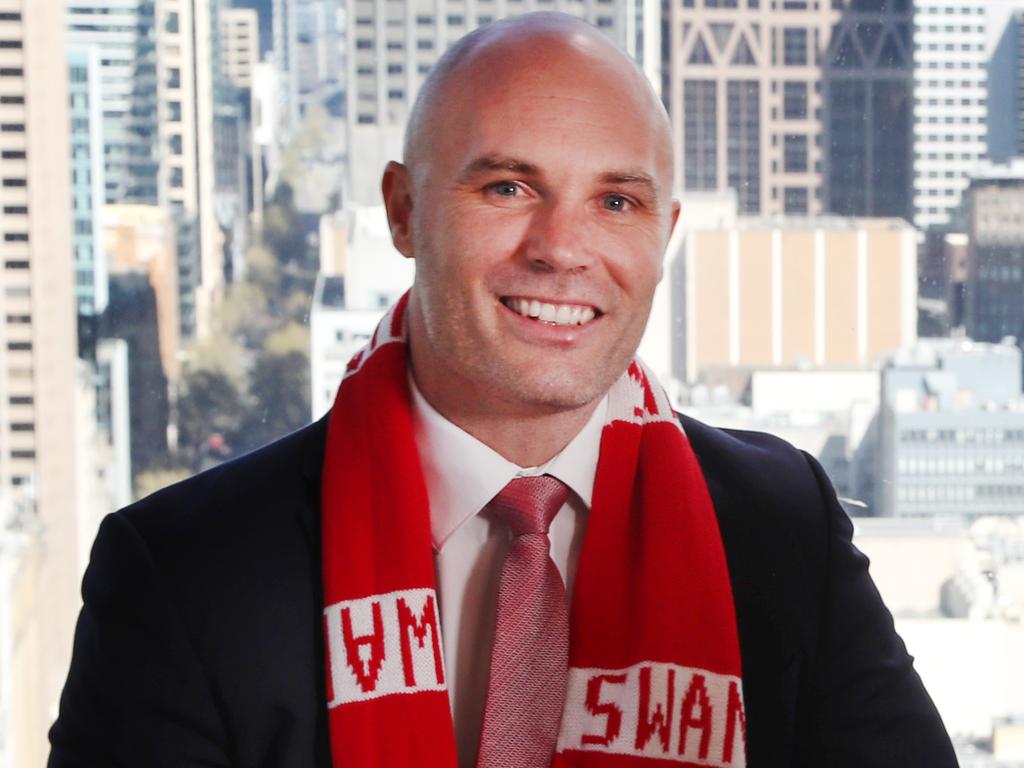
Sydney Swans chief executive Tom Harley analyses the club’s key challenges in AFL season 2023
Lance Franklin’s farewell, SCG challenges, a woeful AFL grand final loss and the new drawcard for recruits. Sydney boss Tom Harley shares his foresights with former Swan NEIL CORDY.
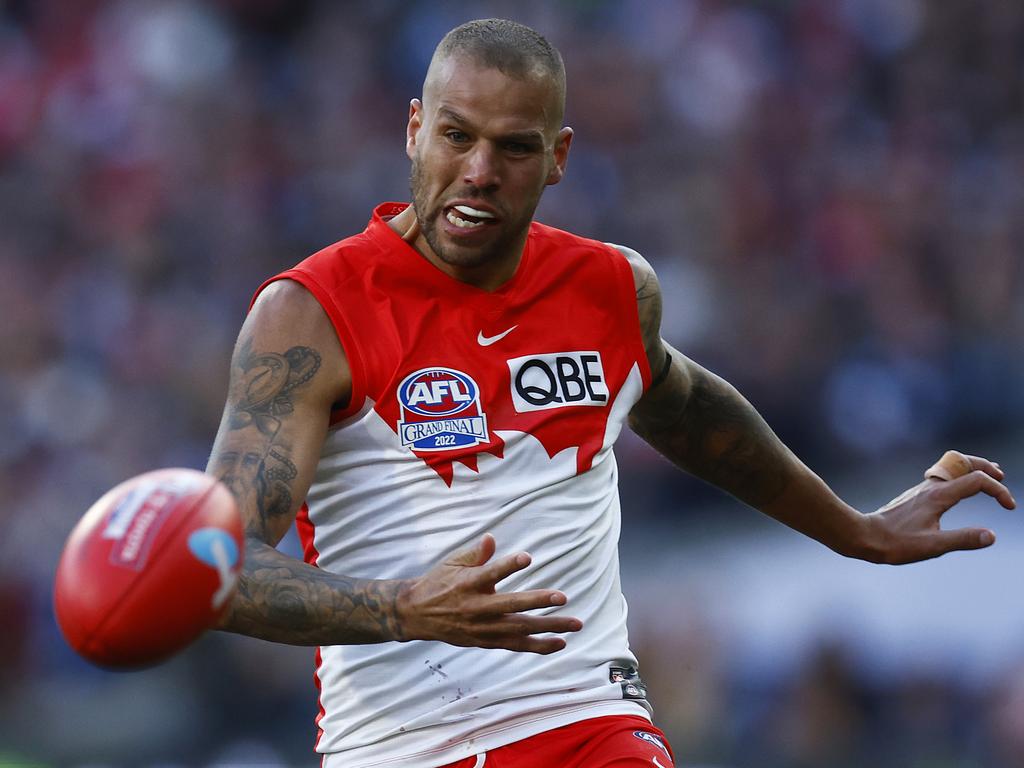
Lance Franklin will almost certainly play his final season in the AFL this year. It is one of several hurdles faced by the Sydney Swans.
The club has been buoyed by their move into a brand-new $70 million training and administration facility, but it won’t erase their horror grand final loss.
Nor will it alleviate the problems created by a home ground which is outdated and restricting their growth in membership, sponsorship and crowd size, plus the looming departure of one of their most beloved players.
CODE Sports sat down with CEO Tom Harley to chat about these obstacles.
Buddy’s goodbye
After many seasons of speculation on whether ‘Buddy’ would go the distance on his contract, he’s added a 10th year at the Swans – the 19th of his career – to confirm his longevity. There won’t be a 1,000 goal celebration but he will have another two key milestones.
He needs just nine games to bring up the 350-game mark, and a further 11 goals to pass Doug Wade into fourth position on the all-time goal kicking list.
“He’s still a very important part of what we want to achieve in 2023,” Harley says.
“When you’re in your twilight years it’s not just about football, it’s about family. That’s the case with Lance and Jesinta and we will always be supportive of that.”
SCG redevelopment
The SCG is one of Australia’s most beautiful and popular sporting venues, but last year it short-changed tens of thousands of fans with its limited capacity of just over 45,000.
Matches against Collingwood, in round 22 and the preliminary final, could both easily have drawn a further 20,000 if the ground had room to fit them in. The numbers for blockbuster clashes with Geelong (Buddy’s 1,000th goal) and Richmond were restricted as well.
The limited capabilities of the ground also puts the brakes on potential membership and corporate hospitality. Harley is acutely aware of the ground’s limitations.
“The SCG is such a beautiful and nostalgic building, we don’t want it left behind,” Harley told CODE Sports.
“You only have to look at Optus Stadium in Perth, the Adelaide Oval, and there will be a new Gabba for the 2032 Olympics. That’s a Venues NSW decision. Allianz Stadium has just come on line. I‘m sure the next project to be looked at will be the SCG. We will be heavily involved in that along with the AFL.”

Unfortunately for the Swans and the AFL, the immediate prospect of funding for any SCG redevelopment is limited and their timing couldn’t be worse.
With the NSW state election just over two months away, the Chris Minns-led Labor opposition have campaigned against funding for sporting stadiums in favour of hospitals, schools and transport.
Even if the Perrottet government is returned in March, the $828 million forked out on the new Allianz Stadium will limit their appetite for more stadium spending.
The most recent rebuilds of the SCG have been the Bradman & Noble Stand (built 2013-14) and the Victor Trumper Stand (built 2007-08). But as Harley points out, they have both been to the benefit of cricket rather than Aussie rules.
From an Aussie rules perspective, the stands which need replacing are the Brewongle-Churchill (built 1980 and 1986 respectively) and the Bill O’Reilly (built 1984 as the Pat Hills Stand). The Brewongle-Churchill Stand also houses the worst AFL media/broadcast facilities of any capital city. Replacing either of these stands would also provide the opportunity for a drop-in cricket pitch.
Grand final horror
Of more immediate concern for Harley is the last match the Swans played in 2022, a shocking 81-point loss to Geelong. Only four VFL/AFL grand finals have been decided by a bigger margin.
“We’ve put a lot of work into separating what happened on grand final day and what happened in the past two years,” Harley says.
“You are never going to say we’ll wipe it from our memory and move on but we have the right people in place to work our way through it. I’m certainly not a subscriber to those who say you are better off not being there to losing one.
“The facts are we’ve got the experience, it’s not the winning experience but I’m confident the guys driving the team on and off the field will have a good season again.”
Harley has been on both sides of the grand final equation. He was captain in Geelong’s drought-breaking 2007 win over Port Adelaide, tasted a shock loss to Hawthorn the following year then bounced back in 2009.
“We’re not looking for the silver bullet,” Harley says.
“We’re not looking for the magic wand that ensures we win the grand final, we‘re just focusing on what is in front of us. As a general rule when you lose games of football, nobody feels it more than the players and the coaches.
“That’s what I’ve learned as a fan, administrator and a player. You can only go on how the team has presented back to training and they are in top shape. The lion’s share of our team is young and they are unbelievably close.”
John Longmire has also experienced the best and worst of grand final days as a player and coach. He missed out on the 1996 North Melbourne premiership due to injury but won in 1999 in his last game as a player. He claimed a flag in his first grand final as a coach (2012) but lost the next three (2014, 2016 and 2022).
“We have a lot of personnel around the club in coaching and administration who have been on both sides of grand final outcomes,” Harley says.
“We have an experienced coaching group led by John (Longmire) who puts things into perspective and can strike a balance between constantly striving. Our focus is clear, We are focusing on literally getting better every day.
“Across the club – and certainly the football department and the players are taking it as it is presented. You have a training session in the morning and you get the most out of it. You can sign off the day knowing you have achieved something.”

New facilities and players
While he’s not on the $1 million-plus per season he once commanded, Buddy’s retirement will still leave some salary cap space at the end of the year and the possibility of the Swans becoming active again in the free agency market.
Harley wouldn’t speculate on who that might be, but is hopeful the state of the art training and administration centre will be a drawcard.
“The new facility doesn’t hurt,” Harley says.
“Most of the clubs have state-of-the-art resources. The thing that separates us is it’s a stone’s throw from our home ground. We can train, play and prepare and welcome all our members all in the one space. There aren’t many clubs that can do that.”

Petracca, Oliver, Goodwin: Drastic overhauls footy’s new normal

Swans’ camp gets awkward — thanks to a kid’s innocent question

Why Bloods recruit rejected Tigers and co for Sydney move

SSP watch: VFL star, ex-Docker battle for Hawks spot

One-on-one with Charlie: Former Hawk desperate to prove himself
