
West Coast Eagles have two urgent issues to address and neither relate to the coach or chief executive
The issues are mounting for West Coast but two supersede all others. MARK DUFFIELD reveals what they are and the potential solutions.


The two most pressing questions West Coast must answer do not pertain to the employment status of their incumbent coach and chief executive.
The first, obviously, is how to reduce their overcrowded injury list. And the second goes to development: how do they fix their reserves to give their youngsters the best chance.
West Coast coach Adam Simpson has a contract until the end of the 2025 season and the injury list, hovering between 17 and 18 over the past three weeks, is so long that Merlin couldn’t conjure a way to the finals.
And Eagles CEO Trevor Nisbett has been at the helm for 25 years. The question over whether the club needs fresh leadership is legitimate. Nothing lasts forever, 25 years is a long time and Nisbett himself will tell you he is nearer the end than the beginning.
But it is not as urgent as other matters.
There have been calls for an independent investigation into what has transpired at West Coast the past two years to anchor them to the foot of the AFL ladder. If the Eagles wanted to spend money on that they could certainly afford it – but it would be a waste.

We know what happened. They tried to extend a premiership window for another couple of years with a group that showed all the signs of lacking hunger with the attitude they took to the Queensland hub during the Covid-19 affected season of 2020.
They now have several ageing champions who are broken, a few draft picks from the last two years who show promise and precious little in between those two groups.
But the AFL looks after its non-performing clubs. Blessed are the weak, for they inherit the best draft picks. So the system will solve the problem of a lack of talent in time. And one thing we can say with certainty about the Eagles: they won’t go broke before that happens.
The process has already started. West Coast took three picks inside 40 in 2021 and four picks inside 30, including two first round picks, in 2022. They also got Jai Culley as the top pick in the mid-season rookie draft and will take one of the top picks from this mid-season draft, with any range of options to free up the list spot to enable them to take the pick.
As it stands, the indicative order for 2023 has them holding four picks inside 40 at this year’s national draft. Nisbett has already committed the club to being draft-focused.
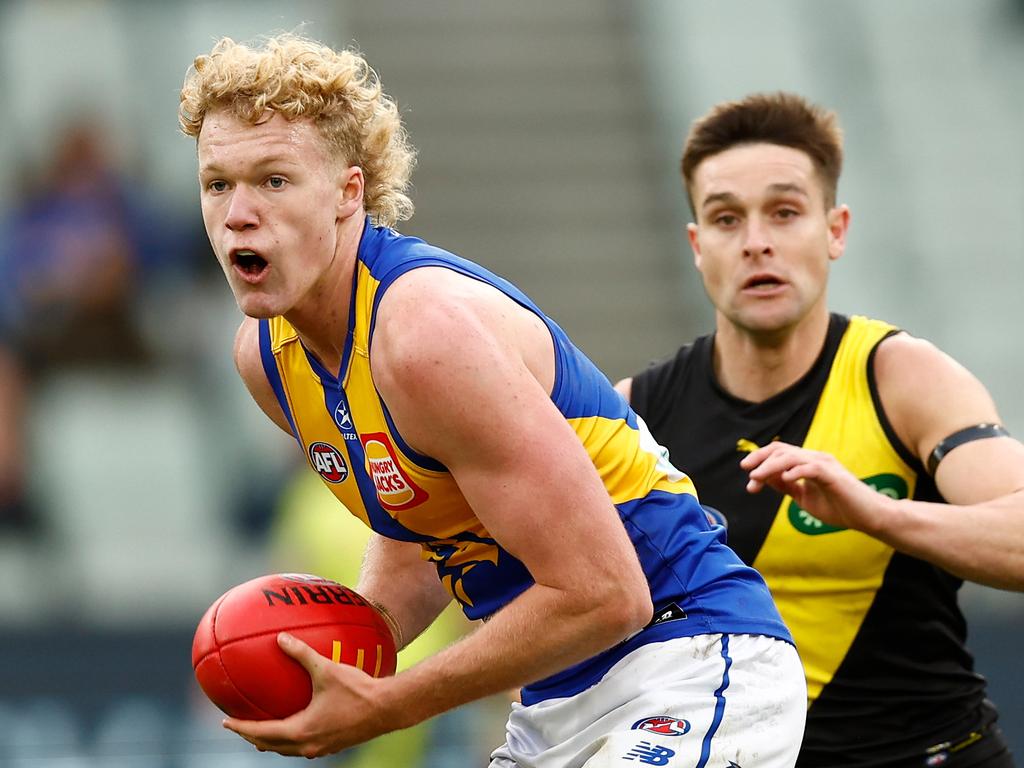
The only way to mess this up is to not be able to develop the talent properly. And development can be severely hampered by either, or both, of injuries and an uncompetitive seconds team.
The club’s former high performance manager Glenn Stewart had a simple philosophy on cultivating talent: players get better while they are training and playing so, whatever you do, don’t break them.
The club has given assurances it is doing a “deep dive” into how many of its injuries could have been prevented and those investigations will run their course and hopefully lead to a better outcome in the near future.
So, assuming they find the “cure” to the current injury epidemic, the right environment for the youngsters to develop in becomes the most urgent issue the club faces.
The Eagles WAFL team has now lost 13 matches in a row.
The last four games have produced three defeats by more than 100 points with one, at the weekend by fellow cellar dweller Perth, by 97 points.
The club narrowly avoided joining Peel in 1997 (pre their alignment with Fremantle) in being the one club to have lost four games in a row by more than a century. More than one West Coast stalwart has quietly made the observation that this is no environment to be thrusting youngsters into expecting them to reach their full potential.
There are four options in front of the Eagles in regards to their seconds, assuming there will be no fresh push to establish an 18 team AFL reserves competition:
Continuing with a stand-alone WAFL team
Nisbett indicated this was the club’s preferred option before the start of the season and pre-season form indicated the Eagles would be strong if they stayed fit. They didn’t.
Pros: It gives the club total control over preparation and coaching. It allows all players to stay at one site and the club answers only to themselves.
Cons: Other WAFL clubs are wary of them becoming too strong and are loath to allow them top-up players. At the moment, they have only three with strong football resumes: Jackson Nelson, Alec Waterman and Jarrod Garlett. This leaves them vulnerable when injuries strike the AFL list because the bulk of the WAFL team then consists of players rejected by other WAFL clubs or recruited from amateur clubs.
The Eagles have very limited ability to pay to draw talent. West Coast legend Josh Kennedy believes the list rules will be gradually worked on over time to allow better depth and competitiveness. But it hasn’t happened yet and the youngsters for this rebuild are either already there or about to arrive soon.
They need a better team to play in now or next year.
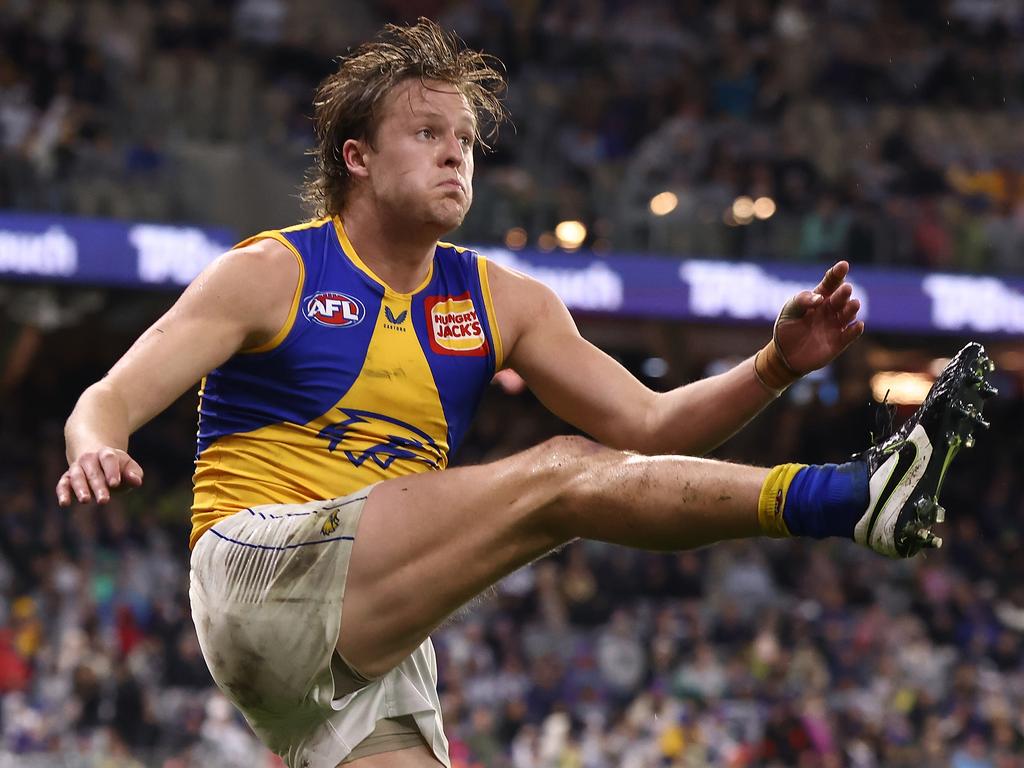
Aligning with a WAFL club
The question is who? East Perth had an alignment with the Eagles for several seasons, and it allowed the Royals to rebuild their bank balance. But neither East Perth nor West Coast were completely happy and the partnership was dissolved. Perth shares Mineral Resources Park with the Eagles and has been an unsuccessful WAFL club for 40 years but is reluctant to align.
Pros: An established WAFL club would bring significant player resources and the Peel list would be a guide to list and recruiting rules to establish a competitive team. Perth looms as the most likely alignment target, which would be convenient because the Eagles built their training base at Lathlain Park where Perth is still based.
Cons: The Demons don’t want to do it. Even if a club agreed to a “limited” alignment there would be compromise. For example, the WAFL club may only want a limited number of Eagles in the senior team at any one time which would mean a significant number of young players would have to develop playing WAFL seconds.
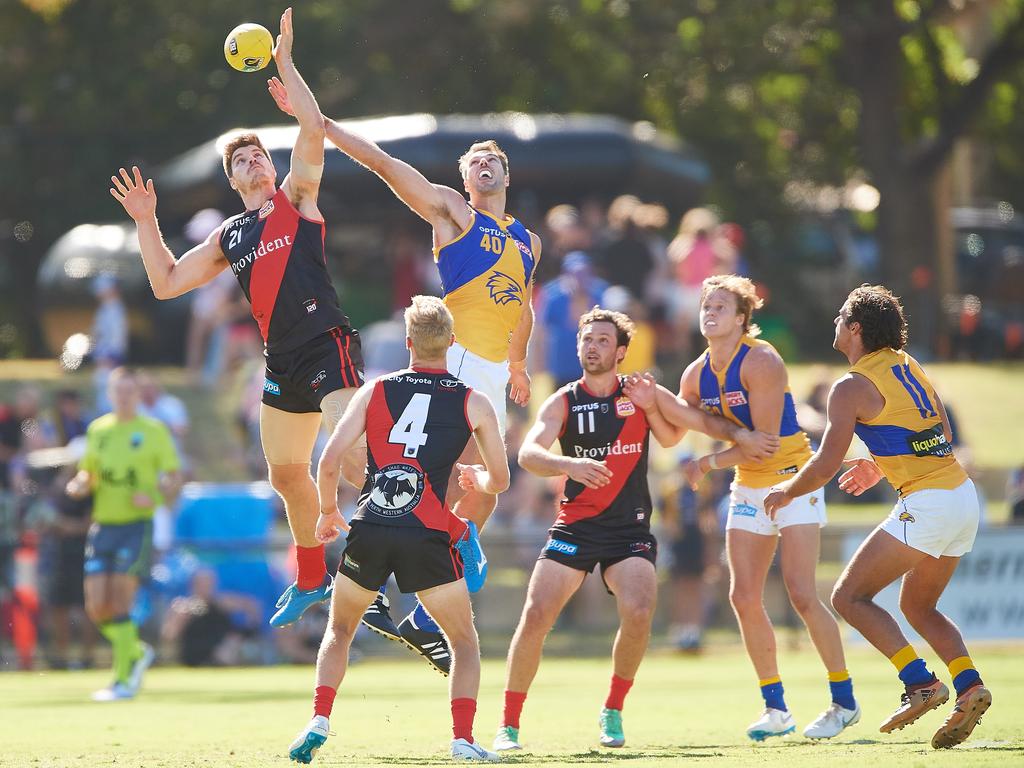
Establishing a new WAFL club like Peel
Bunbury, the biggest regional population centre in WA, has expressed some interest in housing a WAFL club. And while the Eagles haven’t fully investigated the possibility, they have not ruled it out and acknowledge the potential.
Pros: Bunbury is the central point of the South West Football League, the strongest country football competition in the state. The Peel list rules would be a good guide to putting a competitive side on the field and the Bunbury team would have a strong chance to be financially viable because of the population base and a strong football culture in the town.
Cons: Bunbury is two hours from Perth which would create travel issues for training, in particular. It is also a key part of Swan Districts’ country zone requiring a significant reallocation of zones to prevent Swans being disadvantaged. It might require a vote from the WAFL clubs to allow a 10th club in. The WAFL clubs are notoriously resistant to change.
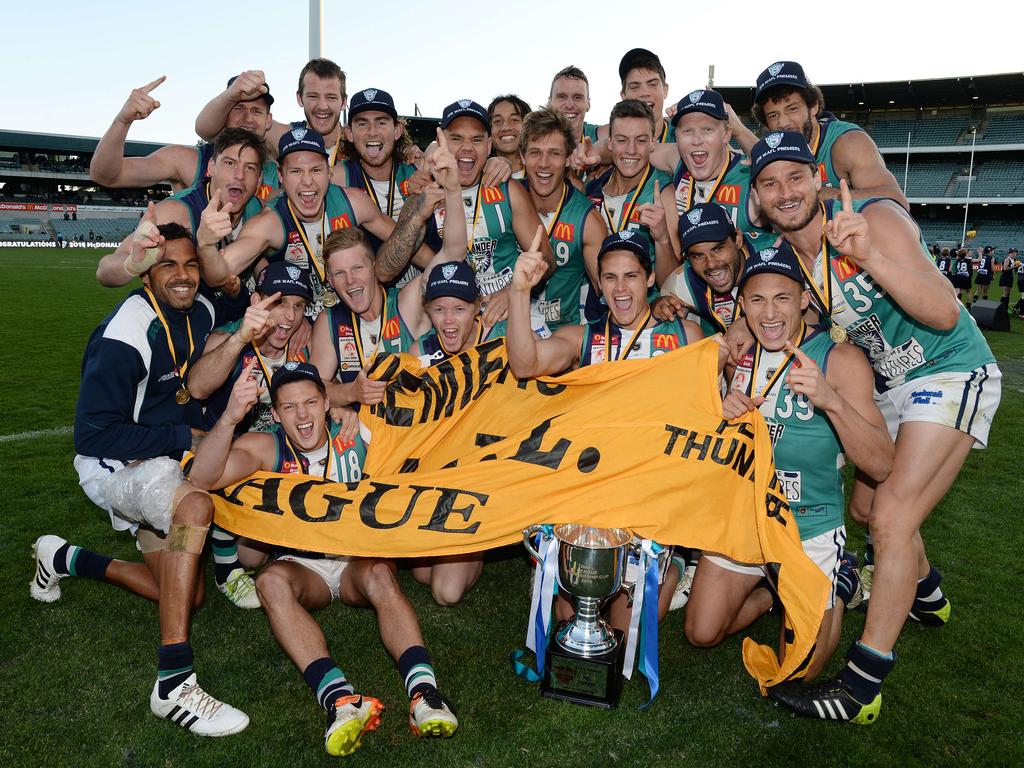
Allocating players WAFL club when not playing AFL
This is the old system and, remarkably, remains a slight possibility because of the Eagles’ plight. Players from interstate could be housed at one club and other Eagles could simply return to their club of origin (with the exception of Peel players because of the alignment to Fremantle).
Pros: Low cost and would be popular with WAFL clubs because it gives them access to cheap talent and stops them being stripped of players they have produced. It could be done quickly and easily and allow the Eagles youngsters to play in a strong, competitive environment.
Cons: All AFL teams have their own seconds or an alignment and the Eagles would feel competitively disadvantaged because their players would be playing in different systems under different coaches. They would have to use extensive match simulation at training sessions to teach young players their own team based attack and defence methods.

Stephenson wins praise at Port as new Eagle pushes for early debut

SSP watch: VFL star, ex-Docker battle for Hawks spot

Luxurious draft hands piles pressure on battling Eagles

‘He’s looking over us’: Selwood’s integral role in finals rise

How Eagles’ 1988 inaugural finals side is inspiring Eagles’ W debut
