
NBA: Ben Simmons and Rudy Gobert are NBA stars plagued by bad free throw shooting, perhaps they need to look to Korea
The bane of players like Ben Simmons and Rudy Gobert, free throw shooting is the NBA refuses to evolve. ROBERT O’CONNELL investigates how physics – and the glass – is changing the skill in Korea.
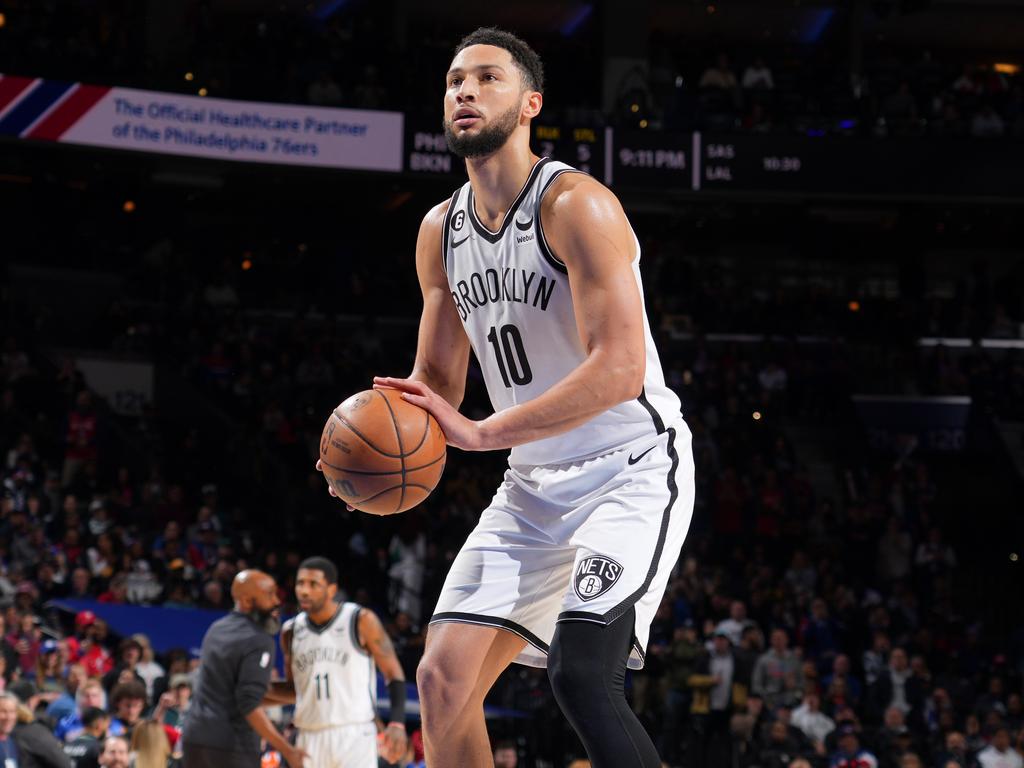
Over the last generation of NBA basketball, players have reimagined nearly every method of scoring points. Top dunkers have evolved from lumbering behemoths to athletes who can sprint the length of the floor in a few strides. The 3-point shot has progressed from a complementary feature to the sport’s central tactic. The game’s best passer, a title once reserved for point guards, is a centre.
The exception is the free throw, stuck more or less where it’s always been. Even the league’s worst shooters, with rare exceptions, settle for the norm after they draw a foul. They tinker instead of overhauling, trying for higher arc and a more consistent release, logging the same lousy numbers.
Johnny McDowell, Sr. never reached the NBA; his stateside career ended at the University of Texas at Arlington in 1993. But the retired forward, now 52, has a word of advice gleaned from his time in Korea’s pro league, in which he won multiple MVP awards. It’s a little weird. Don’t aim at the rim; aim for that big pane of tempered glass behind it.
“The more I did it,” McDowell said of using the backboard on his foul shots, “the better I got.”
The practice of bouncing free-throws off the backboard is unheard of in American basketball, where shooters universally aim for the swish. When a viral reel of Korean stars taking and making bankers circulated last summer, NBA fans puzzled over the technique and fired off jokes about which players — the Brooklyn Nets’ Ben Simmons, the Minnesota Timberwolves’ Rudy Gobert — might stand to benefit from trying it out.
In the KBL, though, using the backboard from the charity stripe isn’t a novelty. It’s a staple of the game, popularised by an icon and supported by the statistics of those who make the shots at an 80-plus per cent clip. The percentages, and the physics behind them, suggest NBA players would do well to give it a (redirected) shot.

The origins of the Korean bank-shot free throw trace back to Moon Kyung-eun — who, if he did not invent the method, certainly popularised it. Over a career spanning the 1990s and 2000s, Moon made his name as a marksman. His attempts tended to go in regardless of the build-up to them — whether he had set his feet or was flying around a screen, using the glass or arcing the ball straight through the rim.
“I tell everybody, you’ve got Steph Curry shooting pull-up threes,” McDowell said. “Moon was doing that back when I was playing.”
The most identifiable and imitable quirk came at the foul line. Players have long used the backboard when facing the basket at an angle, but conventional wisdom had held that taking dead aim at the rim was best for a straight-on shot. Moon’s intuition led him to loft the ball high over the hoop, feather it off of the square outline painted onto the glass and watch it drop — nearly every time — through the net.
“If he shot 100 free-throw bank shots, he would have a success rate of 100%,” said Kim Tae-sul, who played with Moon early in his own career. Kim quickly adopted the method as his own.
Interesting trend from the Korean Basketball League where a number of players are 80%+ from the free throw line shooting exclusively bank shots. pic.twitter.com/OBKmVW3pfa
— Eric Fawcett (@EricFawcett_) August 31, 2023
Rhett Allain is a physicist at Southeastern Louisiana University who has researched the properties that differentiate a successful basketball shot from an unsuccessful one. Allain said that players’ approaches have more to do with received wisdom, passed down between generations of coaches and parents, than with a systematic study of what works. Even those struggling at the bottom of the free-throw leaderboard — such as the Nets’ Simmons, who had made just one of four in six games this season before missing time with a back injury — are hesitant to venture too far afield in search of a fix.
The banker, therefore, hasn’t yet made its NBA debut. But it has scientific bona fides.
“If you come in from a low angle, the rim — from the ball’s perspective — is a lot smaller,” Allain said. “If you come from straight down, it’s as big as it can get; it’s a circle. That’s the big advantage of hitting it off the backboard, it increases that angle. It makes the rim bigger.”
McDowell, who also learned the banked free-throw from Moon, concurs. “It helps your touch out,” McDowell said. “Put it on that square, and it’s going to fall right in.”
The most notable attempt to disrupt the foul shot came in the 1960s and 70s, when Hall-of-Fame guard Rick Barry brought the underhanded “granny shot” to the NBA and ABA. He made 90% of his free-throw attempts in the NBA, and in the decades since his playing career has campaigned for current players to try his technique. (Wilt Chamberlain shot underhanded for a time, including during his record 100-point game in 1962.) His pleas have mostly fallen on deaf ears — an unwillingness Barry attributes to fear of looking foolish.

“People are adopting this,” Barry said of the shot spreading in the KBL, “but they’re not going to adopt the way that physicists have said is the most efficient way to shoot a free throw. It just shows you how crazy this world is.”
Barry nevertheless conceded points to the banked free-throw’s credit. The backboard “softens” the shot, he said, increasing the likelihood of a friendly roll. “If I were playing today, I’d do more with the bank shot from the side,” Barry added.

McDowell can relate to Barry’s frustrations. These days, the former KBL champion coaches the junior varsity team at his alma mater, Central High School in Tuscaloosa, Ala. Among his audience of teenagers, he’s yet to find any takers for the experiment that boosted his own hit rate years ago.
“I would like to pass it along,” McDowell said, “but these kids aren’t interested.” In that way, they’re just like the pros.
-The Wall Street Journal

50+ photos: Ellas Titans, Tracy Village triumph in basketball finals

Overtime heartbreak extends United’s losing run

Bitter NBL break-up: Trez says Sixers deserted him

Came to play, want to stay: NBL imports set to join Aussie Bryce

New era for NT Basketball after dramatic vote
