
One draft pick and years of trust behind the Denver Nuggets first ever NBA championship
When the Denver Nuggets selected Nikola Jokic with the 41st pick in the NBA draft nine summers ago, the 6-foot-11 Serbian was fast asleep. It proved transformative, setting the wheels in motion for a first ever championship.
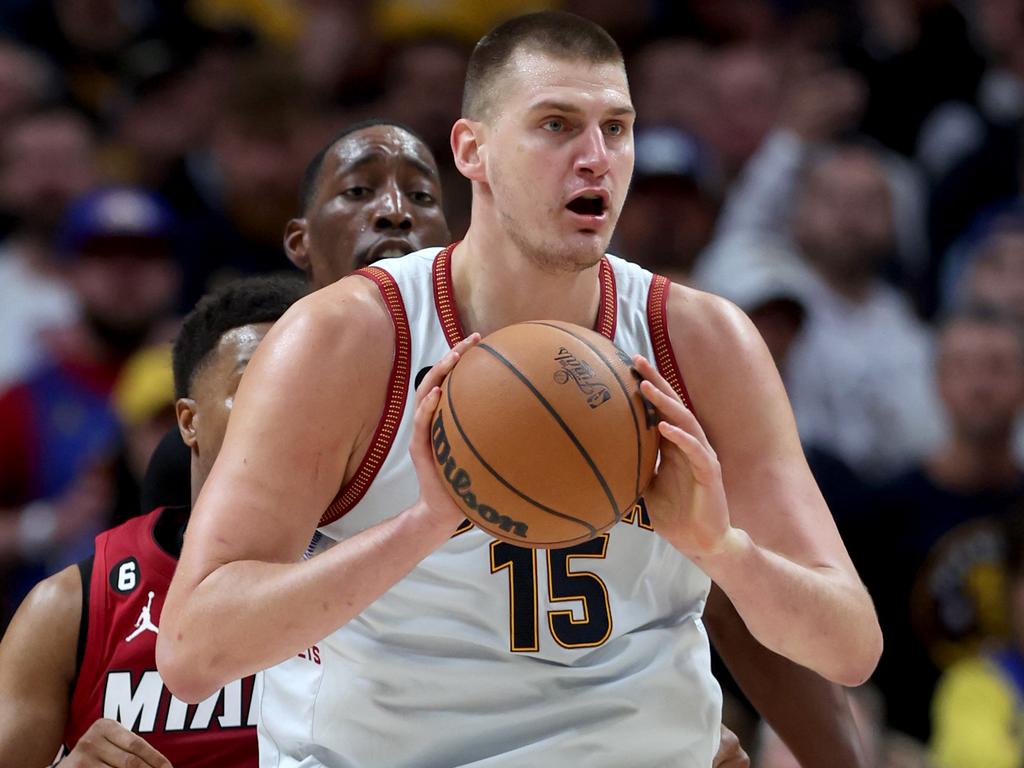
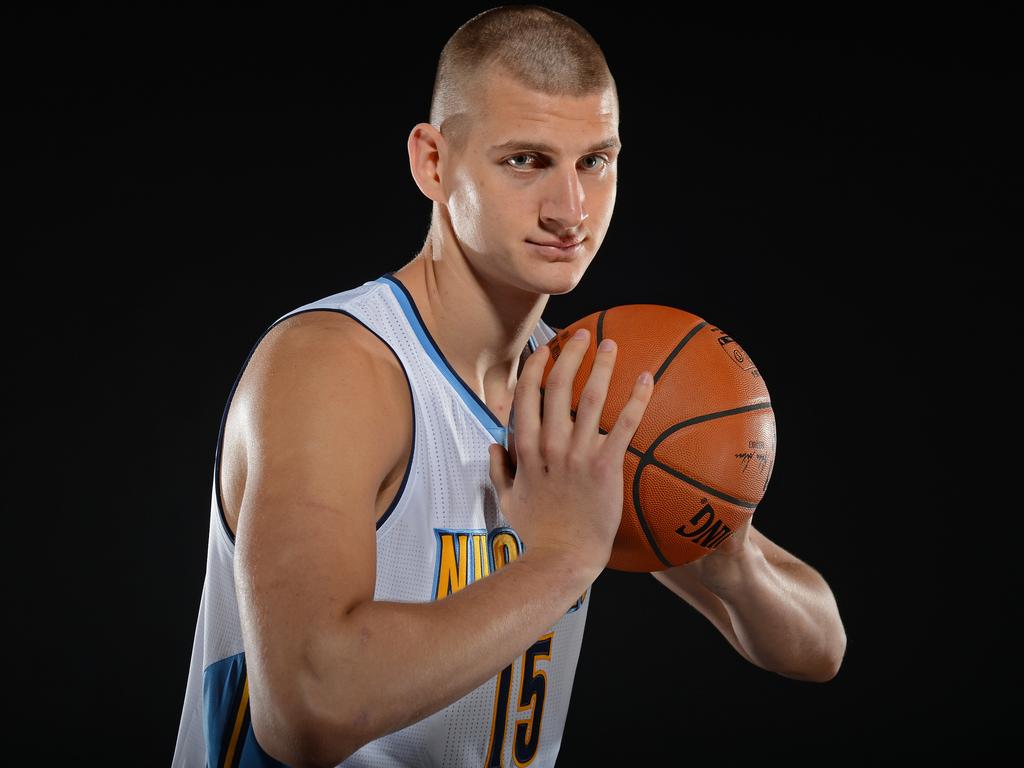
When the Denver Nuggets selected Nikola Jokic with the 41st pick in the NBA draft nine summers ago, the 6-foot-11 Serbian was fast asleep. The television broadcast didn’t show the selection live, instead airing a commercial for an addition to the Taco Bell menu. Devotees of European basketball had heard rumours of a portly giant from Sombor who threw precognitive passes, but nobody claimed that the future had changed.
Monday night (Tuesday AEST), in front of a feverish home crowd, Jokic led Denver to a come-from-behind, championship-sealing 94-89 victory in Game 5 of the NBA Finals over the Miami Heat. The win marks the first title in the franchise’s 56-year history and cements the status of this one-time unknown as the best player in the sport.
Jokic, who won the 2021 and 2022 Most Valuable Player awards before losing this season’s to Philadelphia’s Joel Embiid, played in the Finals as if to correct the record. He scored 19 of his 28 points after halftime on Monday, hauling Denver back from a seven-point deficit at the break.
The Nuggets battled foul trouble and nerves early, turning the ball over due to Miami’s stifling defense and their own jitters. In the second half, they righted the ship, steadied by their own defense led at the point of attack by Kentavious Caldwell-Pope, who helped hold star forward Jimmy Butler to 5-18 shooting.
On offense, Denver turned once and again to Jokic, who muscled his way to the rim when the normally flowing system ran dry. Jamal Murray finished with just 14 points but made timely long-range shots as the Nuggets gained and extended the lead.
Just when the series seemed ready to slip beyond Miami’s reach, Heat star forward Jimmy Butler put on a signature sequence: hitting a pair of 3-pointers, getting fouled on a third, and making all three free-throws. Another jump shot and two more free-throws later, Miami took the lead back, 89-88.
After a Bruce Brown put-back put Denver back on top, though, Caldwell-Pope ripped a steal from the Heat and drew a foul, making both free-throws to put Denver up three. Miami wouldn’t make another shot.
The tension of the end was out of step with the ease of Denver’s overall run. Over the whole of the playoffs, Jokic led all participants in total points, rebounds and assists, a feat nobody in NBA history had pulled off. The Nuggets won four series and lost just four games along the way.
At the end of a run this dominant, it can be hard to remember that Denver entered the playoffs as a top seed thought to be ripe for upsetting. Prognosticators and odds adjusters still didn’t quite trust Jokic’s strange-looking game—all flipped-high shots and snuck-through passes—set next to the straightforward scoring punch of the Los Angeles Lakers’ LeBron James, the Phoenix Suns’ Kevin Durant or the Golden State Warriors’ Stephen Curry.
“You kind of grow accustomed to it,” Nuggets coach Michael Malone said earlier in the playoffs, of pundits overlooking his team. “There are people who are still kind of being introduced to who Nikola Jokic is.”

The Nuggets dispatched the Suns and Lakers comfortably: the former in a 25-point shellacking of a closeout game in which Jokic made 13 of 18 shots, the latter in a conference-final sweep that left James rating Denver as the best club he had faced during his time with Los Angeles.
Though the Finals brought a matchup with the eighth-seeded Heat, the Nuggets’ true opponent seemed to be basketball convention: Could this team, built around this player, really win a championship?
Denver proved well-staffed for the task. Murray, the point guard who shares a mind-meld with Jokic, slipped to the rim to catch his assists and rescued rare stalled possessions with snipes from the perimeter. Aaron Gordon, a boulder of a forward, rolled through the Miami defense. Nearly everyone on the roster—such as the backup guards Christian Braun and Brown, who tilted close games with breakout quarters—made a crucial cameo.
Jokic was the soul, and the show. During some stretches, he worked close to the basket, freeing himself with a shoulder to his defender’s sternum and hoisting a hook. During others, he sent up fadeaway jump shots with the trajectories of roller-coasters. At any moment, he was ready to spin his head toward the sideline and let go of a blind pass that somehow found a teammate’s hands, gifting an easy lay-in.
“It’s free-flowing,” Murray said of playing alongside Jokic. “If something is there, we go. If it’s not, we don’t force it. He makes tough shots look easy, and he’s been doing it for a very long time.”
Before Game 5, Heat coach Erik Spoelstra called his team “savage competitors,” and said of the challenge of digging out of a 3-1 series hole, “That’s what our guys love.” Center Bam Adebayo worked a hustling end-to-end game, and Butler finished with 21 points. Spoelstra pulled every lever he could, switching into zone defenses and calling elaborate set plays to spring 3-point shooters free.

The Nuggets could lean on cohesion. Malone, the fourth-longest tenured coach in the league, has been in Denver for eight years; Jokic and Murray have been teammates for seven. The trio has weathered disappointments: in 2018, when a last-game loss meant that it missed the postseason, and in 2021 and ’22, when Murray’s absence with an ACL injury led to early-round playoff exits.
“I couldn’t be more thankful for working for an ownership group that is not impatient and is not trying to find the next great thing,” Malone said before this series, “but lets this grow and marinate into something special.”
Coming on the heels of last year’s championship, a fourth title for Curry and the Warriors, Denver’s win suggests that basketball has plenty of evolutionary road left to travel. Curry and his ilk were thought to have brought the game to a final, mathematically pure stage—the more 3-pointers, the better—but Jokic has rekindled an old archetype, with new tweaks. He became the first player unambiguously categorized as a center to win the Finals MVP award since Shaquille O’Neal did so 21 years ago.
It is not just the position that distinguishes Jokic. Even in his slimmed-down mid-career shape, he remains an athletically unlikely star, with an awkward gait and ill-defined biceps. And where other great players speak of executing their game plans and imposing their wills, Jokic takes an improvisatory approach, scanning a defense and accepting whatever invitation it offers him.
“He takes what the game brings,” Malone said. “That’s what makes him special.”
Unlike Curry’s Warriors, Jokic and the Nuggets probably won’t inspire legions of professional and grade-school imitators. Their style is too distinct, and he relies on an innate, inimitable awareness. Still, Denver offers one lesson to the franchises now chasing its crown. Keep your eyes open: you don’t know where the next big thing will come from, or what it will look like.

Aussie NBA stud brutally axed amid injury hell

LeBron’s crazy 18-year record snapped

‘It ain’t about the $’: Simmons on his NBA return

‘Run, run, run’: NBL’s ‘entertaining’ pace of play a big coup

Stacked 36ers land former NBA wingman in major signing coup
