
Why NBA teams aren‘t tanking for Victor Wembanyama, the best draft prospect since LeBron James
The arrival of Victor Wembanyama in June’s draft has pressure-tested the NBA’s measures designed to stop teams losing on purpose.
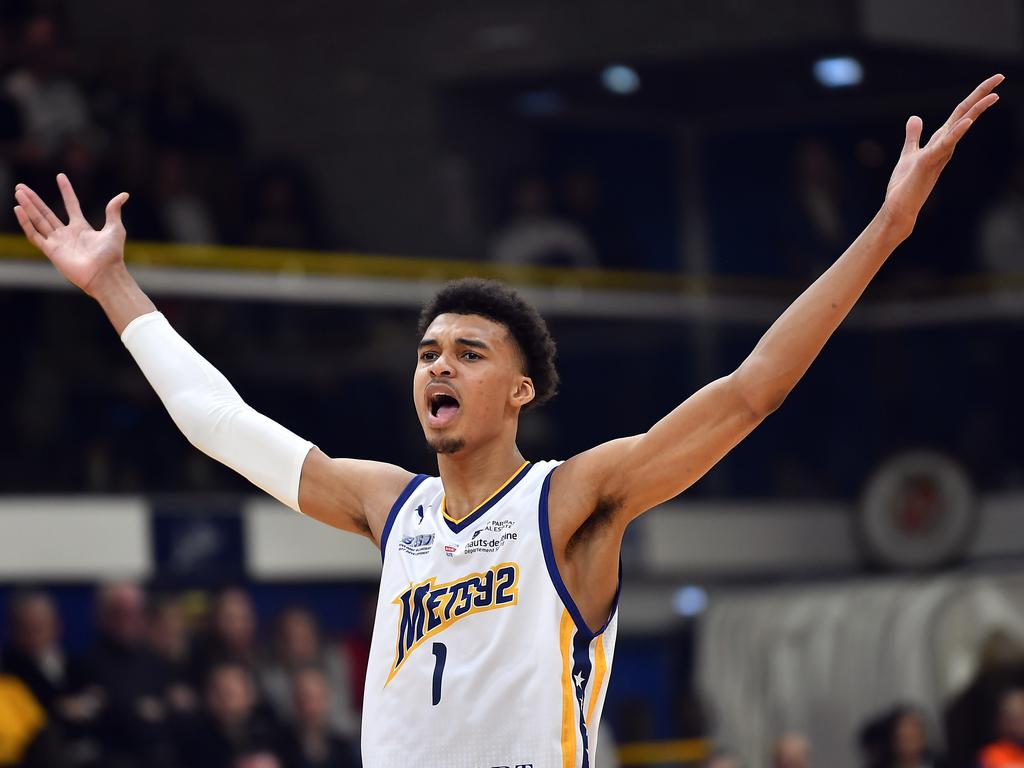
The arrival next season of the most hyped NBA prospect since LeBron James was supposed to be foreshadowed by an all-time spectacle of futility.
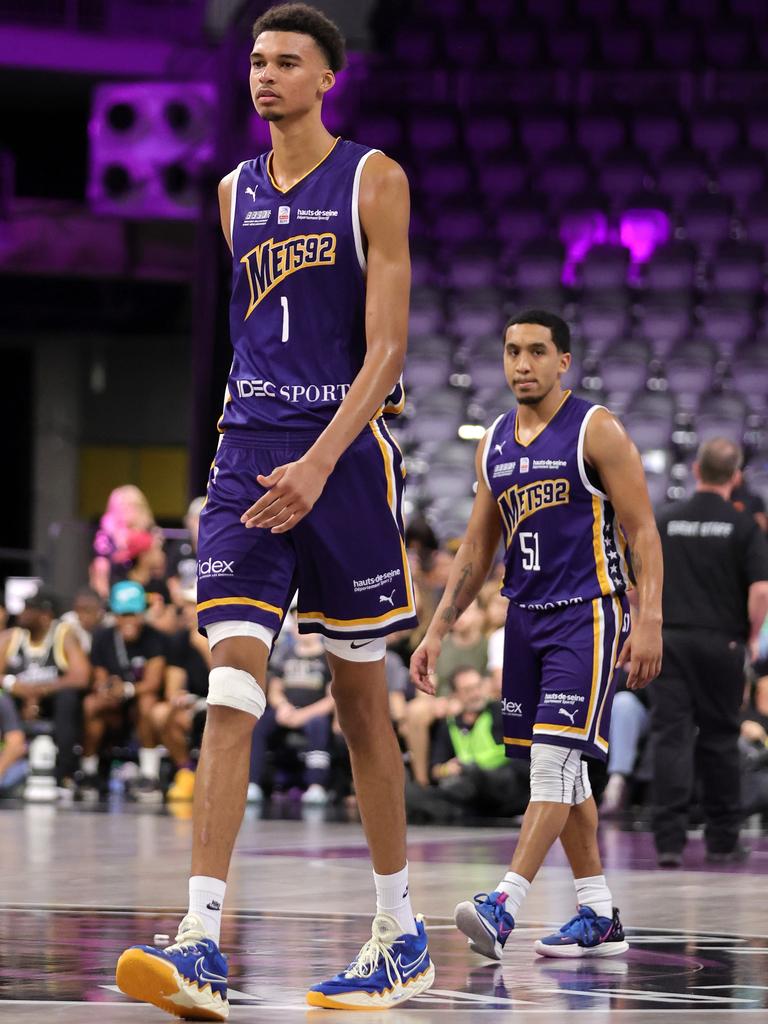
Victor Wembanyama, a 7-foot-4 French teenager, launches one-legged 3-pointers and swallows opposing team’s shots whole. He is a functional certainty to be selected first in June’s draft. In other words, he is the type of future winner that teams have long considered to be worth losing for.
Before the season tipped off in October, pundits and oddsmakers predicted a frantic competition — to sink at the bottom of the standings. Those teams without a realistic shot at a championship were supposed to be doing whatever they could to secure the next best thing: a fair chance at winning the NBA’s draft lottery, which gives the best shots at the No. 1 pick to the losingest teams, and bringing aboard Wembanyama. The 2022-23 campaign would be a tank-a-thon to remember, with solid contributors traded away, mysterious ailments lingering and nightly line-ups filled out with names you had never heard before.
One person who didn’t think it was going to work out that way, however, was Evan Wasch, the NBA’s executive vice president of basketball strategy and analytics. “I was shouting from the rooftops, pre-season, that it wasn’t going to be what everyone said,” he said in a recent interview.
Wasch was right. Even with the unavoidable smattering of struggling clubs — the Spurs, Rockets, Hornets and Pistons have each lost at least 70% of their games — this season has become one of the most competitive in league history. In the Western Conference, 11 of 15 teams have tallied between 27 and 33 wins, turning the playoff race into a peloton. The NBA tracks the average team’s distance from .500 — the bigger the gap, the more imbalanced the standings — and this year, the average team is 10.7 games away from dead even. It is the lowest number, at this juncture of the season, in league history.
Wasch and his colleagues in the NBA office have curtailed the race to the bottom by throwing out the carrot that lured teams there. By the fall of 2017, the league had identified tanking — not the intentional losing of games by coaches and players, but the building and managing of a roster designed to come up short — as a fundamental threat to the entertainment value of its product. The previous year, eight teams had lost at least 60% of their games, and the next season the number would rise to nine. In Philadelphia, the years-long losing strategy that yielded a string of early picks had a nickname: “The Process.”
Such tactics were “incredibly corrosive to the league, obviously” Wasch said, “this perceived idea that somehow you were better off finishing last than second- or third- or fourth-last.”
In September 2017, the NBA Board of Governors approved a revamping of the lottery rules. No longer would the worst team have the best shot at the top pick; now the lowest three franchises would have equal odds — a 14% chance apiece, down from 25% for the last-place club previously. Those snipped-away percentage points would be redistributed among the remaining nonplayoff teams. The new formula went into effect in 2019, followed by the advent of a play-in tournament that gives each conference’s top 10 teams a shot at the postseason. Previously, the top eight teams had made it.
“The two work really nicely in concert,” Wasch said. “On the one hand, you’re disincentivizing the race to the bottom, and on the other hand, you’re keeping more of those teams in the middle in the mix for playoff spots.”
As if to confirm that a franchise no longer needs to wallow to land a generational talent, the inaugural redone lottery awarded the New Orleans Pelicans, the team with the seventh-worst record in the league, the first overall pick — and with it, the sought-after Zion Williamson.

With Wembanyama’s arrival in June’s draft looming, the league’s designs only partly explain this season’s surprise turn away from farce and toward fierce competition. A number of teams simply have no incentive to tank, having dealt away the rights to 2023 draft picks. The Los Angeles Lakers’ year-long slide from pre-season contender to late-season also-ran, for instance, comes with the potential added loss of their upcoming first-round selection, which will go to New Orleans if it lands in a better spot than the Pelicans’.
The biggest moment of this Lakers season doubled as an example of the nightly intrigue produced by what Wasch calls a “perfect storm” of competition-boosting factors. The game in which LeBron James broke Kareem Abdul-Jabbar’s scoring record, last week, was also one the Lakers needed to win as they hung around the back of the Western Conference’s pack.
But the Oklahoma City Thunder, despite a makeup and standing that might previously have called for a tank job — a promising but young core, a sub-.500 record two-thirds of the way through the season — desperately wanted a victory as well. They talked before the game of using the bright lights as an opportunity to test their progress, and they overcame James’s 38 points to win an entertaining and unmistakably hard-fought contest. Shai Gilgeous-Alexander, the team’s lead guard and a first-time All-Star this season, swivelled and swerved his way to 30 points; rookie forward Jalen Williams gamely contested James’s shots on one end and drove hard at the Lakers’ defence on the other for 25 points of his own.
“I thought our guys just had laser focus in the game, showed a lot of growth,” Oklahoma City coach Mark Daigneault said proudly after the win. “If you trace us back throughout the season, I just thought we played like a very mature team tonight.”
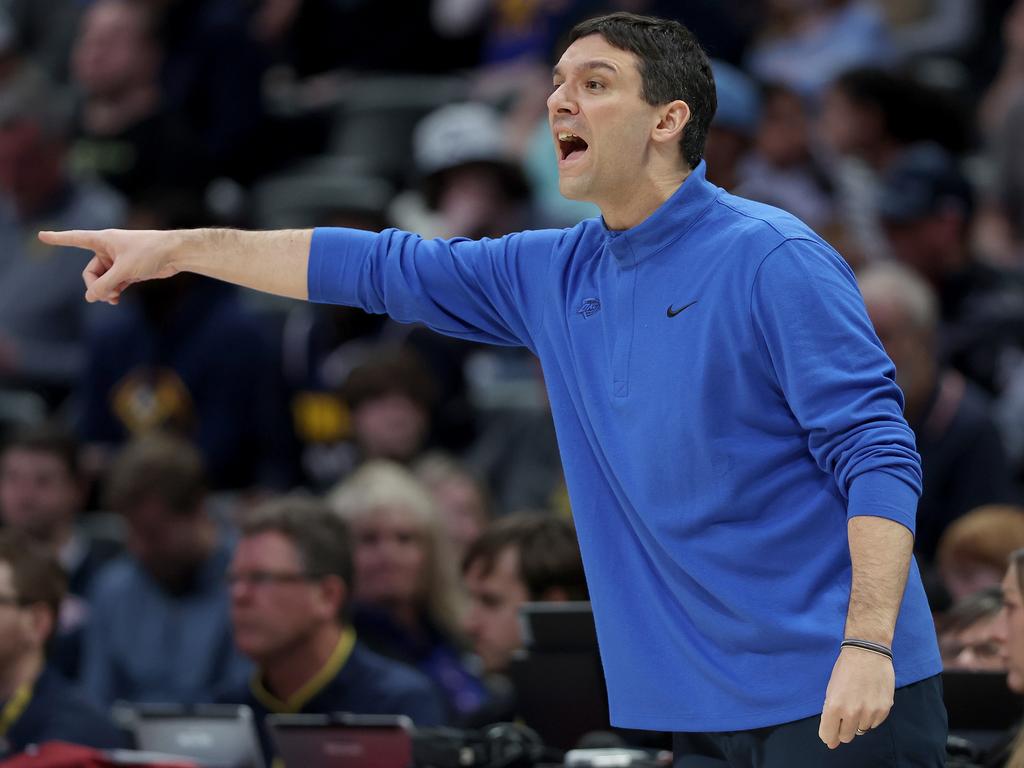
Daigneault was speaking what recently seemed to be a lost language. The way to build a winner was, in his telling, not to maximise chances of nabbing a future player but to challenge and develop the current ones. The Thunder enter the All-Star break hanging on to the last play-in spot, but the chance to test themselves in a big-game atmosphere in front of a national audience also offered some unquantifiable lift, at least according to the team’s coaches and players. And unlike in recent years, that lift didn’t come at much quantifiable opportunity cost.
If the fans benefit most from the NBA’s freshly competitive landscape, Wembanyama himself may end up almost as grateful. The matching-up of the most lauded prospects with the lousiest teams has often meant those future icons spend their early years doing a lot of losing. Wembanyama has a reasonable chance to land in Indiana, catching alley-oops from All-Star point guard Tyrese Haliburton, or among the precocious Thunder, if they fall short of the playoffs.
He might even land alongside Williamson in New Orleans, courtesy of the Lakers’ traded-away selection. Wasch says the league is neutral on whether top prospects go to cellar-dwelling clubs or ascendant ones, seeing benefits in both circumstances. But he acknowledged that the NBA was “comfortable” with the mediocre but not hapless Pelicans getting the chance at Williamson in 2019.
“It meant that we weren’t reinforcing this notion that all you have to do is finish last to get the top pick,” Wasch said. It’s a lesson teams have quickly learned.

50+ photos: Ellas Titans, Tracy Village triumph in basketball finals

Overtime heartbreak extends United’s losing run

Bitter NBL break-up: Trez says Sixers deserted him

Came to play, want to stay: NBL imports set to join Aussie Bryce

New era for NT Basketball after dramatic vote
