
Martin Stark’s brushes with death led him on the path of organising the first World Gay Boxing Championships
Martin Stark stared death in the face and came out the other side. His recovery uncovered a love for boxing that he’s united with the desire to stamp out homophobia in sport, writes BRENDAN BRADFORD.

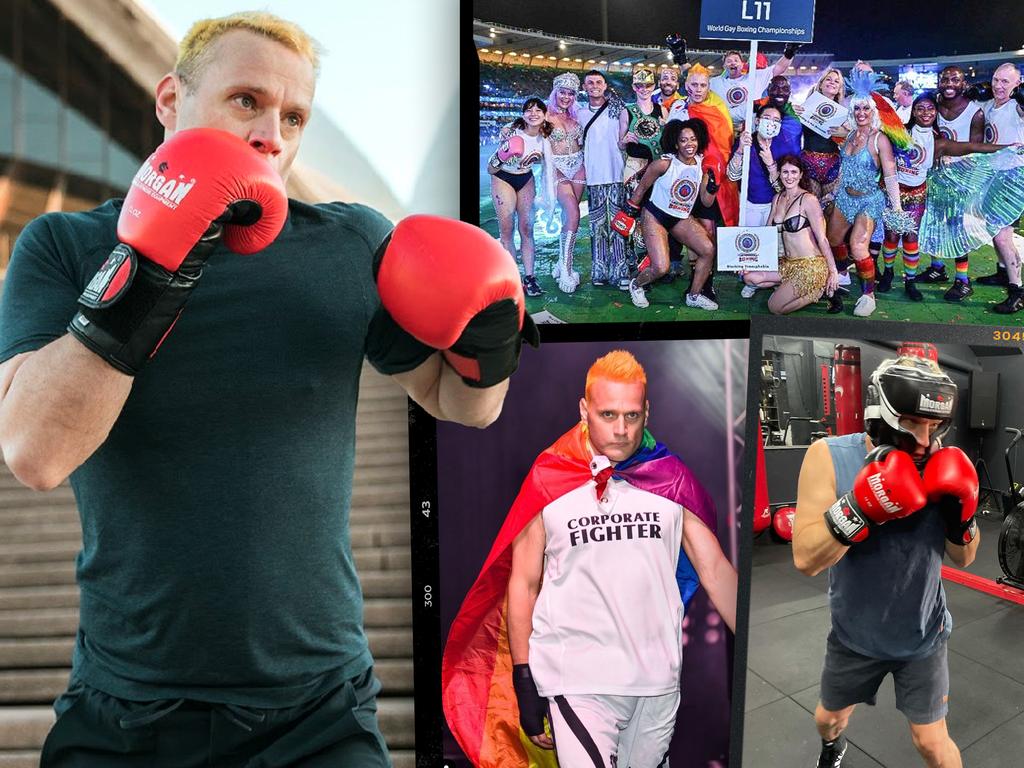
It takes a special kind of person to stare down the barrel of death and come out the other side – twice. It also takes plenty of guts – or maybe a few loose screws – to step into a boxing ring.
Martin Stark has done both, and drew on strength gained from each experience as he created and organised the first World Gay Boxing Championships out of nothing.
Only a few years after first formulating a vague plan for it, Stark’s dreams will become reality when Sydney hosts the inaugural WGBC starting on February 18.
“It’s weird to think that I just had an idea two years ago, to then creating a not-for-profit and reaching out to people all over the world,” Stark tells CODE Sports. “Now my dream is going to become a reality.
“It’s exciting to really make a difference in sport.”
The final few weeks of preparation involve mountains of paperwork, planning and organisation, but it’s nothing compared to the journey Stark has taken to get to where he is already.
The journey
Stark almost died in 2006.
After undergoing a procedure to remove gallstones that had been blocking his liver, he ended up getting pancreatitis, went into septic shock, suffered two collapsed lungs and was placed in an induced coma.
He emerged from his first showdown with death, but was later diagnosed with a rare auto-immune disorder called Addison’s disease.
In 2017, Stark almost died again when he had what’s known as an Addisonian crisis.
Once again, he stared death down, and once again he emerged. But, again, it came at a cost, with the emotional turmoil of his ordeal leaving him with PTSD.
As part of his recovery, he started a self-defence class that included boxing.
“The first time I did shadow boxing, it was quite empowering,” he says. “It taught me that it’s not OK for me to be hurt all the time.
“I’d built such a strength … when you’ve been in hospital 70 times, when you’ve faced death multiple times, you build this strength to deal with it.
“But I don’t always have to be strong. I can draw strength from moments of being uncomfortable.”
Contrary to the old school stereotype associated with boxing, Stark says the sport allowed him to be his true self.
“That’s one of the barriers I want to remove,” he says.
“I’ve personally found the sport welcoming. I’ve had the trolling and call outs, but I’ve had considerable support from friends in the boxing community as well.”
Drawn to the physical and mental rewards of training, Stark decided he wanted to fight at the Gay Games, but soon discovered boxing wasn’t on the program.
“So, I had a crazy idea to organise the world’s first boxing competition for the LGBTQI+ community,” he says.
“It just started from there.”
Getting started
With a professional background in procurement but no prior knowledge of the boxing industry, Stark got to work, reaching out to fight insiders and contacts in the LGBTQI+ community.
His vision took shape after a short meeting with Boxing Australia.
“It was one conversation with the CEO at the time,” he says. “I just said, ‘This is my idea, can you support us?’
“A few weeks later, they issued a press release saying they were happy to support us and that boxing is for everyone.
“When you have the peak body for the sport giving their support, that’s a significant sign of allyship and shows the inclusive nature of the leadership of the sport.”
And now, after a few Covid-related delays and reschedulings, the first World Gay Boxing Championships will be held at the Winx Room at Randwick Racecourse between February 18 and February 22.
The five-day event, which has been scheduled to coincide with Mardi Gras, is an amateur tournament conducted under Boxing Australia rules and is open to the LGBTQI+ community and straight allies to compete.
It has already attracted some high-profile boxing backers including trailblazing female fighter Christy Martin, and Stark expects around 100 fighters to compete.
The why
As much as Stark wants to show that boxing is welcoming and inclusive for everyone, he also wants to change the environment in which sport takes place.
A 2019 study conducted by Out on the Fields shows that 80 per cent of people in Australia have either witnessed or experienced homophobia in sport, and 78 per cent of people believe an openly gay person wouldn’t be safe as a spectator at a sporting event.
Another study, conducted by the Professional Footballers Association in the UK, found that 32 per cent of all abuse sent to footballers online is homophobic in nature.
Stark aims to make sport more generally a more accepting place.
“Just take gay and bisexual men. They play sport at half the rate of straight people, and they’re at least five times more likely to attempt to commit suicide,” he says.
“We know sport is a great intervention strategy, it boosts mental health, physical health, and creates that sense of belonging.
“For me, this is about a grassroots movement and building things up.”
Outside the WGBC, change is already happening, with at least two LGBTQI+ boxing clubs established in Australia, joining similar movements in Europe and the US.
Stark has big plans for the tournament, but, ultimately, he hopes a WGBC won’t be necessary in a decade.
By then he wants to have eliminated any barriers, stereotypes and misconceptions.
“The ultimate achievement in 10 years is that there’s no need for a World Gay Boxing Championships, that we’ve been able to remove levels of homophobia and discrimination,” he says.
“We’d like to hold another event in another city, and emulate the success (of the Gay Games and rugby’s Bingham Cup) in removing barriers in sport for LGBTQI+ people.
“It’s a good thing for Australian sport, and for the world, to see it as a welcoming and inclusive place to participate in or to watch sport.
“Imagine at the 2032 Brisbane Olympics there are some out LGBTQ boxers to support who might go on to become the Olympic champion.”
Wider community
Stark’s work in boxing doesn’t exist in isolation, and he hopes the influence of the WGBC spreads into other areas of sport and life more generally.
Based in Sydney, he says the drama that engulfed the NRL’s Manly Sea Eagles after the club’s rainbow jersey fiasco last year, shows how important acceptance and good faith discussions are.
“The Manly jersey saga should’ve been a conversation 12 or six months prior, engaging with players and the community to have those difficult conversations,” he says.
“Have those discussions very early on, then we can share ideas. Having conversations is about making people aware of what it means to be LGBTQI+.
“Manly’s at the elite level, but to drive any change, it starts at the grassroots.”
That’s exactly how Stark views the WGBC – as a grassroots movement.
“It takes one brave person to step up and say, ‘I’m going to do this’,” he says.
“At the same time, you can blaze a trail for others, and make it easier for the next person to come along.
“Having the courage to do it has been my driving passion, but I’ve been inspired by people in the LGBTQI community and in the sporting community in the past who brought about that change too.”

‘Pull your head in’: Legend’s advice to save Tszyu’s career

‘Not in the loop’: Fenech concedes no role in do-or-die Tszyu fight

‘He’s going to quit again’: Tszyu-Velazquez war of words ignites

Second flight delay throws Tszyu fight week into chaos

Social media influencer in the fight of his life for the brother who lost his
