
Ashes 2023: Mark Wood and Chris Woakes give me hope for life after Stuart Broad
It may only be in home Tests but there is no reason why Chris Woakes cannot replace Stuart Broad with the new ball for England, writes ALASTAIR COOK.

Let’s start this Ashes review by comparing England’s second innings at the Oval with how they played at the same phase of the Edgbaston Test at the start of the summer. The total when they lost their fifth wicket was 332 and 150 respectively. The runs at the Oval came at just over five an over; in Birmingham, the rate was just under five an over.
In my memory, however, it is the latter innings which felt more frenetic; at Edgbaston England looked like a team keen to show off Bazball rather than play it. And the difference proved critical on each occasion: in the first Test, they probably needed another 40-50 runs to secure the win; in the final Test that was their margin of victory.
It was England’s batting last Saturday that summed up for me how they had evolved over the series. We saw aggressive stroke play from Zak Crawley, Ben Duckett, Ben Stokes, Joe Root and Jonny Bairstow, yet it looked so much more clinical and purposeful. And it was done against the backdrop of that difficult third innings I referenced last week – when two sides achieve parity after the first innings and the team batting next knows that it can lose the game within the space of a session.

Particular credit should go to Crawley who came into the series with question marks over his selection. Any player wants to know he has the backing of his selectors and that’s what Crawley got. But that in itself adds to the pressure. The public can’t understand why you of all people are the beneficiary of perverse favouritism.
For some players, being dropped can often be a form of release and relief. Often you need time away from the international stage to repair faults in your technique. Don’t forget that even Root was dropped by England early in his career (I forget the name of the captain who rubber-stamped this decision). Crawley didn’t have that time out of the spotlight. Yet from the first ball of the series he proved the most consistent performer on either side.
The facts are simple: he scored the most runs for England in the series and had the highest average overall. If you were picking a combined XI from the two Ashes teams, his would be the first name on the teamsheet. Remember too that going into June, Marnus Labuschagne, Steve Smith and Travis Head topped the Test batting rankings so it’s not like the competition was weak.

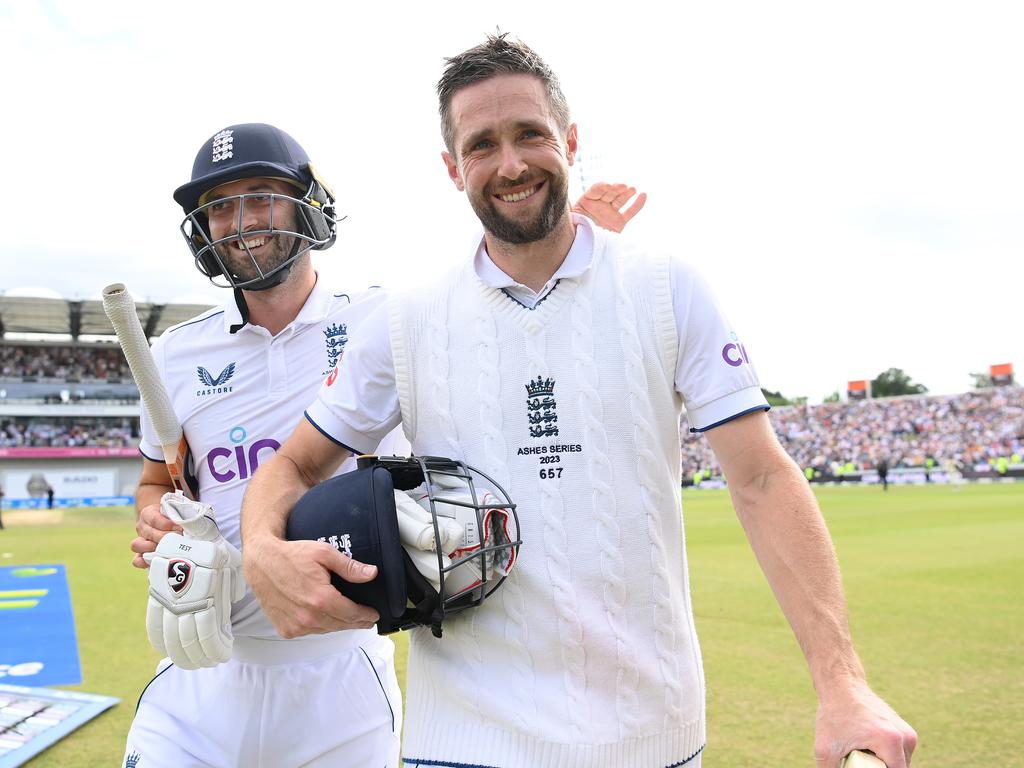
England’s other standout performer was Chris Woakes. I take my hat off to Pat Cummins for the way he ran in throughout the summer – even if his figures in the last two Tests did not compare favourably with those in the first three – but if you want to pick the two best spells of bowling then you would have to go for Mark Wood on the first morning at Headingley and Woakes when play began on the final day at the Oval.
We talk about Stuart Broad delivering in the big moments but if ever England needed an intervention it was then. The score was 140-0, Dave Warner and Usman Khawaja were well set and the pitch looked docile. Irrespective of what effect the ball change had, Woakes bowled a brilliant line at a good pace, beating the bat regularly. Watch the video of the dismissals of the left-handed openers and you see he lands the ball in almost identical areas, except the one to Warner just jags away and takes the edge, while the ball to Khawaja the next over nips back and traps him in front. That’s bowling perfection.
It is Woakes’s performances that mean I don’t share some of the pessimism around the future of England’s pace attack. It may only be in home Tests but there is no reason why he can’t replace Stuart Broad with the new ball. Jimmy Anderson will obviously leave the stage soon as well but Ollie Robinson, Matthew Potts and Josh Tongue, unlucky perhaps to play just one Ashes Test, have looked far from out of place in their international careers to date. I would also throw in Gus Atkinson of Surrey as one to keep an eye on.

It’s unfair to expect any of these to have quite the same impact as Broad but you have to remember that Broad had played 21 Tests and taken just 58 wickets at an average of nearly 38 before he conjured up his first match-turning spell, at the Oval in August 2009. He didn’t become Stuart Broad overnight. By way of comparison, Robinson has taken 76 wickets at just over 22 in 19 Tests to date.
Australia should be congratulated for playing their part in an absorbing contest but the drawn series must represent an opportunity missed. We shouldn’t discount the physical toll that an extra Test – and a World Test championship final at that – took on them, and losing Nathan Lyon was also a serious blow. Yet they were too ready to sit in and wait for England’s mistakes.
The victories in Birmingham and at Lord’s no doubt underscored this mentality but it would also prove their undoing. To achieve something special – and with every four years that pass, the 2001 Australia team’s achievement of winning an Ashes in England becomes even more special – you have to do something special.
Cummins did that in the space of 40 minutes with the bat at Edgbaston but for the rest of the series his team looked too content to play within their comfort zone. England checked out of their comfort zone the day Ben Stokes and Brendan McCullum joined forces.
Originally published as Ashes 2023: Mark Wood and Chris Woakes give me hope for life after Stuart Broad

Up to the stumps, up the order: Carey’s challenge to selectors

Aussies’ biggest selection hints yet as Adelaide line-up intrigue swirls

‘A lot of eyeballs’: McCullum admits airport scuffles ‘not ideal’

‘Get out of my face’: England’s shambolic tour hits new low with airport clash

The Test cricket meal an Aussie captain fought to save
