
Australia v West Indies: Steve Smith is already an all-time great of Australian cricket and his technique changes could elevate him further
By the numbers, it was one of Steve Smith‘s most flawless tons. CricViz analyst PATRICK NOONE breaks down how he achieved it.
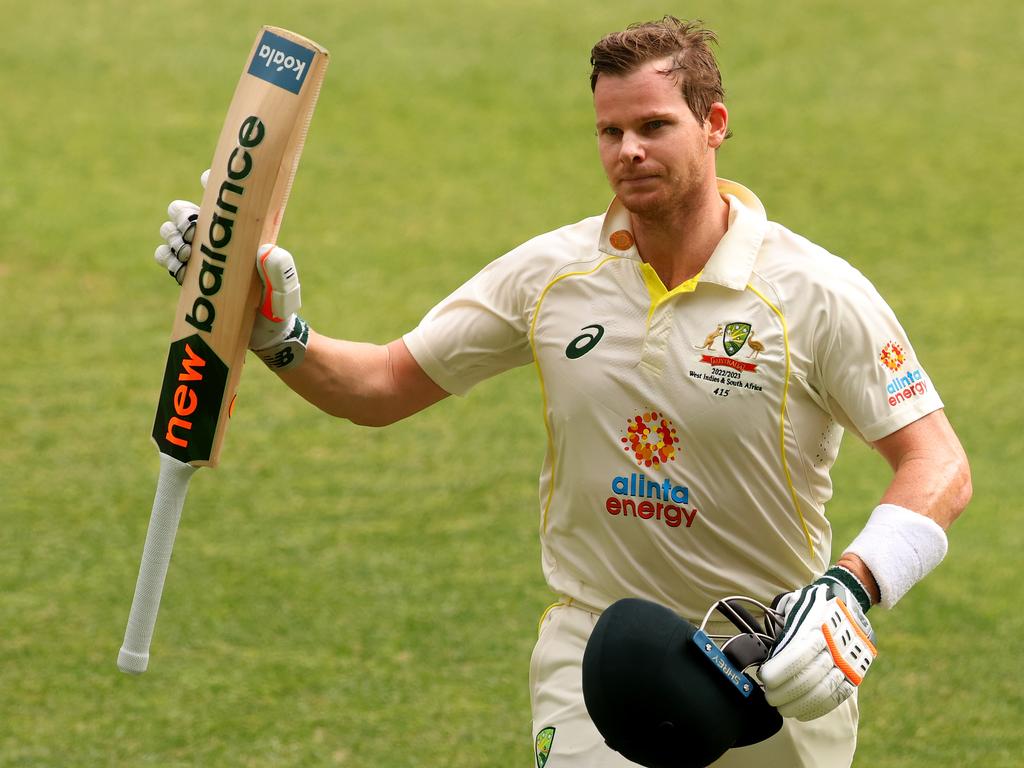
Steve Smith would retire an Australian great even if he never scored another international run. Today, though, he ticked off another small but significant milestone in his glittering career as he brought up his 29th Test century to move alongside Sir Donald Bradman, the undisputed number one in terms of Test batters.
Smith has, of course, batted many more innings than The Don, and an unspectacular ton against a forlorn West Indies attack in front of a mostly empty Optus Stadium is not likely to go down as among his most memorable innings in the format. But none of that should detract from the high quality of batsmanship that was on display throughout Day 2 as the former captain further cemented himself among the greats of Australian cricket.
It seems hard to believe now, but Smith’s Test form has been patchy of late by his own lofty standards. Prior to this innings, he had just one century in this calendar year, while his previous three figure score on Australia soil was way back in January 2021, a run that stretched back across 12 home innings.
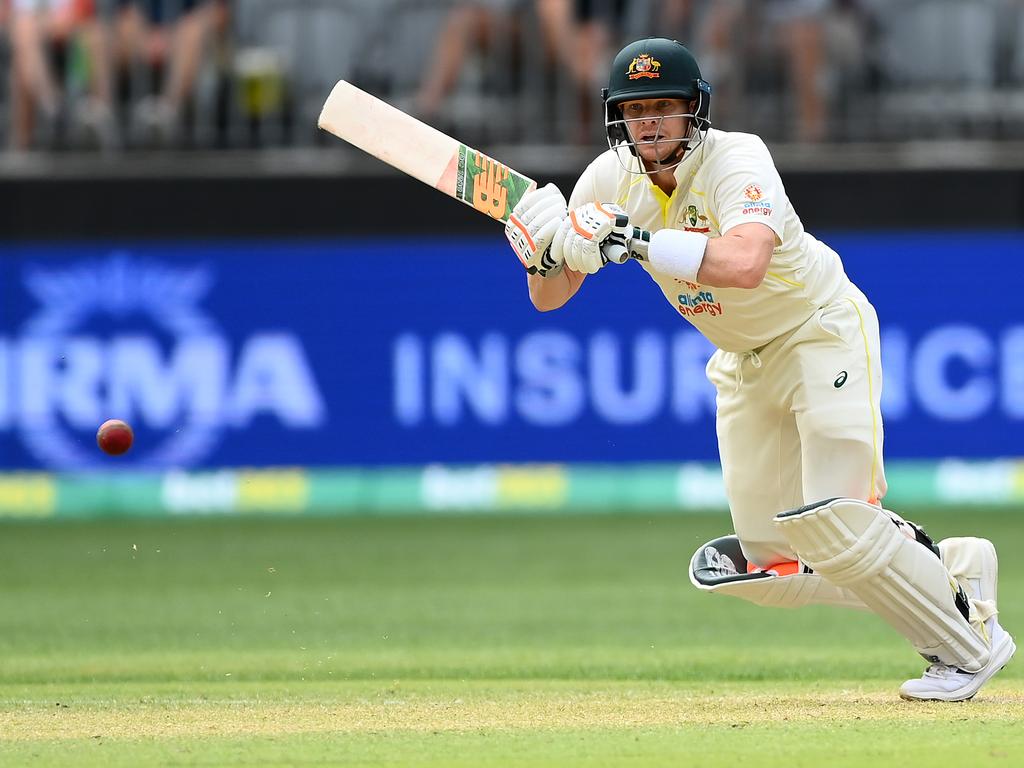
This was a return to his dominant best as Smith, resuming on 59, set about compiling the fourth double hundred of his Test career, and rarely has he looked in such control. Only seven per cent of the balls he faced drew a false shot, the lowest percentage he’s registered in an innings in which he’s reached three figures since his Boxing Day century against England in 2017.
In that sense, Smith was batting in a similar fashion to how he was at his absolute peak, and few shots characterised his stranglehold over West Indies’ bowling attack like the straight drive he drilled past Jason Holder to the long off boundary to bring up Australia’s 450.
By that stage, the tourists had begun to bowl to Smith’s strengths, targeting straighter lines after losing their discipline from Day 1. Yesterday, they had bowled 51% in the channel outside his off-stump, but they gradually erred straighter, eventually bowling 24% on Smith’s stumps, up from 18% on Day 1.
Smith was able to adapt to the changing lines, as shown by how his scoring areas differed across the two days. On Day 1, he was happy playing through cover when he wasn’t letting the ball go outside his off-stump, whereas today, he targeted the leg-side a lot more, peppering the mid-wicket region and rarely playing through the ‘V’ throughout his innings.


Much has been made of the changes Smith has made to his technique recently and those tweaks perhaps contributed to him being so adaptable to the challenges posed by West Indies. His change of guard allows him to play through the off-side more fluently, allowing him to score runs in those areas and thus force the bowlers to adjust their lines and bowl straighter, into areas that give him freedom to play at his imperious best.
It says a lot about Smith’s temperament that he saw fit to alter a technique that had taken him to a Test average in excess 60, but his career has always been one of twitchy perfectionism. Few were even discussing a lean patch or his relative dearth of centuries, such was the volume of runs he had piled up during his golden years. It was seen as something more akin to a blip that would right itself in time, rather than anything more terminal. But Smith evidently saw it differently and has readjusted to further maximise his talent as he enters the latter stage of his career.
Australia batted just long enough to see Smith through to his double century, joining his teammate and protégé Marnus Labuschagne on the milestone. It was the first time since 2012 that two Australian batters have scored double hundreds in the same innings and ended any realistic hopes West Indies might have had of winning this match.

That was yet another nugget of history to add to Smith’s ever-growing collection of statistical improbabilities. When Bradman scored his 29th and final century at Headingley in 1948, no other batter had more than 22, and that was Wally Hammond, who had played 34 more matches than his Australian counterpart. As a measure of how insurmountable that number must have felt, it would be another four decades before anyone would overtake that figure.
Though the game has changed beyond recognition since those days, the significance of Smith – one of the few batters justifiably in the conversation for ‘The Next Best’ – drawing level with that tally should not be underplayed and perhaps makes this hundred a little more special than the previous 28.

Up to the stumps, up the order: Carey’s challenge to selectors

Connolly overshadows Babar to lead Perth to BBL win

Aussies’ biggest selection hints yet as Adelaide line-up intrigue swirls

‘A lot of eyeballs’: McCullum admits airport scuffles ‘not ideal’

Feedback fuels Rogers’ BBL foundation
