
Analysis: How BBL rediscovered formula for growth after hellish few seasons and questions over league’s future
Fans were jumping ship, broadcast partners wanted out and key metrics were in decline. SHANNON GILL investigates how the BBL fought back.

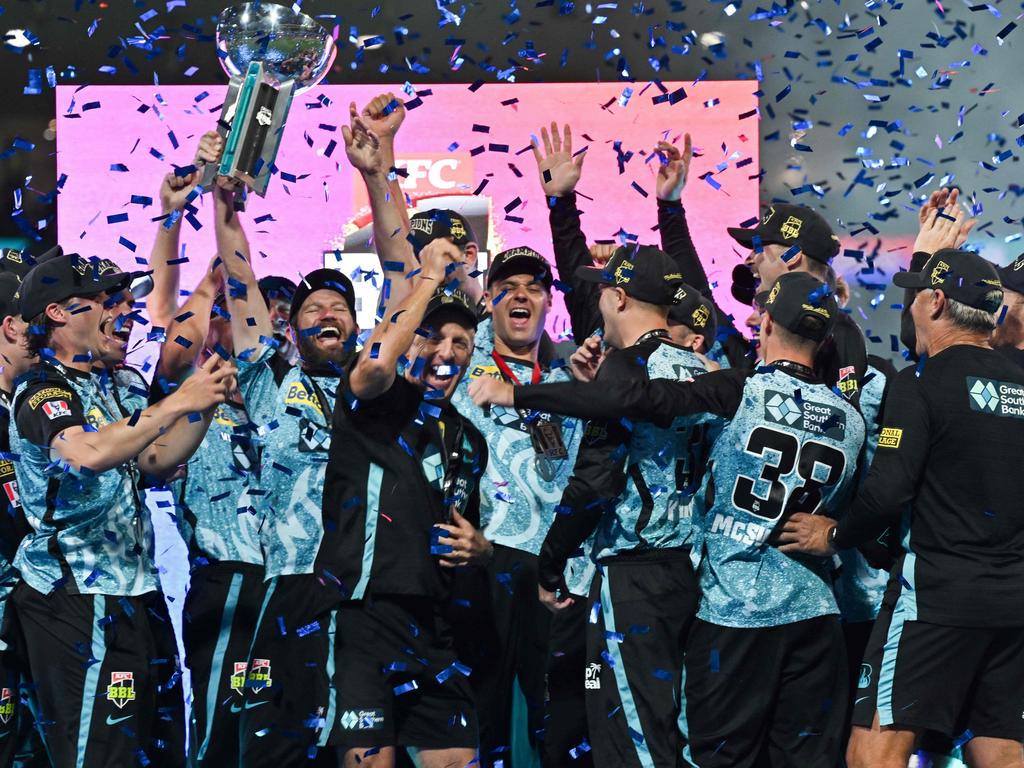
Cricket has long ignored the idea that less-is-more but, after the 2023-24 men’s BBL season, the message could not be clearer.
Three seasons of dwindling crowds, uninspiring broadcast ratings and negative commentary about the league’s future – a period that included Channel 7 trying to offload the BBL to a rival broadcaster and openly criticise its appeal – had many wondering whether the decline was terminal.
The narrative could hardly be more different this summer.
Not only has the slide been arrested, it has been reversed.
The not-so secret ingredient for success has been fewer games in a campaign capped by a rousing upset final win by the Brisbane Heat in front of a record crowd for a BBL game in Sydney.
BBL general manager Alastair Dobson agreed a reduced season had contributed to the league’s resurgence.
“It’s hard to deny that that played a role,” Dobson told CODE Sports. “Whether that’s a scarcity factor or whether it is quality over quantity – or perhaps a bit of both – there would be no point reducing the season if you didn’t back that up with a whole lot of other initiatives and strategy.”

Data tells part of the story of the BBL’s revival but perhaps the most compelling evidence lies in the public utterances of Channel 7.
In a gushing press release on Thursday, the broadcaster’s head of sport Lewis Martin described Cricket Australia as “our trusted partners” while declaring “we’re rapt with the success of BBL|13 on Seven.”
“Fiery moments, thrilling contests, passionate fans, it’s just not the cricket we grew up with – it’s bolder and Australian viewers absolutely love it,” he said.
On first inspection, the comments appear little more than standard industry speak.
That is until you compare them to the network’s stance three summers ago.
Then, with Covid-19 shutting borders and ravaging balance sheets, Seven West chief executive James Warburton described CA as a “trainwreck” and “the most incompetent administration” he had worked with, while declaring the BBL “not an acceptable product”. His comments preceded reports that Channel 7 sought to cancel the 2020-21 BBL season and a legal bid to extricate it from its broadcast deal with CA.
If the BBL wasn’t quite on life support, it was certainly in the ICU.
But attendance and broadcast data confirm the patient is now in recovery.
Average crowds increased at every regular BBL stadium this summer, contributing to an overall lift of almost 4,000 spectators per game on average. The 20,691 attendance average is the highest since 2017-18; the last season before the competition initially expanded from 43 to 59 games.

Remarkably, this was achieved despite a run of rain-effected matches and with three or the BBL’s four ‘big market’ franchises – the Melbourne Stars and Renegades along with the Sydney Thunder – occupying the bottom three places on the ladder.
Dobson believes the underperformance of the Stars and Renegades – they have posted a collective 27-50 win-loss record over the past three seasons – indicates the league has more room yet to improve.
“For our Melbourne teams to see some good growth in their crowds this year, despite on-field performance, there’s encouragement around when those things come together that there’s more growth,” he said.
The trendlines were similar for broadcasters.
The BBL final out-rated the Australian Open nationally on free-to-air television on Wednesday – a distant dream just a few summers ago – while Fox Sports has reported a 10 per cent increase in its Kayo streaming figures for the regular season. That made it the most streamed BBL season ever, culminating in a final that was the second most streamed game in league history.
Foxtel was also buoyed by their BBL Kayo Mini highlights package streaming figures doubling this season.
“(It) is a good sign of a maturing league,” Dobson said. “I think it also reinforces that a BBL match is essentially a collection of a heap of highlights.”
Another interesting narrative shift this campaign was around the significance of international imports. Whereas the league has in the past been guilty of pinning too much importance on the quality and quantity of costly overseas stars, this summer saw local players embraced by fans across the country.

Dobson attributes the uptick to a back-to-basics strategy to make the BBL fun again; to strip the league back to its original purpose.
“We were super focused on that objective of the best family entertainment proposition in summer,” he said. “Our clubs have really taken the opportunity with fewer home games to make the ones they have even bigger and better, with a big focus on music and a big focus on crowd activation.
“The evidence would suggest they’ve nailed it this season.”
Still, there is much to do to return to the league’s halcyon days.
As promising as the key metrics appear, they remain well below the BBL’s pre-expansion peak of 2017-18 when 30,122 spectators on average flocked to each game; a season in which the league’s most successful team, the Perth Scorchers, still played at the smaller capacity WACA ground.
Solving the Melbourne conundrum is critical.
More Coverage


The 80,000-strong crowd the Stars and Renegades attracted in January, 2016 was stunning but, in recent years, has served as a reminder of what has been lost.
While crowds at the MCG and Marvel increased this season year-on-year, they still sat below averages for the Scorchers, Strikers, Sixers and Heat.
The sight of more than 86,000 empty seats for the Stars season opener against Perth illustrated the challenge for the present – and the opportunity for the future.

Connolly overshadows Babar to lead Perth to BBL win

BBL late mail: Sixers leave out star, name $39k SuperCoach bolter

Ashes ‘hurt’ to batting with Warner: Sam Konstas’ rollercoaster year

The Babar effect: Azam makes Sixers Sydney’s favourite team

Why McDermott is confident of Hurricanes BBL lead up form
