
Shane Harwood’s bouncers, barbs, pace and tattoos put the ‘fear of God into’ batsmen
Shane Warne was one of many who rated Shane Harwood‘s intimidatory bowling. Jonathan Brown’s broken arm was among the injuries inflicted. PAUL AMY shares the story of the fiery paceman from Ballarat.


The young Melbourne fast bowler pitches the white ball up outside off-stump.
It arrives to the Northcote opener as a half-volley and is eased through cover for four.
The fast bowler’s father is sitting in a fold-up chair at Mayer Park, Thornbury, watching the Victorian Premier Cricket third XI match.
“I know what I’d be bowling next,” he says as his 17-year-old son, tall, lean and right-arm, goes back to his mark as the ball is retrieved from the boundary.
The youngster’s next delivery is a bouncer.
The Northcote batter hooks, but uncertainly, and the ball floats to fine leg, where the Melbourne fielder takes a straightforward catch.
Jack Harwood has broken through for the Demons.
And his father, former international Shane Harwood, is almost out of his chair.
Of course Shane ‘Stickers’ Harwood would have bowled a bouncer after being hit for four.
“That’s the only thing I would have thought about, the short one, just to let the batsman know he’s not getting away with that,’’ he says with a throaty chuckle.
*****
Jack Harwood is having a run at Melbourne 20 years after his father graduated from the Demons’ first XI to debut for Victoria at the age of 28.
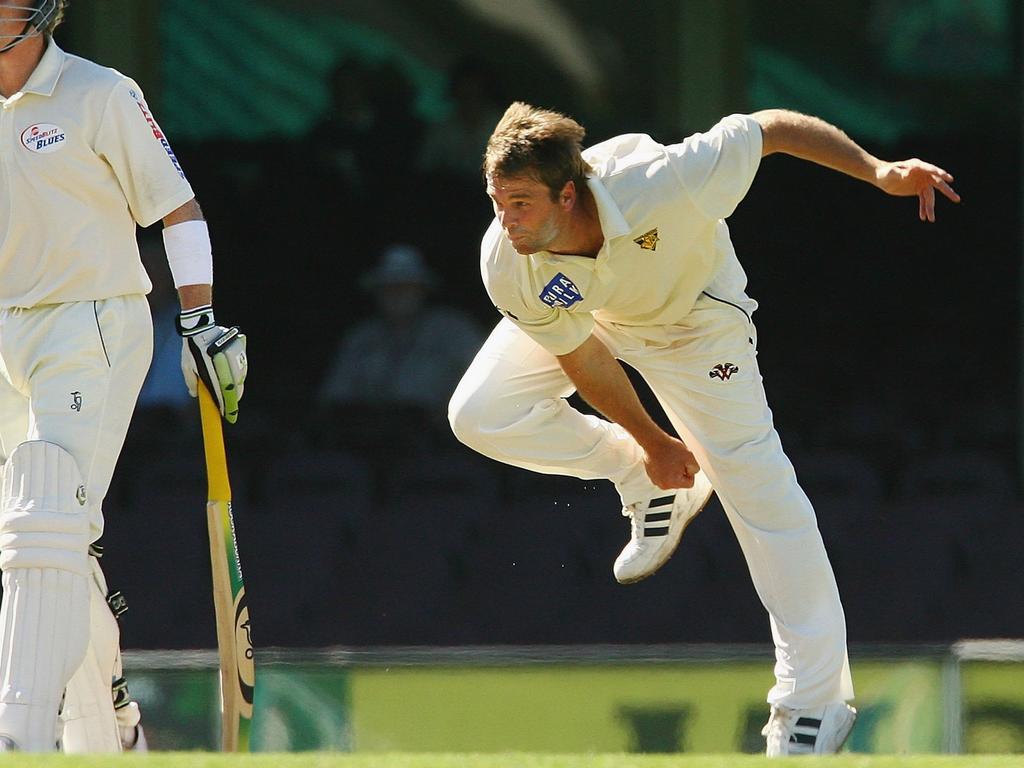
Shane Harwood, now 48, went on to play at international level, representing Australia in an ODI and three T20s (but not in Tests, despite Shane Warne giving a few toots of his Ferrari’s horn in support of his state teammate).
By the time he bowed out of top cricket at the age of 38, Harwood’s body ached from an accumulation of injuries he had fought as far back as his teenage years in Ballarat.
And as he retired, a player who describes himself as “old school” left behind a legion of stories about his speed and aggression.
It’s no exaggeration to say he unnerved a decade’s worth of batters in Victorian Premier Cricket.
Former Victorian wicketkeeper Adam Crosthwaite played with and against Harwood - happily in the former position, warily in the latter.
“Every time you came up against Shane Harwood it felt like you were in a bar fight,” he says.
“You’d hear guys talk about who was the scariest to face. They’d talk about Dirk Nannes and they’d talk about Shane Harwood. I reckon every country player he bowled to, every District player he bowled to and quite a few Sheffield Shield players he bowled to would have a strong memory of Shane Harwood.
“He didn’t sledge much. Didn’t need to. It was just his presence and his pace.”

He says Harwood would “terrorise” the Victorian batters at training.
One or two stopped facing him, preferring to take throw-downs or balls from the bowling machine, Crosthwaite recalls.
“He was scary in the middle. He was also scary at training,” he says.
****
For a time, people in Shane Harwood’s home town wondered if his fast bowling would be seen beyond the boundaries of Ballarat.
One day he was drinking with some mates at a pub and watching Shield cricket on a big screen.
Mick Lewis was bowling for Victoria. Harwood, having seen the bottom of a few glasses of beer, remarked that he could bowl as fast as Lewis.
Go and prove it, his mates responded.
“They baited me. They said, ‘You’re all talk, rah, rah, rah’,” he recalls.
With the words “stop swimming in a little pond”, Harwood’s father, Garry, also encouraged him to head to town.
Growing up, Harwood played indoor and outdoor cricket until a growth spurt left him with a sore back every time he bowled.

He decided to take a break from the game, sitting it out for two years from the age of 17.
When he returned, he clinched the competition’s best-player medal and a premiership for his club, Brown Hill.
Representative matches, Melbourne Country Week and Victorian County selection followed. The bush telegraph crackled with talk of a fast and fiery bowler.
Victorian Premier clubs made contact – the Demons, Prahran and Footscray (Merv Hughes was making calls on behalf of the Bulldogs) - but he had lost his licence for drink-driving and stayed in the bush.
“Just young and stupid,” he says of the police charge.
When he regained his licence, he decided to head to Premier Cricket.
Legendary Demons recruiter Doug Patrick had been courting him and set up a meeting with Harwood and his father ahead of the 1999-2000 season.
The prospect of gaining an MCC membership and playing at the picturesque Albert Ground on a fast and bouncy wicket won him over.
Demons great Warren Ayres remembers a “private net session” at the MCG in which he batted, Harwood bowled and Melbourne coach Michael Sholly observed.
The club wanted to make its own assessment of the Ballarat paceman.

Ayres emerged from the nets to tell Sholly that Harwood was the best player in Victoria outside of District cricket. And he told Harwood to get to Melbourne pronto.
“He bowled fast from the time he walked in the place,” Ayres says. “We all knew we had something special.”
Harwood’s first net session with the club was also at the MCG.
Veteran Demons wicketkeeper Rob Templeton was batting without a helmet and someone encouraged Harwood to bounce him.
Templeton’s cap and glasses fell to the ground as he narrowly avoided being struck.
“A bit awkward,” Harwood, still living in Ballarat and working in civil construction, says. “I was embarrassed, actually.”
Harwood started in Melbourne’s seconds. He didn’t get a wicket – he had 0-43 off 20 overs - but he cracked 55, enough to earn promotion to the first XI seven days later.
His first season was outstanding. He took 4-47 off 19 overs on debut and led the Demons to the last game of the season with 46 wickets at 14.2.
A bag of 6-20 splintered St Kilda in a semi-final, and he toiled for 5-96 off 38.2 overs in a grand final defeat to Richmond.
“Still hurts today,” he says of the loss. “We had them 5-100 and they ended up making more than 500. With the side we had, we should have the flag.”

Harwood took a lesson from it.
If he wanted to go higher, he had to prepare better.
“In that game I realised how tough cricket was. A four-day grand final. Got into the second day and I had massive blisters, bleeding toes. I had to work through that pain. And it cost me. I started to see there were other things you had to do in cricket.
“Be well prepared, have all your gear set up. I never realised you had to cut a hole in your boot. I just used to lose my big toenail every year. Thought that was part of cricket.”
The word had quickly got around Premier Cricket that the Melbourne recruit was hostile and a handful.
In the following few years he put bruises on opponents and occasionally cracked bones.
In a match against Dandenong at the Albert Ground, Harwood broke the arm of left-hander Al Campbell (years earlier he had done the same to future AFL champion Jonathan Brown in a representative country match at Warrnambool).
He cut a rugged figure too. Seeing Harwood’s array of tattoos in the change rooms, a Melbourne player - he thinks it was Ayres - had dubbed him “Stickers”. It stuck.
Former Dandy wicketkeeper John O’Hare says it was an unsettling experience to face Harwood.
“He just bowled fast,” he says. “For a bloke who couldn’t handle the bat well … I was actually just as worried about him as much as the ball.
“There are blokes who were quick who you didn’t mind. And then there were blokes who weren’t afraid to hurt you either. He was one of them. Fast bowling with intent.”

St Kilda premiership captain Tim O’Sullivan believes Harwood had a “genuine dislike for batsmen, and probably more so St Kilda batsmen, and maybe even myself”.
“You didn’t get too many full balls,” he says.
“He was super-impressive. He hit the deck. Everyone talks about him having a ‘heavy’ ball.
“To me, he just bowled fast, and he could put the fear of God into anybody, couldn’t he? He was such a great competitor too. He hated to lose. You would have loved to have him in your side, rather than play against him.”
Harwood saw intimidation as part of his interrogation of a batter. He “loved’’ that part of bowling.
“I’m a strong believer that cricket’s all mental,” he says.
“The way the wickets are – designed for batsmen – you have to ask how you can upset that. My answer was with short bowling, aggression, being in their face, mind games. And they’re gonna get themselves out.
“I always had the belief that, well, I’m hurting, and so are you gonna be. White-line fever.”
But Crosthwaite says there was skill to go with the hostility, noting it was “amazing” to keep to Harwood.
“He had such a beautiful action, and you knew he was always a chance to beat the bat and you were in the game.
“I remember some games where we were playing on the flattest wickets and nothing was happening but as soon as you gave the ball to ‘Woody’ things happened, just through his competitiveness and ability to move the ball around. He was always attacking and aggressive but he didn’t give away the runs, and he bowled in pressure situations.”
*****
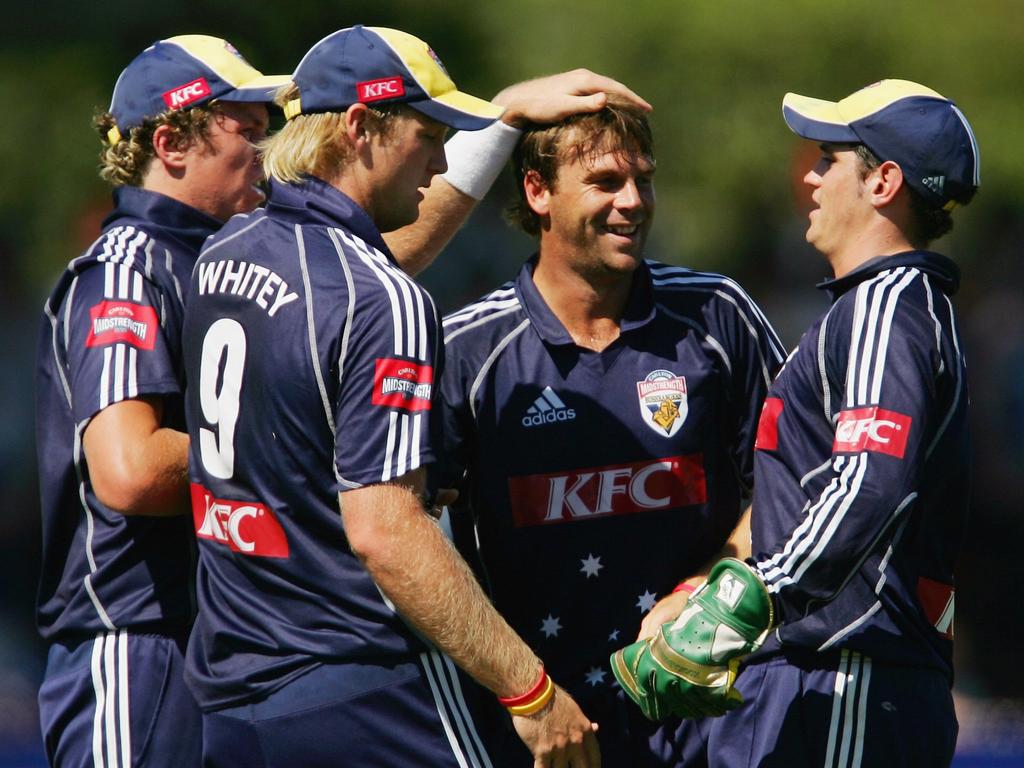
Shane Harwood was playing cricket in the UK when Cricket Victoria official Shaun Graf told him to return to Melbourne. Victoria would be giving him a contract.
His Shield debut - against Tasmania at the MCG early in the 2002-03 season - could hardly have gone better.
Harwood took a hat-trick, with a bit of help, he remembers, from Warne.
Harwood gained wickets with the last two balls of his over, bowling Shane Watson and trapping Graeme Cunningham lbw.
Warne was bowling at the other end and told the quickie he would ensure the new batter was on strike for his hat-trick attempt.
He was as good as his word. With a reversing ball, Harwood castled Sean Clingeleffer for a first-back duck and had three from three.
He finished with 5-55 off 19 overs and added 1-48 in the second innings in a 159-run victory for the Vics.

The following day Harwood was interviewed by the press at the MCG.
As he answered questions, Warne drove past in his Ferrari, tooting his horn and revving the engine.
“Next Australian quick!” the leg-spinner shouted.
Warne had taken a liking to the fast bowler from the bush.
“He always put my name forward,” Harwood says.
“We enjoyed each other’s company. First time I met him was at this introduction meeting for the Victorian squad. I was sneakily having a dart out at the front and ‘Warnie’ came over and said, ‘How you going mate, Shane Warne’. And I’m like, ‘Yeah, no shit, like who doesn’t know who you are!’ I think we just gelled from there.
“Same with Ian Harvey, who is a great mate of mine. Again, we’re similar sort of people.”
Harwood broke through in the Shield team under the coaching of David Hookes.
He was there the night Hookes died outside a Melbourne hotel in 2004.
It’s a painful memory.
“A great man lost,” he says. “A pretty shitty thing. I won’t talk about it. Can’t.”
Harwood’s dreamy Shield debut was the first of 44 first-class, 57 List A and 40 T20 matches.
It would have been more but for injuries: a broken leg in a country-round Premier match – ironically at Ballarat - a broken eye socket and depressed cheekbone when struck by a bouncer from WA’s Kade Harvey, a broken hand, hamstring problems and a shoulder reconstruction.

The right-armer says the Victorian selectors were always eager to pick him, and in hindsight he sometimes came back too early.
But Harwood says he could never complain, having “absolutely loved’’ playing for Victoria.
It was the highlight of his career, even shading Australian selection, he says.
Harwood’s national call-up came as he went fishing with some friends visiting from the UK.
He left his phone at home.
When he returned, there were eight missed calls. All from Cricket Australia. He had been called up for a Twenty20 match against England in January, 2007.
“Within two hours I had my bags packed and I was at the airport, off to Sydney,” he says.
“There was no real lead-up. I couldn’t really think about it. Didn’t even get to sleep on it. It just happened, a night game in Sydney.”
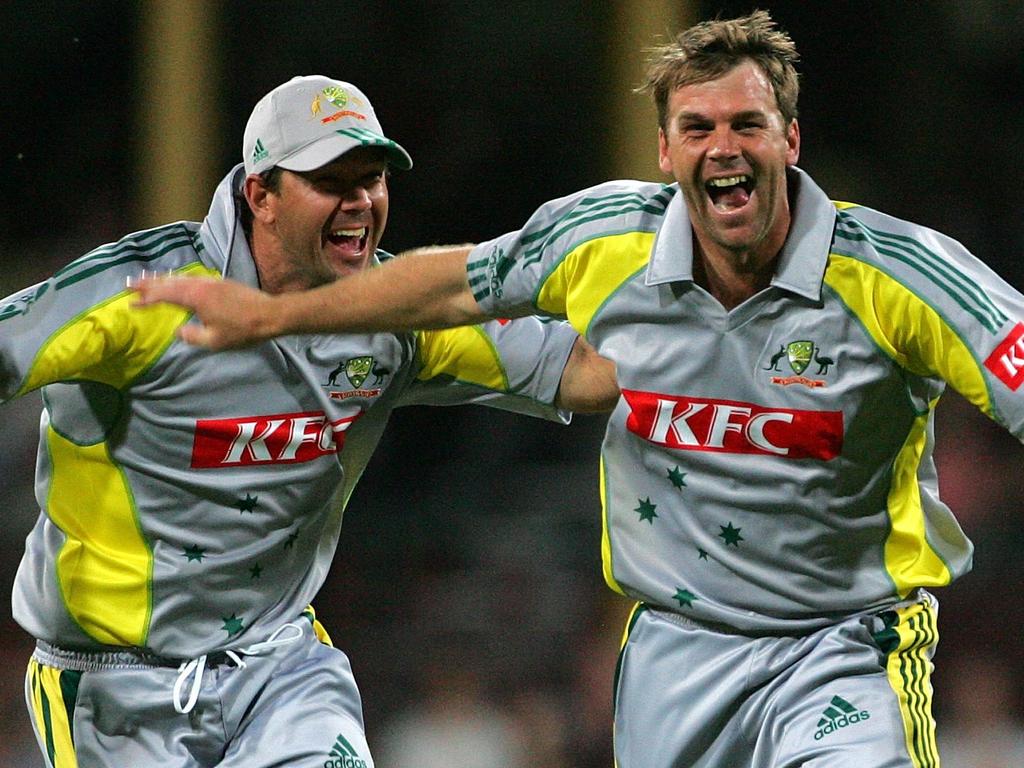
Harwood had two more T20s in March, 2009, against South Africa.
His sole ODI came a couple of weeks later against the South Africans, 10 overs bringing him the wickets of Jacques Kallis and JP Duminy at a cost of 57 runs.
“Playing for Victoria was the ultimate for me,” Harwood says.
“Cricket and sport to me is all about fun and mates. The times I got to represent the country, it was a bit of a foreign environment to me. The dressing rooms, they were over here and keep to yourself sort of thing, whereas over the years with Victoria, you bleed pretty hard, you play pretty hard and you do a lot together.’’
Crosthwaite thinks Harwood should have played for Australia more.
“At the time they (selectors) were looking at the next kid to come through but he was in his late 20s, early 30s and never really seemed to get the opportunity. They were two or three years late in picking him,” he says.
Harwood has always believed the Victorian teams he played in would have given the Test side some bother.
“Harwood, (Mick) Lewis, (Dirk) Nannes, Clint McKay … pretty handy attack,” he says.
In the final year of his career, 2012, Harwood had T20 stints with the Melbourne Renegades and in the Bangladesh Premier League.
He left the game with a lot of wickets, but weighed down by injuries.
“I’d got sick of injections to play cricket,” he says. “It was the time to walk away and I felt it was the right time, when I was still wanted and needed. I didn’t want to be told it was time to go.”

Harwood’s last matches for the Vics had been in 2010-11, the same season he signed off from Premier Cricket during a brief stint with Essendon.
In his second-last game for the Bombers he went after a young St Kilda player, cracking him in the ribs and blasting him with some hot words.
The Saint went on to make a century. Harwood jotted him down as a future star: Peter Handscomb.
Handscomb had come out of Sub-District cricket, which is where Harwood headed.
His two seasons at Melton brought two premierships. Completing the circle on his cricket, the paceman then returned to Brown Hill for three years.
“I always wanted to go back to the club I started at,” he says.
“My kids were at an age where they could actually start seeing what dad was capable of. When I was playing for Victoria they were only young.”
In his last season, at the age of 43, he hit 553 runs and claimed 31 wickets.
*****
Shane Harwood has three sons – Jack, 17, Nate, 16, and Kane, 11 - and his eldest boy is the only one playing cricket.
Jack played in the Dowling Shield for Melbourne last season – of course, Doug Patrick had a hand in bringing him to the Dees - and is now having a run in the third XI.
He’s also a promising footballer, picking up a pre-season invitation with NAB League team Greater Western Victoria Rebels.
His third XI captain is Alistair McCooke, whose father, Steve, played for Victoria and many games for Melbourne.

When Shane Harwood made his debut for the Demons all those years ago, Steve McCooke was a teammate.
McCooke junior says Harwood junior – who finished with 2-36 off 8.1 overs against Northcote - is a good prospect.
He points out Jack has had little exposure to the “pathway” program.
“We picked him a little sight unseen in the Dowling last year and he showed glimpses of what it’s all about,” McCooke says.
“But he’s got all the attributes to be a successful bowler: beautiful rhythm, his run-up, a nice, repeatable action, and he’s got a bouncer and yorker. And it obviously helps that his dad’s there to give him a bit of advice.”
Crosthwaite says he’ll be keeping an eye on the performances of Jack Harwood.
“Once he gets to first grade, that’s it, I’m out. I’m retiring,” he says.
“Because there’s no way I’m facing another Harwood!”

Marsh open to Ashes recall as red-ball retirement looms

‘I accepted pretty quickly’: Teen swaps thirds for Shield at MCG

Vic U19 stunner! Back-up keeper’s direct hit from boundary snatches victory

Glory, mediocrity, and not much else: Cricket NSW’s double life

How ‘tested’ Tigers claimed memorable Shield win
