
Paris-Roubaix: The legendary bike race where cycling fans pray for rain
For the first time in almost two decades, Paris-Roubaix was contested in pouring rain. Italian Sonny Colbrelli won an instant classic.
François Doulcier has been tending to the cobblestones of northern France for most of his adult life, all for the one day a year when a peloton rips across them at 35 miles per hour. He understands how the stones have evolved over the years, how they behave in different conditions, and where they make the Paris-Roubaix bike race extra treacherous.
But for the past few weeks, Doulcier had been rooting for chaos, along with nearly every other cycling fan. That’s because Paris-Roubaix unfolded in the rain this weekend for the first time since 2002. And while it might seem strange for supporters of an outdoor sport to pray for abject weather—unless you live in Green Bay during the playoffs—cycling fans see something epic in the added peril of riding bicycles on cobbles in the mud.
They know that the race dubbed the Hell of the North becomes even more infernal when hell gets wet.
“It’s been too long without the rain,” says Doulcier says, whose volunteer organization, Les Amis de Paris-Roubaix, looks after the cobbled sectors. “We’ve been waiting for it for 20 years.”
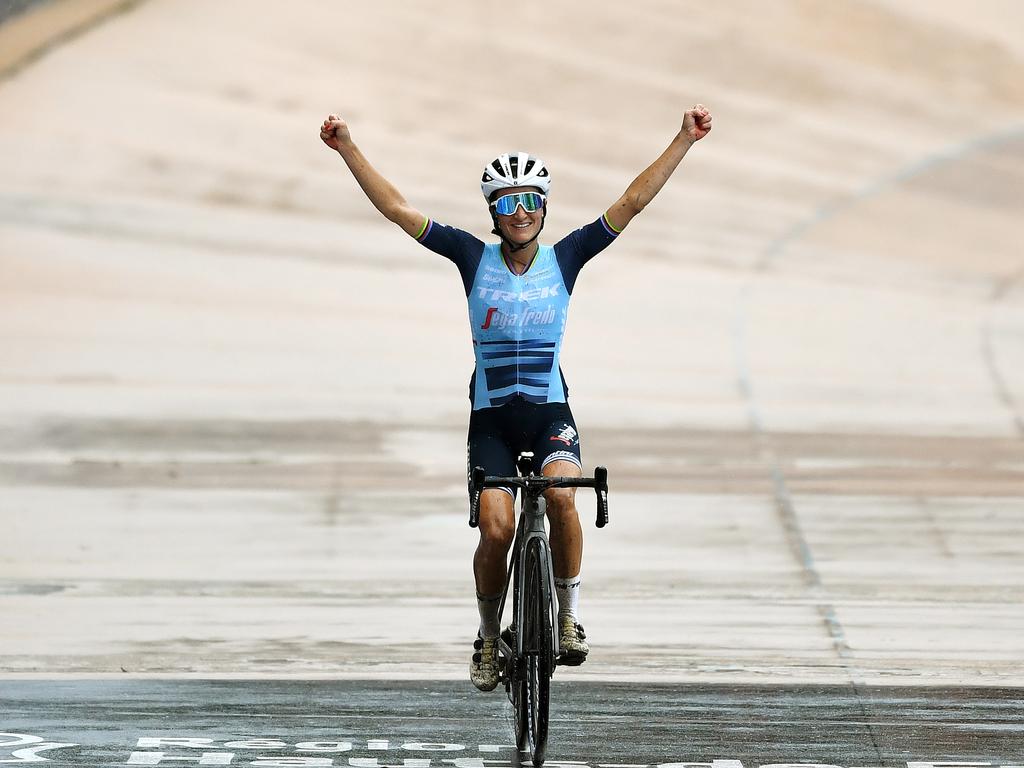
The wait ended this weekend. Rain doused the first-ever women’s race on Saturday and the 118th edition of the men’s event on Sunday. It also made them instant classics. British rider Lizzie Deignan became the inaugural women’s champion after a solo attack from more than 50 miles out. By the time she crossed the line, she had bounced over the cobblestones so much that her handlebars were covered in blood.
“The plan was: there’s no rulebook today,” Deignan said.
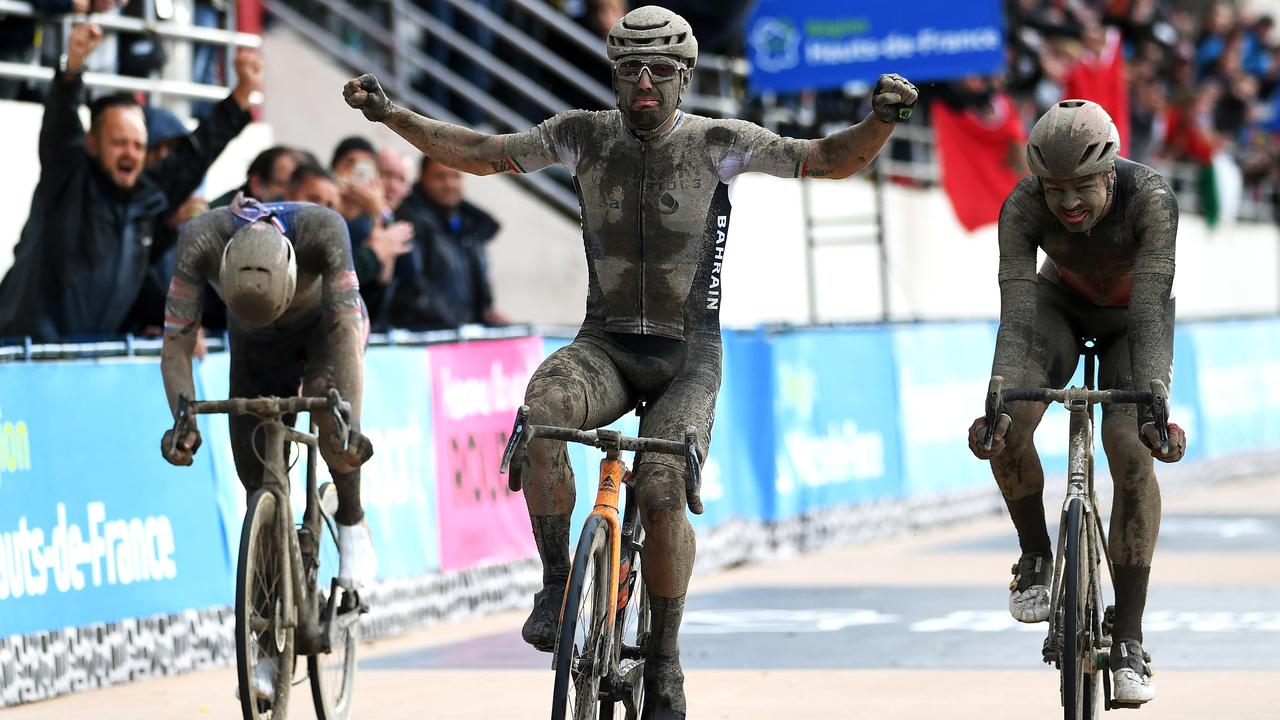
The men’s race came down to a sprint finish in the Roubaix velodrome as Italy’s Sonny Colbrelli held off Belgium’s Florian Vermeersch and the Netherlands’ Mathieu van der Poel—though they were barely recognizable under a layer of dirt.
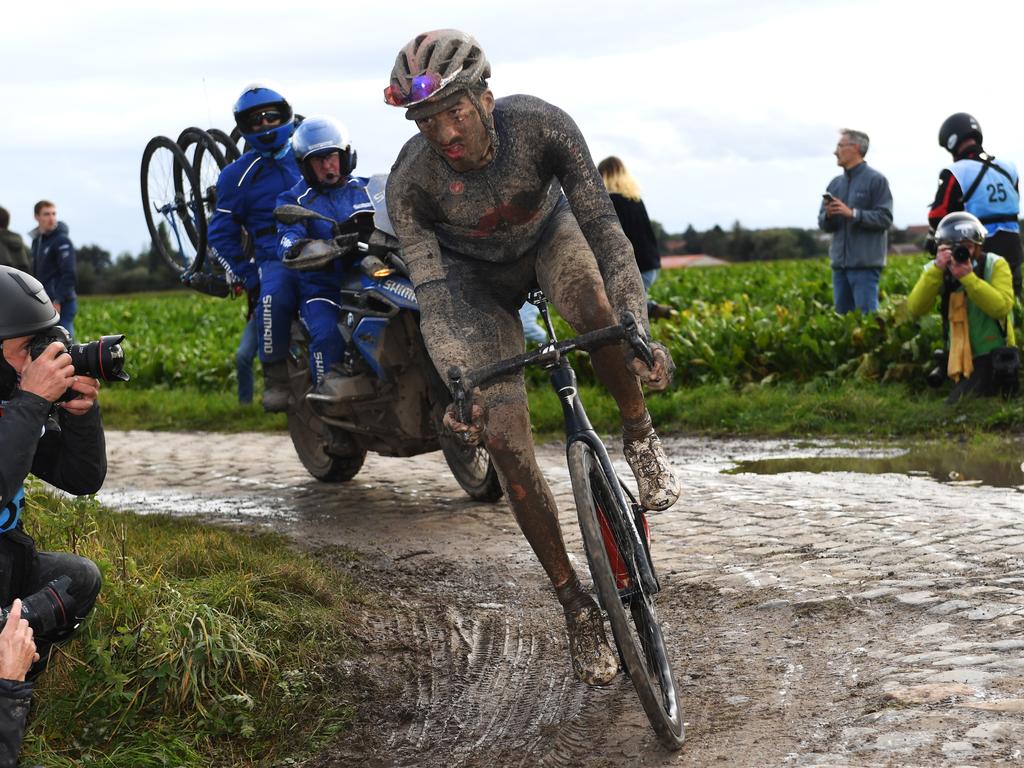
What is already a brutal exercise that requires endurance, deft bike-handling skill and a taste for splattered mud turns into a test of nerve and a rider’s appetite for misery. It was cold. It was crowded. The surface of the cobbles felt like an ice rink. And potholes, known in French as “chicken nests,” filled up with water, making them impossible to judge. Your front wheel might skip over them, or you might go over your own handlebars.
“You have a 50 percent chance of falling,” Team Deceuninck-Quickstep coach Tom Steels told the Belgian broadcaster Sporza. “Paris-Roubaix in the rain is life-threatening…Because of the rain it will also be an edition that we will remember for a long time.”

The only people who hate the rain as much as the fans love it are the poor souls who have to spend six hours riding through the deluge. The narrow roads, frequented mostly by tractors the rest of the year, become more suited to riders with cyclocross backgrounds than traditional road racers.
Dutch rider Dylan van Baarle was more direct. “A wet Roubaix…It’s not something that I look forward to,” Dutch rider Dylan van Baarle said before the race. “It’s one of my biggest nightmares.”
Van Baarle didn’t make it to Roubaix. His Ineos teammate Gianni Moscon fared much better—at least for most of the day. Moscon attacked with nearly 50 miles left, much like Deignan, and eventually found himself leading the race by himself with a one-minute cushion. All he had to do was to stay upright.
That’s when the course bit back. Moscon punctured a tire then crashed on the cobblestones in two separate incidents that allowed the chasing group to gobble up his advantage. He eventually settled for fourth place. And still, the aching, mud-covered Moscon called Paris-Roubaix “the most beautiful race in the world.”
The possibility of Roubaix in the rain only emerged because this will be the first modern edition of the race held in October, due to the pandemic. The race, which hasn’t occurred since 2019, is normally held in early April. The only problem with sticking to tradition is that this century has seen a clear trend toward milder springs in that corner of Europe. Botanists in nearby Flanders have even used decades of bike racing footage to show that plant life is flowering earlier in the year.
The long dry spell, meanwhile, only made the last wet Roubaix that much more legendary.
In 2001, so much rain fell on the course in the days before the race that water had to be pumped out of the cobbled sector through the Arenberg Forest for bikes to make it across. But 2002 was the year the skies truly turned against the peloton.
“It was just more spectacular,” said Team EF Education-Nippo sports director Andreas Klier, who rode Roubaix that year.
Spectacular, in cycling-speak, doesn’t necessarily mean good. There were crashes all over the road then, just as there were this weekend. The run-in to each cobbled section was even more hectic than usual, since the only safe place to be was right in the front. And the riders were covered in so much spray and mud that midway through the race they looked like extras in a World War I movie.

The saving grace for Klier in 2002 was the rookie who snuck into the breakaway with him and then proceeded to tow the group for much of the afternoon. “Lucky we have this (first-year pro) here pulling in the headwind,” he remembers thinking. That turned out to be Tom Boonen. The Belgian would go on to win Paris-Roubaix a record four times.
One hundred and eighty riders set off that morning from the town of Compiègne, northeast of Paris for 162.2 miles of damp, dull pain. Two-thirds of them quit. The results list only 41 official finishers, led by the Belgian cobbles specialist Johan Museeuw, but another 16 were crazy enough to push through to the end even though they were well outside the race’s time limit. By the time they reached the line, the soaked fans were already scattering. The stragglers had spent nearly eight hours on the bike.
Klier wasn’t among them. Despite feeling strong enough to ride in the breakaway, he became just another victim of a course that was never intended for bicycles—let alone bicycles in the rain.
“There’s not much you can do if someone crashes in front of you,” he said. “You really need to have no bad luck that day.”

Formula One star unveils latest SA venture

How cycling’s biggest name could race at Tour Down Under

Cycling’s biggest fears exposed by protest chaos, embarrassing finish

‘I’m not going to live’: Olympian’s miracle escape from truck crash

Olympic defector makes mockery of record
