
Central Coast Mariners owner Richard Peil reveals frustration behind A-Leagues’ lost millions and why change was needed
‘I’ve wasted some serious money in areas I wouldn’t do again.’ Richard Peil speaks to ROBBIE SLATER about the challenges of A-League club ownership.


The APL has remained largely silent since the announcement last week of mass redundancies, but some frustrated club owners have spoken out about the league’s predicament.
Central Coast Mariners owner Richard Peil opens up on the lost millions, transparency issues and why, despite the sea of red ink, he still holds out hope for the future of the A-Leagues.
Robbie Slater: It’s been a difficult couple of weeks for the competition after the announcement of APL redundancies. What’s your take on the situation?
Richard Peil: I’m very, very sorry that a lot of good people have lost their positions and I don’t want to make light of that. But they’re cuts that had to be made. In the long run, the sustainability of the league is the No. 1 priority for the APL to get right and that requires an adjustment at this phase of the APL’s existence. I’m one of the guys who was calling for a cut to staffing levels some time ago. A lot of people are painting this as a dire straits situation, but I see it as normal business. You have to make adjustments along the way for businesses.

RS: The APL have been fairly silent on the issues, including bosses Stephen Conroy and Nick Garcia. Given the money from Silver Lake has reportedly gone, the well is dry, and we’re hearing possibly more than $30 million was lost on KeepUp, how does that make you and the other owners feel?
RP: I can’t speak for the other owners but, speaking for myself, it’s frustrating. I’m one of the guys putting money into the game that doesn’t have visibility over everything. I’m not on the board of the APL and I think there will be people now on the board who are asking for a full accounting process of where all that money’s gone. I don’t think we exactly know.
What I will say is I don’t believe there is anything untoward, but I do think there has been flippant spending on questionable strategies. It’s easy in hindsight, and I’m sure the people making the decisions at the time thought they were making the right decisions for the long-term benefit of the game. What’s important now is that a full accounting process is done and, in my view, the APL gets back to what’s important and that’s focusing on the product and the consumers, the fans.
I get in trouble all the time from my PR people at the club and in my businesses that I want to tell people too much, but it’s just the way I am. It’s the way I was brought up. Maybe it’s something to do with having humble beginnings. But I do get frustrated that … I think the fans would support the game a lot more if they fully understood what was going on. I’m probably going to get in trouble for talking to you, but it is what it is.
I want to make sure that we are always going to have a top league in Australia. There are good people globally who want to get involved with this league. It’s important that we as football lovers and football administrators and the media don’t make out that the game is totally f—ed because it’s not. We just have to make adjustments. People have to be accountable for what’s happened, I agree with that, and we have to learn the lessons from this and get back to focusing on the product.
One thing that hasn’t happened in my two years in the game: I’ve never been asked to attend a meeting or been involved in a meeting that talks about the product. How do we make the game better now?
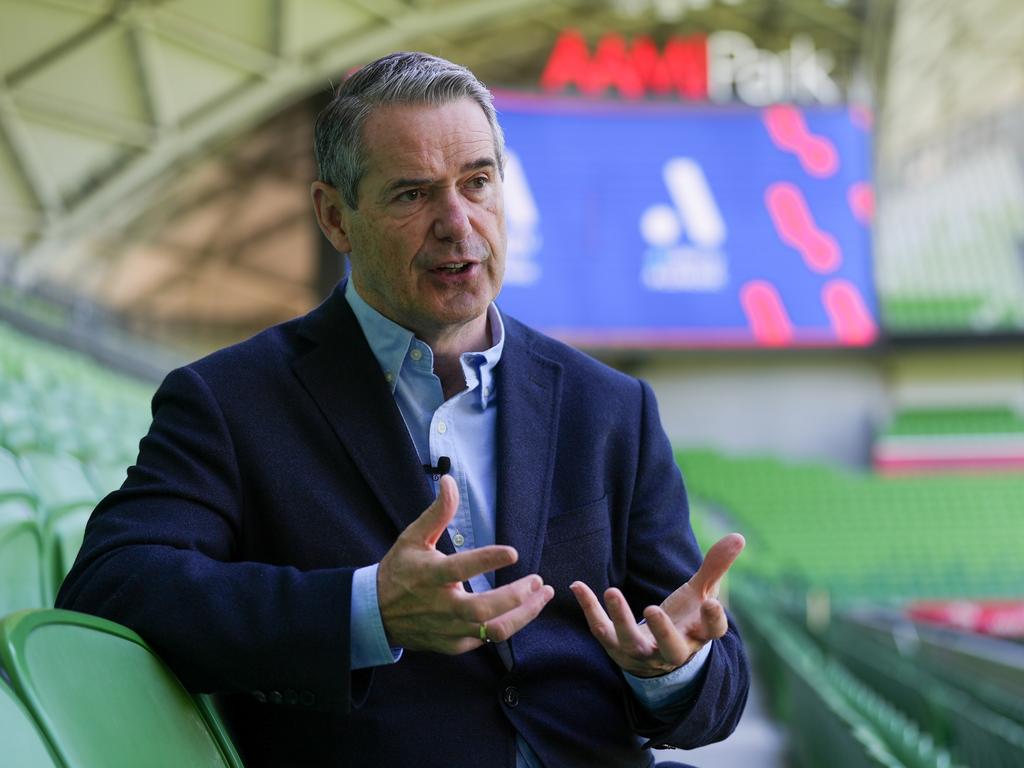
RS: How does that make you feel as an owner? As a businessman who in some ways came in to save the Mariners, is it not frustrating that this is your business but you don’t seem to have control over decisions that are made?
RP: It’s been a very frustrating last two years. But I can tell you over the last few months, with Stephen Conroy and Nick Garcia coming on board, that has changed. There is a lot more transparency. They’re both great guys and very good at what they’re doing. They are trying to get to the bottom of a lot of things and find the best way forward.
But it has been frustrating, Robbie. I’m not a brilliant businessman and I don’t claim to be. I make a lot of mistakes. I’ve probably made more mistakes in business than most people. But what I have done, along with my partners, is build the biggest health club membership in Australia’s history (and) what I do understand is how to build supporter groups. We broke our ground record at the Mariners last year with more than 20,000. We had more than 15,000 on New Years’ Eve. For a small club, they’re really good numbers.
Now we have a lot of work to do at the Mariners to make that consistent. But, yeah, it’s been really frustrating. I’m learning on the run and I’ve wasted some serious money in areas I wouldn’t do again. I’ve learned lessons already. But I think our model is probably closer to what is sustainable in the Australian marketplace, and I will get backlash for that.

RS: If you had known then what you know now, would you still have invested in the league two years ago?
RP: That we were going to win the championship in our first year? Yes, probably! But from a pure business perspective? Mate, it depends on what day of the week you’re asking. Some days yes, some days no. I was at a stage in my life and my business career where I needed a challenge. It was time for me to put some money back into Australian football.
More Coverage


What I can tell you is I would have invested in Australian football somewhere but I’m not sure I would have taken exactly the same path. I told my wife that I wanted to spend between $6 and $8 million in Australian football to see if I could make a difference and she supported me thoroughly on that. I have spent a lot more than I expected to already, but it’s a game I love.
RS: The original APL management team chose to go with Channel 10 and Paramount and it has been a struggle. Because KPIs are not being reached you are receiving less than half of what you were originally supposed to get. Is there any thought with Stephen and Nick now in charge that there could be some resolution on the broadcast deal?
RP: What I know is that it is that the broadcast level is not at the level it needs to be. That’s no secret. I wasn’t around when the deal was done … but all I can tell you is that despite the best efforts of everyone involved, what was expected has not been delivered for anybody in the deal. Sports broadcasting … there are better people than me who understand this area. My only comment is that we need to at least maintain our current level of distribution but hopefully get it back up to what was expected when we separated from the FA. That’s a no-brainer.

The Tackle: Mata has last laugh over ‘embarrassing’ Wanderers

The Melbourne-born teen who has world football giants circling

Vergos ends drought with brace in original derby win

Victory ‘bleeds success’: This star knows that better than most

From Italy to Sydney: Logarzo makes last-ditch Matildas bid
