
Antonio Conte latest victim of a confused Spurs culture that ‘eats managers for breakfast’
They’re among the most coveted managers in the world, but Mauricio Pochettino, Jose Mourinho, and Antonio Conte have all been shown the door at Tottenham.
The Tottenham Hotspur nerve centre is housed in an office that can be reached from the club’s impressive stadium via a walkway. There are no views of the pitch, no sense at all that the business is a football business. It is an obvious metaphor for the puzzle that is Tottenham, a club that regard themselves as part of the elite and yet cannot find a way to win significant silverware.
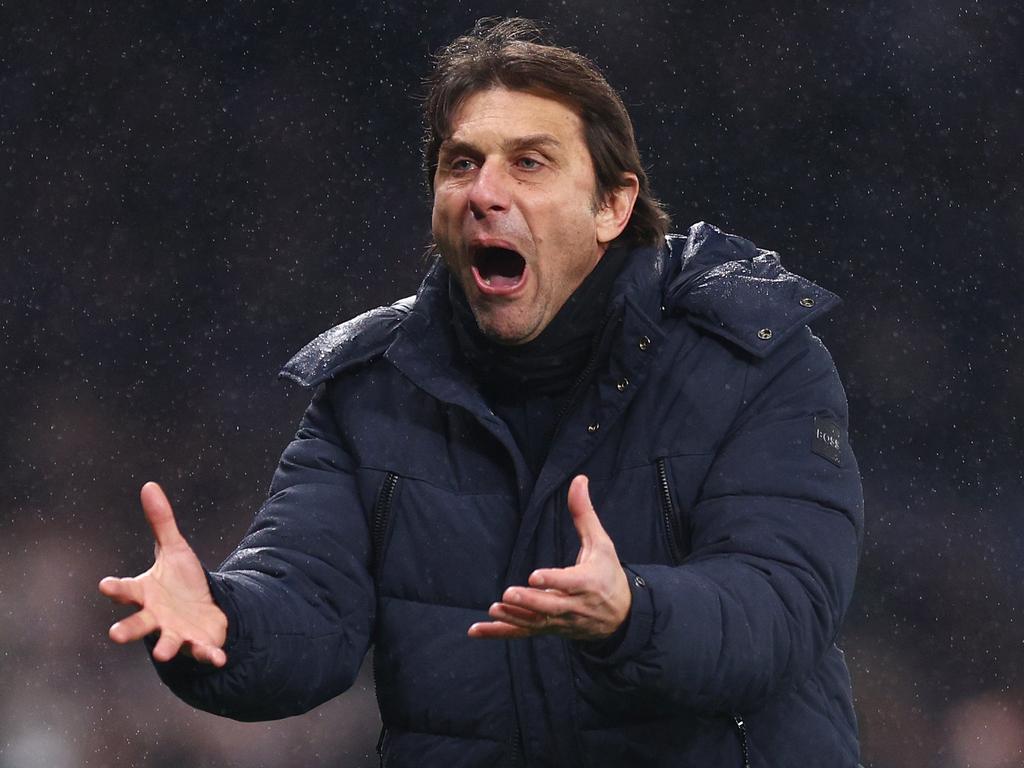
If Tottenham are a baffling entity from afar then we caught a glimpse of just how frustrating they are from within when - the now sacked - Antonio Conte embarked upon an emotional rant after his team’s 3-3 draw on March 18 with Southampton that was, in part, a dig at Spurs’ inherent flimsiness. The former Chelsea manager, used to masterminding successful campaigns, railed against a Tottenham culture that he claimed blocked the path of any manager with a coherent plan.
The outburst reinforced the notion that Spurs are not built to win; that if they are ahead with 15 minutes to go, no one will be surprised if they lose; that if they have a shot at the title or go on a cup run, they will falter when it matters. What, then, is at the heart of such an inability to clinch success?
Simon Chadwick, professor of sport and geopolitical economy at Skema Business School is well placed to offer an explanation. Chadwick has spent a good deal of time in the Spurs nerve centre, having worked with the club on a British Council project establishing links with China and Thailand.
“Inside that office building are people who have been to very good universities and business schools and worked across different sectors,” he says. “In other clubs those people would be sitting inside the stadium, looking out over the pitch and would never forget why they were there. They are making the decisions and they are doing it in a building that isn’t even inside the stadium.”
There are, of course, other clubs who house their commercial staff away from the stands and may have more suitable facilities at their training grounds, but Chadwick is intrigued by how the physical distance is mirrored by the cultural one. There is a conflict at Spurs between the need to make money, to be a viable business, and the desire to win trophies.
“There is a fundamental misalignment between what people think the club should be doing and what they are doing,” Chadwick says.
Tottenham cannot decide what they stand for, according to Chadwick, and are being pulled in different directions as a club with a reputation for playing attractive football but also as the first to float on the London Stock Exchange in 1983. “The Enic ownership - which has an 85.55 per cent stake in the club - means Spurs are not the most important asset for an owner - in this instance Joe Lewis - but one of a number of assets,” Chadwick says. “The DNA of the club becomes further diminished by this.
“Then there is a third strand around strategy which is trying to reconcile those two things but in doing so, the culture is eating the strategy. The club could not listen to Antonio Conte too closely because the strategy dictates otherwise, and the DNA and culture of the club also dictate something different.”

It is not as if the football strategy is in itself commendable, according to Sarthak Mondal, lecturer in sport management at the University of Portsmouth. He believes Spurs are too focused on the short-term. “In my view the club have allowed managers to bring in players who suit their style every time. And none of them can play with each other,” Mondal says. “They need to build a culture that sets them up for long-term success. At Chelsea, in the Roman Abramovich era, they bought in players that suited the team, not the manager.”
But back to the stadium. It cost pounds 1 billion, has a 62,850 capacity and is so imposing that for it to house a mediocre team is unthinkable - and yet its very existence may well ensure that the team underperform.
“The stadium is staggering - arguably, the best in the world,” Chadwick says. “They’ve got their own micro-brewery and fast-filling pints. Spurs are ceasing to be a football club and becoming an event destination. Once you’ve created that kind of asset you’ve got to do something with it.”
Many things are being done. As part of a deal with Formula One, an electric karting track underneath the stadium will open this year. Spurs have a pounds 40 million, ten-year contract with the NFL and hope to host the Super Bowl one day. “Tottenham possibly thought by building a stadium they would solve a lot of problems,” Chadwick says. “Short to medium term, that is not the case.”
Spurs built it too soon, according to Mondal. “It was a bit over-ambitious given they had not won a trophy,” he says. “They tried to emulate Arsenal and the Emirates but they could have expanded step by step.”

Arsenal are never far away when it comes to the dissection of Spurs and Daniel Levy, the chairman, could legitimately argue that he and the club are being judged too soon. The downfall of Arsene Wenger was wrapped up in the juggling act he performed as the club covered the cost of building the Emirates.
More Coverage

Now that Arsenal have settled into the pattern of life at an expanded stadium and are able to back their manager, they are in pole position to win the title. Patience has won the day in Highbury and it may do the same in Haringey. It is entirely plausible that Levy, in building the stadium and addressing revenue streams, has put in motion a means to combat the “Spursiness” that has frustrated its fan base for too long.
Chadwick, after all, concedes that Spurs deliver a level of strategic planning that is absent at many other clubs. Most big businesses exist to make money, but football is more complicated. “It’s not enough to win games,” Chadwick says. “You’ve got to win them in a stylish way with well-known players while making money in markets around the world and delivering a return to shareholders. It is hard to reconcile these targets. It’s like football Whac-A-Mole.
“If Lewis wasn’t happy with what Levy is doing, he’d have fired him by now. Levy hasn’t lost his job; Mauricio Pochettino has, Jose Mourinho has, Conte might. Culture eats the best managers in the world for breakfast.”
Originally published as Antonio Conte latest victim of a confused Spurs culture that ‘eats managers for breakfast’

SuperCoach EPL: How to replace missing AFCON stars

City, Villa keep heat on Arsenal as Spurs fall to Ange’s old side

Slot laughs off farewell game whispers for Salah after tirade

‘No right’: Prickly Slot confirms Reds retaliation after Salah rant

Extraordinary tirade could end Salah’s legendary Liverpool run
