
Inevitable v magical: Manchester City’s march to match Manchester United’s mighty treble
If any team is to match the treble, it should probably be this one – yet Pep Guardiola’s Manchester City has a far different feel to Sir Alex Ferguson’s immortal United side, writes MATT DICKINSON.
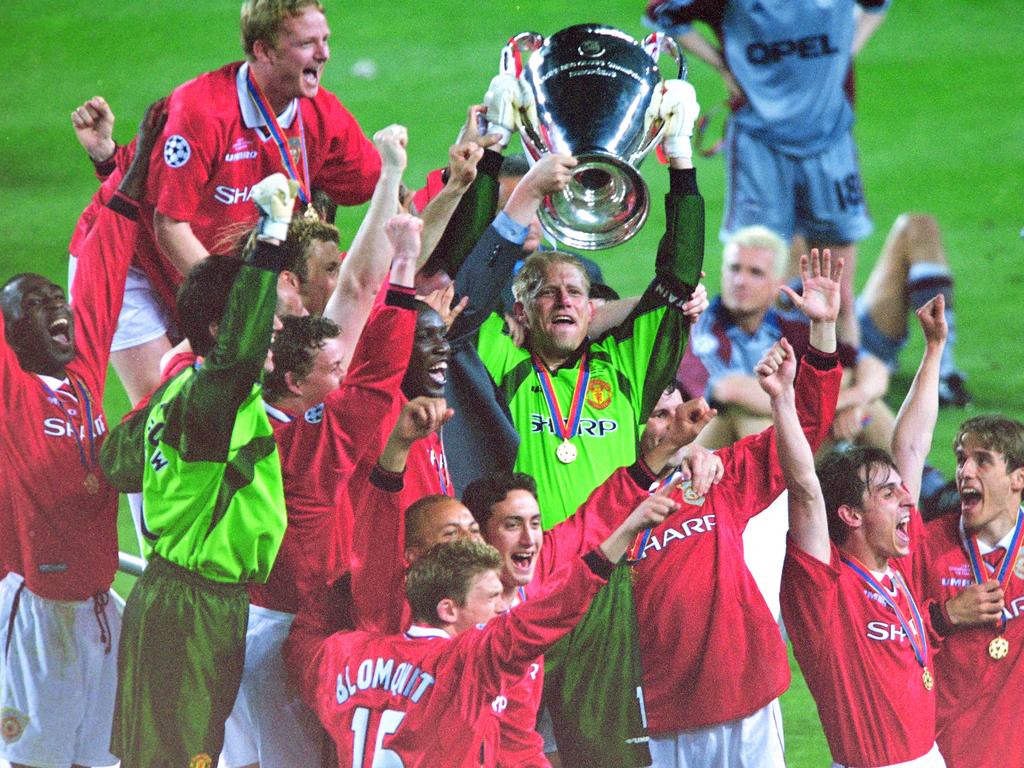
If it is going to be any team, it should probably be this one. If any English club side are going to join the legends of Manchester United 1998-99 on the pedestal of Treble winners, it is hard to imagine a more likely or fitting gang than Pep Guardiola’s finest Manchester City assembly.
We have been speculating for more than two decades whether any team could pull off what took that United squad to the most extraordinary, heart-stopping, jaw-dropping, unceasingly dramatic, improbable (make that impossible, 90 minutes into the Champions League final) and celebrated sequence of victories in the history of the English game.
Thirty-three games unbeaten, five months swaying on a tightrope repeatedly lurching close to calamity – as the crowd, the country, gasped that it was all about to come crashing down – only to save themselves, the campaign, their march on history, with another outrageous comeback. This feels very different. To wonder afresh at Kevin De Bruyne and Erling Haaland’s lethal combinations in midweek – one guy mugging Arsenal with stealth, the other with muscular violence – was to sense that this tilt at the Treble (not any Treble; do not accept cheaper alternatives) is moving into the realms of the probable.


Real Madrid, reigning European champions waiting in the Champions League semi-final, will regard that as beyond impertinent but, with all the gathering momentum of Haaland in full flight, hair billowing behind him like Thor, we are starting to wonder how much further City will be stretched or need to stretch themselves; how different it feels to 1998-99, which Sir Alex Ferguson called “the greatest season English football has ever known”.
I wrote a book last year, 1999 – Manchester United, The Treble and All That, vindicating that claim and many more. Different? Well, these days it obviously takes a lot more money. It takes much more tactical sophistication given that Ferguson’s smartest – make that only – strategic switch was tucking in the full backs in the quarter-final ties against Inter Milan. It takes a lot more continental know-how.
United, with an English core, trained at The Cliff in Salford, where the smell of bacon butties wafted along the corridors and the game was bridging between an old macho rawness and a new technical excellence. Roy Keane embodied both. It takes more of a squad, even though Ferguson initiated rotation. The XI widely accepted as being their strongest (Schmeichel – G Neville, Stam, Johnsen, Irwin – Beckham, Keane, Scholes, Giggs – Yorke, Cole) started twice all season. We could have a long argument about the make-up of Guardiola’s best XI, if such a thing even exists.
But perhaps the huge difference is that we could scarcely believe it then. No English club had won the biggest club competition since it was known as the European Cup; not since 1984 and the European ban and the nadirs of the English game. United were carrying the weight of their own history, Sir Matt Busby and 1968, but also of a reviving English sport.
Now it feels overdue, especially given the financial muscle of the Premier League. After all, Spain has had its 21st century Trebles (Barcelona 2009, 2015) and so has Italy (Inter Milan in 2010) and Germany (Bayern Munich 2013, 2020), who narrowly deprived France and Paris Saint-Germain.

Guardiola will reject the idea that it is to be expected of his players, or that they have it any easier. This is his seventh season of trying in England. City have come close to the summit and slid back down a few times themselves, never more painfully than in the 2021 Champions League final against Chelsea.
It has taken all that vast sovereign wealth but also one of the most brilliant managers in the history of the game, a restless genius of a coach, having to tinker and improve and reinvent time after time.
No one wins the Treble by luck any more than they stand at the top of Everest, at the top of the world, scratching their head and wondering how they got there. It takes planning, suffering, brilliance, luck, but, above all, the skill and character to shape the big moments.
In that sense, football is timeless. Outstanding players – David Beckham, Ryan Giggs, Dwight Yorke then; Haaland, De Bruyne, Riyad Mahrez now – conjuring match-winning excellence just when it counts.
Eleven games are left, including an FA Cup final in which United will hope to defend their unique honour with all their might. Eleven games. That is exactly when United first glimpsed unprecedented glory with the FA Cup semi-final replay against Arsenal, which, perhaps instructively, was one of the most tumultuous battles in English domestic football, compared with the gulf in class the other night.
We stood afterwards in the Villa Park car park talking to Ferguson. “It may blow up in our faces, we are aware of that,” he said. “We have game after game after game. But the most important thing is that nights like this are the ones you never forget … They are embedded in your mind for ever.”

His point was to enjoy the journey because you could not know what was lying around the corner. For United, it was one more incredible comeback against Juventus a week later; another against Tottenham Hotspur to win the league on the final day after more unbearable tension; and the most ludicrous recovery of all against Bayern in the Nou Camp as the immortal finale.
“Another English team will win the Treble but they cannot possibly win it like this,” I wrote to conclude the book.
Watching City’s dominance against Arsenal on Wednesday, it certainly felt timely and right.
Originally published as Inevitable v magical: Manchester City’s march to match Manchester United’s mighty treble

Real rage as Bayern win thriller, Arsenal scrape through

Liverpool’s Champions League over as PSG storm Anfield

Hair pulling red card sees United slump to 45-year first

City smash Chelsea to put heat on Arsenal, Spurs crisis deepens

Arsenal booed off as runaway PL leaders feel the heat
