
There will be little change at Chelsea with Roman Abramovich’s mind reader in charge
Roman Abramovich’s announcement that the ‘stewardship’ of the club will leave his hands doesn’t mean much will actually change, writes MATT DICKINSON.
According to a spokesman for Roman Abramovich, the oligarch has been trying to broker peace between Ukraine and Russia. Good luck with that, though quite how it squares with the previous insistence that he is not a political figure, or connected to Vladimir Putin, is unclear. A riddle, wrapped in a mystery, inside an enigma, perhaps.
Where does Abramovich stand on Putin and the unprovoked invasion of another sovereign state? His daughter, Sofia, has condemned Putin’s war, so why won’t he?
Without any answers, we can only guess what matters most to the oligarch — his standing at the Kremlin? Losing the Carabao Cup final on penalties? — while also trying to unpick the confusion at Chelsea, where the claim that Abramovich has relinquished all say in operations is as convincing as, well, Kepa Arrizabalaga standing over a penalty kick.

Saturday’s short announcement that “stewardship” of the club was being handed from the owner to the trustees of the Chelsea charitable foundation was a sign of extraordinary times and growing anxiety about where this might yet all lead for a high-profile Russian and his business interests if the war continues to escalate.
It was also so hasty and half-baked that it may not even be legal under the rules of the Charity Commission, which sets out the parameters for any charitable body and has already been in touch with Chelsea for more information. Independent trustees are awaiting updates this week but it is quite possible that one or two could resign.
Chelsea is a club hoping that it is business as usual for its football team — “I think it will change nothing for me on a daily basis as I understand it,” Thomas Tuchel said on Sunday — while also in a flap at board-level.
The attempt to create some distance between Abramovich and his club by trying to change the “stewardship” to trustees was intended to buy a little breathing space but, in straining public credulity as well as appearing unworkable in the version so far presented, it has been badly botched.
Abramovich remains the sole owner through a holding company, Fordstam Limited. There is no suggestion of that changing, or of any attempt to sell the club.
When Richard Masters, chief executive of the Premier League, spoke to Bruce Buck, the Chelsea chairman, on Saturday night about the issue of stewardship, he was told that nothing would need to be ratified because there would be no change of control. In short, the stewardship issue is window dressing.
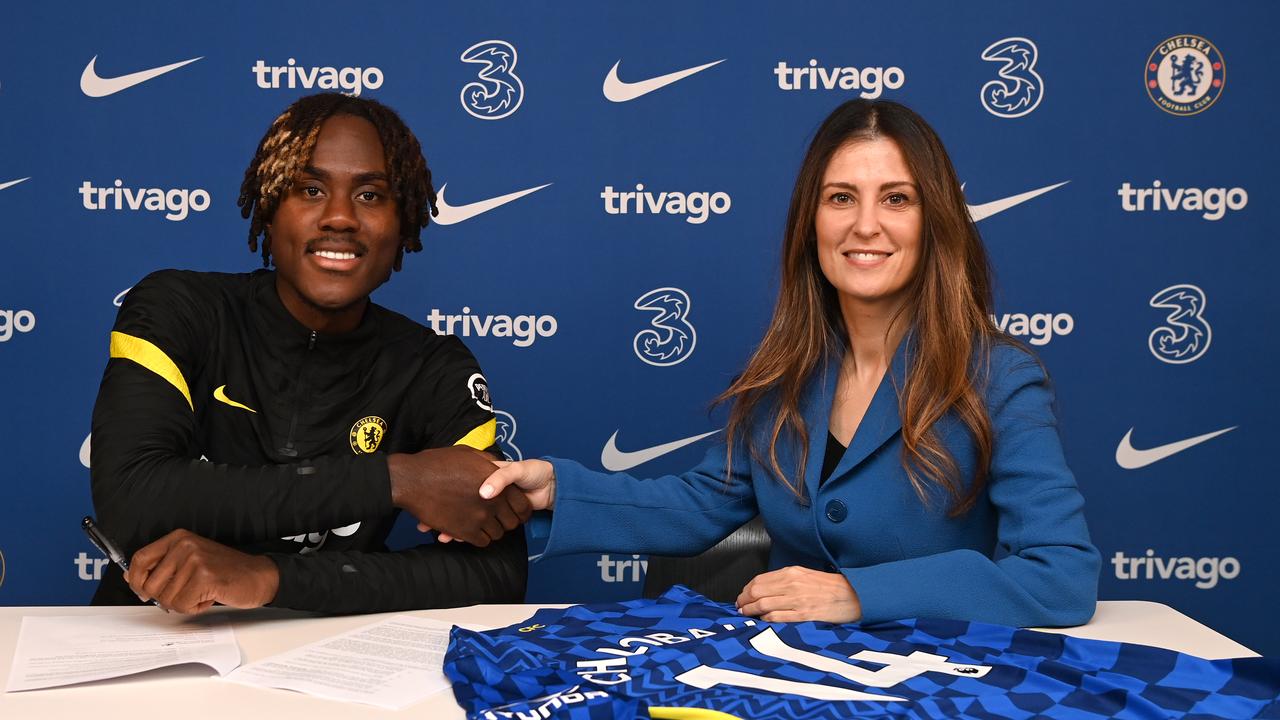
As long as the most influential person on the football side at Stamford Bridge remains Marina Granovskaia, we can reasonably ask whether anything will change in terms of Abramovich’s influence.
She is one of four directors — along with Buck, Guy Laurence, the chief executive, and Eugene Tenenbaum, a long-time associate of the owner — and runs the football business with Petr Cech, the technical director. Tuchel, the head coach, works with Granovskaia and Cech on football matters, such as recruitment.
Granovskaia has become a figure of fascination: in part as a woman in such a high-profile role in football, but also for her success while saying so little in public. She spoke in December when picking up an award for best club director in European football from an Italian newspaper, but only to say that “there isn’t a secret to Chelsea’s successes, or at least, I don’t know it” and that it was all down to teamwork.

After studying at university in Moscow, the Russian-Canadian started working for Abramovich as one of his personal assistants in his oil business more than 20 years ago and has enjoyed a remarkable climb. She has been on the Chelsea board for almost a decade — in which time her influence has grown from handling transfers and contract negotiations to agreeing the long-term kit deal with Nike, which runs until 2032. Persuading Real Madrid to pay more than £100 million for Eden Hazard, when he had only 12 months on his contract at Chelsea, was one notable triumph.
Agents who have dealt with Granovskaia invariably describe her as shrewd and unflappable. Certainly, she has tried to bring a degree of stability to a club where the owner’s whims, particularly with regard to managers, have created turbulence. She has become one of the most powerful executives in global football precisely because the sport knows that she has the trust and backing of the owner. A profile in L’Equipe recently explained that she came into the role at Chelsea because Abramovich wanted to know everything and she was so adept at reading his mind. The idea that the owner has removed himself from the decision-making process, as if the pair will not still be in regular communication, seems beyond fanciful.
In seeking to change the “stewardship”, decisions unrelated directly to the team — about safe-standing, for example — would go to the trustees but that is not what they signed up for or what may feel appropriate, especially when Abramovich is expected to reserve the right to rip up any change in structure if/when the situation in Ukraine calms down. Chelsea do not pretend that any change would be irrevocable.

Abramovich may be sincere in wanting to find a way to protect his club from being dragged into the fallout of Putin’s war, but it is likely that he will have to find another entity, a special purpose vehicle with a new set of trustees, to make this happen rather than dump it on the charitable arm.
Even then, as Chelsea’s lawyers examine the possibilities and try to work out what a demanding boss requires, it all appears to be a convenient device intended simply to quieten complaints from MPs such as Chris Bryant, chairman of the Russia All-Party Parliamentary Group, who has called on the government to freeze the oligarch’s assets if he does not personally condemn Russia’s actions.
Of course, that will not be necessary if Abramovich somehow proves an adept peacemaker after, according to a spokesman, being contacted by the Ukrainian side for support in finding a resolution.
The delicacy of his position was, it was claimed, a reason why he has not said anything in public about the war — but his profile will ensure plenty more questioning of that stance, and the status of his many assets including a football club which he claims to own but, somehow, not control.
-The Times

Real rage as Bayern win thriller, Arsenal scrape through

Liverpool’s Champions League over as PSG storm Anfield

Hair pulling red card sees United slump to 45-year first

City smash Chelsea to put heat on Arsenal, Spurs crisis deepens

Arsenal booed off as runaway PL leaders feel the heat
