
There’s no way of turning back the grotesque, never-ending tide of football transfer spending
MATT DICKINSON tries to shine light into the world of transfer dealings but only highlights the thankless job facing any regulator wading into this murky world.

For an insight into the befuddling world of transfer dealings, we might factor in the science that pits some very big brains against one another: Manchester City’s lead AI analyst, once of the astrophysics department at Yale University; and a Liverpool research team led by a former particle physicist at the Large Hadron Collider near Geneva.
The race for information is one aspect of the game’s hunt for a smart signing but, then, not exactly the full picture of transfer strategy, or even close, when we also have a renowned manager telling me how he once drove over the alcohol limit from the North West to London to turn up at the house of a striker he feared was about to be lured to a rival.
Or the agent who passionately, as if his life depended on it, tried to persuade a Premier League manager that his client deserved a new contract and, when told that his words were in vain, promptly replied: “Ah, well, if it’s a new left back you want I’ve got another one,” with capriciousness that would put a ropey second-hand car dealer to shame.
The latest transfer window, wondering how many more hundreds of millions will be spent by top-flight clubs, seems as good a time as any to consider if this business is science, art or more akin to the desperate interventions of a slightly worse-for-wear manager knocking on a forward’s door at midnight and saying: “I’m not leaving until you sign.”
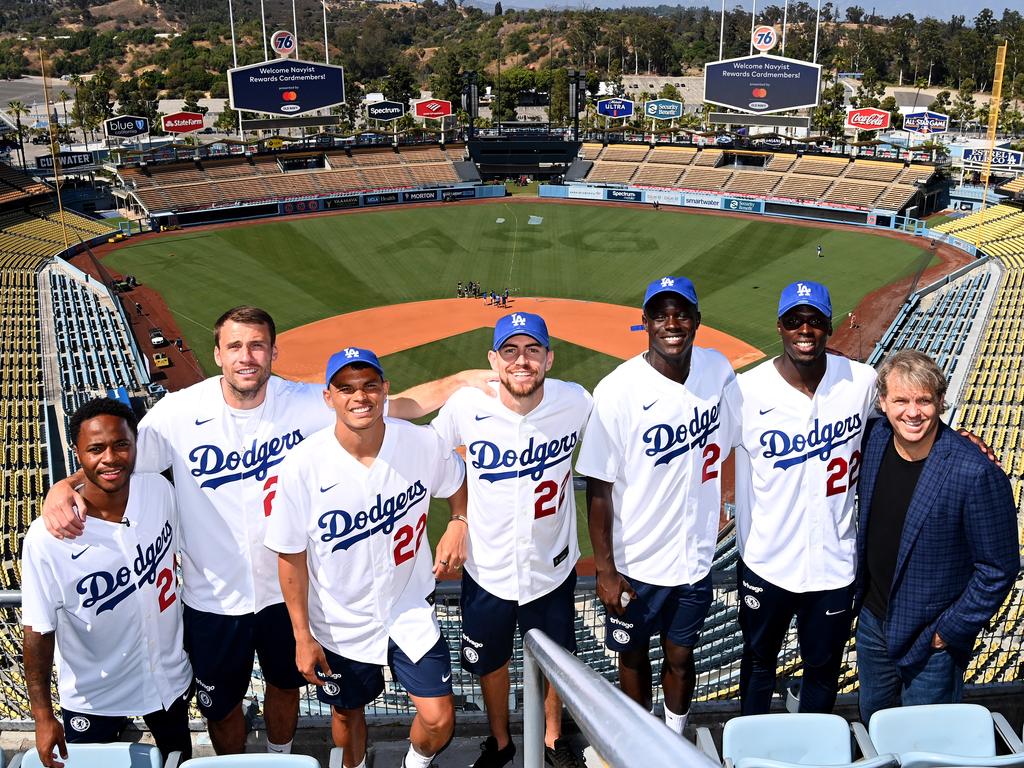
A new TV series tries to shine light into this opaque world but it is rather like trying to capture any realm of shopping - some of it is necessary, prudent and shrewd but, in the Premier League, it comes with unmistakeable reminders of Michael Jackson notoriously being filmed walking round an antique store in Las Vegas pointing “these, these, these, these, these, these …” at countless gaudy dollars 500,000 pairs of urns, or Todd Boehly performing his own version at Chelsea.
We have David Sullivan, the West Ham United co-owner, explaining: “You feel pressure all the time to sign players. It’s the most stressful, horrible time. I have done it for nearly 30 years and it’s got worse and worse and worse.
“Particularly late in the window, you are signing players you probably shouldn’t be signing because you have lost your main choices and then you sign second, third, fourth-best because you feel you must sign somebody.”
Note the “must”. Make that one reason why January’s spending has already exceededpounds 100 million, and very much counting. It remains to be seen if this month’s extravagance will hit the previous January’s outlay of pounds 295 million, the second-highest mid-season in Premier League history, but it is not as though Britain’s winter austerity is blowing a hard wind through the nation’s richest clubs.
The numbers - pounds 1 billion! pounds 2 billion! - flash up on TV screens and in headlines like the spending itself is a form of accomplishment; Comic Relief night gone grotesquely wrong.
The Premier League smashed its own record for a transfer window last summer; more than euros 2.25 billion (about pounds 2 billion) on new players. The net spend was even more remarkable: euros 1.35 billion for Premier League clubs, with La Liga a distant second on euros 52.44 million. The comparisons are astonishing.

To think we once wondered, momentarily and naively, if Covid and lockdowns would bring a reset, including to English football’s relish for throwing all this money at the rest of the world. On it goes, unstoppably, and Sky believes this is firmly now part of the entertainment, judging by its new four-part series, Deadline Day.
The broadcaster had access to executives, players and especially agents so we see plenty of middle-aged men sitting in smart shades, open-neck shirts and expensive cars swishing through Mayfair and Madrid. Flattering words - “You’re not a small player now, you’re a big player, show the swagger” - are caught, along with fraught conversations when a deal is in jeopardy, but this area is football’s most difficult to delve into. We may take a dip into the frenzy but only to drown in the waves of deal, deal, deal.
Clubs are secretive, though whether that is to hide their knowledge or ignorance depends where you are looking. Omar Berrada, Manchester City’s chief football operations officer, can explain how the club did all the smart work to lure Erling Haaland, with glimpses of screens of graphs and charts, but we are also left to wonder how many hundreds of millions of pounds per week were persuasive.
Clearly, some clubs are built on good practice, with my colleague Martyn Ziegler highlighting the brainy work that has propelled Brighton & Hove Albion and Brentford as model clubs of recruitment. But we only have to see this twice-yearly fetish of spending - as Sullivan says, it must be spent! - knowing that there is always a club leading the charge with a chequebook.
Newcastle United are newly wealthy, Nottingham Forest seemingly stockpiling players for a decade and Chelsea, having spent more last summer than any club in any window, continue to make the Roman Abramovich era seem parsimonious under the Boehly-Clearlake Consortium.
In the midst of this, the glorifying of some agents is unlikely to be rapturously received but there is a moment when Steve Parish, the chairman of Crystal Palace, points out that there are humans with dreams, fears, ambitions at the heart of all this.
In that sense we could have seen a lot more of Japhet Tanganga, who resolves that he must leave Tottenham Hotspur, the club of his youth, for more opportunities. With his father and agent, Roberto de Fanti, they plot a move away. AC Milan becomes the dream. They push through some tough negotiations with Spurs to be on the brink of a move, then the club pick up injuries. The deal is off, player stuck in reserve, career stalled by forces far beyond his control.

Perhaps you have little sympathy for a well-paid player, certainly not his agent, in this orgy of money, but we have moved beyond the moral panic to acceptance that football brings in all this wealth and will do with it whatever it wants.
If there is a backdrop, it is the “New Deal” negotiations in which the lower leagues barter for more than pounds 250 million extra a year and the top clubs propose pounds 160 million, in return for agreements over cost control and calendar changes. Guess who will win that arm-wrestle?
A new government regulator may yet want a say but it is highly unlikely to wade into issues of financial distribution, knowing that swimming against this seemingly never-ending tide of spending is a thankless, Canutian job.

Real rage as Bayern win thriller, Arsenal scrape through

Liverpool’s Champions League over as PSG storm Anfield

Hair pulling red card sees United slump to 45-year first

City smash Chelsea to put heat on Arsenal, Spurs crisis deepens

Arsenal booed off as runaway PL leaders feel the heat
