
Fifa study uncovers football’s leading victims of online abuse with racism and homophobia rife
A new study commissioned by football’s world governing body has laid bare the appalling extent to which players are being targeted by online trolls.
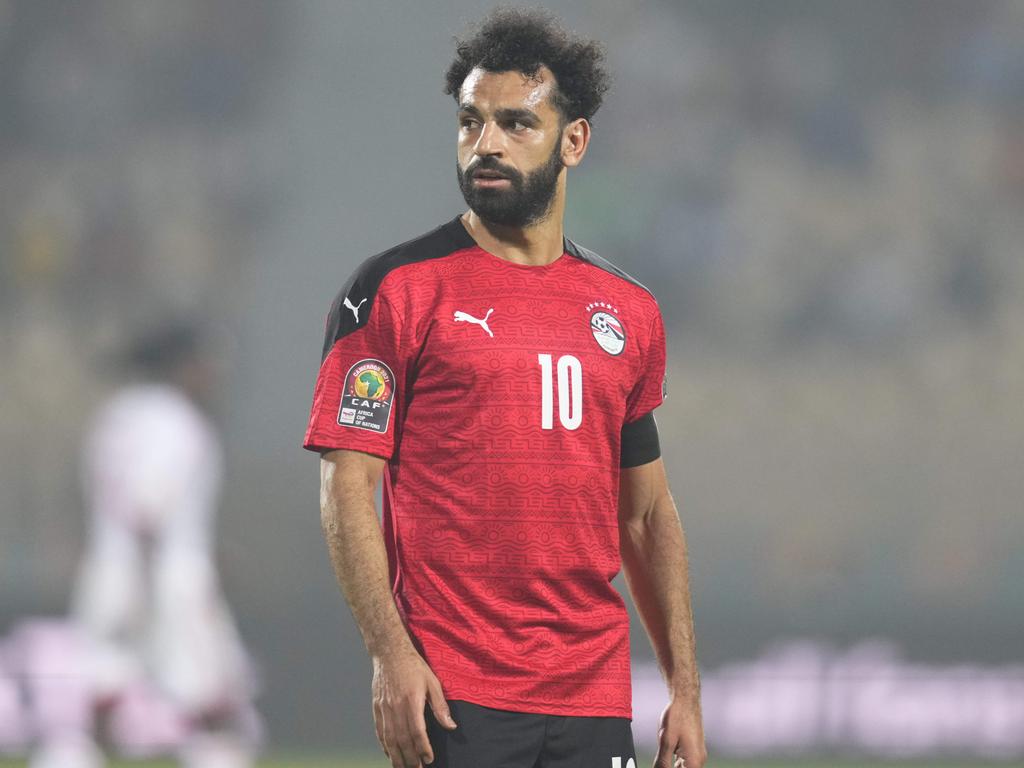
Marcus Rashford, Bukayo Saka and Mohamed Salah are leading victims in the epidemic of social media abuse of footballers, according to Fifa.
A new study commissioned by the world governing body has laid bare the appalling extent to which players are being targeted by online trolls.
Among its shocking findings are that the majority of abusers come from the player’s home country, contrary to belief, and that a huge number of discriminatory messages stay up on platforms long after they are posted – with many still to be taken down even today – despite promises by social media companies to crackdown on abusers.
The report focuses on trolling directed at players and coaches involved in the Euro 2020 and Afcon 2021 finals, examining 400,987 abusive messages on Twitter and Instagram. Rashford and Saka endured the most abuse of those who participated in the Euro final.

The majority of hate directed their way was racist in nature, and linked to both of them missing penalties in the shootout where Italy defeated England. Overall, 78 per cent of all abuse connected to the Euro final was racist or homophobic in nature with Jadon Sancho – a third black England player who missed a penalty – also suffering significant racist abuse.
A point noted in the study is that prior to penalties, racist abuse had been relatively low with homophobic terms more prevalent in the days leading up to the final and during the early part of the match. The conclusion drawn is that even in a tournament or match where abuse levels are low, racial hate can be unleashed in a torrent following a trigger – a lesson against complacency where racism is concerned.
The research is part of a Fifa drive to combat social media abuse which is such a scourge that 1 per cent of all football tweets are now discriminatory. An eye-opening 55 per cent of all players involved in the Euro and Afcon finals suffered some form of discriminatory abuse, with Salah a main target for trolls at Afcon, where Egypt lost the final to Senegal after a penalty shootout.
At Afcon, religious hate – in particular, Islamophobia – was a major factor in the trolling. Sadio Mané, who missed a penalty in normal time, was also singled out for abuse, much of it Islamophobic.

Fifa hope its report will increase pressure on social media companies to do more to protect players. Despite promises by such as Twitter and Facebook to tighten the net on trolls, the study found that 58 per cent of all abuse posted around the two major finals was still visible on the platforms involved, eight months after being posted and that there has been a particular failure to remove homophobic abuse. An astonishing 87 per cent of non-racist abuse posted around the Euro final in July was still visible in April of this year. Another area where companies were found slow to act was in removing racial abuse directed at Italian players.
Contrary to suggestions that it is difficult to chase down trolls, the study found that 90% of deleted accounts sending abuse are identifiable or have a high probability of identification.
Though abuse from foreign accounts is a factor, the majority appear to come from abusers of the same nationality as the player subjected to their hate. Club rivalries are also shown as a key driver of abuse, with Liverpool and Manchester United players felt to be more likely to be abused than those at other clubs.
– The Times

SuperCoach EPL: How to replace missing AFCON stars

Sydney football club mourns player killed in Bondi terror attack

The Tackle: Mata has last laugh over ‘embarrassing’ Wanderers

The Melbourne-born teen who has world football giants circling

Vergos ends drought with brace in original derby win
