
Les Bleus tackle a new opponent amid Euro 2024: The French Far Right
Before a ball was kicked in their European title defence, Les Bleus were tackling another matter of profound national significance: France’s upcoming parliamentary election, writes JOSHUA ROBINSON.
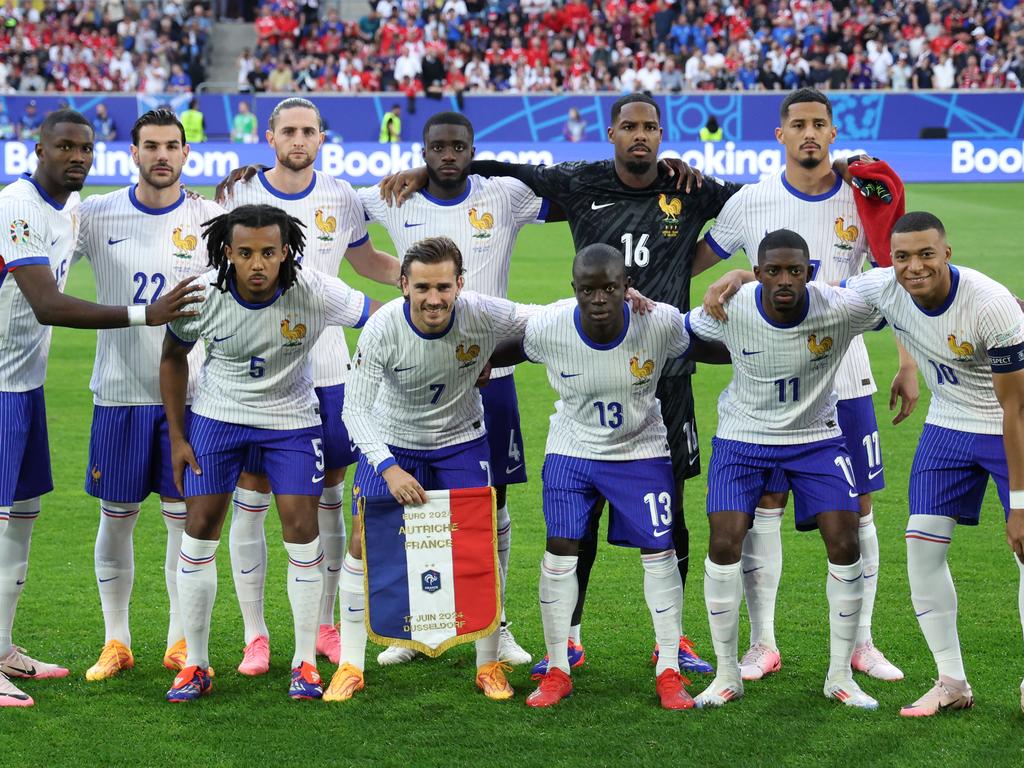
The French national soccer team landed in Germany this month as the favorite to win the European Championship, led by one of the best strikers in the world, fresh off a glitzy transfer to Real Madrid.
But before they had even kicked a ball here, hoping to restore France to the pinnacle of European soccer, Les Bleus were tackling another matter of profound national significance: the country’s upcoming parliamentary election.
Barely a week after French President Emmanuel Macron dissolved the National Assembly and scheduled new elections for the lower house of parliament, the country’s soccer team has broken its usual silence on politics to come out against the far-right National Rally. Polls taken last week showed that the party, led by Marine Le Pen, threatens to become the largest in the assembly after the two rounds of voting on June 30 and July 7—days before France plays in a potential Euro semifinal.
“The situation is extremely serious,” forward Marcus Thuram said ahead of France’s 1-0 victory over Austria in its opening game on Monday. “As citizens, we have to fight to make sure that the National Rally doesn’t get through.”
Even by the quiet standards of most athletes outside the U.S., soccer players tend to be notoriously reluctant to discuss most real-world issues. That began to change in 2020, after the killing of George Floyd, as they followed the lead of the NBA and the NFL to make themselves heard on civil rights abuses. But matters of electoral politics remained practically taboo. The English national team, for instance, hasn’t said a word in public about the U.K. general election coming up on July 4.

“We’re in a crucial moment in the history of our country. We have to have a sense of our priorities: the Euros are very important to our careers, but we’re citizens first and we shouldn’t be disconnected from the world around us,” said French superstar Kylian Mbappé, who this month sealed a high-profile move from Paris Saint-Germain to Real Madrid. He added explicitly that he supported his teammates’ calls to vote against the far-right.
“Today, we can see that the extremes are on the threshold of power,” Mbappé went on. “We have the opportunity to choose the future of our country. That’s why I’m calling on all young people to go vote, to really understand how important this situation is. I hope my voice will carry, because we need to identify with the values of this country—diversity, tolerance, respect.”
The players have found broad support among the parties on the left and in the center of the French political spectrum. But it didn’t take long for the team to spark the anger of the far right.
“Enough with these privileged moralizers who take French people for imbeciles!” National Rally spokesman Julien Odoul wrote on X.
But throughout the conversation, the French soccer federation has defended its players’ right to speak out while the spotlight is on the national team at the Euros and later this summer at the Paris Olympics.
“Each player has had the chance to express himself freely, in accordance with his own beliefs,” the organization said last week, while underlining its own neutrality. “The French Football Federation, feeling deeply attached to freedom of speech and civic duty, joins their calls to go vote.”

The relationship between France and its national team hasn’t always been smooth. As early as the mid-1990s, Jean-Marie Le Pen, Marine Le Pen’s father and founder of the party, had argued that Les Bleus weren’t French enough. But that sentiment gained little traction, especially once France won the World Cup for the first time in 1998. That multicultural, multiracial squad was celebrated as a powerful symbol of modern France, uniting players from Black, white, and North African backgrounds.
The team’s best player was Zinédine Zidane, a midfield genius who was born in Marseille and raised by parents who came to France from Algeria in the 1950s. The projection of his face on the Arc de Triomphe during the million-person party on the Champs-Elysées became one of the lasting images of the celebration.
But by the late 2000s, the positive feelings around the team had begun to dissipate. The low point came during the 2010 World Cup in South Africa, when a dispute between coach Raymond Domenech and striker Nicolas Anelka, who is Black and a practicing Muslim, led to a locker-room split broadly along racial and religious lines. The controversy became so inflamed that when the team returned to France, captain Thierry Henry met personally with then-president Nicolas Sarkozy to explain what happened.

The incident merely highlighted a discussion that was already happening among the team’s detractors. Earlier that summer, Le Pen had stirred up controversy by stating that she didn’t recognize her country in the squad. She highlighted the number of players who were born outside French borders, or were the children of immigrants, or didn’t sing the Marseillaise, France’s national anthem.
“Most of these people consider themselves as representatives of France one minute, when they’re at the World Cup,” Le Pen said at the time. “But the next, they feel like they belong to another country or have another nationality in their hearts.”
The current group of French players say that it is precisely because they are fully fledged representatives of France that it is their responsibility to say something now.
“I hope we’ll make the right choice,” Mbappé said, “and that we’ll still be proud to wear this jersey.”

The Tackle: Mata has last laugh over ‘embarrassing’ Wanderers

The Melbourne-born teen who has world football giants circling

Vergos ends drought with brace in original derby win

Victory ‘bleeds success’: This star knows that better than most

From Italy to Sydney: Logarzo makes last-ditch Matildas bid
