
Matildas 2021: Tony Gustavsson analyses a difficult 2021 campaign for the Australian women‘s football team, and reveals plans for the future
The Matildas have started on the road to the home 2023 World Cup and, as Adam Peacock reports, the journey has been bumpy.

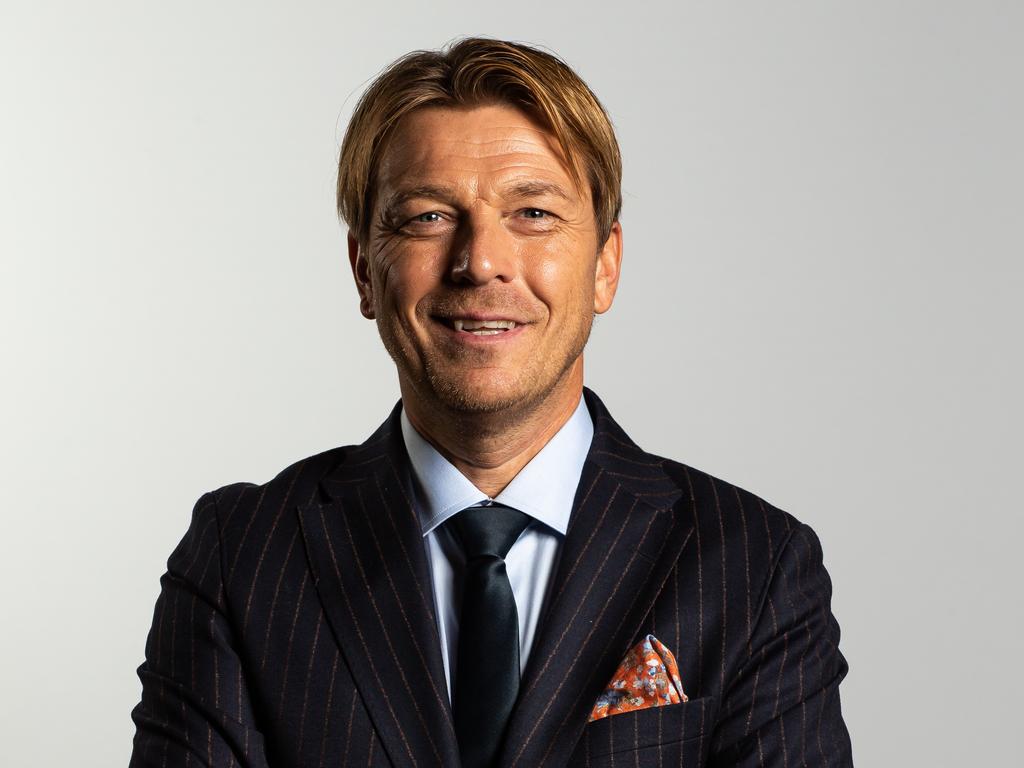
It doesn’t take Tony Gustavsson long when asked for a Swedish word to sum up 2021.
“Händelserik, he says. It translates to ‘eventful’.
It’s impossible to argue.
New to Australia and new to the Matildas, the last 12 months have been händelserik for the team Australia has fallen in love with, and atomically händelserik for the man employed to win a World Cup.
Expectations, preparations for an Olympics hindered by the damn pandemic, plus an unprecedented number of players called into the national team set up, and Gustavsson’s head is still spinning.
“I knew it was going to be intense … (everything) made it more intense than I could ever imagine.”

*****
It took seven months for Gustavsson to see his players in person for the first time after his appointment in September, 2020. As Europe thawed out from a winter of lockdowns, Gustavsson introduced himself to his new side in April in the Netherlands, but it was messy, hit by injury and Covid withdrawals, and the side was roundly smashed by both Germany, 5-2 and the Dutch, 5-0.
Both were brutal lessons, testing Gustavsson’s natural inclination towards positivity. But after the initial shock of the defeats, two moments eased his concerns.
“The one thing that stood out for me was the vibe,” Gustavsson says, not meaning to quote The Castle. “The atmosphere of the staff and the players, I really fell in love with the team”
The other positive was Sam Kerr. Not her playing ability. That’s a given. It was her leadership, and it hit Gustavsson standing in the middle of a windswept Stadion de Goffert in Nijmegen with the entire squad gathered around.
“She gave a raw speech,” Gustavsson recalls. “She was upset about the results, obviously. Her inspirational [talk] to those players in that circle was amazing to see. How she took eye contact with each and every one of them, and said everyone needs to go back to their clubs, work as hard as ever to get better. Because this is not good enough”
“I think a leader should be being true to who they are. Sam is.”

Gustavsson was also taken by Kerr’s selflessness without the ball. “She works the hardest in leading our pressing game,” he says, and he’ll be paying close attention over the coming months on Chelsea games with a mix of admiration and trepidation.
“I think we all (hold our breath),” he continues. “Player availability is the number one factor in winning international football tournaments.
“The reason I think we won into the semi-final of the Olympics is we had a much higher player availability in this tournament.”
Tokyo was an historic moment for the Matildas, despite the disappointment of just missing a medal. It was the first time the team won a quarter-final at either a World Cup or Olympic Games after five previous failures at that stage.
It’s a result that not only gives Gustavsson comfort, but also those who employed him.
Results-wise, the Olympics were the only games that really mattered in 2021.
The rest had other motives.

*****
In late 2020, Football Australia released a Gap Report for the Matildas program.
For those not up with their corporate lingo, a Gap Report is produced from “an analysis of the comparison of actual performance with potential or desired performance.”
Despite the fact the team had shot to national prominence, players had become household names and idols to countless young fans, there were a number of alarming statistics uncovered.
Australia was relying on its “core” players so much, declared the report, “ … it is prospectively a detrimental cycle, with the squad depth the lowest compared to 11 other top quality nations.”
Matches played was an issue, with the Matildas having played 44 over a four-year cycle. World champions USA played 68. And at youth level, the elite weren’t getting enough international exposure at a critical time, playing a total of 57 games in a four-year cycle, while top nations like France and USA played over 200.
In his job interview Gustavsson promised to fix what he could.

“We used 58 players in camps, and we gave debuts to 13 players,” Gustavsson says, even though he knew results would suffer. “When you go through that growth pain, new players, new system, new coach, new terminology – my Swenglish isn’t the best English at times!
“And then at the same time, we’ve been scheduling the toughest schedule ever from the team.
“Thirteen of the 16 games against top-ten ranked opponents. The average was two to three per year the last decade. Now 13! That has been throwing the players in deep water.”
If you look at the Matildas squad profile from last week’s games against USA, it is quite alarming to look at the huge disparity of international exposure between the experienced stars and the fresh faces.
Thirteen players: 0-40 caps. Three players: 41-80 caps. Nine players: 81+ caps.
“A small group of players has all the caps,” says Gustavsson, “which has created a huge gap to the second or third tier of players, with minimum exposure to international football.
“Working in the US (he was national team assistant for two World Cup titles), there was a saying there – if you don’t have 40 caps under your belt, you might not be ready for a World Cup”
“I feel we have started a process to close the gap. We still have a huge gap … and we might not fix it for the World Cup, but this is not just about 2023. It’s about then and beyond.”

Some might view these comments as excuses to buy time. Others will empathise. Whatever the case, Gustavsson knows he faces a monumental challenge in the next 18 months.
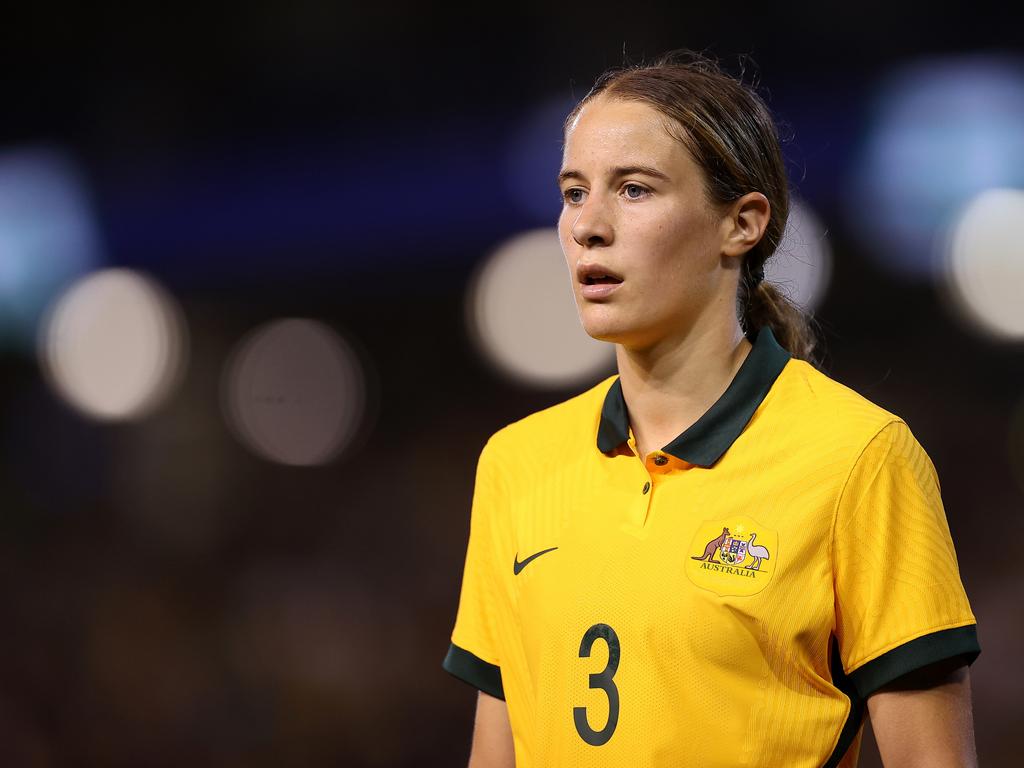
For example, he is a big fan of Courtney Nevin, the 19 year-old centre-back who started both games against the US. Nevin did some great things – ball-playing to set up forward raids – and some bad things – ambling back while the US burst forward and scored in Newcastle.
While he doesn’t reference Nevin specifically, Gustavsson agrees coaching for the now, while trying to fix the past and set up the future, poses an enormous risk.
“We as coaches have to take the eye-blinders off,” he says. “Otherwise we’re going to see what we’re going to see. Sometimes you think you’re not biased as a coach, but you are. Whether it be consciously or unconsciously. Need to train yourself to look away from that.
“I’ve done some mistakes this year where I’ve wanted it more than what was in front of me, if that makes sense, but it’s finding that balance of short term result versus long term gains of results.
“So we need to ask: how ready could Courtney Nevin be? Where is her potential?
“I need to treat the players not just where they are but what they can become. Need to do the same with a Clare Polkinghorne, where can she be in 2023. Find a balance of experience and potential.”
If the football is not a big enough issue to solve, there is the prospect very soon of something even bigger – and out of his control – confronting the Matildas.
At some point in 2022, Sport Integrity Australia will release its findings from a wide-ranging, and importantly, independent investigation into historical complaints of a toxic environment in women’s football.
“My job is to control the controllables,” Gustavsson says. “The federation have invested into a wellbeing manager, physiologist, high performance manager that works with culture in an elite environment.
“I’m happy it is independent, that we can take a step back, trust that process.
“Then once the report comes down, we take action depending on what comes out.”
For now, Gustavsson will spend the next two weeks watching the first two rounds of the A-League Women’s live, trying to learn more about Australia’s football landscape which he continues to understand better every day.
“One of the reasons I took this job was because how I felt coaching against them,” says Gustavsson.
“I always felt that the Matildas have this ‘it’ factor that I couldn’t really tell from the opposition bench what it was. But now being on the inside I understand what it is. That spirit that sits inside the team, and how proud they are wearing the crest. Some teams you need to motivate and push … but they are just giving it all.
“But can we add game management to it? We have struggled in tournaments in the past, to get past the quarter-final. So what are we lacking?”

That’s the question Gustavsson will continue to ponder when he’s back home for Christmas.
The sun barely rises this time of year in Sweden, though he’ll barely sleep, watching and thinking about football.
If 2021 was eventful, or händelserik, what will next year be?
There’s an Asian Cup to win in January and more huge games planned against the world’s best as preparations intensify for the once-in-a lifetime 2023 World Cup at home.
Gustavsson says 2022 will be about one thing: ‘Prestera.’
Translation? ‘Perform.’

From Italy to Sydney: Logarzo makes last-ditch Matildas bid

Yallop headed for surgery, Asian Cup dream all but over

Insider reveals where clubless Matilda could land

The Matilda who helped Lowry back from ACL heartbreak

‘Why we play football’: Sam can’t hide smile on joyful Matildas return
