
Socceroos‘ sons are thriving across European football – but will they choose to represent Australia?
Football development is an inexact science, but bloodlines run strong through some of Australia’s next generation, writes ADAM PEACOCK.

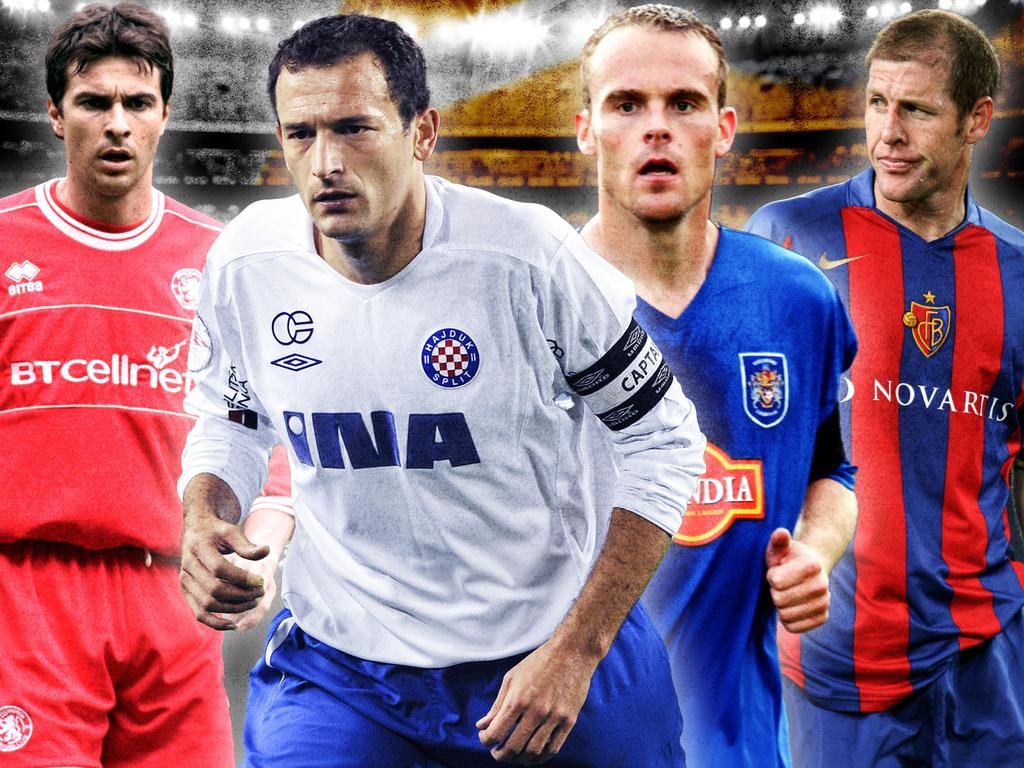
Buried in the servers of Football Australia is a list that contains more than 100 names of young players based overseas, but eligible to represent Australia.
The surnames on the list seem to represent a throwback to the Socceroos golden past: Popovic, Neill, Chipperfield, Skoko, Okon to name a few.
But they are very much the future.
The sons of Socceroos are playing with academies across Europe, football’s finest finishing school, applying the final touches to their development. Those boys will soon be men and Australia would love to have them sing the anthem before a game.
Still, much has to happen. Development is an inexact science. The right way? There’s no such thing. But the unmistakeable bloodlines and the decision to follow Dad’s footsteps to Europe certainly auger well.
*****
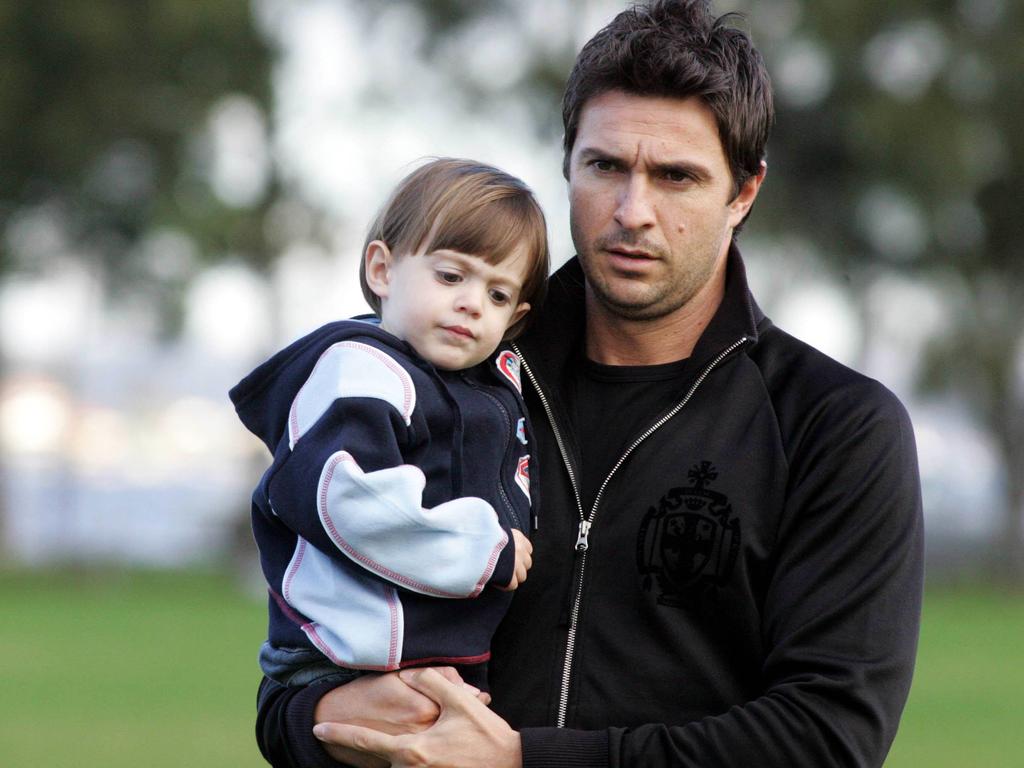
Former Socceroos captain Paul Okon is half-joking, but the chuckle carries some truth.
“Someone once said to me if you want to become an actor, go to Hollywood, and a bit of me thinks if you want to become a footballer, go to Europe,” Okon tells CODE Sports.
In 2019, Okon moved his family, including four boys (aged eight, 11, 14 and 18) to Belgium, where he became a legend in the 1990s with Brugge.
It’s not that Australian football was a horrible place.
It’s just that something was missing.
“When I was coaching Marconi under 16s, there was an Asian Champions League game with Sydney FC midweek,” Okon says from Belgium. “I spoke to the boys the next night, ‘Anyone watch the game last night?’ and no-one had watched it.
“So here, Champions League games are on at night and they are in an environment where it’s football, football, football. They live and breathe it. I believe that has an enormous impact on the way you learn.”
Okon’s eldest, Paul Jr, appears to have learnt well.
He’s now with Benfica’s under 19s, having been poached by the Portuguese giants from Brugge after performing well at a tournament. Weekends in Europe, especially in summer, are full of youth tournaments where the best congregate.
Scouts are everywhere. And when Benfica inquire, you listen.
Based in the Portuguese capital Lisbon, Benfica is now the standard-bearer in youth development, having made $1.7 billion in player sales in the last decade.
None of that is a consideration now for Paul Jr.
“He’s under no illusions,” Okon the elder says. “It’s not about the Benfica first team. He just needs to become better and better and get to the level he can get to. That’s all you can ask for.
“I’m proud that he works hard and wants to make his dream come true.”

Okon Jr was wanted for Australia’s upcoming under 20s qualifiers, which leads to a Youth World Cup. But, because the tournament falls outside a FIFA window, Benfica, as is their right, wanted him to stay for big upcoming games.
It’s a blow for the Young Socceroos, but could benefit Okon Jr in the long run by staying in the good graces of his club.
He might end up in a Socceroos kit one day, but his possible path there would not be a knock on the level of intel within Australian football, according to his father.
“I can’t say coaching is better in early development years here,” Okon says. “The structure is better, professionalism is, club’s invest more in their academies, but the actual content of coaching is not better than Australia. And (the younger kids), I don’t think they are better here. Not at all.”
It’s just all about opportunity.
And Paul Jr has got his with Benfica.
“He’s in a good place to maximise his capabilities,” Okon says.
“Where it takes him, it takes him.”
*****
In Manchester, there’s a kid with an Aussie accent on a first-name basis with Pep Guardiola who shares a pitch daily with Manchester City’s galaxy of stars.
He is 19 year-old Alex Robertson and he is a midfielder with an eye for goal. He has starred for City’s under 21s side and trains daily with the first team.
It all started with bloodlines.
Alex’s dad, Mark, played for the Socceroos in 2001.
Mark’s dad, Alex, played for the Socceroos in the 1980s.

The pair ran a football academy in Sydney when little Alex came along, and it was no shock that the boy would fall in love with football.
“Alexander would knock on my door at 6am, ‘Lets go to the backyard for a kick-around!’” Mark recalls with a laugh. “Chip off the block, really. Obsessed with the ball.”
Mark’s business took him to Europe annually, running tours for young teams through England. Young Alex would go, too, and stay for some training.
It was when Manchester United signed him that Mark and his family moved permanently to the UK. At 14, Alex was rated alongside now-England star Jude Bellingham as the best player for his age and made the switch to Manchester City.
Alex ended up going to the same school as Pep Guardiola’s son and now, through Alex’s ability, Guadiola is his full time football professor.
“(Pep) takes the piss out of Alexander. Sounds weird, but that’s just his norm,” Mark says. “And the (players) take the piss out of him for being Australian, he’ll get the ball and Kevin de Bruyne will be yelling out, ‘Goal for the Socceroos!’ and Alex is just laughing at it.”
Apart from a short spell on loan in Scotland with Ross Country, Alex has played all his development years at City.
“As soon as you start playing for three points, the development stops,” Mark says. “Make a mistake in the 21s and no-one is going to drag you over the hot coals for it.”
Even though Alex makes it look easy with a natural eye for a goal as an attacking midfielder, there have been obstacles as he closes in on a professional football career.
Injury and the death of a close friend dulled his love for the game over the past 18 months. Only recently has Mark noticed the return of the kid who knocked on the door at 6am.
“He bagged a couple of goals, and got that smile back on his face that I hadn’t seen in a while,” Mark says.
Alex is on the verge of first team football with City, having sat on the bench in a recent League Cup game against Liverpool.
There are major choices looming.

Alex has a three-year contract with City. The club may keep him next season, or loan him out for experience. And internationally, Alex is eligible for Australia, England, Scotland and Peru, where his mum is from. Football Australia say they have tried to get Alex in for youth team tournaments, but as yet, it has not worked out.
“He’s never been in a position to pick nations,” Mark says. “Never been fit enough, or playing regularly enough to put himself in the shop window.”
Alex is in no rush.
“The decisions you make, they have to be thought out,” Mark continues. “In football, you can’t just grab the first thing that comes along. None of us have a crystal ball.”
*****

Josip Skoko has always been a thinking man’s footballer.
The 51-cap Socceroo was a gifted technician; the player to make the team tick. The same thought process goes into Skoko’s views on the best method to develop a player.
Skoko’s two sons, Noa (17) and Luka (19), stayed with him through their early development at North Geelong. They could have gone up the highway to Melbourne City or Victory’s youth academy, but it wasn’t for the Skokos.
“Being at a home club is very important, rather than chopping and changing,” Skoko says. “Travelling an hour each way for a training session wasn’t for us.”
Skoko, though, had a decision to make when the boys got to their later teenage years.
“I think the youth system in Australia works OK up until the age of 15, then that next step, what do you do?” Skoko says. “How can you get them to play more games at a better level? It’s not a fault of the Australian system. It’s just how it is.”
So, instead of contending with the development bottleneck in Australia, where under 17s-to-21s players find it hard to get high quality games and/or break into A-League teams, the Skokos went to Croatia.
Josip did the same as a player. He graduated from the famed Australian Institute of Sport and, along with best mate Mark Viduka, headed to Croatia’s two big clubs: Viduka to Dinamo Zagreb, Skoko to Hajduk Split.
Skoko’s eldest, Luka, has been hit by injury and is getting going again at a lower division club, while Noa, an attacking midfielder just like his old man, is finding his feet with Hajduk under 17s and 19s.

“Noa can play a lot more quality games at his age group, rather than be pushed up to play at a higher level,” Skoko says.
“Like it or not, there’s nowhere in Australia he can play at his age, at a higher level. He could be ready for an A-League squad, but would he play games?”
Skoko says 50 to 70 games a season are key for a player in the latter years of development. An A-League season is just 26 games long. Some youth systems in Australia can offer 40 games, plus pre-season, but in Europe 50 games is the bare minimum.
“Lot of kids are doing similar things and getting a really good experience,” Skoko says. “And it’s invaluable because it takes you out of your comfort zone. Make it through the system here, it can toughen them up.”
Noa, who last week played an under 19s Champions League game, has also attracted interest from the Croatian federation, who have capped him at under 17s level.
Skoko senior says it doesn’t mean he has abandoned the idea of playing for the Socceroos.
“His choice going forward is up to him,” Skoko says. “I was clear with my path. When Dukes and I arrived in Croatia, they got us citizenship, and tapped us up to represent. But we wanted to play with our friends, people we felt comfortable with.”
Times have changed.
Mass migration of the last half century has changed international football, with players of diverse backgrounds scattered all over the world.
Skoko reckons Football Australia is wising up to the modern way.
“In Australia they are doing a great job to track players, contact all the boys, just to keep in touch,” he says. “So they don’t let them slip through their fingers.”
*****

Skoko, Robertson and Okon are just three sons of Socceroos.
There are quite a few others.
Lucas Neill’s son, Marcus, has gained a reputation as a goalscorer through Liverpool’s academy.
Michael Valkanis has three sons over in Greece developing well, and on the radar of Greek junior national teams.
Gabriel Popovic, son of Tony, is playing in Croatia’s second division and has represented Australia’s youth teams.
Liam Chipperfield, son of Scott, is at Basel. Born and bred in Switzerland, Liam plays for the Swiss under 19s, even though Dad is as Aussie as a Cold Chisel singalong over a VB. He might be lost to Australia.
Senior international representation, though, is at the end of the line. The top priority is developing to the point of earning a first professional contract.
There are no shortcuts, but neither is there a single route.
As Skoko says: “There’s no right way; there’s only the right way for you.”

The Melbourne-born teen who has world football giants circling

FIFA slammed as Aussie fan’s bill hits $35k to attend World Cup

Every game: Download your 2026 World Cup draw poster

Revealed: Venues, dates for Socceroos World Cup fixtures

FIFA World Cup: Winners and losers of the draw
