
Croatia‘s Luka Modric is the real king of the World Cup
Neymar, Mbappe, Messi, Ronaldo. Fans in Doha wear jerseys emblazoned with superstar names, but a Croatian stalwart is the real master of the World Cup, writes ADAM PEACOCK.

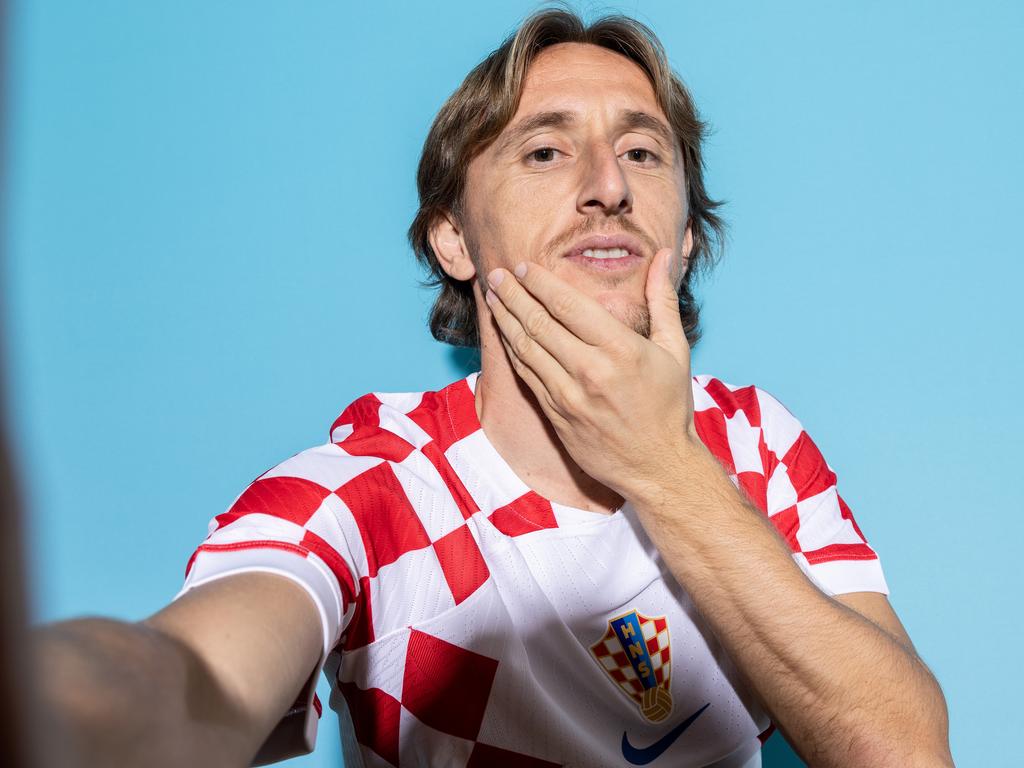
Each night the Corniche area of Doha, a seven kilometre walkway along the bay area, is filled with fans enjoying the balmy winter night air.
Much of the crowd are the local migrant workers. Fake fans? No. Just fans, who with their home nations from the subcontinent not involved, have gotten behind other nations based on a big name.
Argentinian Lionel Messi jerseys are the most popular. Brazilian ones with Neymar, or French ones with Kylian Mbappe splashed across the back are prominent too.
And yep, despite the dummy spits and controversy, Portuguese Cristiano Ronaldo kits are everywhere. Their king is not dead. Long live their king.
Which brings us to the forgotten king.
Luka Modric. Croatia’s midfield wizard who can’t help but make football more beautiful. He did it better than anyone in Russia in 2018, where Modric won the Golden Boot for the best player of the tournament.
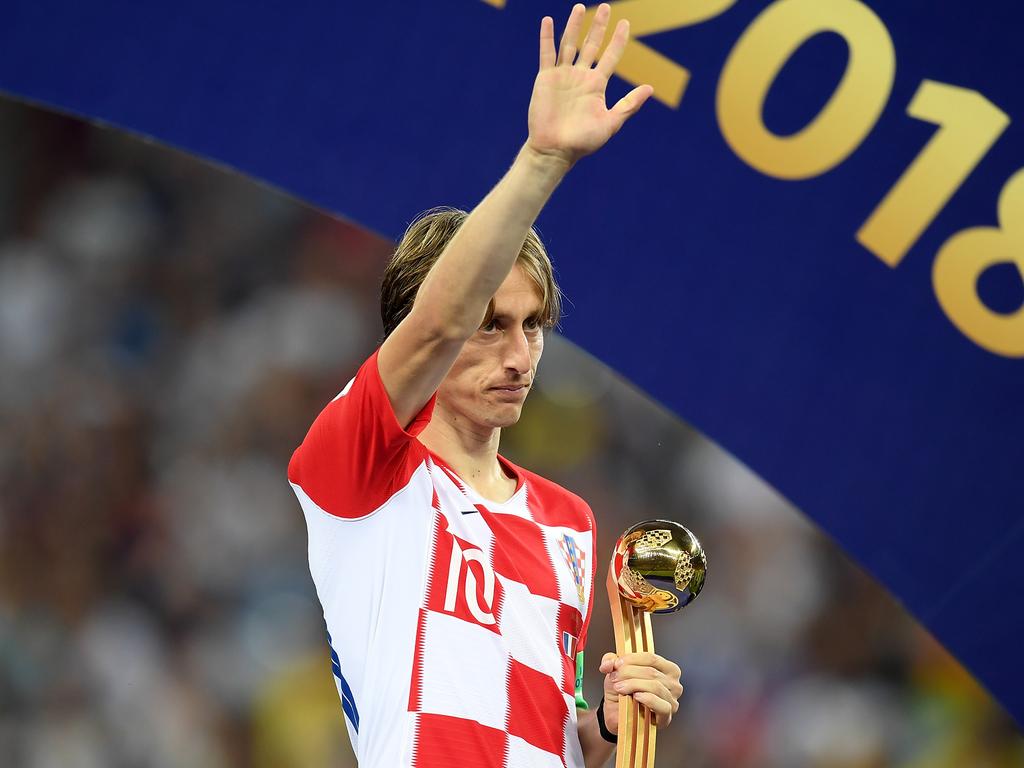
Four years later, you wouldn’t know it walking along the Corniche.
Modric 10 jerseys, in Croatia’s distinctive red and white checks, are as rare as a beer.
Sums up the current way football, in many respects, is supported. Individuals are bigger than teams. Neymar, Mbappe, Messi, Ronaldo. Icons, certainly, but pushed along by the marketing narrative.
Maybe that’s Modric’s problem in terms of instant notoriety. He is not an individual. His brilliance is fully immersed in the concept of football being a team sport, the type of footballer whose first objective is to make everyone else around him look better.
His coaches know.
“I repeat again, whatever I say about Luka Modric, it will not be enough,” Croatia coach Zlatko Dalic says.
At club level, Carlo Ancelotti is crystal clear when it comes to explaining what Modric has meant to his Real Madrid outfit.
“As long as he is breathing with a pulse, he’s going to start for me,” Ancelotti said recently.
“I will use him like a bar of soap until there’s nothing left of him. He won’t retire until he has my permission to retire.”

Modric learnt his artform as a child of war. Displaced by the Balkan conflict in the 90s, he honed his pure technique on the streets, in hotel car parks, wherever he could take his prized possession, a football and find someone else, or a wall, to kick with.
The result is a player who has performed at the top for nearly 20 years. Mixed with a selfless attitude to work off the ball, and a football brain that sees the pitch clearly and quickly, you have yourself a player that will never be underestimated as a teammate or by his coach.
It was again on display in the Japan Round of 16 win for Croatia, even though, on face value, Modric had a quiet game.
Modric was man-marked by a player 10 years his junior, and superior athletically, in Hidemasa Morita. No confirmation yet if Morita followed Modric into the Croatia dressing room at halftime, but it wouldn’t surprise, such was the close attention paid.

Morita was trying to stop the moments like the one that transpired on 27 minutes, when Modric escaped close attention, glided across-field to play an outside of the boot pass to Ivan Perisic, set free down the left.
Modric had no right to play such a pass, because there was no pass there. It cut through three Japanese defenders, who may as well have been bollards. Outrageous. Perisic got on the end of it, and the cross just evaded Croatian support in the middle.
But the flashy moments don’t tell the true story of Modric’s brilliance.
Passing, under pressure or not, is what links teams. Makes them functional. Poor teams can’t avoid clunkiness in possession. Good teams do it so well you don’t notice.
Great players, like Modric, do it well all the time, and help make great teams, like the five Champions League-winning sides Modric has featured in for Real Madrid.
It’s all about ball speed, and where the receiver gets the ball in relation to effect the next action as quickly as possible. Even at this level, passes go to players who have to stop. Critical split seconds added in a game of chaos. The movement breaks down and has to start again.

With Modric, just about every pass helps his teammate make an easier decision of where to move the ball next. It will be needed more than ever tomorrow morning.
In all probability, Brazil will defeat Croatia tomorrow morning to make it through to the semi-finals.
The South Americans have literally danced their way to this point, with unmatched flair and style, their ability to move the ball quickly into dangerous areas unmatched at this World Cup so far.
Very few, if any, are expecting Croatia, workmanlike in the win on penalties over Japan, to trouble the rampant Brazilians.
Modric, a man of few words, appeared at the pre-match press conference yesterday, and agreed.
“Of course Brazil is the favourite,” Modric whispered, then paused.
“Favourites can also lose.”
If it is to happen, Modric will be central to it all.
And maybe then, just perhaps, they’ll remember him on the Corniche.
The rest of the football world, especially those in the know, will never forget a player like Luka Modric.

FIFA slammed as Aussie fan’s bill hits $35k to attend World Cup

‘Extortionate’, ‘astronomical’: Fans call out World Cup ticket prices

Every game: Download your 2026 World Cup draw poster

Revealed: Venues, dates for Socceroos World Cup fixtures

FIFA World Cup: Winners and losers of the draw
