
Nicolas Otamendi’s transformation from liability to Argentina’s World Cup defensive rock
No one could have guessed, after Nicolas Otamendi’s calamitous last World Cup, that he would still be in the Argentina team four years later. JAMES GHEERBRANT tracks his astonishing revival.
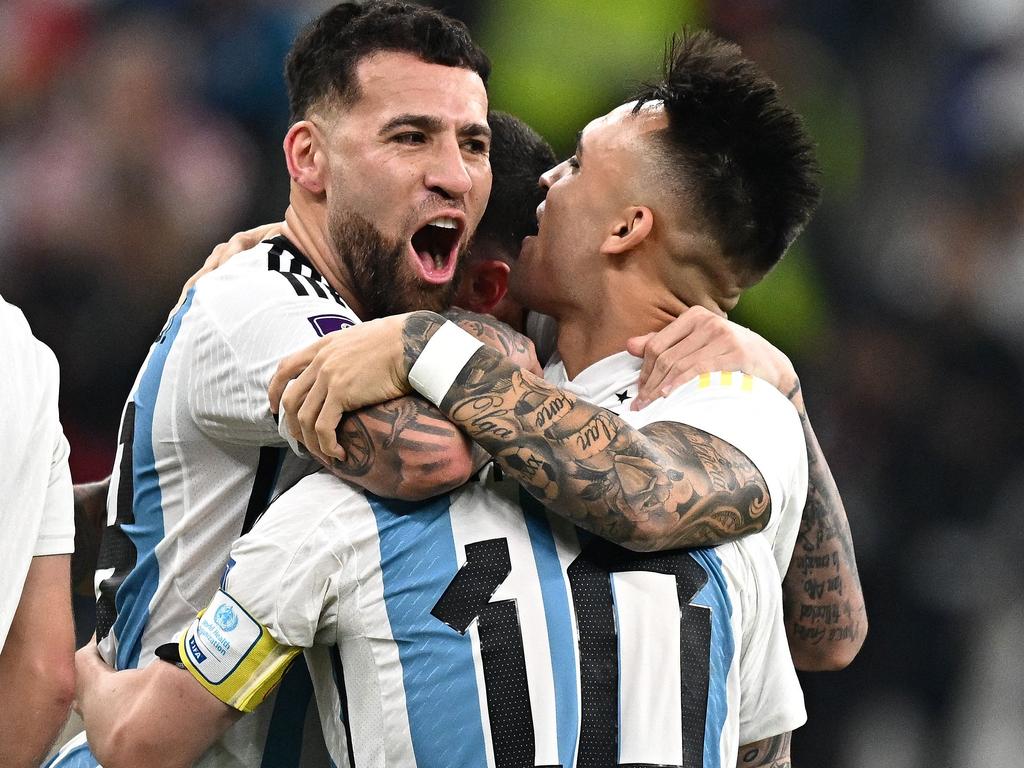
No one would have guessed, at the conclusion of Argentina’s 2018 World Cup campaign, that Nicolas Otamendi would still be in the team four and a half years later.
He was already 30 years old and had endured a torrid tournament, failing to keep a single clean sheet as Argentina conceded nine goals in their four matches. Yet here he is, two months shy of his 35th birthday, one of only three players – Lionel Messi and Nicolas Tagliafico the others – who started the round of 16 loss against France in 2018 and Tuesday night’s 3-0 semi-final win against Croatia.
The Benfica centre back has been one of the unexpected stars of the tournament. His young-and-old partnership with Cristian Romero, 24, has been the rock upon which Argentina’s success has been founded.
Otamendi has played every minute and contributed to three clean sheets, while Argentina’s average-per-game figure for expected goals conceded, 0.4, is the joint-best in the tournament, level with Brazil. Only Spain’s Rodri has completed more than Otamendi’s 57 successful long passes from his own half into the opposition half.
More than that, though, Otamendi embodies the pugnacious, tooth-and-nail spirit of this team. “We are 26 warriors who are willing to fight for the people,” the former Manchester City defender said after the win over Croatia.

At the conclusion of the penalty shoot-out against Holland, Otamendi led the goading of the Dutch team, flapping his ears as his opponents crumpled to the turf. It may not surprise you to learn that the teenage Otamendi trained as a boxer. Though he didn’t make it in the ring, he does seem to have absorbed some of the spite and saltiness of the sweet science.
Otamendi has had to cope with being written off before. He was never regarded as an outstanding prospect, and at one point early in his career he was only the fifth-choice centre back at Velez Sarsfield, of Argentina. After he joined City in the summer of 2015, the team finished fourth and then third in his first two seasons. Many observers thought he just wasn’t good enough. But he played 34 games and scored four goals as City won the Premier League in 2017-18, with 100 points, and was an important player again when they won the domestic treble the season after.
When he moved from City to Benfica in September 2020, with Ruben Dias moving the other way, the symbolism felt inescapable: an ascendant star trading places with a player on the way down, no longer good enough for the big leagues.
Otamendi’s first few months at Benfica reinforced that impression. He conceded a penalty and was at fault for another goal on his debut against Farense. Then a month later he was sent off in the 19th minute of a Europa League game against Rangers for tripping Ryan Kent when beaten for pace.

He kept his place in Lionel Scaloni’s Argentina side, but their form in the early games of South American World Cup qualification was unconvincing: a scrappy 2-1 win against Bolivia was followed by a 1-1 draw against Paraguay and then a 2-2 draw with Colombia.
It was last year’s Copa America where Otamendi really returned to form, starting and completing each of the three knockout games, in which Argentina conceded only one goal.
Despite Lisandro Martinez’s strong form at Manchester United, Otamendi is keeping the 24-year-old out of the team. Having not been selected in the squad in 2014, when Argentina reached the final, he will surely start in Sunday’s showpiece, when he will win his 100th cap.
One thing we know for sure about Otamendi: he will relish the fight.
Originally published as Nicolas Otamendi’s transformation from liability to Argentina’s World Cup defensive rock

FIFA slammed as Aussie fan’s bill hits $35k to attend World Cup

‘Extortionate’, ‘astronomical’: Fans call out World Cup ticket prices

Every game: Download your 2026 World Cup draw poster

Revealed: Venues, dates for Socceroos World Cup fixtures

FIFA World Cup: Winners and losers of the draw
