
Saudi Super Golf League: Most players in top 100 contacted, NDAs signed as millions offered
The world’s top golfers have found themself at a crossroads, as PGA loyalties are tested against individual paydays of up to $140 million for the Saudi-backed Super Golf League.

Money does not talk in golf; it shouts through a megaphone. But if players in the power struggle are now silenced by confidentiality agreements, they will have the final say in shaping the new landscape. Not so much pawns in this game but the kings, it seems fitting that it could end up in court.
Phil Mickelson, who is believed to have been offered $US100 million (about $140m) to join the prospective Saudi-backed Super Golf League, said: “Pretty much every player in the top 100 has been contacted at some point.” They include Lee Westwood, who admitted that he has signed a nondisclosure agreement (NDA), suggesting that he also has an offer to consider.
Last week Colin Montgomerie surveyed the battle between Saudi Arabia’s golf investors and the PGA and DP World Tours, the traditional American and European powerhouses. He said that it came down to “that evil word, money”. Players such as Westwood and Ian Poulter, who has received an offer worth up to $US30 million ($42m), are now deciding which is the lesser of two evils. Should they take the dizzying Saudi super league money and risk bans from their home tours, the Ryder Cup and even the majors? One source close to the tours said that it was heading towards inevitable legal cases.
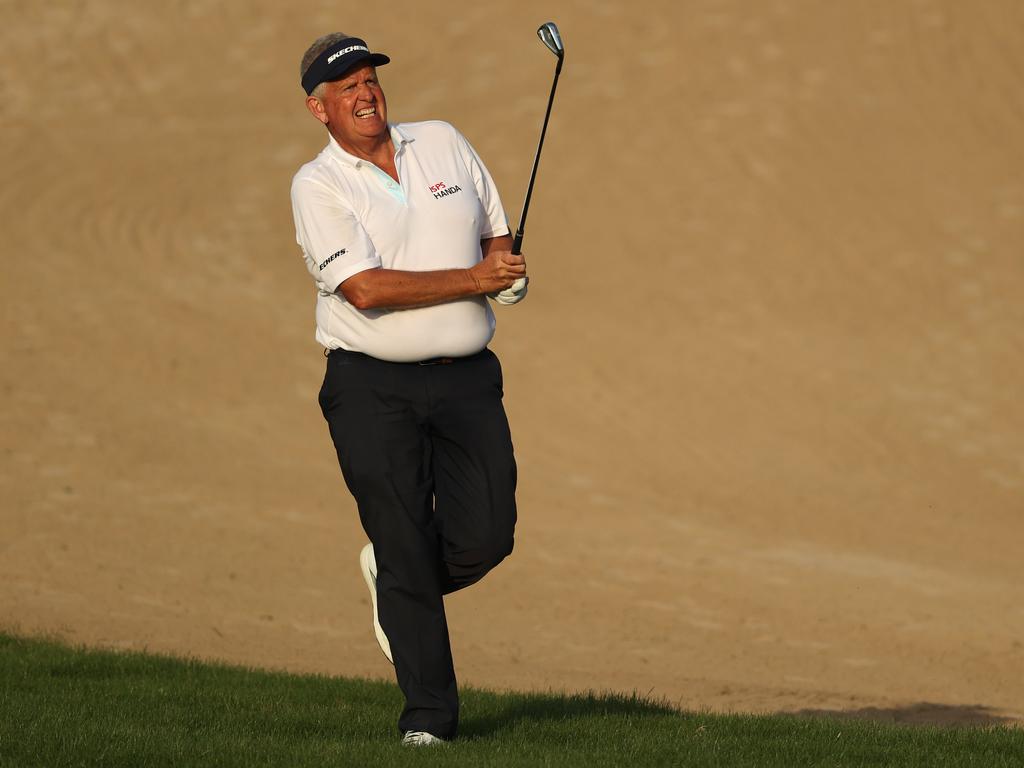
Speaking before this week’s Saudi International, where players have been tempted by huge appearance fees, Westwood, 48, was still able to make one perceptive remark about the Saudis’ investment in the Asian Tour. “It’s like a game of poker where the European Tour [now the DP World Tour] and the PGA Tour have had the biggest hand. Now somebody else has come to the table with more chips. I can see why they feel threatened.”
To recap: Saudi Arabia wants a Super Golf League and has spent months trying to tempt 48 players to join a competition that will have individual and team elements and be staged around the world. The idea gathered pace last summer when Mickelson was targeted as a figurehead with Bryson DeChambeau, Henrik Stenson, Justin Rose, Brooks Koepka and Adam Scott understood to have received offers of up to $US50 million ($70m).
In the meantime, the Saudis have gained a foothold by buying into the Asian Tour, so far via $US300 million ($421m) for a 10-stop International Series. Significantly, that includes a tournament at Centurion Club near St Albans in June which, an insider told The Times, may become a test case with the DP World Tour refusing to grant releases to its players.
The response from the two main tours has been defiant, led by Jay Monahan, the PGA Tour commissioner. He addressed players at last year’s Wells Fargo Championship and told them that anyone defecting to a Saudi super league would face an immediate ban. Seth Waugh, president of the PGA of America, added that rebels would be banned from playing in the US PGA Championship, one of golf’s four majors, and the Ryder Cup.
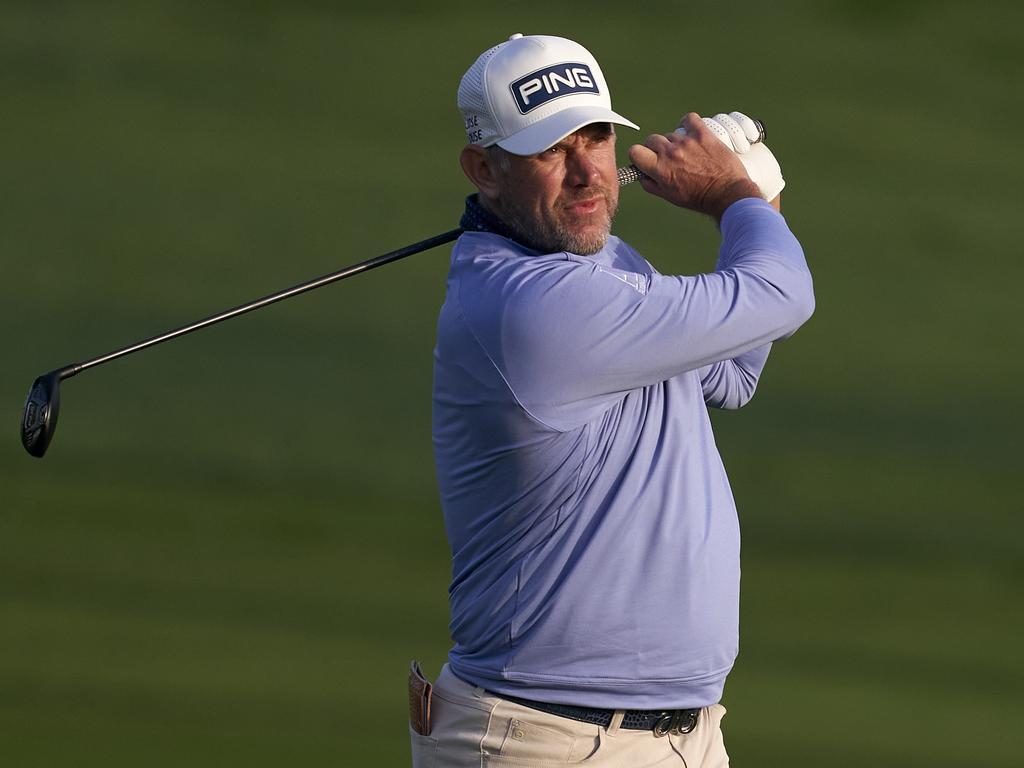
The DP World Tour has not been as aggressive and has tried to avoid a fight with the players, but they will stand behind Monahan when it matters as part of their strategic alliance with the PGA Tour. It is also surely no coincidence that the R&A has said that the winner of the Asian Tour’s Order of Merit would no longer gain an exemption into the Open Championship.
The tours have avoided a legal drama thus far by reluctantly granting releases for this week’s event in King Abdullah Economic City. Part of that was down to a desire to withhold “the heavy artillery” at this stage, as well as the fact some players had contracts to see out from when the event was on the European Tour.
The Centurion event will pose a bigger problem. It clashes with the only mixed-sex tournament on the DP World Tour schedule in Sweden and releases are unlikely to be given again. Players choosing to play will face sanctions, although it is expected that it would take committing to a series or league to prompt a DP World Tour ban.
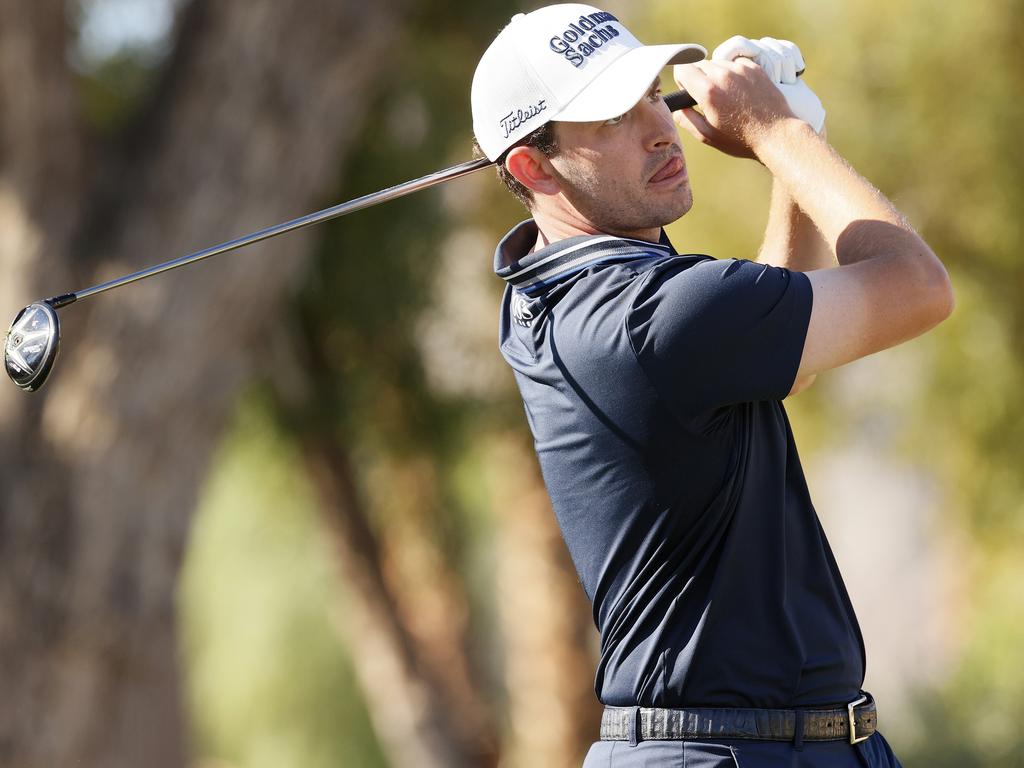
Ultimately, it will come down to the players. Patrick Cantlay, the world No.4 who is playing at the AT&T Pebble Beach Pro-Am in California this week, said: “I wouldn’t be surprised if people’s tune changed quick if the best players, or a majority of them, want to play elsewhere.”
So far Rory McIlroy, Jon Rahm, Tiger Woods, Collin Morikawa and Justin Thomas have either said or implied that they are not interested in the Saudi venture. However, even McIlroy has admitted that players are independent contractors and should have the freedom to play where they want.
Westwood, meanwhile, accused the PGA and DP World Tours of hypocrisy. “[They] have gone into areas in the Asian Tour’s path over the years and never had any problems playing tournaments all over Asia and the Middle East. Now the Asian Tour has this backing, it appears to me they’re just doing what the PGA Tour and European Tour have been doing for 25 years.”
He also said that the team element of a super league appealed to him. “It’s different and golf does need different,” Westwood said. Johnson, a man who does not need an NDA to say little, could not disclose whether he had received a Poulter-like offer but added: “It’s not similar.” Take that to mean bigger.
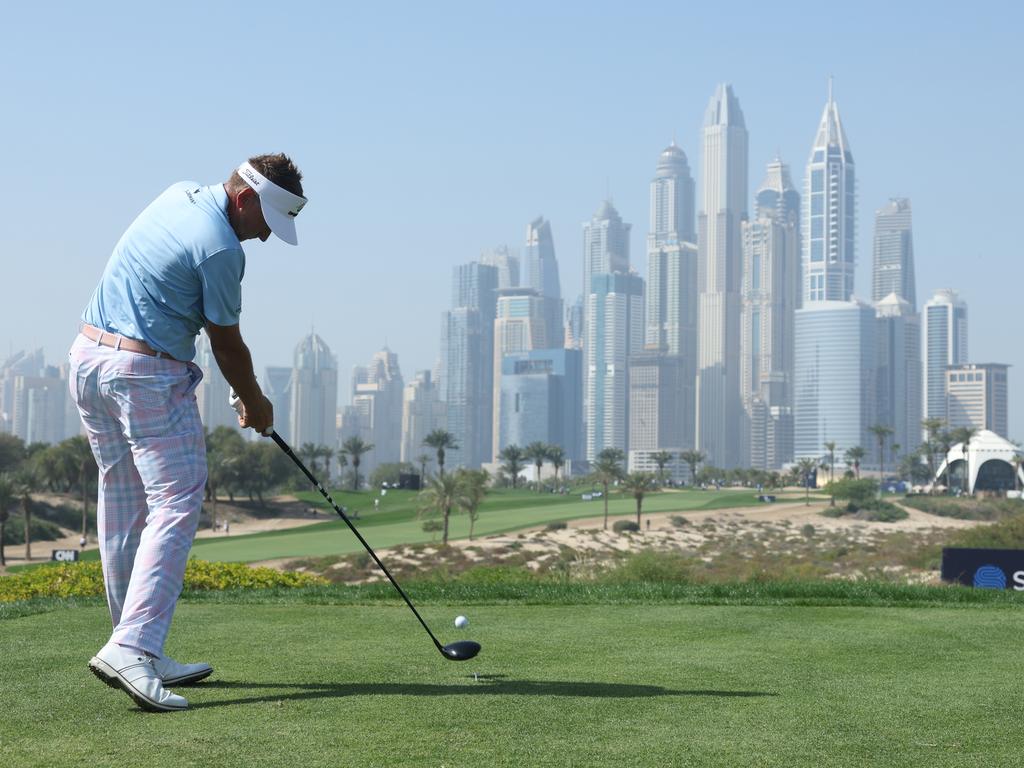
So where does this go now? When announcing details of the International Series on Tuesday, Greg Norman, the man fronting Saudi Arabia’s golf project, promised: “There will be another announcement and then there will be another announcement.” He also said “when” we go to the USA. There will be more battles for player releases, more work for lawyers and a tipping point if enough players sign up.
There is still incredulity in some quarters about how much money players need, and Mickelson admitted that the Saudi threat had already benefited them. “I’m appreciative of the fact that there is competition, and that leverage has allowed for a much better environment on the PGA Tour,” he said. “We would not have an incentive program like the PIP for the top players without this type of competition. We would not have the increase in the FedEx Cup money. We would not have the increase in The Players Championship to $US20 million ($28m) if it wasn’t for this threat.”
The Saudis will scarcely be content with thinking their efforts have simply made the PGA Tour stronger, but Mickelson wants more. “The biggest thing [are] media rights and the way the players have been used for so long,” he said. “I hope that that changes.”
One matter not being discussed by many is Saudi’s appalling human rights record. The money for the Asian Tour investment and super league offers is coming from the kingdom’s sovereign wealth fund, the Public Investment Fund (PIF). Alas, European chiefs cannot take the moral high ground given that the Saudi International used to be their own event, and was first held three months after the murder of the dissident journalist Jamal Khashoggi in a Saudi embassy.
However, the alleged link to Crown Prince Mohammed bin Salman, who chairs the PIF, has bothered plenty beyond golf’s bubble. USA Todaysuggested that anyone attaching themselves to the Bin Salman government should be unwelcome at any significant tournament in the Western world. The Washington Post, which employed Khashoggi as a columnist, said that the golfers were taking “thinly laundered money from a man who orders his dissenters murdered”.
Money is evidently noisy enough to drown this out. Golf has got itself to a table so lavish that a rival super league, the British-based Premier Golf League, has struggled to get people to take any notice. This is despite saying it will provide $US20 million ($28m) payouts to 250 voting members of the PGA Tour by 2030. “We have been refining the terms of our offer,” Andy Gardiner, the frustrated chief executive, said. Interestingly Gardiner, a former lawyer, says that despite wanting to work with the PGA Tour, legal experts have assured him that ban threats will not stand up.
It remains to be seen whether the top golfers, especially those under the age of 40, are willing to test that assertion. For most the tri-continental struggle is not a moral maze, but a crossroads. The players have the power and their next moves could be decisive.
– The Times

Leishman breaks Aussie title drought

Next Cam Smith? Meet Qld’s top teen guns at elite tournament

‘Megabucks’: How golf became fashion’s obsession

A heckle, a putt — then pain: The moment Smith’s dream crumpled

Great Dane’s impossible putt tears Aus Open from shattered Smith
