
Tiger Woods makes a nightmarish return to St. Andrews as Cameron Smith fires on Day One
The 46-year-old made his return to the Old Course, where he has won twice, but he struggled to a 6-over-par finish in the opening round of the British Open.
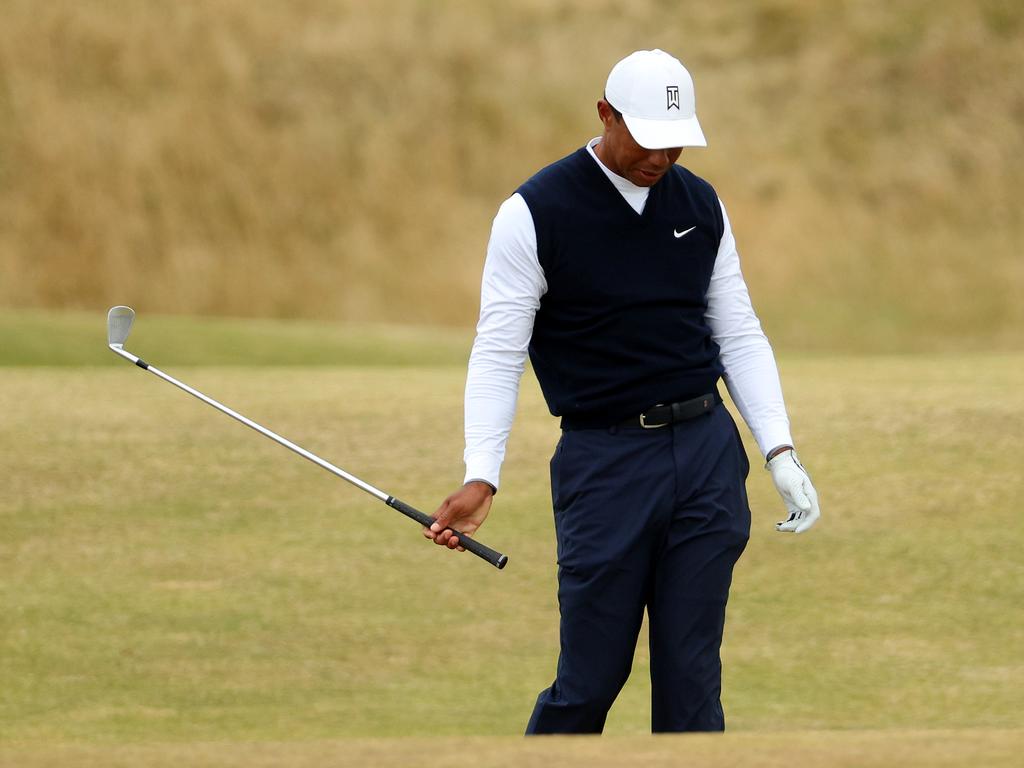
St. Andrews is Tiger Woods’ favourite golf course in the world. It’s where he completed his career grand slam in 2000 and where, five years later, he won the British Open for a second time. He skipped this year’s U.S. Open because, as he grapples with the lingering injuries from the car crash that threatened his career, he wouldn’t risk jeopardising the chance of playing the Old Course for the 150th Open Championship.
“I just didn’t want to miss this Open here at the home of golf,” Woods said this week.
Having made it back to St. Andrews, however, Woods’s tournament unravelled immediately in the opening round Thursday.

A combination of bad luck and poor play led him to a 6-over-parfinish, a whopping 14 strokes off the lead. On a day when other players were able to take advantage of the dry conditions—American Cameron Youngleads the field at 8-under, with the red hot Rory McIlroy lurking at 6-under—Woods quickly plunged out of contention and became a long shot to simply make the cut. He was tied for 146th when he finished his round.
The outcome is undoubtedly a major disappointment to Woods, who has said he is playing in major championships because he still believes he can win them, and raises questions again about his prospects of truly competing in golf’s biggest events once again. He also struggled down the stretch at the Masters, and withdrew after a disastrous third round at the PGA Championship.
Woods’s nightmare at St. Andrews began even before he started, when he received a later start when it appeared windier and more difficult, after the likes of Young and McIlroy posted low numbers earlier in the day. Then, with his first shot of the tournament, Woods had the misfortune of solidly striking an iron off the tee only to watch his ball come to rest in a divot. That led to misfiring a ball into the famous Swilcan Burn. After a drop and a well-placed pitch, he was close to the hole with an easy chance to make bogey—when he missed the short putt and carded a double.

His short game continued to fail him early in the round. After back-to-back bogeys on No. 3 and No. 4, he was four-over par through as many holes. A poor shot from near the green on the scorable par-5 fifth cost him a potential birdie. When he sank a decent-length putt on No. 6, it was to save a par.
His round only got worse on the next hole. Up until the seventh, his problem hadn’t been hitting the fairway off the tee. This time, though, he mis-hit his drive so severely that it wound up in a bunker closer to the 12th hole. It led to his second double bogey of the opening nine.
He showed signs of a potential run when he birdied No.9 and No.10, only to give those two strokes back over the next three holes. He added another birdie on the 14th before bogeying No.16.

His round ended with one last squandered opportunity: He drove the ball to the edge of the green on the par-4 18th, setting up a relatively short look at birdie that he missed.
It was stunning when Woods returned earlier this year at the Masters, barely a year after the grisly car crash that caused severe injuries to his legs. Even Woods had been unsure if he would be able to return to competitive golf as he recovered. As he rehabbed, he ruled out the idea of playing a full schedule ever again—but left open the possibility that he could gear up to play a limited number of events.
His comeback started with a bang. He finished the Masters’ opening round at 1-under, setting up the possibility that he hadn’t just re-emerged, but he would have another opportunity to win a green jacket. He then played each of the next three rounds over par, including back-to-back six overs on the weekend, to finish 13-over.
“My leg was not in any condition to play 72 holes,” Woods said. “It just ran out of gas.”

His lack of endurance as he tries to manage the pain he still experiences was even more clear at the PGA Championship the next month. Once again, he played well enough to make the cut. But in the third round, he shot nine-over, after which he withdrew.
Woods sounded more optimistic about this tournament at one of the sport’s hallowed grounds. He hadn’t played a competitive event since the PGA Championship in May and missed June’s U.S. Open just to gear up for the British.
“The walk is certainly a lot easier than those two championships that I played in before this year,” he said earlier in the week. “I’ve gotten a chance to work in the weight room and get stronger and get the endurance better in my leg.”
As Woods has explained, he remains so uncomfortable that the simple task of walking 18 holes can be the most difficult aspect of playing. At Augusta National, that was a particular challenge because of the course’s undulations. St. Andrews isn’t particularly hilly, but the style of this course presents a different issue, he said, because the ground can be so uneven wherever he walks.

While Woods has said he believes he can still win these events, the 46-year-old was also unusually reflective this week. He referenced watching Arnold Palmer, in 1995, play his last Open Championship at St. Andrews the same year Woods made his debut. Ten years later, when Woods went on to win, he remembered playing four or five holes behind Jack Nicklaus when he bid farewell to the tournament at the same course.
With the British Open’s rotation, it figures to be at least five years until the tournament returns to St. Andrews. And Woods isn’t certain he will be able to physically compete by then.
“Who knows?” he said.

Leishman edges closer to two-decade first

Next Cam Smith? Meet Qld’s top teen guns at elite tournament

‘Megabucks’: How golf became fashion’s obsession

A heckle, a putt — then pain: The moment Smith’s dream crumpled

Great Dane’s impossible putt tears Aus Open from shattered Smith
