
Fishy fish, messy chess, and poker J’accuse: Sports sandals take a turn
Weights! Hidden devices? Accusations roil beloved games and the underwater as JASON GAY unpacks why cheating scandals are erupting around recreational sports.

This week will go down as the moment when — finally! — sports fans stopped obsessing about trivial hobbies like the NFL and Major League Baseball, and started caring about the three most important activities in American life:
Fishing, chess and poker.
Or more specifically: alleged cheating scandals in fishing, chess and poker.
Let’s start with the fishy fish. Video went viral over the weekend from a fishing contest on Lake Erie, where a pair of anglers stand accused of supplementing their winning walleyes with lead weights and filets from other walleyes.
That’s right: walleye in walleye.
The scam fish were gutted on camera, to great drama: A suspect looking on as egg-sized weights and slimy filets are extracted from fish submitted for prize consideration. The nearby crowd grows furious and mob-like.
“We got weights in fish!” an organiser yells.
“Get the blank out of here!” screams another voice. (Except he doesn’t say blank. A warning, if you haven’t seen it: The walleye video is more foul-mouthed than Pesci in a Scorsese.)
Serious Controversy in Pro fishing tournament as multiple-time winners caught stuffing lead weights and other fish filets in their fish to have the heaviest catch to win hundreds of thousands in prizes. pic.twitter.com/Sxqeo2XC0K
— Billy (@Billyhottakes) October 1, 2022
Now if you’re like me, you think of fishing as a leisurely activity in which you fail to catch anything between opening 12-ounce cans. But Lake Erie was big-time stuff: A five-figure prize was on the line. The alleged suspects had been on a lucrative tournament hot streak which is now under suspicion.
I did not have Globally Scandalous Lake Erie Fishing Imbroglio on my sports line-up card for October. Nor did I expect the most widely read sports saga in the Journal this month — and honestly, it might wind up for the decade — to be the cheating scandal currently consuming the world of high-level chess.
If you’re behind (but you shouldn’t be, since this story has been aced by the Journal’s Andrew Beaton & Joshua Robinson, now the Woodward & Bernstein of chess): This dilemma concerns the American phenom Hans Moke Niemann, who unexpectedly toppled world champion Magnus Carlsen at an event last month.
At their next match, Carlsen withdrew after a single move, and signalled strongly he did not believe Niemann’s play was on the level. On Tuesday, Woodward & Bernstein, I mean, Beaton & Robinson reported that an investigation by the online chess-playing platform Chess.com found more than 100 examples of suspicious online play by Niemann, and that Niemann admitted to the allegations and was banned for a period of time. The report also cast serious suspicions about Niemann’s meteoric rise in “over the board” chess (i.e. live chess in the same room as his opponent, as Carlsen was).
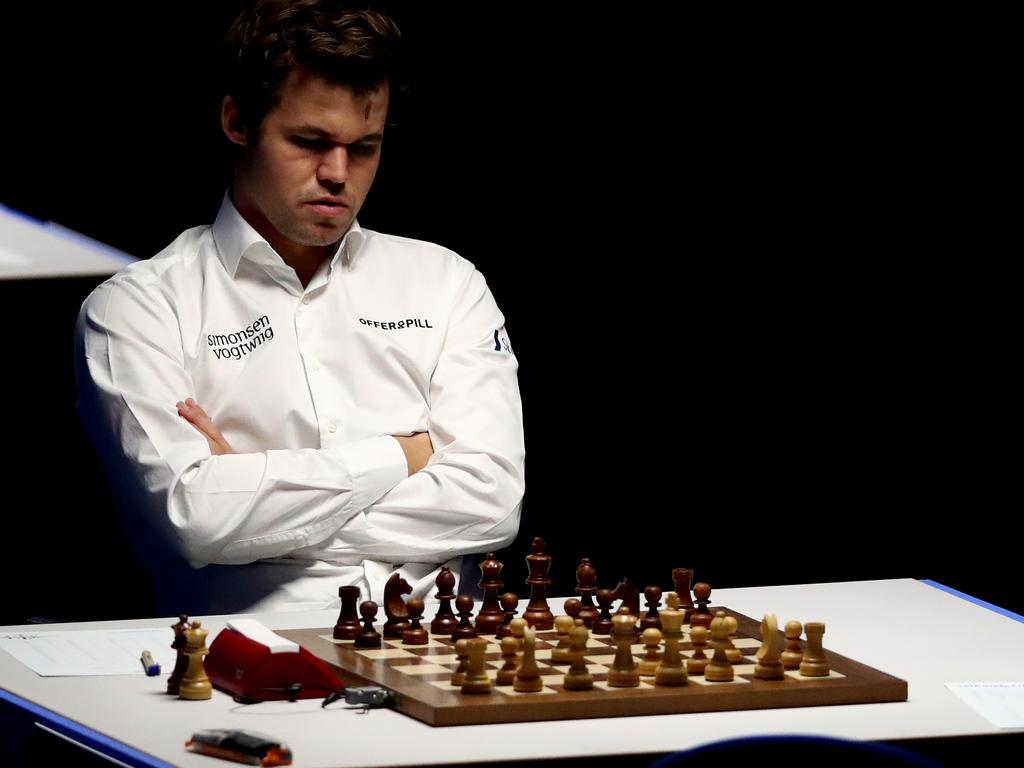
Now if you’re like me, you think of chess as a leisurely activity in which you lose to children and golden retrievers between opening 12-ounce cans. But this chess scandal is a major event, and provokes a fair question: How do you cheat at chess?
Online, there are many options for subterfuge (answers are often a Google click away), but Beaton & Robinson wrote that over-the-board cheating is more complicated endeavour, requiring a live feed of the match and almost surely a co-conspirator running options through a computer and signalling moves to the player via a device of some kind.
Or…not? There’s been no definitive proof and Niemann has strenuously denied cheating in over-the-board games. The same murkiness — and lack of proof — applies to poker player Robbi Jade Lew, who is under scrutiny for going in on a $269,000 pot against Garrett Adelstein while only holding a jack-high. That’s an extraordinary call you probably wouldn’t do playing in the backyard against your cousins and some golden retrievers, and is a wild move on the pro circuit. A suspicious Adelstein was infuriated, and Lew (who denies cheating) wound up returning the money to him.
Now if you’re like me, you think of poker as a leisurely activity in which you lose a maximum of two figures between opening 12-ounce cans. A quarter million dollar pot sounds like stressful, acid-stomach business for everyone involved, and it’s why God invented penny-slot machines and Uno.
I read the man and make a hero call after he shoves on a turned brick card. Get over it.
— Robbi Jade Lew (@RobbiJadeLew) September 30, 2022
I’ll say it again like I’ve said it before: “I’m not playing nice in the sandbox anymore.â€
Make it right @GmanPoker
Or don’t. #IDGAF
I’ve already moved on. I’ll make it back either way.
It’s been quite a week for shenanigans, and there’s still a couple of more days for my favorite sport, professional cycling, to get some of its fantastic brand of nonsense in under the wire. Do you know what pro cycling calls scandals like these? They call it “Pro cycling.” (When your sport has had scandals involving hidden motors and athletes injecting other people’s blood, crudely stuffing a fish full of lead sounds lo-fi adorable.)
Yet these furies capture the imagination, because all of us remain fascinated at the lengths some of our fellow human travelers will allegedly go to win. How fitting is it that these tempests land in the same week the PED-unscandalized Yankee slugger Aaron Judge hits 62, a moment many fans believe returns a layer of virtue to baseball’s home run table?
(Now comes word of a judging scandal in the world of Irish dance. I have no idea what to do with this information.)
I choose to be an optimist. Seeing people riled up by these controversies makes me feel there are still a few places left in this cynical world where a fading but useful quality like human integrity matters—even if those places are Yankee home run records, chess boards, poker tables and onboard motorized fishing boats on Lake Erie. It’s why Magnus Carlsen is so ticked. It’s why prize fishermen get asked to take lie detector tests. It’s why the Houston Astros, like it or not, are going to be hearing garbage can jokes for the rest of their lives.
Here’s to integrity, I say. Truth still counts. Fishing, chess, and poker sounds like a perfectly good summer weekend in Maine. Let’s keep it that way.

WWE fans fume as John Cena’s career ends with ultimate irony

Named: The stars of the Australian Volleyball Schools Cup

Inside the innovative public school that churns out elite athletes

Big futures: Who are the Aussie U18 Rugby Sevens golden studs?

100+ photos: The best local sport action
