
How much can Australian sport be transformed within a decade if gold-standard gender equity measures are implemented?
Sport’s gender equity has vastly improved but the smartest women in the room are tackling still-entrenched problems while eyeing Brisbane 2032 and beyond, writes LINDA PEARCE in Part II of a special report.

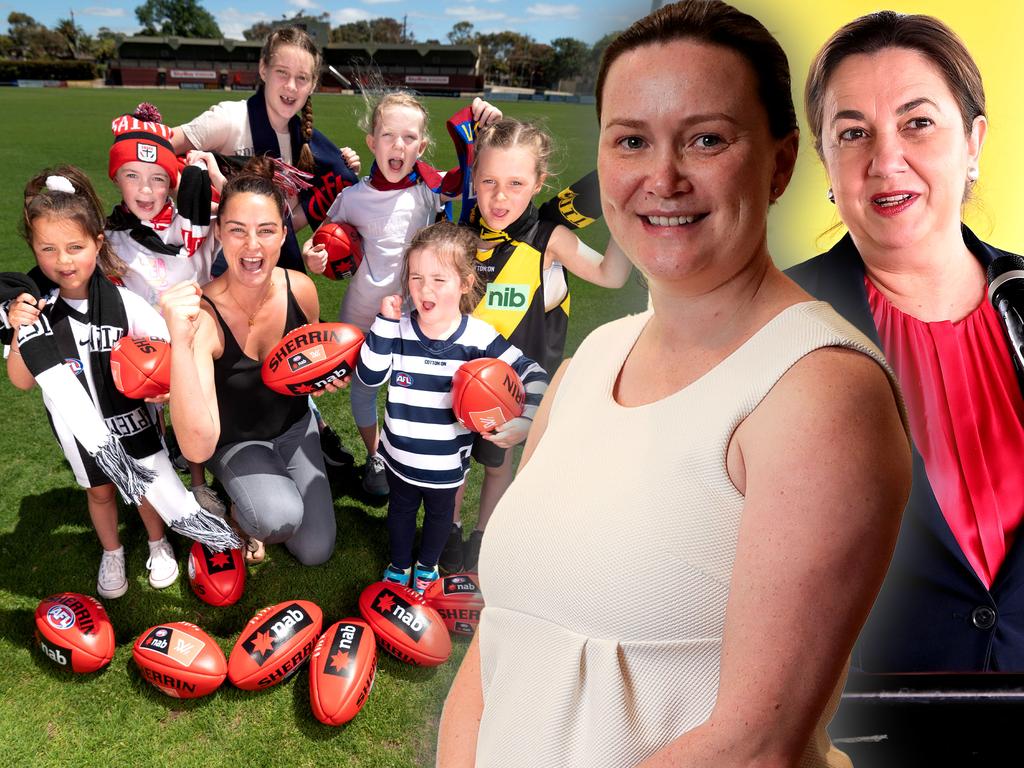
En route to the Brisbane 2032 Olympics, with a 2026 detour via regional Victoria’s Commonwealth Games, the head of the state government department rated as the gold standard in the quest for gender equity in sport offers a convincing argument about what can be gained from the national adoption of what is a unique model.
Because extensive and expensive reports, however excellent, often gather dust. This one, the 2015 Inquiry Into Women and Girls in Sport and Active Recreation, produced by a panel chaired by former Richmond Football Club president Peggy O’Neal, did not.
Because lip-service is often paid to what, with well-intentioned brows furrowed, does not end up amounting to very much. At least culturally, which, for all the value of programs and grants for very worthy ideas and principles, is what matters most.
A few days after CODE Sports interviewed Sarah Styles, director of Victoria’s Office for Women in Sport and Recreation (OWSR), and after a follow-up email requesting a few more specifics, Styles revisited the question of why her state does what it does.
“Fundamentally, it just makes sense,’’ Styles wrote.“ When a society provides equal opportunities to all, we grow as that society, both socially and economically.
“Another way to say that is, it’s the right thing to do, but it’s also the smart thing to do. Fully engaging women and girls is about the single biggest growth opportunity available, whether you’re talking to a sporting organisation or a national economy.’’
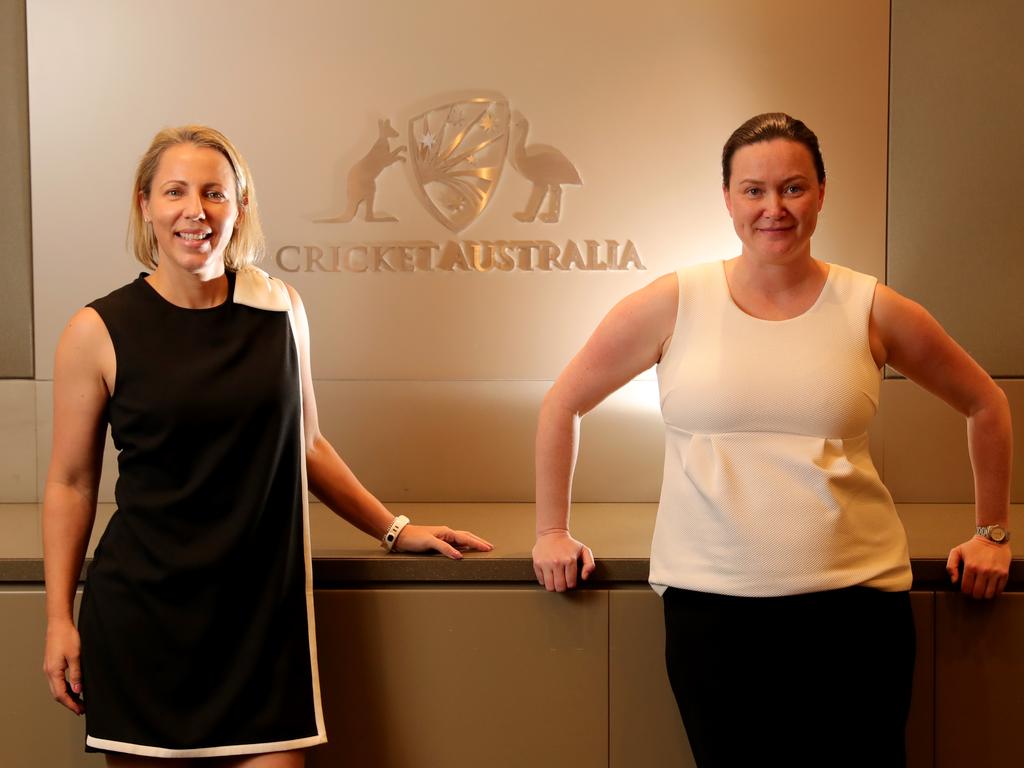
Styles — former head of women’s engagement at Cricket Australia, who started in her current role in 2021 — cites the visibility gap as the key barrier to equality, and says there is also a clear choice to be made as Brisbane prepares to become Australia’s third Olympic host city.
“There‘s option one, which is, we all keep doing our thing and we see where we end up. And that’ll be better than it was yesterday but is a really open ended, ‘Let’s just see’,’’ Styles says.
“Or there is the second approach, where we say, ‘We‘re now nine years to go. What do we want it to look like at that point in time? And then how are we going to make it happen?’
“Much like any other comprehensive strategy, you‘re breaking it down and well, ‘What does that mean needs to happen year on year? How are we tracking: ahead or behind? What are the things that need to happen to make sure we can actually do that, because there’s no reason we can’t be the best in the world at this’.’’
Ingredients include broadcast rights, sponsorship, investment, strategies for increased media coverage and diversifying those who provide it, etc, etc.
“I‘m not interested in wallpapering over cracks, I want to fix this properly, permanently, sustainably. And ultimately, this isn’t about taking something from men and boys and giving it to women and girls,’’ Styles says.
“Every single person benefits from the changes that we are trying to make here.’’
*****
Media. That’s a big one, given the ongoing challenges of visibility, as well as the dollars that flow from broadcast deals being so vital to the fragile bottom line.
“You‘ve got women sports leagues that should be getting good money for their media rights, and yet they aren’t because there is this sense of, ‘Oh, no, you don’t pay for these things’,’’ Styles says.
“And yet they’ll pay for media rights for a men‘s sports league that rates less.’’
Subsidised travel to cover elite women’s events is one useful device in closing the visibility gap, for Styles says there is an assumption that a) the interest is not there and so b) the investment can’t be made, even if c) when men’s data may not compare favourably, that seems to matter far less.

Insisting that fantastic commercial opportunities abound but stressing that the bar is set far higher for women, more strategic interventions are required. Rightly or wrongly, says Styles, demonstrated gains allow cultural change to be accelerated.
“For some people, their minds will never be changed by, ‘Let‘s sit around the room and have a chat about this’. Their minds will change when they see progress. And that is what gets them on board with the destination that we’re working towards.’’
Investment, she says, is largely predicated on raising profiles, and a particular hobby horse is the importance of women not just making the news but reporting on it.
The latest Women in Media Gender Scorecard found from a study of 18,446 sports stories in the Australian media in the last half of July 2022, that only 18 per cent were written by women. Which is probably not surprising given that a long-unforgiving place has grown even harsher and the abuse more widespread in the age of digital trolls.
“We know that the overwhelming majority of people want to see more women in sports media, and yet it is a very vocal minority that really impacts the experience of those women,’’ Styles says.
“Just because those (negative) voices are there doesn‘t change the fact that they should be there … but success doesn’t mean the absence of critics.’’
In a data-driven business, Styles subscribes to the adage that “what gets measured gets managed”, and says basing conversations and strategic interventions on facts rather than ideologies is a good starting point in the quest to overcome some of the historical sources of inequity.
Yet a system change is not necessarily about providing identical opportunities for all. “It’s sometimes a misstep that when people think equal, they think same, because that implies what one side might have is the ideal. Whereas we know that the current system for men is flawed as well.’’
Despite OWSR’s 500-plus “development opportunities” across a vast range of areas including broadcasting, Styles insists that it’s not women who need fixing, but the system denying many accomplished leaders the chance to, well, lead.
Hence the shift away from general upskilling to more targeted technical skills that may be barriers to advancement; such as, for example, providing financially-based training to the high performance manager aspiring to be a CEO.
Sports, says Styles, can tend to use training as a diversion from real, genuine and deserved progression. “So it’s, ‘We‘ll send them on a leadership course’, as opposed to, ‘Well, how about you just promote them?’’’
*****

Among the areas in which Women Sport Australia president Gen Dohrmann believes OWSR is leading the way is its Fair Access Policy Roadmap, that requires local government organisations to be working towards gender equality in the access and use of publicly-owned community sports facilities they oversee, or risk missing out on future government funding for new or redeveloped facilities.
“Something like this doesn’t exist anywhere else in the world, as far as we know,’’ says Styles, who had expected pushback when the conversation began in 2021.
“Instead we were met by, ‘Sounds good. This will help us achieve what we’re trying to achieve, too’.’’
Yet it’s a whole-of-government thing. Tens of millions are also being spent on infrastructure upgrades, including at community level to build new change rooms and better lighting to enhance women’s safety, for instance.
Another government program uses local sport to drive the prevention of gender-based violence while, at the pointy end, one of the big-ticket items is a $100 million-plus investment in a new Melbourne home for the Matildas, while what Styles likes to call the “rewiring of old habits” extends to the access and use of community sports facilities.
“There’s the idea that, ‘Well, the women‘s team simply can’t get access to change rooms’, or ‘You can use that ground, but only at a time that works for absolutely no one’,’’ she says.
“Or, ‘No, you can‘t have use of the good ground in case we need it at some point. Next week. You can have something else or nothing’. So how do we drive that cultural change to mean that when you’ve got kids who are starting to play in, let’s say, 2032, that they don’t even realise this was ever an issue?’’
Gradually, is one answer, despite the frustration that often entails.
“They are absolutely leading the space, nationally,’’ says Dohrmann, whose advocacy group is keenly tapping into the only dedicated state model. “But their remit is only Victoria and, because I’m based in Victoria, it’s a no-brainer to be able to champion a lot of the stuff that they’re doing and share that nationwide.’’
South Australia is among the other states doing strong work in the field, along with New South Wales through initiatives such as its four-year “Her Sport Her Way” government action plan.
Outside the tent, there is also the Equal Pay for Equal Play campaign being ramped up ahead of the forthcoming NSW election, with voters urged to advise their MP that providing “a world leading standard for gender equality in sport … is a priority issue when we’re deciding who to vote for.’’

Nationally, Dohrmann suggests a look across the Tasman, given the advances achieved by Sport New Zealand under former Rugby Australia and Canterbury Bulldogs CEO Raelene Castle.
“They’re absolutely blowing us out of the water at the moment,’’ says Dohrmann of Women in Sport Aotearoa, which last year hosted the eighth IWG World Conference on Women and Sport, the largest global gathering dedicated to advancing gender equity and equality in sport and physical activity; to which the Australian Sports Commission sent a delegation.
Yet the ASC has scarcely been idle, despite its critics. Its Director of Diversity, Equity and Inclusion, Dana Assenheim, provided CODE with a comprehensive list of programs and projects driving outcomes for women in sport, as it works to consolidate the various elements into a single cross-functional strategy.
The Women Leaders in Sport Program is a longstanding example, managed by the ASC in partnership with the Commonwealth’s Office for Women, which has supported more than 27,000 women since 2002 and recently received another $3.4 million funding injection.
More recent is the AIS National Generation 2032 Coach Program | Australian Institute of Sport (ais.gov.au), launched in 2022 in conjunction with national sporting organisations and institutes. In keeping with the need for sport to adapt to meet the needs of women in the high performance space, opportunities are offered on a part-time basis to help with career/family balance.
In the October federal budget, the ASC received $10.3 million over four years to deliver programs across women’s leadership, coaching and governance with a focus at the community level, while the AIS Female Performance & Health Initiative | Australian Institute of Sport (ais.gov.au) established in 2019 has also been well-received.
More broadly, a key point is that the shift to address more of the systemic barriers that are inhibiting women’s progression also means involving and educating men.
Federal Sports Minister Anika Wells wrote in a recent column for News Corp that program funding was far less valuable than structural change, for past gap-fillers had been reactionary and bandaids slapped haphazardly onto wounds in need of surgical repair.
According to Wells, a flawed strategy had attempted to “retrofit females into a system designed for males’’. Even in the blame-the-other-mob game that is politics, little wonder that this is still the underwhelming state of play nationally.

*****
So to board quotas. Not a sexy topic, but an important one.
When the OWSR was established in 2017 under inaugural head Dr Bridie O’Donnell — thereby fulfilling one of the nine recommendations made by Peggy O’Neal’s panel — there was a two-year phasing-in period before a requirement for at least 40 per cent female directors of funded state sporting bodies came into effect.
Over that time, the number of compliant boards more than doubled from the original 40 per cent, and has remained above 90 per cent ever since, with data from the most recent quarter showing the percentage at a record 96 per cent, and action plans in place where unexpected resignations prevent a perfect score.
“That doesn’t mean in Victoria there aren’t people who go, ‘Ooh, quotas, do we like them?’ But it‘s not about catering to the lowest common denominator, it is about, ‘How do we think about where are we trying to get to?’ It’s about, what are the strategic interventions that we’re going prioritise, and then making it happen,’’ Styles says.
The ASC, meanwhile, has moved towards a more funding-linked compliance strategy rather than mandates, which Assenheim describes as an executive-led wish “to remove some of the red tape for sports”.
Still, there is a push towards instituting a common set of governance standards across the country, adding to the four states — Victoria, SA, WA and Queensland — that the ASC says currently tie funding to gender equity on boards.

Of the 63 ASC-bankrolled organisations, 17 have boards comprising at least 40 per cent of women and the rest have more than 30 per cent, as the benefits of diversity continue to be spruiked in an approach that is perhaps more carrot than stick.
“Does it work better, tied to funding? I’m not sure,’’ Assenheim says. “I’m not sure that the evidence is there and often it gets mentioned that it could be a tokenistic thing, or, ‘We have to do it so we’ll just get women on the boards’.
“So the experience because of the environment that they come into is not great, versus if you actually show the value of it, sometimes you can see a better environment, which makes for a better experience for females to be involved.’’
Victoria’s program includes improving training for would-be directors, supporting sports attracting candidates and/or evolving their constitutions while, like the ASC, stressing that diverse boardrooms are the best-performing kind.
“I disagree with people who argue against quotas and if people are ultimately onboard with the destination, and they‘re gonna get there anyway because everybody’s just on that journey, what is the harm of anchoring that into how we do things?’’ says Styles, likening the system to the need for speed limits, and keen for it soon to become a non-issue.
“Right now, it might be this transition phase and some women might think, ‘Ooh, I don‘t want to be a, quote unquote, token appointment.
“A few years ago on ASX listed boards, there was a push to reclaim the title of being a token director and this idea of, “Hell, yeah, if that‘s what took me to get here, I’m gonna do an amazing job and I’m gonna have a fantastic impact’.’’
*****
Assenheim agrees that the Victorian program offers far more than some other states, but says that does not mean it should necessarily be replicated nationwide.
“My opinion (is that) I don’t like to see (women’s sport) segregated off separately. I’m really big on this intersectionality approach: what does an individual person need? And I think sometimes when we go ‘women’, some people still think of white women, white females, versus multicultural or transgender women.
“So I’d like it to be, ‘Who are the individuals and what do they need?’ Because I sometimes feel if we have women-specific stuff there’s still a lot of our community that gets left out of a female strategy.’’
Styles believes the commitment to women in sport is an extension of Victoria’s progressive position at the forefront of gender equality more broadly, while describing sport as a unique mood-shifter and “incredibly powerful lever for change in so many different ways — not just when it applies to gender equality’’.
“I‘m thrilled that we’re one of the few places in the country that actually are able to combine the mandate to drive change with the resources to do so across the program space, the research space, the community engagement space and the policy space.
“Yes, on one hand, do we want change to happen faster? Always. On the other hand, if we think back to where we were when I happened to start this work in 2014/15, things have come on a phenomenal degree. So now the question is, what does it look like from here?’’

Research may help to provide the answer to that, given that 14 university programs have been funded, including one into the impact of uniforms on women and girls by Dr Clare Horton that has led to changes across multiple sports including netball, cricket and AFLW, plus internationally.
Shorts, especially dark shorts, anyone?
*****
Former Netball Australia and ASC chief executive Kate Palmer is among the experienced administrators who has great faith in the small but emerging group of female change agents to drive the necessary reforms.
“They want leadership. They’re grabbing it with both hands,’’ Palmer says. “They’re more confident, they can see that it’s possible and I think this next generation’s going to shake it up completely.
“They demand more, they stand up for themselves, they don’t just go, ‘Please sir can I have some more?’ They actually say, ‘I deserve this, I’m entitled to this’, and they want to create a pathway for other young women.
“But I would also like the younger men to be standing alongside them and I think actually think this generation of younger men view the world very differently as well. So they’re going to either step aside or walk beside these young women.’’
Assenheim, similarly, predicts the new breed will be major players in the revolution — as distinct from evolution — currently underway. She urges those disillusioned with the pace of change not to give up hope, given the positive work being done, the strides taken towards gender equity and the number of organisations committing to the journey.
“They don’t see things the same way we do. They don’t have the same biases,’’ Assenheim says of the emerging young administrators.
“They’ve grown up with people who are non-binary, for example, that’s a non-topic for them, and they’re now experiencing AFL and NRL and rugby and all these other sports that traditionally were male but they can play now.
“So once that generation comes through, I’m hopeful that that’s all part of the nirvana.’’

She notes lots of good intentions but a culture, like in broader society, that is difficult to change. She would also like to see less fragmentation and duplication, and a tighter process of utilising the products and programs that already exist.
“There’s lots of different organisations out there trying to do the same thing and we’ve always said how wonderful it would be if we could collectively come together and go, ‘All right, who’s doing what? How do we come together and develop an overall runway of things and all start to work collaboratively across the whole ecosystem’.’’
Styles says the women in sport space is “light years” ahead of when she started in it almost 10 years ago, propelled by massive gains at the elite level in traditionally male sports in particular, which has “triggered that cascade down to the community level”.
“But we have still got a long way to go. And that‘s where I think about the opportunity we’ve got, if we were to draw a line in the sand for 2032 and think, ‘Well, what do we want?’
“Not even women in sport, just simply what do we want sport to look like? When those teams are walking in for the opening ceremonies, whether it‘s the Paralympics or the Olympics, what can we get done between now and then to eliminate these lingering sources or drivers of inequality?’’
Plenty, given a focus on collaboration and a remit that stretches the full length of sport from top to bottom and vice-versa, from community to elite.
Styles cites AFLW as a prime example of a competition that did not wait for the grassroots and performance pathways to catch up, but capitalised on the latent demand that existed and jumped in before some were ready, while others had waited decades.
*****

One beneficiary was Sharni Norder, ex-Diamonds captain and Collingwood footballer. She has her own vision, literally, for women in sport in five to 10 years.
“For me, it’s just about equal pay, equal recognition, equal coverage in the paper, equal coverage on TV,’’ Norder told last week’s inaugural “Women. Sport. The Future.” luncheon.
“I want to turn on my normal TV on a Tuesday night and have a women’s match on, whether it be netball, soccer, football, diving, whatever it is.
“Just really sharing that marketplace and having more of a balance within that — not just chucking billions into a sport because people watch it. People watch it because it’s always been there and they feel that connection with it, but if you give them something else to watch then they will tune in and build another connection, and you can’t do that if it’s not there to see.
“So it’s turning on the TV and going, ‘Hell, yeah, I’m watching women’s sport tonight’.’’
PART I: Power and influence – sporting equality‘s biggest hurdle

Named: The stars of the Australian Volleyball Schools Cup

Inside the innovative public school that churns out elite athletes

Big futures: Who are the Aussie U18 Rugby Sevens golden studs?

100+ photos: The best local sport action

30+ NAMES: See FNQ’s best student athletes of 2025
