
Toto Wolff’s plan to revive Mercedes F1 dynasty after miserable 2022 season
Mercedes built a Formula One dynasty that came to a crashing halt. Team boss Toto Wolff speaks out on his plans for regaining supremacy from Red Bull.
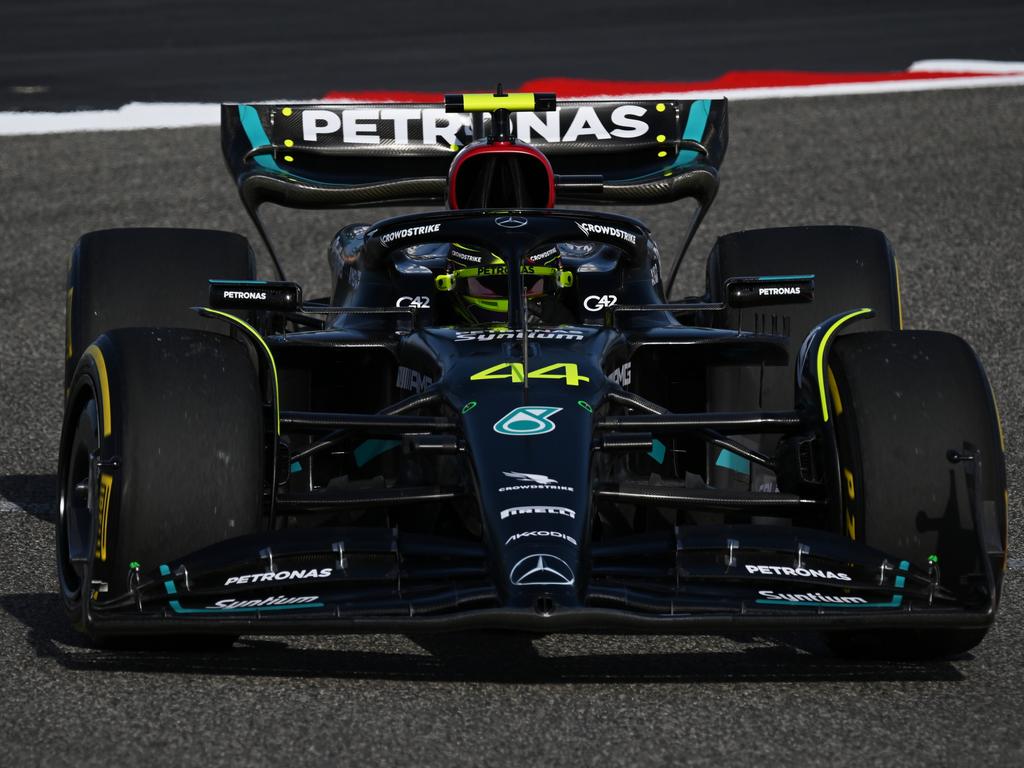
Toto Wolff was at the Miami Grand Prix last spring, gazing out at the most sophisticated cars in the world racing around the sunbaked, palm-fringed circuit, when a jarring realisation hit him like a bucket of cold water at 180 mph.
His Mercedes team, Formula One’s eight-time defending constructors’ champion and arguably the greatest dynasty in modern sports history, wasn’t just off the pace. It was completely uncompetitive. The run of dominance that he had helped to build as Mercedes team principal was coming to a definitive conclusion. Seven-time world champion Lewis Hamilton would finish the season without a single Grand Prix victory for the first time in his entire career.
“We knew that one day the consecutives would end and we weren’t prepared,” Wolff says. “And it wasn’t like a blip.”
It was more like another team, Red Bull Racing, getting every detail right for its star driver Max Verstappen in 2022 — just when Mercedes got a catastrophic amount wrong.

The shock stemmed from a major overhaul in F1’s technical specifications ahead of last season. Out went an entire design rulebook, and in came a whole new aerodynamic recipe for the sport. These radical changes tend to happen about once a decade and usually have the effect of a reset button on the championship standings. Teams had over a year to prepare and spent millions researching and developing the new models.
Mercedes had no reason to think it would miss.
But in a sport decided by the finest margins imaginable — thousandths of a second and imperceptible changes to air flow — any mistake can snowball into a lost season. All it took for Mercedes last year was a single errant data point in a wind tunnel test to set the team’s engineers down the wrong path. From there, errors compounded into a deeply flawed car that bounced up and down on quick tracks like Miami and left it floundering behind the Red Bulls.
“You know, we could position each other as superheroes saying we always believed in coming back and we never lost trust,” Wolff says. “But the truth is, you start to doubt.”

So Wolff, the urbane 51-year-old from Austria who has run the team since 2013, finds himself in an unusual position heading into the 2023 season, which begins with the Bahrain Grand Prix on March 5. One of the most dominant racing outfits of all time is now an underdog to a team that was created to promote an energy drink.
Precisely how Mercedes has improved the car is a closely guarded secret. But the team’s results toward the end of last season suggested they were finally getting the hang of the car’s new shape.
The problem was that progress came too late to rescue the 2022 campaign. During the worst of it, the garage seemed to be coming apart at the seams. A furious Hamilton complained in June that the car was “undriveable” and said that the bouncing issue was causing intense back pain. “For me it’s been a disaster,” the seven-time world champion said at the time. “The car is getting worse.”
Even Wolff had to admit it, jumping on the team radio to apologise to Hamilton for the car being “a bit of a shitbox to drive at the moment.”
That kind of Austrian directness is at the heart of Wolff’s efforts to put Mercedes back on top. And in his role as team principal, Wolff is equal parts head coach, race strategist, and chief executive. A former tech investor who first bought into an F1 team as a trophy asset in 2009, he never expected to spend his time criss-crossing the globe worrying about tire pressures and understeer. Wolff’s days in tech showed him just how quickly regulatory change, like F1 rules changes, can lead to erratic performance and major upheaval.
“The problem is that it’s like a share price,” Wolff says. “It just has these nasty swings.”
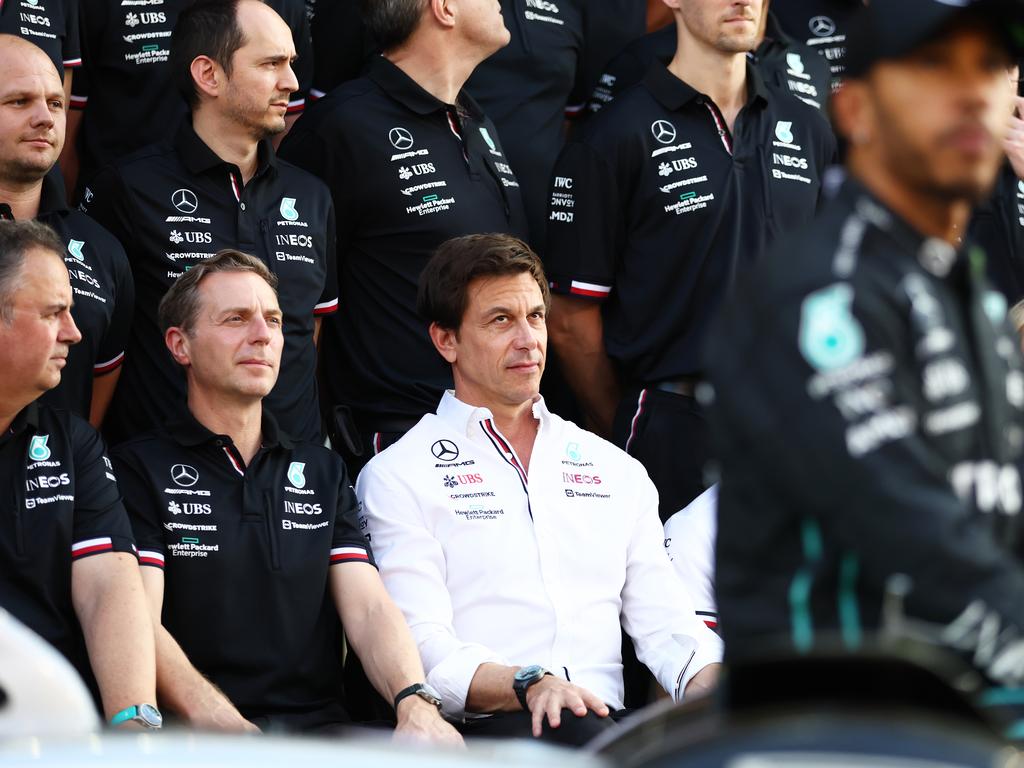
His life has changed so radically over the past 15 years, that he now runs a staff of 1,300 employees and a business with revenues of more than $400 million a year where performance on the track is his new bottom line. Yet even while holding all of those roles, Wolff isn’t himself an engineer. His job is to cut through the minutiae and design processes to ensure that Mercedes starts winning again.
“From the human standpoint and very much from the engineering standpoint, why is it that we have misjudged certain things?” he says. “Why is it that we have taken technical decisions to prove to be wrong? And how can we avoid that in the future?”
“The real test, the reality check,” he added, “is going to happen once the stopwatch comes up again.”
That will begin in earnest when Mercedes rolls out its new W14 car for the first official laps of the season in Bahrain on Thursday. Wolff hopes that a culture shift he imposed inside the team over the winter will begin to show results.
“The environment I want to create is one of transparent and super brutally honest exchange,” he says. “That’s tough love. Define the objective for everybody, buy into the objective, and create an atmosphere where you can throw things at each other.”

Not everything, however, can be solved by throwing things around. And in modern F1, you can no longer simply throw money at a problem, either. Under spending caps that were introduced to save the sport from teams’ routinely going bankrupt, the 10 outfits last season were each limited to budgets of roughly $140 million. That number is due to come down to around $135 million for this season. The drive to save so much money has led to Mercedes F1’s finance department swelling from 15 to 46 people in the space of 18 months. (Spending on finance departments, ironically, is excluded from the cost cap.)
For Mercedes, whose initial journey to the top of F1 was built in part on its unrivalled resources, those rules mean having to come up with a new approach. In 14 seasons of existence, the team’s story had always been of forward progress. Even the controversial 2021 season, which broke Verstappen’s way on the last lap of the last race, isn’t viewed internally as a failure on Mercedes’ part. The 2022 season, on the other hand, most definitely is. It’s up to Wolff to make sure that 2023 doesn’t turn into another one.
“The first eight years were, ‘How do we grow this organisation to keep the continuous success?’” Wolff says. “And then whilst anticipating that [setbacks] will happen, how will we actually manage the situation? This has been very much a live experiment.”

Piastri the next F1 champion? Aussie bookies say no

McLaren boss snubs Aussie motorsport with Supercars exit

Where Piastri sits on F1, Aussie sport rich list after breakout season

F1 Rich List: Top 10 earners revealed, where Piastri ranks

Queen and a McMuffin: Watch how Lando celebrated his F1 title
