
Fox Sports Lab: The big cost of the Brisbane Broncos’ State of Origin resurgence
Brisbane are a major player in State of Origin again – but at what cost? TIM ELBRA and FOX SPORTS LAB crunch some alarming numbers, while revealing the NRL’s winners and losers during the series.

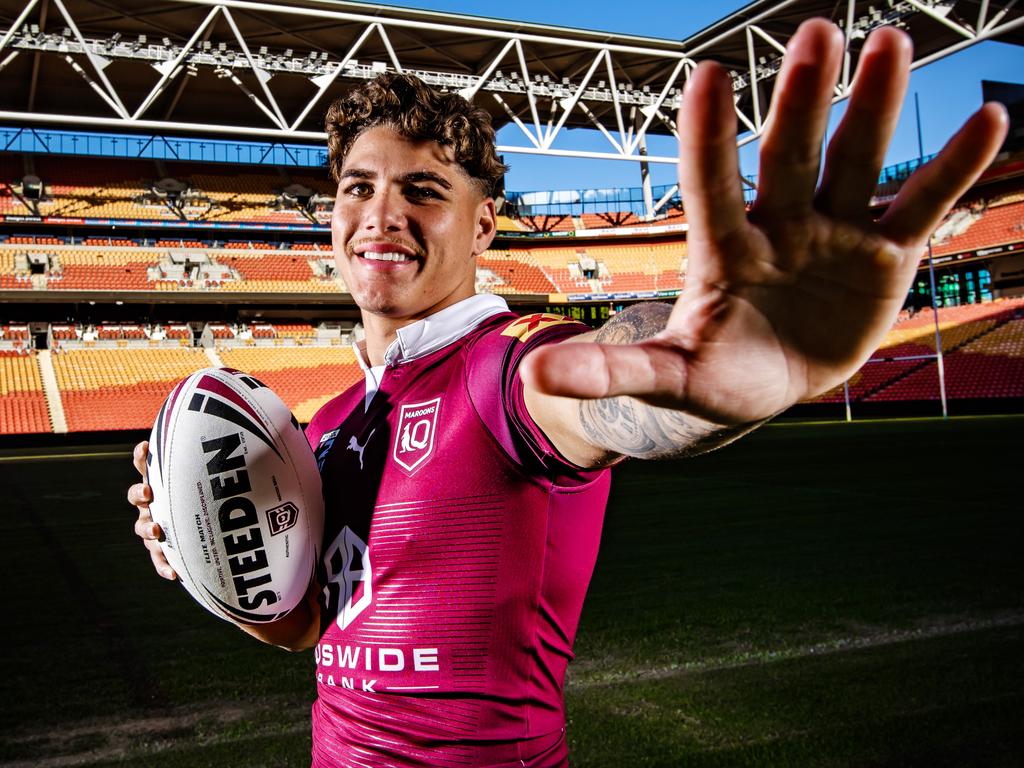
State of Origin 2020 marked the Brisbane Broncos’ lowest point.
The NRL’s richest club had just won its first wooden spoon and Origin rubbed salt in the wound, with the Broncos copping their lowest-ever representation: two. Inexplicably, Queensland picked just one Brisbane player, Xavier Coates, while Payne Haas featured for NSW.
Three years later, the Broncos are tied for first on the ladder (fourth by points differential) and again making a significant contribution to Origin. Five players – Reece Walsh, Selwyn Cobbo, Tom Flegler, Patrick Carrigan (Queensland) and Haas (NSW – will line-up at Adelaide Oval next Wednesday for the series opener.
So what does that mean for Brisbane, as they face the Warriors this Saturday minus those stars? And what will be lost if they have players unable to back up after each Origin game?
Fox Sports Lab delivers the stats.
A gaping hole in go-forward
The five Origin reps all rank in the top six for Brisbane this season for average run metres, of Broncos who have played at least five games. Haas (165m per game) leads the way, followed by Englishman Herbie Farnworth (158m), then Cobbo (144m), Carrigan (129m), Walsh (119m) and Flegler (102m).
Haas has the highest total (1810) and average run metres of any forward in the NRL, plus the best stats for post-contact metres (778m, 71m per game); as well as boasting the second-most offloads (24, J’Maine Hopgood 30) and second-most tackle busts among forwards (49, David Fifita 51).

It’s not just forward thrust that Brisbane lose with their Origin stars out; Walsh’s ball-playing has been sensational so far this season. The livewire fullback the equal-most try assists in the NRL this season, matching Dylan Brown and Cody Walker on 15, yet from one fewer game. Walsh and Cobbo have also contributed 57 and 52 tackle busts respectively.
They are gaping holes to fill and Brisbane’s back-up stocks are somewhat unknown quantities, due to very limited opportunities. Some have barely played NRL football.
Stand-in fullback Tristan Sailor hasn’t played in the NRL since 2020 and has just five games to his name, for one try and two try assists. His last couple of appearances, three years ago, totalled 61 minutes off the bench for the Dragons.
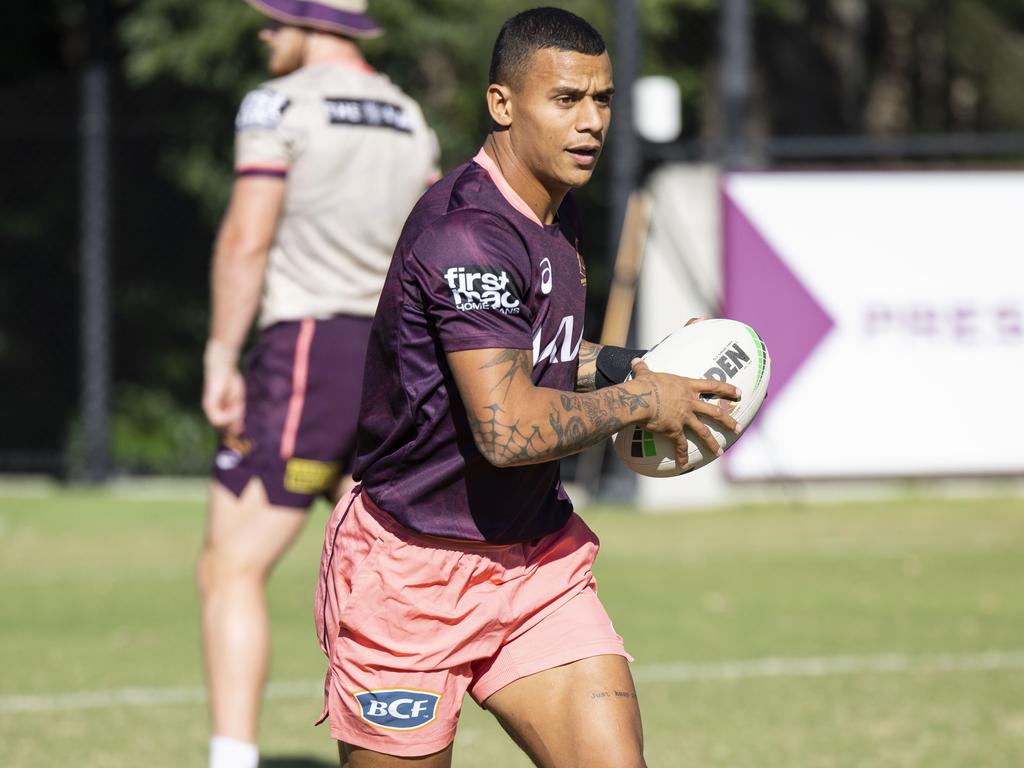
Deine Mariner delivered two strong performances in the Brisbane centres last season (rounds 20 and 21), averaging 120m, but didn’t register any tries or assists.
Keenan Palasia is the obvious man to step up in the pack, in terms of absorbing minutes (of which Haas plays 59 per game, Carrigan 66 and Flegler 44). Palasia has 41 NRL games to his credit, playing 80 minutes three times and 40+ minutes 18 times; though his average minutes from eight game this season sit at just 27.
Corey Jensen has averaged 34 minutes across 12 games this season but has only surpassed 40 minutes in 19 of his 88 NRL matches. Kobe Hetherington has played an average 24 minutes across six games this season and has notched 40+ minutes in just 14 of his 42 NRL matches; though his career high is 70 minutes.
On the bench, Xavier Willison played four games for just 67 total minutes last season, while Brendan Piakura has appeared for just 34 total minutes in two games across the past two seasons.

How often do players actually back-up?
The percentage of players who back-up after Origin, unsurprisingly, rises significantly when there are more days between the showpiece game and NRL duties.
Playing a Friday night game after a Wednesday Origin has consistently proven a bridge too far, with players suiting up again barely half the time. Yet that jumps to above 70 per cent when players are scheduled for Saturday or Sunday games, then lifts right above 90 per cent where players have featured in a Sunday Origin match and had most of a week to recover.
While the Broncos’ byes mean that they avoid being without players for games ahead of Origins II and III, they will have players trying to back up from all three matches. Brisbane play the Sharks (currently third) three days after Origin I, the Titans (currently 10th) four days after Origin II and the Bulldogs (currently 15th) three days after Origin III.
Applying the percentages, they may be without one or two of their Origin stars for each back-up game.
Brisbane tied Penrith (Nathan Cleary, Jarome Luai, Isaah Yeo, Liam Martin and Brian To’o) for the most Origin representatives for game one. The Panthers have a bye before Origins I and III but will also face back-ups after every match. Their back-up matches will be against the Dragons (currently 17th) four days after Origin I, the Knights (currently 12th) three days after Origin II and the Dolphins (currently 6th) four days after Origin III. They will be depleted for round 16 against the Cowboys (currently 14th) before Origin II.

Which teams lift/fade during Origin time?
The number of players provided for the series typically rises and falls with a club’s NRL fortunes.
Across the past decade, clubs that consistently have few Origin players – the Warriors, Brisbane’s looming opponent, being the prime example – have cashed in on the Origin period.
Fox Sports Lab data going back to 2013 (excluding 2020, when Origin was played post-season), reveals that the Warriors’ winning percentage has spiked 12 points from before the series to during it (42.34 per cent to 54 per cent). However, it has then dropped to an abysmal 28.79 per cent after the series, the worst in the NRL.
The Raiders, with just NSW bench forward Hudson Young in this year’s series, are the other standout. Canberra have won 44.14 per cent of games before Origin, then 56 per cent of their matches during the series, before reverting to 51.52 per cent for the remainder of the season.

The Broncos, meanwhile, have plunged 11 points during Origin (57.14 per cent to 46 per cent), the equal-worst in the NRL; though they have recovered post-series to win 56 per cent of games.
Roughly categorised, this is how each NRL club fares during Origin. Notably, strong clubs with large player contingents (including Penrith) don’t necessarily suffer.

WINNERS: Warriors (up 12%), Raiders (up 12%), Sea Eagles (up 10%), Eels (up 8%), Bulldogs (up 8%) Sharks (up 5%).
STEADY: Panthers (up 4%), Roosters (up 1%), Rabbitohs (down 2%), Cowboys (down 3%)
LOSERS: Dragons (down 5%), Wests Tigers (down 8%), Storm (down 9%), Knights (down 10%), Broncos (down 11%), Titans (down 11%)

Walsh on wheels: Broncos star debuts medical scooter at training

Operation Reynolds: Inside the Tigers’ failed $1.5m halfback heist

Born to coach: Wayne praises Benji as master meets apprentice

How every NRL NT club is shaping up for the 2026 season

Manly, Foran in ‘no rush’ to lock in long-term deal despite turnaround
