
NRLW pay debate: Club captains lead push for full-time contracts and longer season
The upcoming NRLW season shapes as the biggest in women’s rugby league history, but the pay packets of the players shows how far the game needs to go as it tries to grow even bigger.
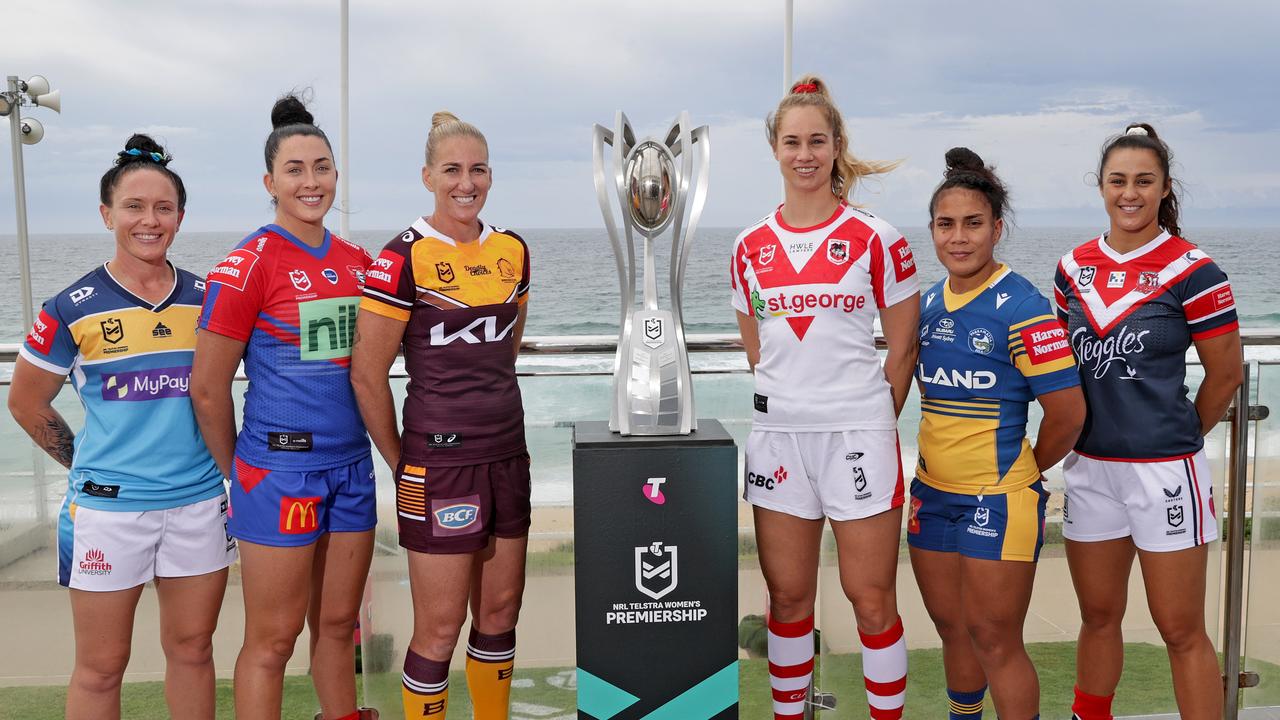
Jillaroos superstar Ali Brigginshaw is leading a push for NRLW contracts to not only go full time, but as high as $100,000 — warning female players this year “could earn more working at Woolies”.
On the eve of this Sunday’s historic NRLW season opener, a group of Australia’s most recognised female players — Brigginshaw, Kezie Apps, Corban Baxter and Simaima Taufa — have encouraged NRL bosses to overhaul the code in line with rivals such as cricket, soccer and rugby sevens.
While the upcoming season shapes as easily the biggest in women’s rugby league history, with six teams, two competitions, a World Cup, Origin and stand-alone deciders, the stars of the show are adamant more still needs doing.
Currently, the game’s top females earn $16,000 for an NRLW season.
This figure, they argue, and the competition length of only five rounds, is not enough for the code to reach its potential.
Roosters skipper Baxter argued elite NRLW players such as Brigginshaw deserved to earn up to $100,000 in an expanded league, where teams played each other at least twice.
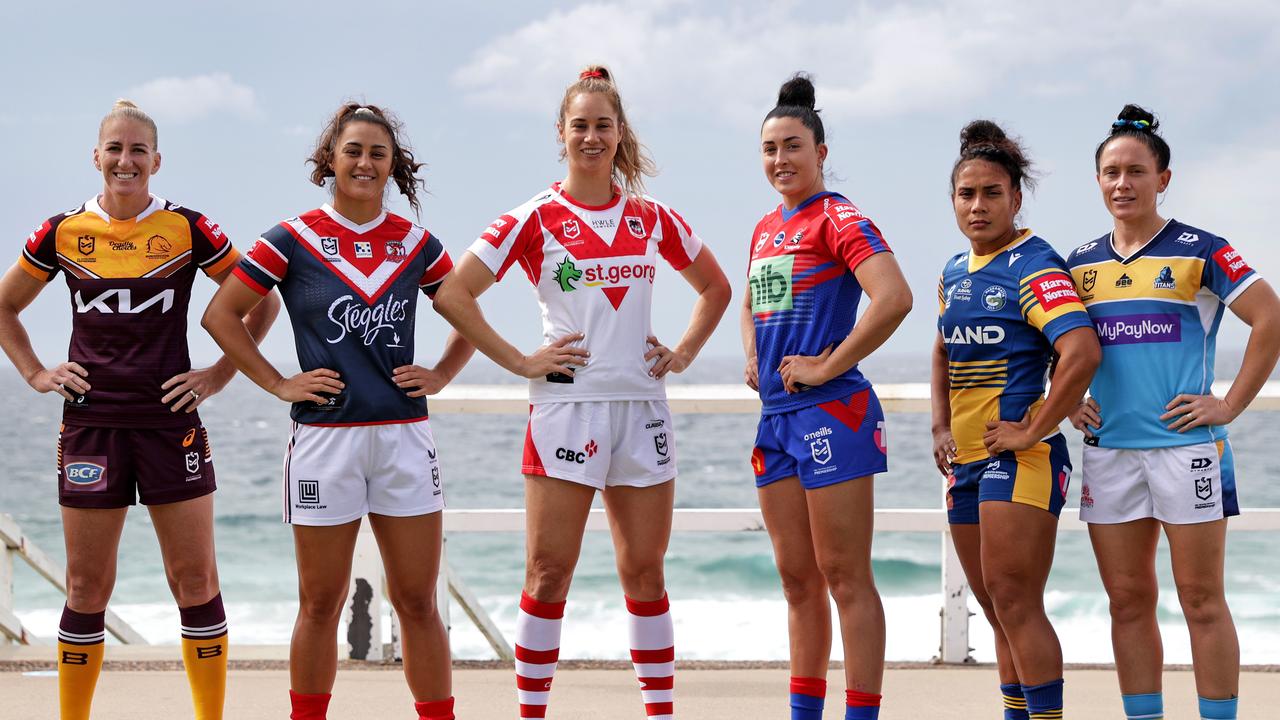
Importantly, the players also want the competition’s minimum wage of just $8500 to be significantly increased, pointing to the improvements made in rival women’s sports when athletes go full time.
Launching the new season in Newcastle on Tuesday, NRL chief executive Andrew Abdo talked up player opportunities, including increased sponsorships, representative pay rises and employment roles where marquee women’s players are “signed to the game full time”.
Yet while Abdo could not put a timeframe on the NRLW going full time – and even suggested it could take “years” – Brigginshaw and her fellow Jillaroos argued full-time wages, combined with a longer season, were an essential part of growing the game.

The Broncos captain also called for upgrades to the minimum wage contracts, worth around “$500 per week” over a season, spanning four months from pre-season to grand final.
“Right now, there’s a lot of girls on $8500,” Brigginshaw said. “Or $500 a week. You could earn more working at Woolies.
“But these players are still expected to train four times a week, and up to four hours a day, while also holding down full-time jobs.
“So this is the thing we need to work on. Make the game worth playing.”
Baxter agreed, suggesting the quality of NRLW games would “take off” if season lengths were increased and players were able to go full time.

“Things are improving but there’s a long way to go,” Baxter said.
“You see what’s happened in rugby sevens and cricket, where those women train full time and the quality of the games is awesome.
“At the moment in rugby league though, we’re training part time and getting extras in where we can. But when we do finally get the green light to go full time, the quality of women’s rugby league is going to take off.”
Asked what an elite NRLW player should earn, Baxter pointed to a figure of $100,000 saying, “I think that’s a figure we deserve and what players should get in the future”.
The upcoming NRLW season shapes as the biggest ever, with Parramatta, Newcastle and Gold Coast all debuting teams in an expanded tournament that will culminate with a stand-alone decider in Redcliffe on April 10.

But as for what it could be?
“It’s a really good question because, right now, our competition isn’t long enough for the players to quit their jobs and focus full-time on rugby league,” St George Illawarra skipper Apps said.
“So it’s difficult. You get more working than you do playing rugby league.
“But if we do go full time – if we’re paid to be full-time athletes – you’ll see rugby league excel exactly like other female codes have in that same environment.
“So, for the game to go to that next level, we have to (go full time).”
Parramatta captain Simaima Taufa also suggested that, for the NRLW to truly reach its potential, players needed to be given the opportunity to become full-time athletes.
“Because we know where we could be if the code did that,” she said. “What we could be capable of. You look at those girls coming across to NRLW from the rugby sevens program, you can just tell they’ve been in the full-time system.”
Quizzed on a timeframe for the NRLW going full time, Abdo said: “That’s difficult to predict. I don’t have an answer there. But what I can say is that we’re putting in place the foundations and the enablers to facilitate that.
“How many years that takes? I can’t answer. But, what I can say, is that we will invest in all levels of the pyramid to make sure the quality of the football and the quality of the experience for the players isn’t compromised.”

Titans NRLW star asks for release to join boyfriend in Sydney

‘Gutted’: Brutal contract call that blindsided injured Dragon

Why generational talent has exited Cowboys to join premiership team

Pride coach opens up on “special” moment

Bali beaches, coaching kids: How NRLW stars are spending off-season
