
Warriors eye a club-wide cultural revolution under captain Tohu Harris
The Warriors are returning home as they left it – as the NRL’s perennial underachievers. Tohu Harris is not just eyeing improved results, but a complete shift in how the club connects with people inside and out.
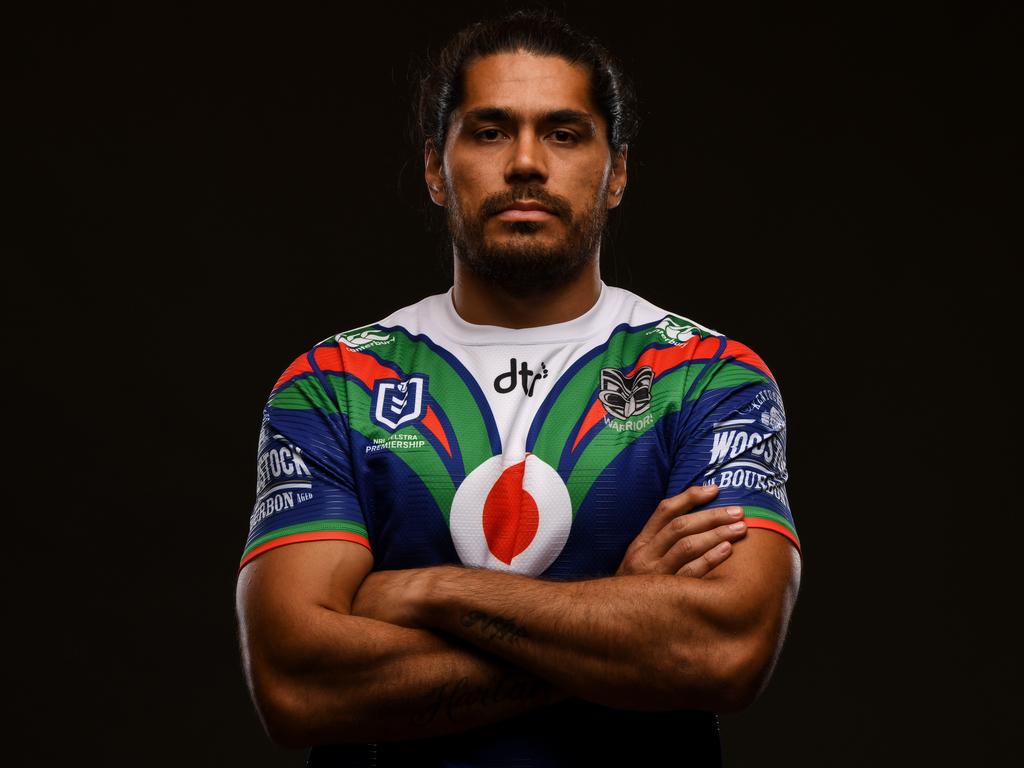
When Tohu Harris was a kid he lived and played on ‘Harris Lane’, a street you won’t find on any map, but which was very real in his formative mind.
“There were three houses on Harris Lane. The front house was my grandma and grandad’s house; the middle house was my aunty's with about a hundred cousins coming out of there and the back house was where I grew up.”
Harris, 30, was the youngest of six kids with three brothers and two sisters. There was never a dull moment.
The lane was a driveway off State Highway 51 which links the provincial twin cities of Hastings and Napier along the stunning Hawke’s Bay coastline. Everything Harris needed was within arm’s reach.
“We were about 100 metres from Waipatu marae so we grew up around there, playing cricket with my cousins down the ‘lane’, playing touch rugby at the marae, or on the basketball courts at the rugby club.
“It was a whole lot of fun growing up.”

Not only did 24/7 access to playmates give Harris the fundamentals of hand-eye coordination and evasion that he would parlay into a professional rugby league career, his upbringing gave him the sense that he was part of something bigger.
Waipatu marae – a Maori meeting house and grounds – belonged principally to the Ngāti Kahungunu iwi (tribe), a confederation of East Coast hapu (clan), but Harris also had iwi connections to Ngāpuhi in the Far North through his father and Ngāi Tahu in the South Island through his mum.
Waipatu was a broad church so to speak, a welcoming melting pot where loose connections bound together to become strong. In its own way, Tamatea Rugby Club on the same stretch of road near Harris Lane played a similar role.
It’s a philosophy he wants the Warriors to espouse: an embracing of different cultures while retaining a strong connection to place.
Which, when you stop for a second to think about, is bloody difficult when you play for a club that has been dislocated from “place” for so long.

*****
The Warriors haven’t played a home match at Mt Smart Stadium since August, 2019, as a direct result of the global pandemic that, for long periods of time, closed the borders between New Zealand and Australia.
When people think of the hardship that causes, it’s usually restricted to performance – it’s called home-ground advantage for a reason – or homesickness.
But there’s more to it than that. Intangibles. You lose a connection to the place that makes the club unique and it doesn’t matter how much you enjoy Redcliffe or how warmly the Central Coast welcomes you, by not being in Auckland you lose a unique and identifiable part of your club DNA.

Harris says they’ve “been looked after” everywhere they’ve gone, but the separation from New Zealand has impacted the young players.
“It’s been extremely difficult for them,” he says. “We have a number of guys who had never lived away from home before. They were still living with their parents, all their siblings. For the first time they had to live not only away from home, but in a different country with no access back to New Zealand.
“It is taxing, but in terms of performance we can’t let it impact us. At the same time I have a lot of empathy for the young guys that have been forced into that situation.”

“I was 17 the first time I left home and moved to Melbourne. I left home and was in a different country and although the borders were open it was still a hard time, so I can only imagine what some of these boys are feeling.”
The unspoken part of that is the strong Pasifika contingent in the club. Most are brought up in large households with extended, god-fearing families.
“These are the two values these guys live by – family and church – and when you’re forced away from the things you hold tightest it’s very hard, but at the same time we’re professional footballers and this is the life we’ve chosen and this is the job we do.”
While this season has been more “normal” as they’ve based themselves in Redcliffe and have had their own spaces to live in, Harris is mindful of continually checking in with the young Pasifika players to assess where their minds are at.

As a club, they came to the conclusion at the end of last season they needed to re-establish those unique cultural ties to New Zealand, even if they couldn’t be there.
“Just this past off-season we started to re-emphasise that because we’d spent so much time away,” Harris says.
“We wanted to create a real connection back to where the club is from, especially for the guys who’d a) never really set foot in the country before and b) guys who had been away from home for a long time.
“We’re trying to build that connection to everyone’s culture, not just Maori culture, but every culture we have at the club. Adam Blair is doing a lot of work behind the scenes trying to build that side of things.
“(CEO) Cam George came to me in the off season and spoke about wanting … to build something the club has never had before, to build something that people can see from the outside. We want people to be able to ‘see’ the culture and see how much it means to not only the athletes on the field, but to the staff who work there.”

Culture is often perceived to be an internal, hard-to-define mechanism, but Harris says if the Warriors are successful in implementing their vision, the public will witness the change.
“It takes time and effort, but from what everybody has said so far we’re all enjoying learning new things. It’s not just learning about wider cultural groups but learning about people at the club – where they come from, what’s important to them.”
To switch sports, it is not dissimilar to what Jürgen Klopp has done at Liverpool FC. When the German was appointed manager in 2015 he was alarmed at the disconnect between players and club staff. He essentially forced players to get to know each other, to get to know those who worked at the club, no matter how small their link in the chain might have seemed. Now, those connections are organic rather than forced.
“It’s just the beginning of what we’re trying to do.”

*****
If that’s the beginning, then the end is winning a maiden NRL title, something that feels as far out of reach now than it ever has in the club’s 27-year history.
With just two grand finals to show for their efforts (2002 and 2011) and many more years outside the playoffs than in, the Warriors’ history has been one of brief spikes of hope among long periods of futility.
If we’re being brass tacks about it, this season has given little cause for celebration – just four wins, a negative points differential creeping toward 100, increasing criticism of coach Nathan Brown and disruption in the form of the abrupt departures of Kodi Nikorima and particularly Matt Lodge. Lodge’s departure from the club, including details of an argument with Warriors owner Mark Robinson prior to the split, is the kind of negative attention that isn’t exactly conducive to a cultural shift.
But there are reasons for optimism.
One is the return to Mt Smart, when the Warriors will host Wests Tigers on July 3. Another is the reservoir of goodwill the club has built up by accepting their fate over the past three years without complaint. A third is Tohu Harris himself.
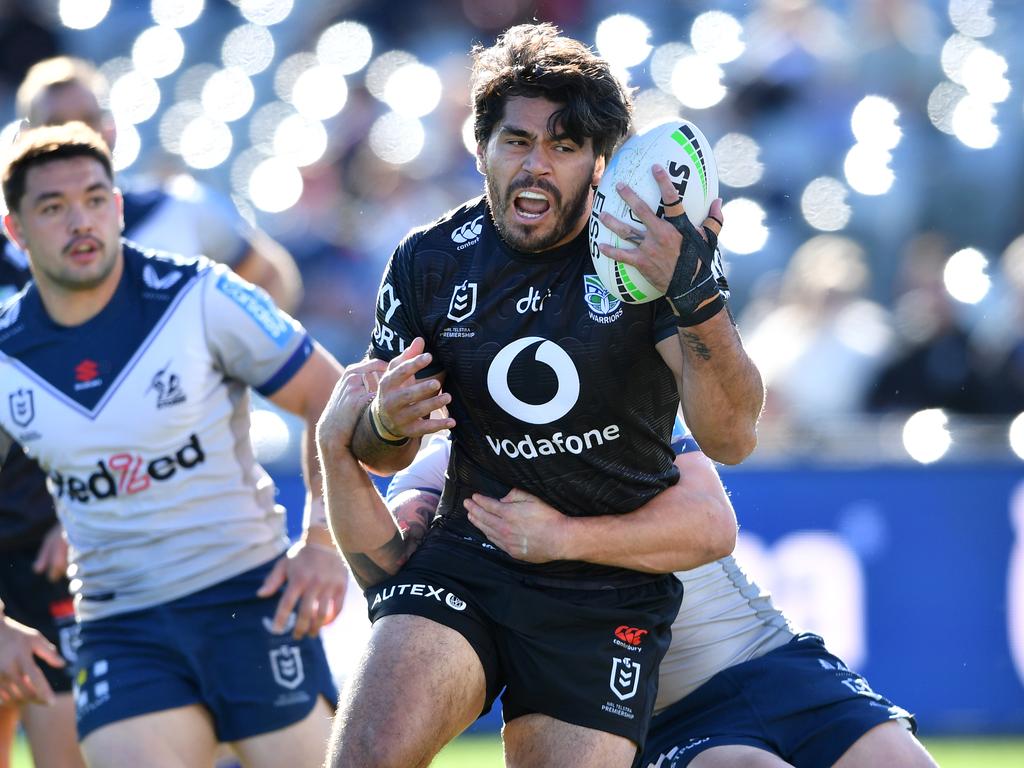
After significant time out rehabbing his knee after MCL surgery, Harris is just starting to stamp his captaincy imprint on the club following the loss of Roger Tuivasa-Sheck to rugby.
While remaining active off the field during his absence, Harris acknowledges there was a limit to what he could influence.
“We’ve got really good leaders in the team but personally it was hard because I couldn’t action the things we were speaking about,” Harris says.
“You could say everything you wanted throughout the week but the other guys had to go out and actually do the job. Seeing them go through some tough periods, those are the parts that were the hardest for me because I just wanted to be out there with them to feel what they’re feeling and help as much as I can.”
While Harris is often depicted as a quiet, follow-me type leader, he says he is more vocal than he is given credit for, but gets more of a kick out of empowering others to speak.
“When I have a thought or find something I think needs to be said, I’ll happily speak about it to the other leaders and let them use their voices as well. It’s not just me talking all the time, or Shaun [Johnson] talking all the time. There are different voices driving different things.”

“That’s the philosophy I’m trying to adopt. It’s to empower other voices and to create more leaders. One of those guys is Marcelo [Montoya], who has really taken that on board and become a strong leader for us. I get more enjoyment out of empowering those guys and sharing the voice, but certainly if I think something needs to be said, I’ll say it.”
For inspiration he need only cast his mind back to his Melbourne Storm days, where he had a ringside seat to the best-led club in the land.
“I’ve been very fortunate to play under some of the best leaders rugby league has ever seen. Obviously at Melbourne there were guys like Cam [Smith], Billy [Slater] and Cooper [Cronk]. I’ve played alongside Simon Mannering, Roger and Shaun. I’ve seen how all those guys operate and have taken little bits and pieces from all of them,” he says.
“Cam is just such a calm person on and off the field. He led with his actions and only spoke when he needed to. Billy and Cooper did a lot of talking and drove a lot of things but when Cam spoke it was at times it was really needed and we were there at the drop of a hat to listen.”
What impressed Harris most was the unspoken connection between captain and coach.
“Cam would speak to us if things were not going well and we’d go in at halftime and almost word for word Craig would say what Cam had just told us on the field.”
When the messages are consistent, Harris says, “the benefits are substantial”.

Part of Harris’ leadership package is his tirelessness and consistent excellence as a backrower since making his teenage presence felt at a trial for locals held in Wellington by the Storm in 2009. Up until then he’d played rugby at Tamatea and Hastings Boys’ High School, “with a little bit of league here and there”.
Harris can tackle and eat metres with the best of them, but when fit he also offers nous and creativity on the edges that has been missing from the Warriors as he rehabbed his knee back to health before finally making his season debut against South Sydney a fortnight ago.
“I didn’t get the normal pre-season, so you miss out on all the specific movements that you build into your game plan. You miss out on all the reactions and movements with bodies in front of you,” he says.
“That’s why there’s still not the timing of my footwork and the contact. I’m still a bit rusty, I’ve got to work all that out.
“Going into the first game against Souths I was confident in the knee. I didn’t think about that at all in the two games I’ve played, which is a really nice feeling, but I was nervous about performing at a high level.”

In the NRL, as there is in any professional league, there’s a mantra that you never look further ahead than your next game.
In the Warriors’ case, they might say it, but they’re lying. Newcastle might be next up tomorrow, but there is a big red circle around July 3. It’s only natural.
“There’s a huge amount of anticipation for it,” Harris admits. “I can’t help but look ahead to July 3 and running onto Mt Smart Stadium. It’s something that every single person at the club, no matter what position they have, is looking forward to. It’s been a long time since we’ve been home and we’re all waiting for it.”
This time, he knows, it must represent more than another false dawn for the club.
It must be the start of something bigger – a cultural revolution, perhaps.

NRL transfer tracker: Every player signing, exit linked with your club

Souths chasing Latrell unicorn, Qld insult – bookies’ brutal 2026 calls

Watch: The NZ schoolboy rugby beasts defecting to Warriors

Poaching coups: Growing NRL footprint swallowing NZ rugby

100+ NRL pathways players to watch at your club
