
Banned Chinese swimmer Sun Yang faces investigation after evidence emerges of secret training
The latest breach by disgraced Chinese swimmer Sun Yang has him in hot water, but it’s also an ideal opportunity to test new FINA reforms which will drag swimming into the 21st century.

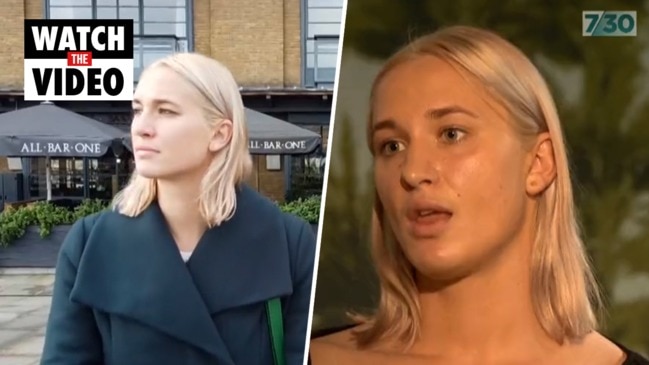
Disgraced Chinese swimmer Sun Yang has provided the sport’s new leadership with an early test of how serious they are about implementing their historic reforms after finding himself back in hot water.
Currently serving a second doping suspension that prevented him from competing at the Tokyo Olympics, the serial rule breaker is again under investigation after pictures surfaced of him secretly training in Chinese government-funded facilities.
That’s a crystal-clear breach of the conditions for every swimmer serving a doping suspension, let alone a repeat offender, who now faces a lengthy extension to his ban that could render him ineligible for the 2024 Paris Olympics.

But that’ll only happen if officials deliver on their promise to allow independent investigators to properly punish everyone that breaks the rules instead of going weak at the knees whenever swimmers from powerful countries such as China and Russia are implicated.
The signs are positive that the tide has finally turned after swimming’s global governing body FINA voted to accept a range of reforms that will effectively blow up the 113-year organisation and start from scratch.
The vote, taken on the sidelines of the short-course world championships in Abu Dhabi on the weekend, overwhelmingly agreed to implement a raft of radical governance changes that will drag swimming into the 21st Century, including:
■ The creation of an independent integrity unit to deal with doping and other serious violations;
■ New protocols to protect athletes from harassment and abuse;
■ A new constitution and code of ethics;
■ More opportunities for women in the sport;
■ More prizemoney for athletes instead of the sport’s fat cat officials;
Driven by FINA’s newly elected President Husain Al-Musallam, the overdue reforms followed a two-year investigation by News Corp that exposed FINA’s reprehensible, dirty secrets, including the way it mishandled serious integrity complaints and spent its vast fortune.
FINA even threatened legal action against News Corp for revealing the eye-watering perks its leaders enjoyed, but everything changed when Al-Musallam was elected as resident in June on a platform to clean up the rotten organisation.
Today was one of the most important days in the history of #aquatics sport.
— FINA President (@fina_president) December 18, 2021
Together with our national associations, we sent a message to the world that @fina1908 has entered a new era for the benefit of our great athletes. Check out the latest video from #FINAAbuDhabi2021👇 pic.twitter.com/ebCfbvj9HA
Buoyed on a sea of green, @fina1908 approves sweeping reforms only six months after the election of @fina_president. Even better days ahead for this top Olympic sport that @Team_JTA is so proud to be a part of. #FINAAbuDhabi2021#FINApic.twitter.com/cGjbgbZRF9
— JTA (@Team_JTA) December 18, 2021
“We have been rightly criticised for a lack of transparency and directness,” Al-Musallam told the extraordinary Congress in Abu Dhabi.
“It can never be right for a federation to act both as a judge and jury, athletes have little confidence in our process on vital topics, like anti-doping and ethics.”
A former pilot, the Kuwaiti said that while the creation of an independent integrity unit was the centrepiece of the reforms, the real heart of the changes was finally putting the interest of athletes first.
“These reforms are essential to modernising FINA, but they are just the beginning,” he said. “There is so much more to be done.”

Swimming Australia president Kieren Perkins, who has just been promoted to the most powerful role in Australian sport as chief executive of the Australian Sports Commission, has welcomed FINA’s reforms and said he was already witnessing significant changes taking place.
“At an operational level, we‘re seeing engagement with swimming in Australia that brings a level of transparency and clarity to what they’re doing that I’ve certainly not experienced before,” Perkins said.
“I would say the proof being in the pudding, certainly all the early indications are the reform agenda is something that they mean and they‘re actually living, which is hugely positive.
“But like any significant transformational cultural change, it‘s going to be hard work. It’s going to take a lot of time and it’ll be interesting to see, as they continue to move forward, how that momentum is maintained.”
WADA weighs in over Sun Yang ban breach allegation
Chinese swimmer Sun Yang faces a fresh investigation by the World Anti-Doping Agency (WADA) following evidence he has been secretly training in government-funded facilities while serving a four-year doping ban.
The 30-year-old is eyeing a potential comeback for the Paris 2024 Olympics but WADA has confirmed they are looking into allegations he has been using a nearby high performance facility to plot his return to training.
Any athlete serving a doping ban is prohibited from using government funded facilities or coaches, as was the case for Australia’s own Shayna Jack who patiently served her two-year ban away from her training partners in Brisbane recently.

But a Chinese whistleblower has contacted British newspaper The Times with photo evidence of Sun training at the Anji Children’s Sports School in Zhejiang Province, near the swimmer’s home where he was infamously involved in a dispute with drug testers in 2018 that resulted in his mother smashing a sample with a hammer and led to his doping ban.
The Times presented the evidence to WADA who has launched an investigation.
Sun’s ban was due to expire in February 2024, giving him time to qualify for the Paris Olympic Games, but if these allegations are proven his four-year penalty could be restarted - ending his quest for Olympic redemption.
“(We) take these allegations around Sun Yang very seriously,” a WADA spokesman told The Times.
“We are looking into the matter and, as part of that, we will follow up with the relevant entities, including Fina, to gather more information and to be in a position to determine whether the swimmer has breached the terms of his suspension, as per the decision of the Court of Arbitration for Sport (CAS).”
World swimming’s governing body FINA said it would comply with a WADA request to investigate.
“We are contacting the Chinese authorities to seek explanation and will reiterate that it is imperative that any banned athlete complies with the Wada Code and the conditions of their ineligibility,” a Fina spokesman told The Times.

The Chinese Swimming Association, the leading authority for the sport in China, failed to respond to requests for comment.
But sources told The Times the school where Sun was pictured is fully-funded by the state and is home to some of China’s top sports prospects.
The fact Sun was even eligible for a Paris comeback sits badly with many in swimming after an initial eight-year ban was reduced to four years and three months by CAS even though he was found to have “acted recklessly”.
Join the conversation

From coma to champion: BMX star’s comeback finds a new track
Read more

She miscarried last week – now this brave Olympian is taking on a triathlon
Read more

1000+ athletes to benefit from revolutionary $50m retirement fund
Read more

False start as Ian Thorpe prepares for wild ride in Sydney to Hobart yacht race
Read more

‘Definitely reasonable’: Teen Olympian backs social media ban
Read more

Olympic history up for grabs for our toughest, fastest, wildest women at LA Olympic
Read more