
British Olympic great Mo Farah reveals he was trafficked to UK under false name as a child
Sir Mo Farah, one of Britain’s greatest athletes, has revealed that he was smuggled into Britain illegally as a child, living with a married couple as a slave.
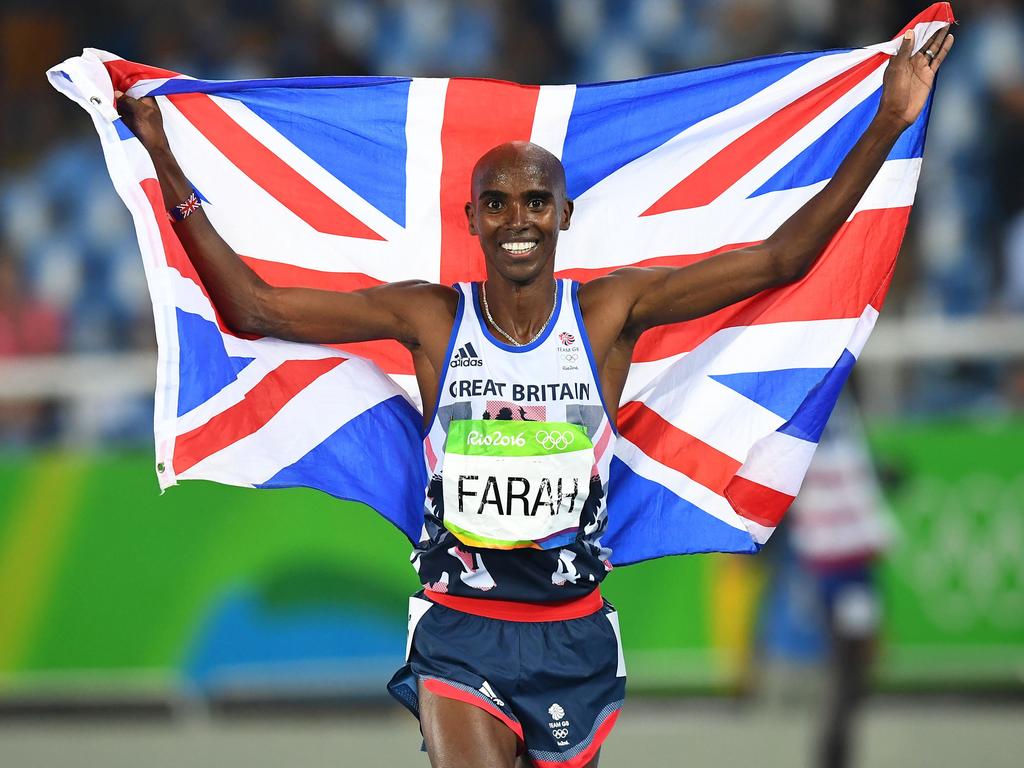
Sir Mo Farah, one of Britain’s greatest athletes, has revealed that he was smuggled into Britain illegally.
The four-times Olympic champion, 39, invented an alternative life story to “protect” himself after he was trafficked and abused as a child. Farah, who became a household name after glory at the London 2012 Olympics, had previously said he was born in Somalia, arriving from Mogadishu aged eight to join his father, who worked in London.
In a BBC1 documentary, The Real Mo Farah, to be aired on Wednesday, the athlete says that in fact he was trafficked to London in the 1990s under an assumed name after escaping war in Somalia. His real name is Hussein Abdi Kahin.
After arriving he lived not with his father but with a married couple who treated him like a slave. His PE teacher at school went on to champion his cause with social services and he was eventually moved to a new home.
Through this documentary I have been able to address and learn more about what happened in my childhood and how I came to the UK. I'm really proud of it and hope you will tune into @BBC at 9pm on Weds to watch. pic.twitter.com/rqZe41gFm8
— Sir Mo Farah (@Mo_Farah) July 11, 2022
Farah said he feared that the teacher, Alan Watkinson, could face trouble because he helped the runner’s successful British citizenship application, which included inaccurate information. Farah’s real father died when he was four during the country’s bloody civil war, he tells the documentary. His mother sent him to Djibouti, which borders Somalia, to escape the conflict and live with an uncle. Farah says he was trafficked from there, aged nine.
The runner, 39, said he was telling his story to unburden himself of a lie that he and his closest friends and family have perpetuated for years, despite warnings that the revelations might leave him vulnerable to deportation.
“I don’t think I was ready to say anything not because you want to lie, but because you’re protecting yourself,” he said. “You only realise later it’s okay to let things out and say how it happened.”
The documentary was made by a company owned by Freuds, the powerful PR firm that has representing Farah.
It reveals that the athlete crafted the story about his arrival in the UK to protect himself from the reality.
“I’m not who you think I am. And now whatever the cost, I need to tell my real story,” he says in the documentary, which was filmed over the past two years.

Farah, who was knighted by the Queen in 2017, was told by lawyers during the making of the programme that he risked having his UK citizenship revoked because “false representations” were made on his application. The Times understands that Farah has not made the Home Office aware of his true backstory.
However, the department said his immigration status would be unaffected by the revelations and he would not face any repercussions. “No action whatsoever will be taken against Sir Mo and to suggest otherwise is wrong,” a Home Office spokesman said this evening.
In the documentary, the long-distance runner says he did not know why he was brought to the UK. A trafficking expert tells Farah that his experience in his new home in Hounslow, west London, is consistent with being forced into domestic servitude.
The documentary does not name those who brought Farah to the UK in the 1990s. The Times understands that it was a married couple who allegedly trafficked him to the UK under the false identity of another child, named Mohamed Farah.
Farah says he rarely saw the husband, but the way the wife treated him “wasn’t right”.
He was forced to cook, clean and care for other children in the house. “I would just lock myself in the bathroom and cry and there’s nobody there to help,” he says.
The BBC said the couple did not respond to requests for comment.
Farah was a troubled child, who barely spoke any English and was disruptive at school. It was only once he was taken in by Kinsi Farah, the sister of the man who allegedly helped traffic him to the UK, that his life transformed and his athletics career flourished.
Farah lived with Kinsi for seven years. Watkinson, his PE teacher, tells the documentary that he connected his pupil with social services during this time.
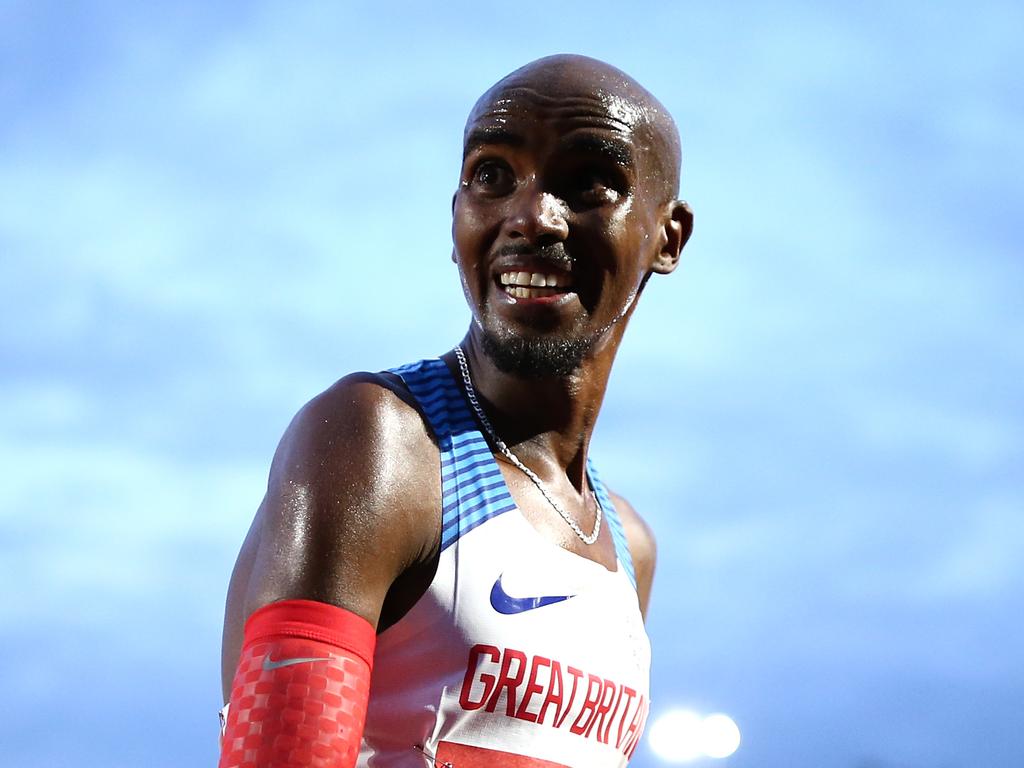
Watkinson assisted Farah with his application for British citizenship, saying he “bombarded” the Home Office with communication, describing Farah as an “asylum seeker from Somalia”. The application was granted in July 2000.
Farah tells Watkinson that he is concerned that going public with his real identity will “cause a problem for you” because inaccurate information was supplied to the Home Office. Watkinson says the school and social services were aware of Farah’s story and the “state had recognised” his new identity. “When I think back, I don’t think either I or the school did do anything wrong,” Watkinson says.
The Home Office said it was unable to comment on Watkinson without further information. He declined to comment when approached by The Times.
Farah is reunited with his mother, Aisha, in Somaliland during the programme. “I sent you away because of the war,” she tells her son.
“You were given a name that was not yours, sent away to England, a country you knew nothing about. It’s important that you tell your story. Lying is a sin.”
Farah is also reunited with Kinsi, who says she doesn’t know why her sister-in-law brought him to the UK. Kinsi took him in because he needed protection, she says. “Do you think that was her reason when she bought me to the UK, in helping her with cooking, cleaning?” Farah asks. “I don’t know,” she replies.
Citizenship likely to be safe despite confession
The Home Office could not have been clearer: “No action will be taken against Sir Mo.” However, looking at the law it was not immediately clear that would be the case (Matt Dathan writes).
Under section 40 of the British Nationality Act, British citizenship can be revoked if it is discovered that an applicant gave “false information or concealed information concerning their identity, for example by using a false name”. Citizenship can also be nullified if the applicant is “using someone else’s identity”.
On the surface these both appear to apply to Farah. The important mitigation is that Farah was under 18 when he submitted his citizenship application with false details.

Home Office guidance issued to Immigration Enforcement officials are told to assume a child is not complicit in gaining citizenship by deception. In Farah’s case, it is assumed that as a nine-year-old, he had no power or control over being trafficked into Britain. He was also below the age of criminal responsibility, which stands at ten in the UK.
Even if Farah were over 18 it is unlikely he would face retrospective action, according to Colin Yeo, an immigration barrister and author of Welcome to Britain: Fixing Our Broken Immigration System. This is because in his case it was just the falsification of his name, rather than details that would increase the chances of citizenship being granted.
What is far less clear is whether an adult helping a child to deceive in a citizenship application would face repercussions. The Home Office said it was unable to comment on whether Alan Watkinson, Farah’s PE teacher, would face action because it lacked the information necessary to apply guidance, although officials doubted he would face any repercussions.
Yeo said that there were so few cases of individuals being prosecuted for assisting immigration offences that in reality it would be “draconian and preposterous” for somebody in Watkinson’s case to be punished, given he was helping a vulnerable boy to escape effective slavery.

From coma to champion: BMX star’s comeback finds a new track

She miscarried last week – now this brave Olympian is taking on a triathlon

1000+ athletes to benefit from revolutionary $50m retirement fund

False start as Ian Thorpe prepares for wild ride in Sydney to Hobart yacht race

‘Definitely reasonable’: Teen Olympian backs social media ban
