
Why Mack Horton pressed reset on his swimming career
He’s an Olympic gold medallist, but Mack Horton’s gold in the 400m freestyle at Rio feels like a long time ago. One big move later and he’s ready to reclaim his best form again, writes LINDA PEARCE.

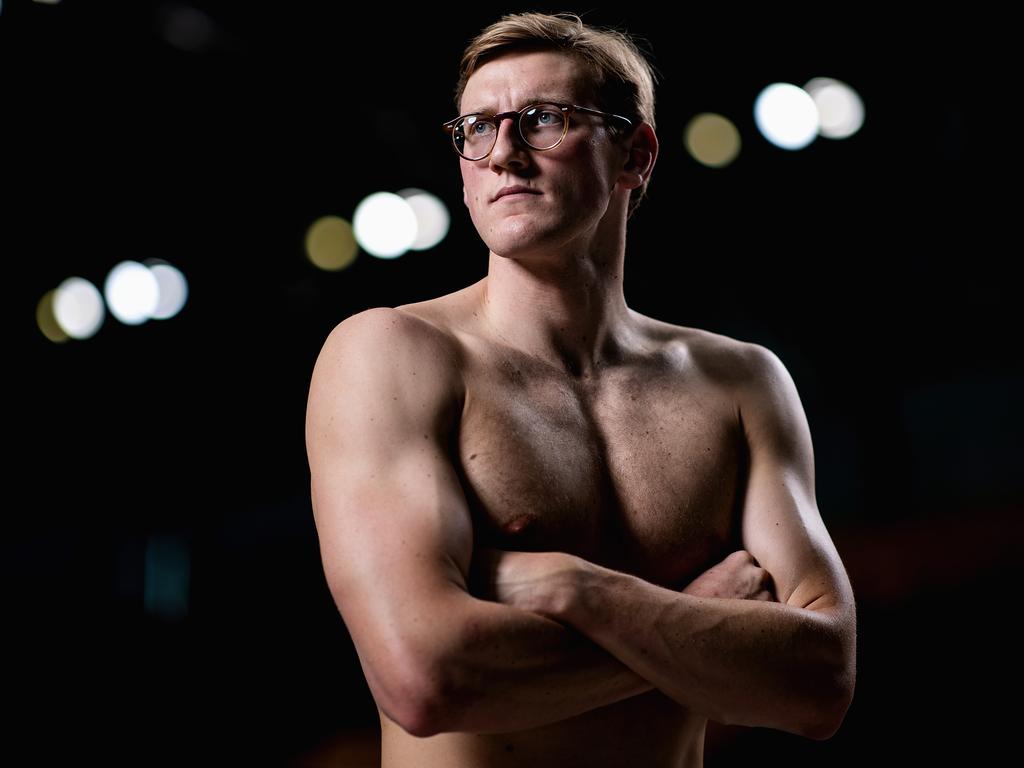
Olympic gold medallist Mack Horton has not prioritised his fourth world championships over his third Commonwealth Games, or vice versa.
A return to the podium is the obvious ambition, but new coach Michael Bohl initially just wants to see him back on the horse.
Horton, the Rio Olympics 400m freestyle champion, has not raced individually at a major international meet since the pre-Covid days of 2019, having scraped into the Tokyo team as a 4 x 200m relay squad member after a surprise failure to qualify in his pet event.
“This year is just a good opportunity for me to obviously tick the box at trials and then have two chances internationally to fine tune things,’’ Horton says.
“It’s an ideal year in terms of that, for me to figure it all out again, which will be nice.’’

Horton was speaking to CodeSports before leaving with the Dolphins for a nine-week European odyssey. It has started with a two-week staging camp in Slovakia ahead of the FINA world titles in Budapest from Saturday week, and will end with the Birmingham Commonwealth Games in July.
Paris 2024 is the end game for this Olympic cycle, but will not necessarily be the finale for the 26-year-old Victorian, who left his long-time coach Craig Jackson’s squad at MSAC to try to “reset and refresh” as part of Bohl’s star-powered group on the Gold Coast.
While chasing a return to his best, and improving a six-year-old PB of 3:41.55 set in the memorable final in Rio, Horton is not looking at either Budapest or Birmingham through the lens of time marching on, but via the extra appreciation that comes with age.
“When I was younger it was just like, ‘Swim, swim, swim, think about nothing else, just get it done’,’’ Horton says. “Now it’s all about obviously swimming, but enjoying the experience and the process and the people that come along, too.’’

*****
Horton always wanted to be a one-club, one-coach, swimmer. In his case Melbourne Vicentre and Jackson, his home/mentor for 14 years.
“Once I made this decision (to move) and once I got over that, it was like, ‘OK, I’m actually getting a bit older, I might only have one Olympic cycle left, so it’s just like ‘let’s just do this and make the most of it’. It was exciting.’’
There was plenty of think-time post-Tokyo at Howard Springs, Horton having deleted all his social media in favour of what he quips was a “pure quarantine experience’’. He admits it was difficult to tell Jackson upon returning home, given their long and fruitful collaboration, but was by then reconciled to the need for change.

“I think he might have had a feeling it was coming, which probably also made it harder to have that conversation, but we still have a good relationship,’’ Horton says.
“We probably talk once a fortnight. He likes to check in and also Bohly is really good in checking in with Craig, and having some input on what we’ve done in the past and comparing notes, which has made the process really smooth.’’
As positive as it has been to join a squad that includes the likes of Emma McKeon and Kaylee McKeown, Horton concedes he is yet to see whether the move has improved his performance, having swum slower (3:44.06) at the April trials than at the corresponding meet in 2021 (3:43.92).

Yet on top of what he describes as a “fairly predictable” training program, one heavily restricted during Melbourne’s crushing Covid lockdowns which kept him out of the water for an unprecedented nine weeks at one stage during 2020, it was just time for something different.
“Then obviously coming up here we’re in the sun, there’s a new coach, it’s refreshing, there’s 20-plus people in our squad — where in Melbourne there might have been six or seven of us — so I feel like the energy just really picks up,’’ Horton says.
“There’s I-don’t-know-how-many Olympic medallists, but a lot. There’s obviously excellence all around and people absolutely pushing the limit, constantly.
“So it’s just been a good reset, and I’m just really enjoying swimming at the moment, basically, which is great.’’

*****
Horton insists he enjoyed his second Olympics, too, for the issue was not what he did in Tokyo but what – as the defending 400m champion who had been relegated to third in the trials behind Elijah Winnington and eventual silver medallist Jack McLoughlin – he did not.
“Being a relay swimmer’s great; watching individual events that you’re usually in is not great,’’ he says. “It was difficult watching that 400, particularly because I’d done times previously that would have been in the mix. But it was what it was.
“I think in a situation like that it probably goes one of two ways: it’s either ‘I’m retiring and getting a desk job’, or ‘I’m hungry and I’m going in on myself again and almost doubling down’, and it was the latter, for sure.’’
A query about what desk job it would have been prompts one of Horton’s regular chuckles.
“I don’t know! I’ve never had a job before, believe it or not, so it’s a scary prospect.’’
At 26, there is an inevitable side-eye on the future for the soon-to-be business graduate who thinks he may study for an architecture degree next. Without any clear vision of exactly what lies ahead.
“It’s like this thing where I don’t know what I don’t know. I don’t know what I like and don’t like in terms of work or what inspires me or motivates me, but I’d like to find something close to swimming in terms of I guess the enjoyment that I get from it, which is easier said than done I’m sure, in the workforce.
“But also something where I can push the limits, like I do in swimming and probably have a bit of that competitive aspect as well.’’

*****
Rewinding eight years. Horton was the rising star, fresh from a five-gold haul at the 2013 World Junior Championships, where he had contested every freestyle distance from 100m to 1500m, then set two new under-age world records at the Commonwealth Games trials.
“That was my first senior team and I was a wreck,’’ he says of Glasgow, 2014.
“I was so nervous. I remember doing the 400 final with Dave McKeon and just being so nervous I was almost watching the race while swimming it. Literally not doing anything.
“I think I ended up coming fifth and then the 1500 was later in the week and I kinda got it together and ended up coming second. It was a lifetime ago, but I think the Comm Games is the best ‘entry team’ to have your first international experience, because it’s just an unreal experience. Can’t wait to go to my third.’’

The last time Budapest hosted the long-course world titles, 2017, also seems like another age. It was the year after Horton publicly labelled as a “drug cheat” his Chinese rival Sun Yang, whose three-month ban in 2014 for testing positive to a banned stimulant was not revealed until after it had been served.
Understandably, given the furore and the fallout, the subject is not one Horton is keen to revisit.
“That was a while ago, too,’’ he says, of finishing second to Sun in the 400m final in 2017.
“Um … I’m just looking forward to getting back there. It’s a great pool, Budapest, an amazing facility, so looking forward to just getting the individual races going again and getting stuck in.’’
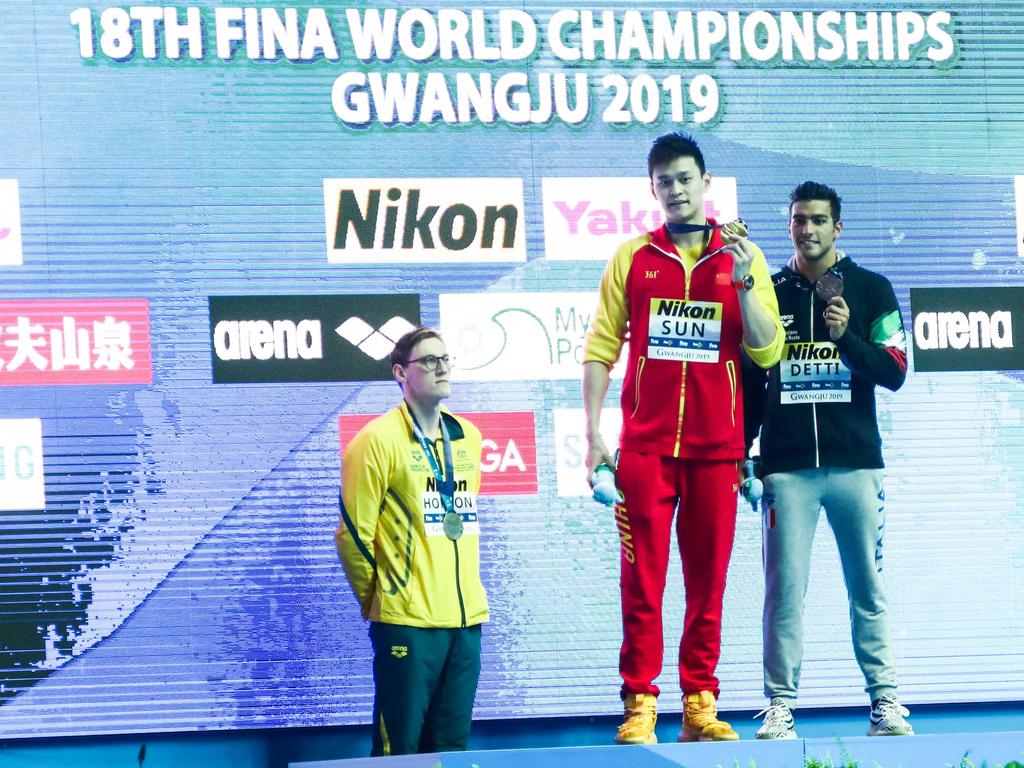
Is that long and fraught episode completely behind him, given Sun’s failed appeals to overturn a later, effectively-career-ending suspension, or will Horton always be remembered for that controversial stand as much as for his results?
“Ah … I think it’ll always be there, whether I like it or not.’’
And the trolling, the threats, the personal and other attacks?
“It definitely still lingers. Hence my hesitation to delve into it.’’
One last one, then: Did it all affect him more than he possibly realised at the time?
“I think because I’m still swimming I haven’t sat down and properly reflected on it, and I probably won’t until I stop swimming, because when you’re in this world, it’s just like, ‘What’s the next thing, what can I do now, how can I get better’.
“So there’s not that much looking back, if that makes sense.’’
Since the most recent worlds, in 2019 in Gwangju, where he refused to stand beside Sun on the podium after another 400m silver before winning gold with the 4 x 200m relay team, it feels to Horton like almost a decade has passed.
“I think it’s just Covid. It’s all very strange. It’s just two years that have disappeared out of nowhere, so it’s just about bridging that gap and getting back to where we were.’’

*****
Having won seven Olympic and world championship medals — including five individual, two of them gold — plus another six at Comm Games, the bespectacled Horton is a senior statesman of the Dolphins these days.
“I guess so — I am getting old! In my head I still feel like I’m a rookie. I still feel 18 and like it’s all still new and exciting. But I guess my words might (carry) a bit more weight these days. Whether I like it or not.’’
In Tokyo, he roomed with 200m breaststroke champion Zac Stubblety-Cook, and if Horton is too modest to admit he provided wise counsel to his younger teammate and friend, then the Queenslander told CodeSports last year that one of several things he absorbed was the importance of enjoying the moment — which, in Rio, and in hindsight, Horton wished he’d done a little more.
“I was there for (Zac) if he needed me; I’m there for anyone if they need me, but the formal mentor role, not really, I don’t think,’’ says Horton, recalling that he was struck by a premonition as soon as the pair checked into their apartment in the Athletes’ Village.
“I was like, ‘This man is winning Olympic gold’. He was just on a mission and so focused and nothing was getting in his way. I was like ‘he’s doing it’, and this was six or seven days before he actually did it.
“It was just so clear that nothing was going to stop him. He was already there. I just witnessed it, and it was a privilege to be able to witness it.’’

While Stubblety-Cook’s star continues to rise, with the 23-year-old having broken the world record at nationals, Horton’s quest for improvement continues at a different age and stage.
Having moved interstate, the freestyler is now making some shifts within his program, given that middle distance success relies on the fine balance between speed and endurance.
A bit like Mack Horton himself, really: fast arrival, long-lasting impact.

From coma to champion: BMX star’s comeback finds a new track

She miscarried last week – now this brave Olympian is taking on a triathlon

1000+ athletes to benefit from revolutionary $50m retirement fund

False start as Ian Thorpe prepares for wild ride in Sydney to Hobart yacht race

‘Definitely reasonable’: Teen Olympian backs social media ban
