
Cocktails, Maui training and Wallaby greats: Inside the Hollywood-worthy rise of the LA Giltinis
It started with an F45 franchise, was moulded on a mountain top in Maui and calls upon some of Australian rugby’s most famed modern names. Meet the LA rugby side named after a cocktail.
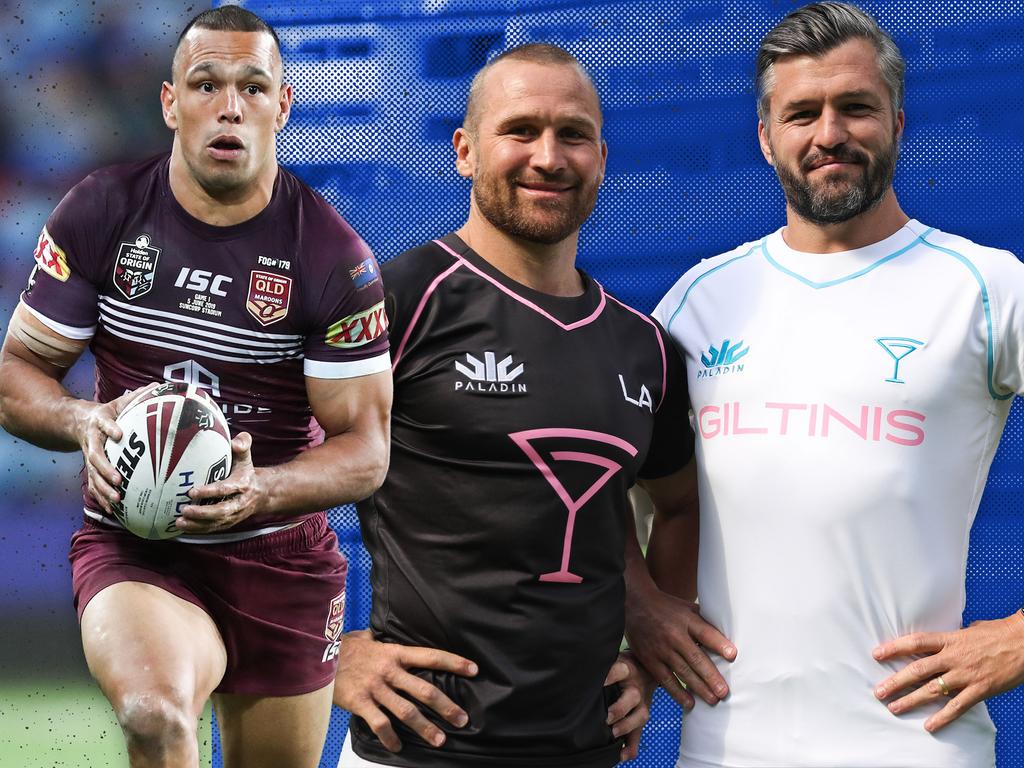
If rugby truly is the game they play in heaven, then it has no more faithful a missionary than Adam Freier.
“Everywhere I go around LA, everyone’s got a rugby story,” he says, running a scarred old hooker’s mitt over what’s left of his hair.
“Mate, I’m talking everyone!”
Having lived in Los Angeles now for more than half my life, I’ve stumbled across remarkably few rugby stories, but the thing with true believers is that, first and foremost, they believe.
And Freier believes in rugby with the zeal of a Catholic schoolboy he once was; a real friar, if you will.
How the ex-Wallaby came to be in El Segundo, a now-gentrified blue collar suburb near LA’s expansive airport, running a rugby club that won the Major League Rugby championship in its first season, is a story that lends itself to nearby Hollywood.
A story that opens in Sydney, where two teenage front-rowers shared a room at Australian Schoolboys camp.
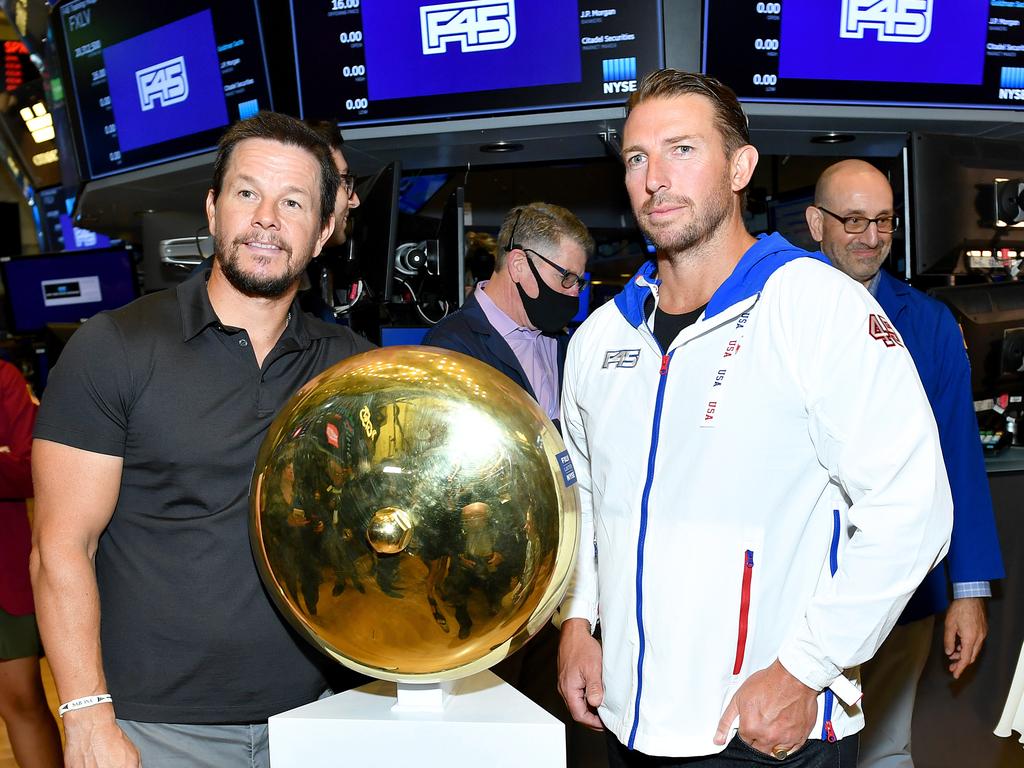
“I remember these big calves,” Freier says, “His nickname was Nugget back then.”
Nugget was Adam Gilchrist – not the cricketer – who in 2013 would open a gym in Sydney. The gym eventually bulked up to become the F45 franchise, growing so big that Mark Wahlberg bought in and before being floated on the New York Stock Exchange last year, making Gilchrist one of Australia’s richest men.
“Exceptional player, Gilly” Freier says, “I’ve got no doubt if he wanted to stick at it, he’d have made it in rugby, but he gave it away in his early 20s.”
But rugby never really leaves men like these.
“It gets in your DNA. He loves the sport. And he’s an out-there thinker,” Freier says.
And so with his newfound riches, Gilchrist bought himself two franchises in the fledgling MLR, one in the rapidly growing city of Austin, Texas and the other in LA.
Typical of his entrepreneurial style, Gilchrist chose unconventional names for his teams: Gilgronis in Austin and the LA Giltinis. Both are named after canned cocktails Gilchrist – who also brews his own beer – plans to release.
“Everyone has a bit of a laugh at the name at the start but you’ve got to understand, you can’t just rock into the US and be the Kings or the Lakers, you’ve got to do things differently,” Freier says.
Suntory does it in Japan, and Gilchrist paid close attention to the way Red Bull moved into sports.
“Go to F1 or to soccer games in Europe and watch the crowd go ape shit waving a flag with an energy drink,” Freier says. “Once you understand the Red Bull model, you see fans will gravitate to the colours, the team.”
But this is LA, and nothing succeeds here like success.
“I landed here on the 29th of December, 2020,” Freier says. “We had no lease, no stadium agreement, everything was shut in LA.
“I was literally meeting people at park benches, wearing masks. We were kicking off on March 20 so we had literally three months to get the club together in what pretty much was the Covid capital of the world.”

And with that, Freier’s hand goes back to scratching what used to be hair. There isn’t a lot of give up in him, so he found a way.
“We found an old polo ground on the top of a mountain in Maui,” he says. “We mowed it, we paid a guy a fee, which was nothing, and literally started our campaign. For eight weeks we trained and we became a rugby team.
“We got out of the blocks super-quick but it was all by accident, near a miracle.”
What wasn’t a miracle was the way the team was constructed: a handful of highly decorated veterans and a lot of young blood, including callow but athletic Americans eager to learn.
“The reason we won last year is we went full out on the coaching,” he says. “To circle back to the F1 model, we’re doing everything to make the car go faster.”
Darren Coleman – now head coach of the Waratahs – coached them, assisted by Freier’s school mate, another former Wallaby, Stephen Hoiles; and they in turn were ably assisted by veterans who doubled as coaches on the field.
The Giltinis say they buy players on their way up or on their way out.
“But it’s not just getting guys at the stage of their careers but getting the right guys,” Hoiles says, having taken over from Coleman.
“Adam Ashley-Cooper, I’ve played a lot of footy with him, Gits (Mat Giteau), Dave Dennis, these blokes were the three pillars of the organisation.
“Good family men who still want to work hard and they’re here because they really want to win because they’re ultra competitive people.”
Freier says the team’s championship wouldn’t have been possible without the influence of those veterans, especially Giteau.
“Us getting Gits is like the LA Galaxy getting David Beckham. Everyone in rugby knows him. Now he’s 39, which is taking the piss a bit – though I played till I was 41 – and he’s nowhere near as good but he’s not after the money,” he says.
“He’s got the drive. He wants to play. He’s someone who wants to give back and if you attach that with some young player who wants to learn, it’s just a winning formula.
“Will Chambers is another one. Is he on the way out? Sure he is, but he’s a winner. He’s won everything. We’re bringing winners in and establishing a culture.”

Culture is a big theme at the Giltinis.
“It’s critical when you’re starting something like a new club,” says Ashley-Cooper, who has retired and is now an assistant coach.
“You’ve got guys here learning the game and you’ve got Matt Giteau here who’s played 100 Tests. Young guys get to see what a week looks like in the eyes of a professional.
“You only have to watch Matt Giteau walk around a gym and how he applies himself here and in team meetings, on the field, in training; you can see why he’s been so successful. That’s certainly part of the recipe of installing a very healthy and high-performing culture.”
There are two names that are mentioned constantly at the Giltinis new headquarters. Men who may be far away but whose influence is always near.
Eddie Jones and Michael Cheika; Randwick men who became coaches at the highest level.
“I’ve got tremendous respect for both those coaches,” Giteau says.
“Both were big on finding the balance of enjoying your football but also know when it was time to dig in and work hard for each other.”
Hoiles, Giteau, Freier and Ashley-Cooper all played for the Galloping Greens.
“Five things stand out about that Randwick culture,” journalist, author and former Wallaby, Peter FitzSimons explains.
“Pick talent, work hard, win, have fun and be tribal.
“Randwick of the late 80s and 90s runs half of world rugby: Dwyer, Eddie Jones, [Ewen] McKenzie, [Robbie] Kearns, Cheika, for starters. What surprised me was the fun element. Their training [sessions] were hard, fast, sharp and fun; particularly their touch rugby games, with the Ellas [brothers Mark, Glen and Gary].
“I took part in a few when I was with the Wallabies, and they were revelatory. Thirty minutes, fast and furious, exhausting, exhilarating.”
Hoiles is the son of a Randwick old boy, serving as a ball boy himself as a kid. It’s not a stretch to see him one day back at Coogee Oval, overlooking the beach he loves.

“I feel very lucky about where I grew up, where I learned the game,” he says.
“Randwick’s struggled in the professional age, but I think growing up there was this belief in the way to play the game, in continuity and support play and a lot of people often talk about the Ellas, Campeses, David Knoxes, and at every turn there was one, but rugby’s also about the people upfront; the engine room.
“It was guys like Cheika who weren’t Test players who held the club together. They didn’t play representative rugby but they were just as important.
“All my mates, that’s how we grew up playing footy. I always played in successful teams because I just think we watched a style of footy that was creative and had flair and that’s how we played.
“Was it success that made the culture down there, or did the culture make the success? Does winning make the team stronger or is it the strong team that wins? I don’t know the answer but as a coach, you try to find a way to create it.”
Chambers, who was playing State of Origin three years ago and had a long career with the Melbourne Storm, was ready to retire when Giteau talked him into coming to LA.
“Gits talked about the enjoyment he got out of last season, how he liked it here and how he really liked the way things were done, so I thought, why not, eh?” Chambers says.
“It’s also an opportunity for me to give back a bit. I really think about that; footy’s been pretty good to me.”
He didn’t want to return to the NRL because the code had him “a bit bored”.

“And I was getting a bit fat. NRL, they’re getting bigger, faster, stronger. The body just takes such a beating and here it’s a lot more enjoyable,” he says.
“Still physical obviously but there’s more space to play. It’s not just a grind like league can be. Six tackles and a kick for 80 minutes, it can be pretty one dimensional.”
As with all the Aussies, Chambers is enjoying the LA life. Most of the players live in a beachside suburb and cycle to the team headquarters.
“It’s not a bad lifestyle, eh?” the Queenslander, who is a big NBA fan, says with a grin.
“I’m glad I came. I was content on retiring when this came up. Funny thing is being around blokes like Gits, Dave, Hoiles, Freier, Adam, these blokes, I’m still learning off them, at my age.
“It’s a good system here. The way they run the organisation, how professional it is, it reminds me of the Storm. The people they have in place here, these are successful people, starting with the owner.”
The goal, ultimately, is to bring converts to rugby – both on the field and in the stands – in time for the 2031 World Cup which is strongly tipped to be held on US soil for the first time.
“Gits and I debuted for the Wallabies together, Hoilesy and I have known each other since we were six years old. We’ve all been coached and crafted by Eddie (Jones) and then Michael Cheika and now it’s up to us to keep that awesome DNA together and going,” Freier says.
“It’s funny how the world works like that. You feel like you’re part of something bigger; of something important.”

Big battles loom to close out 2025 Darwin Rugby season

Revealed: Ex-Wallaby wants more than $50k from Rugby Australia

‘Surreal moment’: Sunshine Coast teen earns Aussie team call-up

Blue-tal! NSW players smash rival states for Aussie U16 rugby spots

Who’s who? The Qld Reds U17s and Aus 16s set for blockbuster
