
Fear of ‘sucking so much again’ fueling Aussie women’s Sevens resurgence
The Aussie women‘s Sevens team is so hell-bent on rectifying their shock losing Olympics campaign they have taken their training sessions to unbelievable heights, writes BRENDAN BRADFORD.

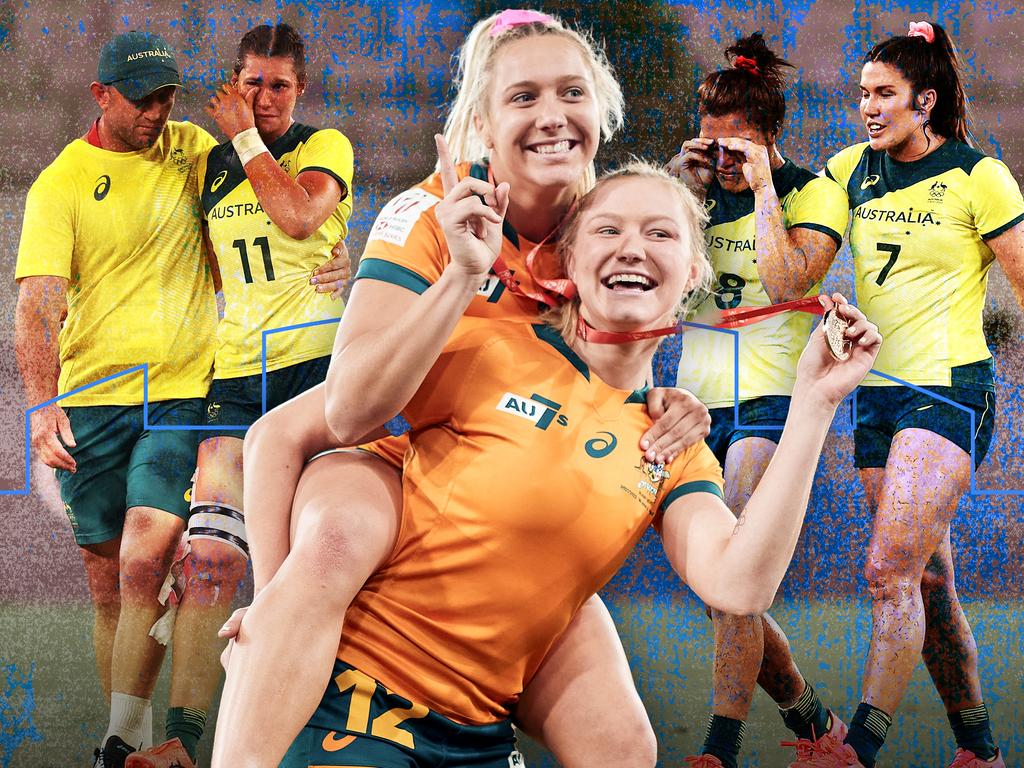
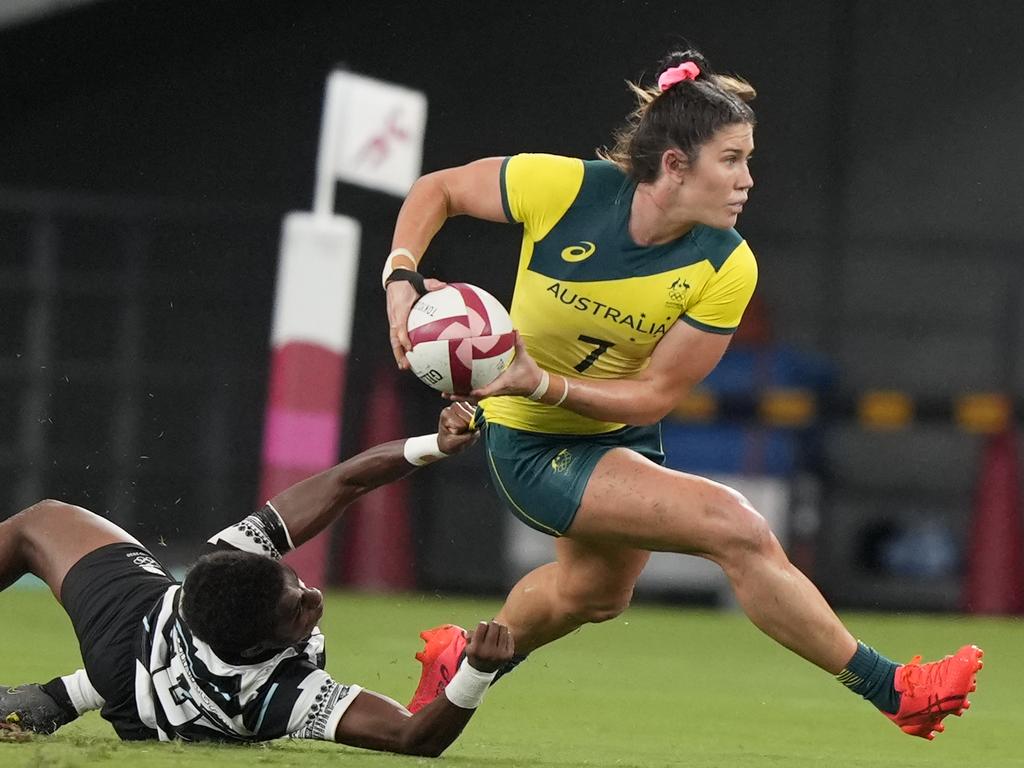
Her late five-pointer against Fiji at the Olympics last year is the most heartbreaking try Charlotte Caslick will ever score.
With under a minute on the clock in the quarter final, the Australian veteran broke free and scored under the posts, with a conversion making the score 14-12 to Fiji.
It was too little too late for Australia. Down 14-0 early in the game, Caslick’s late try gave the faintest glimmer of hope, but with just seconds left after the kick-off, Fiji held onto the ball to record the tournament’s biggest upset.
The defending champions and gold medal favourites were out. The shock defeat followed a group stage loss to the USA, with the team eventually finishing a disastrous fifth.
“We sucked so much at Tokyo,” Caslick laughs.
With the benefit of hindsight – and a phenomenally good 2022 season – Caslick can laugh now, but those raw memories are what’s fueling the side’s current resurgence.
“Everyone doesn’t want to feel like that again. That was a really difficult experience,” she says of the necessary off-field changes that have taken place since.
“It’s just the fear of sucking so much again.”
Caslick is brutally honest when asked what went wrong.
“We weren’t fit enough,” she says.
“The way we wanted to play – moving the ball and being expansive – you have to be fit, and we were playing a style of rugby we weren’t fit enough to play.”

Demi Hayes, who walked off the rain-soaked pitch in Tokyo in tears after that defeat to Fiji, says the Covid-impacted build-up to the Games also took a toll.
“I think it was the lack of games leading into Tokyo, and not having anyone to benchmark where we were at,” Hayes tells CODE Sports.
“We probably got comfortable with where we were and how we were training.
“We thought we were good enough, but we weren’t up to the standard of where we wanted to be, and when it came to the quarter final, you just look back and wonder what happened.
“It just happened before we knew it.”
With the men’s side also underperforming in Tokyo, there were a series of intense post-mortems, with Rugby Australia eventually deciding to switch coaches. Tim Walsh, who coached the men’s side in Tokyo, was named women’s coach – a job he had previously held for five years, winning gold at the Rio Olympics in 2016. Meanwhile, John Manenti – who led the women in Tokyo – took over the men’s side.
It was a strange piece of maneuvering, but yielded instant results.
“It was quite tumultuous there with the coach transitions,” Walsh tells CODE Sports.
“Both of us were happy in our roles, and we felt we were making headway, but the powers that be thought there were better options and that seems to be right.
“It ended up being a really good decision from RA.”

Having built many of the programs and foundations of the women’s set-up, it was a homecoming more than a fresh start for Walsh. There were only a few players remaining from when he last coached the side, but he put his own touch on things and set about looking ahead to the next 12 months.
Fitness was the major concern, with Caslick and Hayes both singling out strength and conditioning coach Tom Carter as a key figure in the turnaround.
“He reached a new level of strict,” Hayes says of Carter’s torturous preseason drills.
“Broncos, yo-yos, 15 on 15 off, grid running, lots of contact conditioning … it was another level to anything I’d experienced.”
The sessions were so intense the squad invented two new words to describe the body’s reaction to it: Crunning (crying while running) and cromiting (crying while vomiting and running).
Brutal stuff, but it built the physical and the mental fortitude to cope in high-pressure situations late in big tournaments.
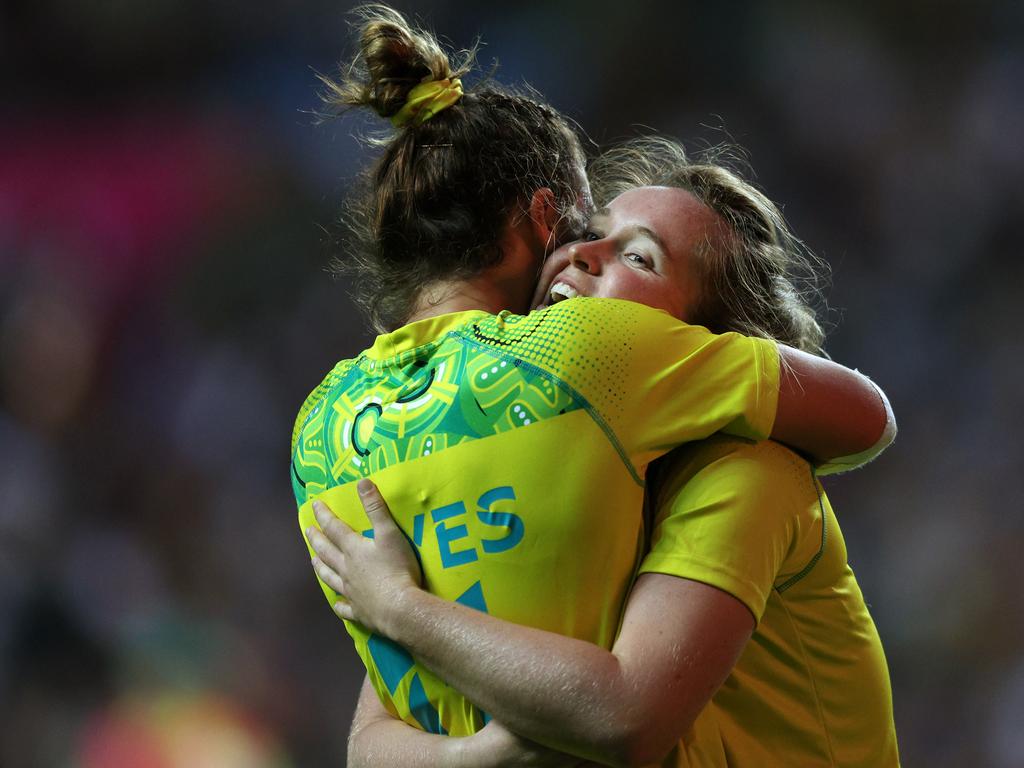
That’s what Walsh has been most impressed with as the side claimed an unprecedented ‘Triple Crown’ by winning the Sevens World Series title, Commonwealth Games gold and Sevens World Cup trophy.
“Winning off the back of not being in form, or in high pressure moments,” he says when asked his highlights of 2022.
“There was a moment in Seville where we won the semi-final and the final with the last play. We weren’t playing that well, but found a way to win.
“Then to bring it all the way to the end, we went into the World Cup as hot favourites, ranked number one in the world, and there was a lot of outside pressure.
“We called it ‘The Courage Campaign’ which is having the courage to be the best you can be. Don’t be afraid to win it. It had been a good season, but that wasn’t enough, we were going there to win the World Cup.”
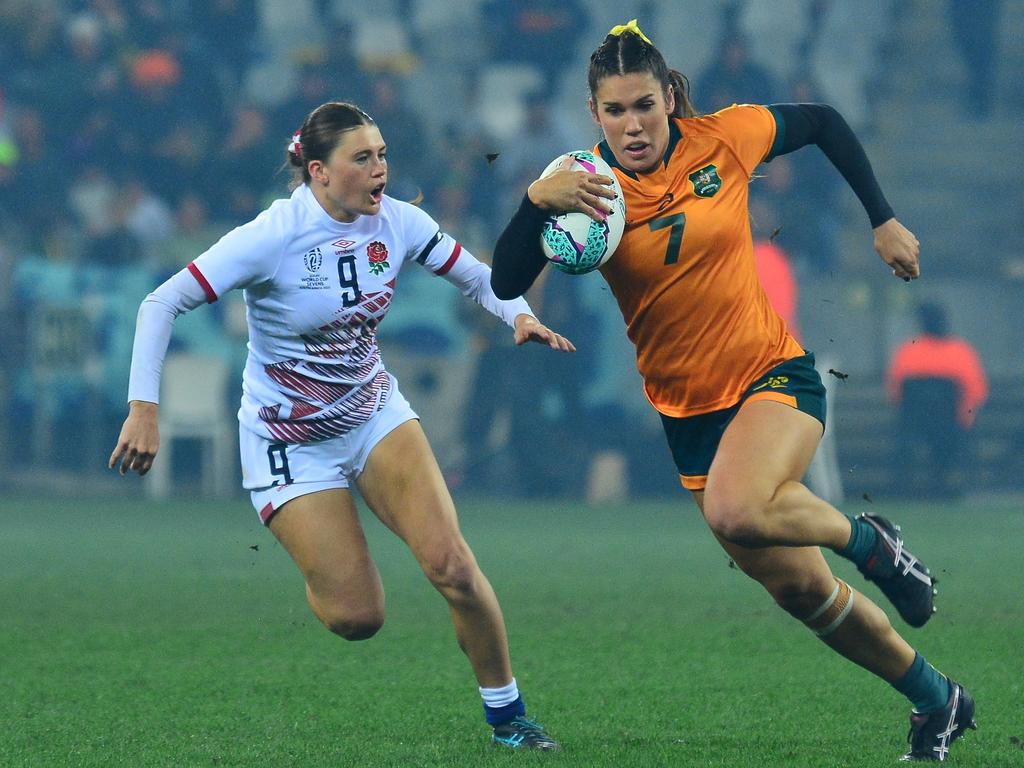
Caslick’s own highlights are similar, with the 27-year-old citing the ability to flip the script on a powerhouse New Zealand side as a particular standout.
“We beat New Zealand in Canada in extra time, and for a long period of time, New Zealand would always win those moments that would decide games,” she says.
“I think that was a turning point. They had the ball, we turned it over, then went two minutes into extra time to win that game.
“The Comm Games as well, they had an opportunity to win it, and didn’t. In the past, they’d always take those opportunities and we were on the other side. Those two moments in close games and finding ways to win, that’s where this group has gone a step ahead.”
With less than two years until the next Olympics in Paris, Hayes leaves an ominous warning that the side still hasn’t hit top gear.
“We’re talking a lot about not wanting to just win by a point, and not relying on another girl missing a kick and us winning,” she says.
“That’s not good enough for us. We don’t just want to be winning, we want to be unbeatable.
“When we come back to training, everything will be ramped up even higher and higher.”

Big battles loom to close out 2025 Darwin Rugby season

Revealed: Ex-Wallaby wants more than $50k from Rugby Australia

‘Surreal moment’: Sunshine Coast teen earns Aussie team call-up

Blue-tal! NSW players smash rival states for Aussie U16 rugby spots

Who’s who? The Qld Reds U17s and Aus 16s set for blockbuster
