
Rugby Australia announce Phil Waugh as new CEO
Known for never taking a backwards step as a player, former Wallaby Phil Waugh is planning to take a similar approach as he takes charge of the sport’s revival. See his plans and thoughts on the big issues here.

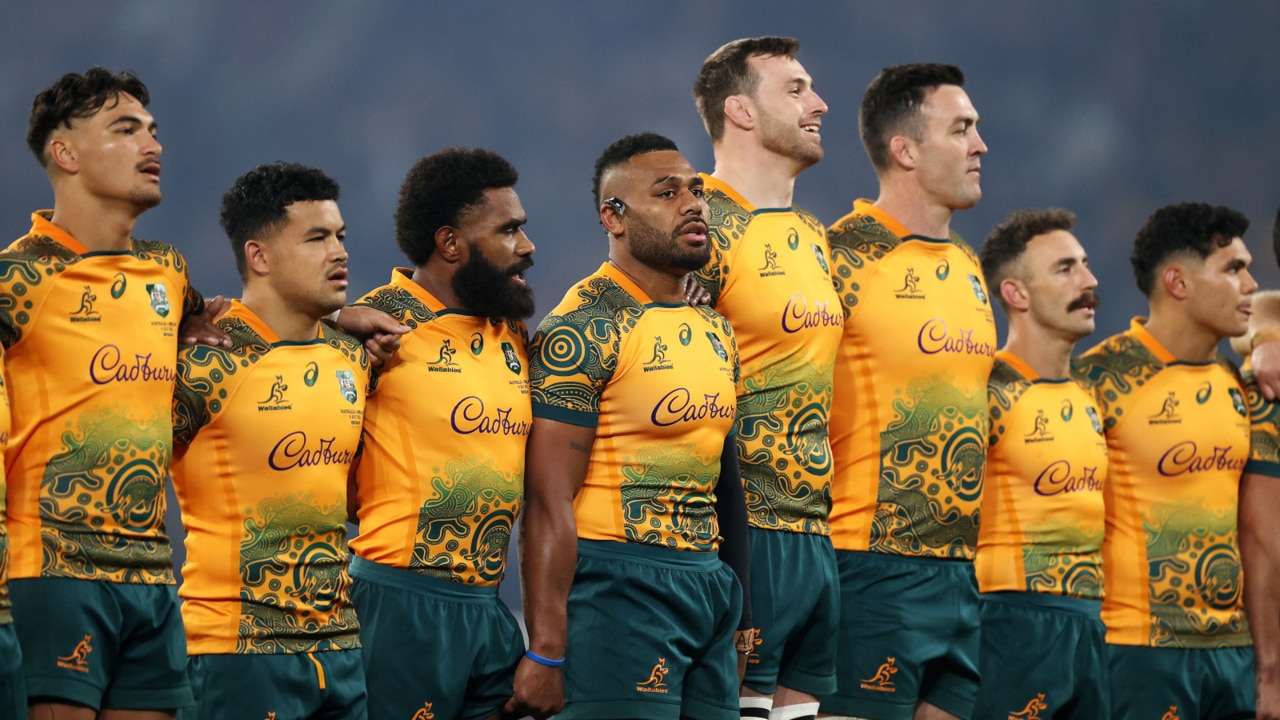
Phil Waugh has vowed to stand up to both Hamish McLennan and Eddie Jones after being appointed as Rugby Australia’s new chief executive.
Waugh, 43, has gone from ballboy, to player, to Wallabies captain, to RA board director, and into the hot seat.
He is the first Wallabies player to be appointed as RA chief executive, replacing Andy Marinos who announced he was stepping down on May 1.
Questions have been raised about the appointment of Waugh, who has never held a CEO role previously, and has a close relationship with McLennan and Jones, who selected him to play for Australia.

But Waugh, who attended Shore school in Sydney’s north – the same as McLennan – is adamant he can take on the powerful and vocal chairman.
“I see it as a team effort, you’re always going to have battles, a bit like playing or selection room, you’re going to have differences of opinion but when you go out to market you want to have a united front,” Waugh said.
“But I’ll certainly challenge aspects I may disagree with.
“But when we go to market we need to make sure we’re out there in front of people as a united board, with the executive.
“I see it as quite exciting, I like ambition, I like leaning in and having a crack. I certainly played my rugby that way, I intend to lead rugby in the same way.”
Jones was installed at the helm after Dave Rennie was sacked in January.
Marinos, dialled in from his South African holiday via Zoom to give Rennie the news, while Waugh told him in person.

It was a telling moment, as McLennan came to rely upon Waugh for the tough moment.
McLennan and Marinos clashed over a number of issues, including the timing of Rennie’s axing, to the signing of NRL star Joseph-Aukuso Suaalii on a $5.35 million deal.
Marinos quit the job on May 1.
As for Wallabies coach Jones, Waugh said: “It was always very robust with Eddie when we were playing. The great thing about Eddie as a coach is that, back then, and he’s obviously grown and evolved, is that he knows how to get the best out of every individual.
“I was only 22 or 23 when Eddie came in and coached the Wallabies, he provided me with great opportunity but also drove me to the best possible performance as a player.
“That was 20 years ago, a lot has changed since back then. But I think we still have that robust relationship where we want the best and highest performance of the Wallabies, and we’ll work together to get that.”
McLennan said he and Waugh had already traded differences of opinion at board level.
“When I look at my interactions with Phil, we’ve had our healthy debates and disagreements on a range of issues, but we’ve always ended up in a better place,” McLennan said.
“I think the board recognises that too and they’ve taken a lot of comfort around his insights around the game and how we can drive it harder.”
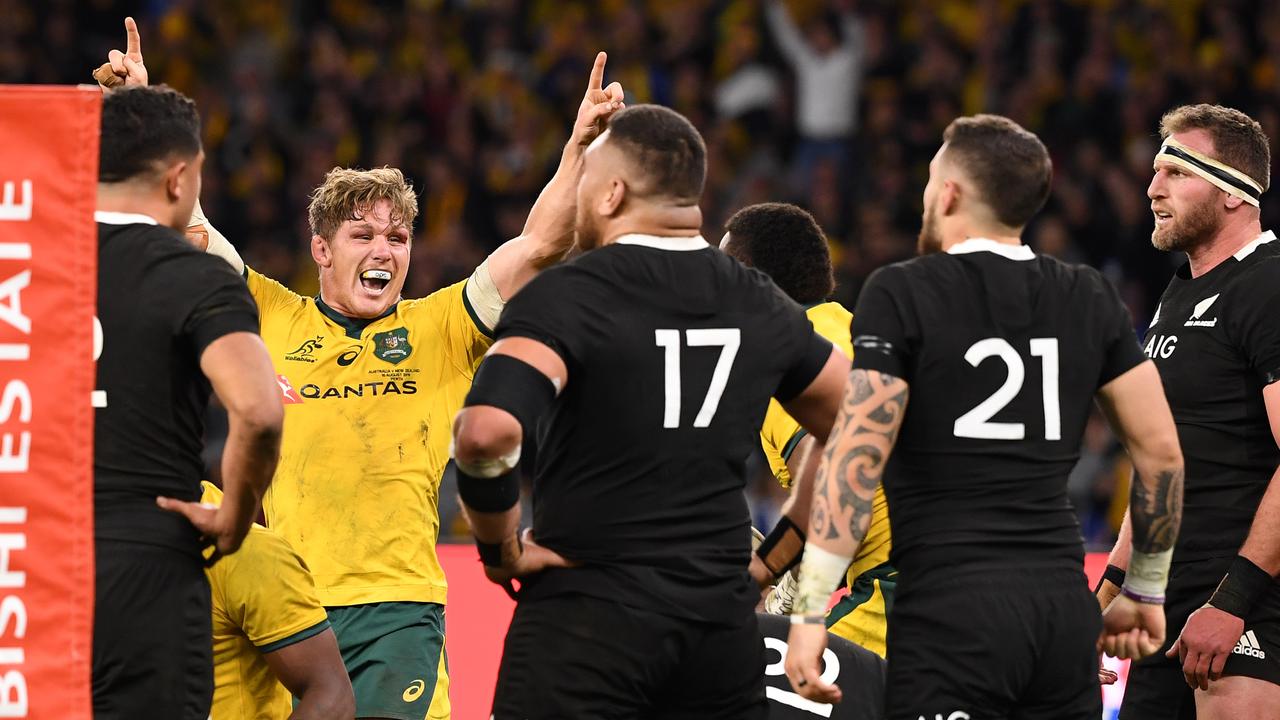
Waugh officially begins the role on July 6, leaving his role as Executive, Broker Distribution at National Australia Bank.
McLennan said Waugh won the job “hands down” after a presentation to the RA board who interviewed candidates.
“We had an external consultant come in, we mapped the market to see who was out there, we had outside candidates who interviewed for the role, Phil put his hand up and he has great respect among the board,” McLennan said.
“But it was a very fair and transparent process, and he won hands down.
“He delivered a stand-up presentation with his vision for the future and it really excited the board and our stakeholders, and he won it fair and square.
“He’s got really high standards in how he wants our on-field and off-field behaviour to coexist, and we’ve got to shoot for the stars.
“He is very performance driven, and we’ve seen that in his business career.
“And the board and I took a lot of comfort from the fact that he’s been there doing the hard yards for the last two-and-a-half years.”
Waugh is keen to lift Australian rugby from the doldrums as it approaches a “golden decade” during which the nation will host a British & Irish Lions series, men’s and women’s World Cups, and Olympic Games featuring rugby sevens.
“I think we’re pretty aspirational, not just as a chair and new CEO, but as an overall board,” Waugh said.
“We’re ambitious around where we want to take the game, that’s a good environment to be in.
“We’re going to lean in and have a good crack, and we want to be on top of the podium in every game we play. We’ve been there or thereabouts, we dip in and dip out, but we haven’t consistently been there.
“The high performance arm of the organisation needs to be strengthened, we’re focusing on that, and as we know things turn around pretty quickly and if we get those performances at the World Cup, beating the All Blacks in the Bledisloe, winning Rugby Championships, winning the O’Reilly Cup in the women’s, people want to support us.”
After being unveiled as the new CEO, Waugh was also probed about his views on rugby’s biggest talking points:

Poaching NRL stars
“I’d prefer to pay less, but my view is that we’ve got a sport that is very compelling that other sports can’t offer in the Australian market,” Waugh said.
“I’m a big believer that, whilst we’ll compete for talent, the Australian sporting landscape is too small not to allow us to coexist across different sports.
“And my belief is that as a national body we should be encouraging boys and girls to be playing as many sports as possible, if that means someone’s playing soccer, AFL, rugby league, I’m less concerned about that as long as they’re having the opportunity to experience rugby.
“That’s how we’ll get the best opportunity to see talent earlier.
“We’ve coexisted with rugby league since 1908, it’s not new ground. It’s just how we provide as much exposure and opportunity as we can.”
Reviving Super Rugby and a potential player draft
“Our Super Rugby performance hasn’t been good enough, I was just going through with Eddie (Jones) today our statistics around Australian Super Rugby teams for the last period of time, since 2016,” Waugh said.
“When you take out the Australian versus Australian games, what those statistics look like are considerably lower.
“So we need to lift the performance across our Super Rugby clubs, and we know when we do that, that feeds through to better Wallabies performances.
“It’s certainly a reset across our Super Rugby clubs, but also working closely with Mark Robinson, my counterpart in New Zealand to make sure we’ve got the right distribution of players across the teams.
“I think we need to pretty creative. We need that tournament to be the best provincial tournament in the world.
“We produce so much good talent in Australia and New Zealand. We can talk about changing laws, but what people really want to see is better execution of the current laws, I think that’s where spectators get a little bit frustrated.”


Private equity investment
“It goes back to the challenge of 2020 and onwards with Covid, the overlay of a very congested market in Australian sport,” Waugh said.
“We know all sports have been challenged. It’s not new, the conversation on private equity in sport globally.
“We’re certainly engaged in that process. I think it’s exciting, a profile-lifting investment.
“But also, we need to change with the times rather than hang on to where we’ve been historically.
“Do we end up down that path? I think we’re in the process, we’ll see.”
Reuniting grassroots to the professional game
“We’re a pretty small population in Australia, and if you think about the rugby supporter base it is based in the communities, it is based in schools and clubs,” Waugh said.
“And we need to connect with where our base is.
“Over time, people are making choices about whether they go to club games or they go to Super Rugby games. When I was playing, you’d you to your club game and then go support your club players at the Super Rugby game.
More Coverage


“It’s really important we go back to that, and put our best Super Rugby players into clubs and then we bring club supporters into Super Rugby and Test matches.
“I do think there’s been a huge separation over time.
“The game starts and ends at our clubs.”

Big battles loom to close out 2025 Darwin Rugby season

Revealed: Ex-Wallaby wants more than $50k from Rugby Australia

‘Surreal moment’: Sunshine Coast teen earns Aussie team call-up

Blue-tal! NSW players smash rival states for Aussie U16 rugby spots

Who’s who? The Qld Reds U17s and Aus 16s set for blockbuster
