
Australian Open 2022: Marin Cilic is a child of war, and a philanthropist because of it
Marin Cilic has known the aftershocks of Balkan conflicts all his life. So when an earthquake rocked a Croatian town with half a century’s baggage, the affable big man led the rebuild from the ground floor.

When Australia hosted Bosnia-Herzegovina in the Davis Cup three years ago, the Bosnian captain Amer Delic spoke movingly about the legacy of the Balkans conflicts of the 1990s.
The devastation and upheaval on tennis facilities still lingers heavily, more than two decades on.
“There are courts there, indoor courts with old bubbles, hard courts that might as well be ice, they haven’t been resurfaced in years,” Delic said. “There is no national tennis centre, they don’t get free tennis balls when they go. It just doesn’t exist.”
His best players, Damir Dzumhur and Mirza Basic, were war babies in the truest sense, the hospital they were born in was bombed days after.
Neighbouring Croatia and Serbia have done a far better job of finding ways to help kids bridge the gap to a pro career.
But there is still much to be done.
World number 30, Marin Cilic, too, is a child of the war, born in the Croatian enclave of Medjugorje that now sits within Bosnia-Herzegovina. People movement across the Balkans has been endemic for centuries and is a source of its cultural uplift and conflict. Borders there have come and gone forever.

It is a background that has grounded Cilic, the 2014 US Open champion, and compelled him to provide educational, music and sports opportunities to children across Croatia. To help out where he can. To build school playgrounds and school laboratories. To give back.
Standing 198cm tall and weighing in at 89 kilos, Cilic cuts an imposing figure. Black haired and with a short, scruff beard, he could be mistaken for someone overly hard line or fearsome. It would be a monumental mistake.
A glance at his warm-up with John Millman the day before the Adelaide International kicked off is instructive. Millman is one of the sport’s good guys (Roger Federer is a fan) and if you can judge a man by the company he keeps, then the Croat is top class.
Maybe 10 Croatian supporters come and go, dads and kids, some with their racquets in tow. Everyone sits in the main stand behind the players and no one goes higher than the third row. They sit there a long time. It’s free to get in everywhere and high calibre qualifiers are on the outside courts, but this contest is a bigger pull.
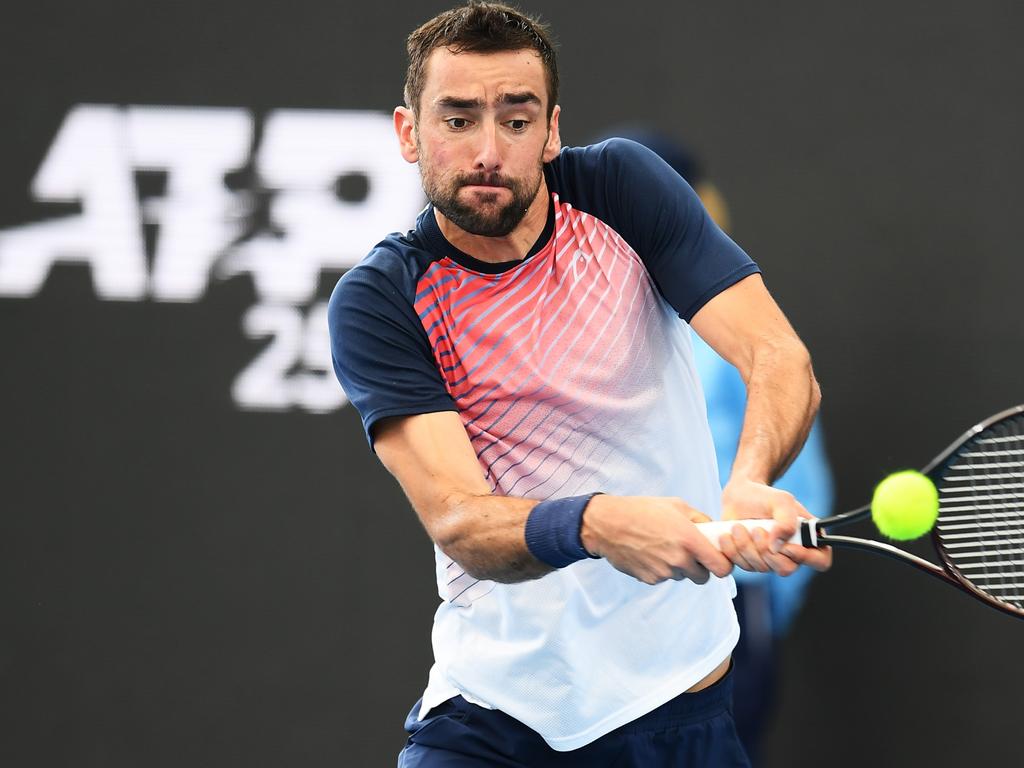
It’s an intense 90-minute session, both men go for their shots and the mini match towards the end is full on. Comically almost – and regular recreational sports players will appreciate such an abruptness – it ends bang on time when the next group scheduled to hit on the arena appear without warning and park their bags by the umpire’s chair.
Cilic and Millman make no attempt to grab another minute and the everyman feel reveals a wholesale lack of ego.
Cilic’s story is original in its setting, but not new. In Nevada, Andre Agassi has raised millions of dollars to build better educational facilities for underprivileged children, while in Australia elite tennis coach Roger Rasheed is putting up sports outlets galore to show disadvantaged youngsters that sport and recreation can be a way out of the poverty cycle.
The Marin Cilic Foundation, with just one paid employee and a host of volunteers is magpie-like in its approach to philanthropy. It has an overriding philosophy to help by building sports facilities where it can, but see an issue, grab it and do your best is the operational mojo.
The earthquake in Petrinja 12 months ago tells it best.
Pretty much the central spot of Croatia, lying between the capital Zagreb and the border with Bosnia, the town has about 40,000 people living in or around it. Old and densely constructed, Petrinja suffered badly from ethnic flare-ups and persecution in the early 1990s and World War II, half a century before. Baggage abounds still, by many accounts.
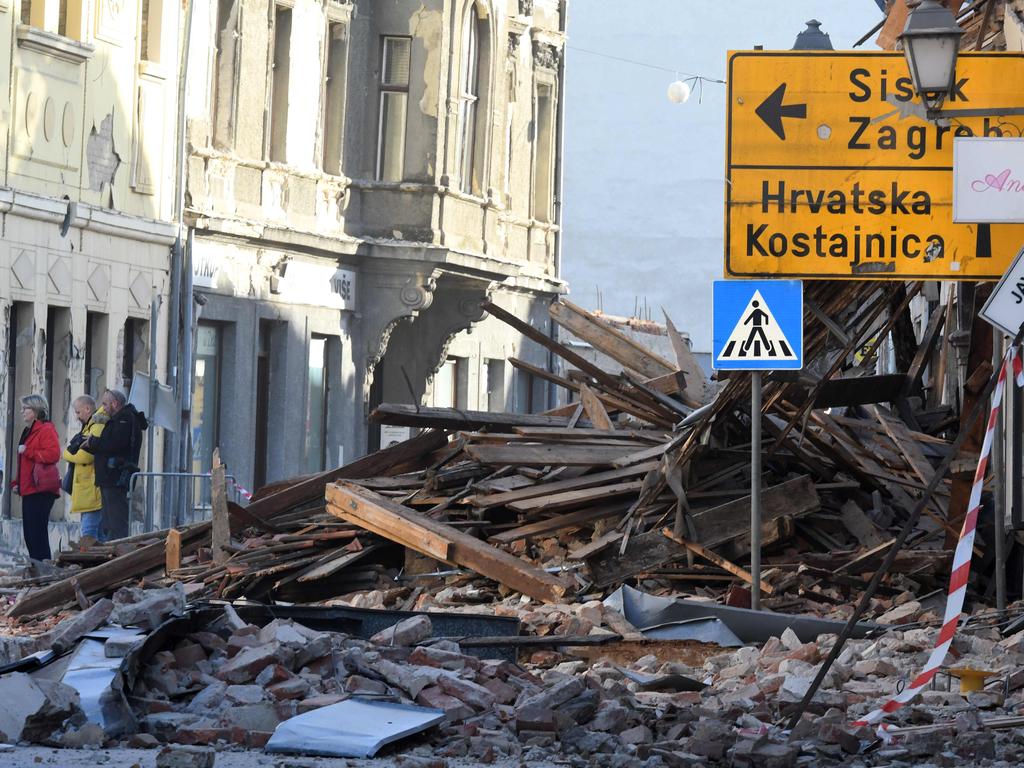
The earthquake, which came with several foreshocks and aftershocks, was reportedly the country’s biggest in more than 140 years. Eight people died with many more injured.
“Lots of people suffered and lost their homes, the city centre was completely demolished. They have not had time to rebuild them,” Cilic says.
“Our idea was to bring players from different sports into that region and try to help them and families have a better life.
“We are building a playground to promote better opportunities, from funds raised, for people who didn’t have anything.”
The remit is widespread across a Croatia that has many neglected regions, particularly in the east and southeast and where families continually uproot, often an impact of the war years.
“We are building laboratories and playgrounds for schools in areas where they don’t have many,” Cilic says.
“There were times when these areas didn’t develop as much. People move home to support a better life and work. So the idea is to give kids a play area and to promote good health.”
So Cilic – one of a very few current players other than Novak Djokovic, Federer or Rafael Nadal, to have won a major title – called upon his mates and ‘Game, Set, Croatia’ kicked in.
Essentially a mini tennis tournament between players from different sports held six months ago, it was a hit as a spectacle, morale booster and fundraiser.
Borna Ćorić, Donna Vekić and Ivan Dodig headlined the tennis contingent in a squad that drew in major names from European football with Chelsea’s Mateo Kovacic, Ivan Perisic of Inter Milan and former Bayern Munich and Juventus star, Mario Mandžukić all heeding the call.
“It is a few hours of our time but it means so much to the people here,” Perisic said at the time.
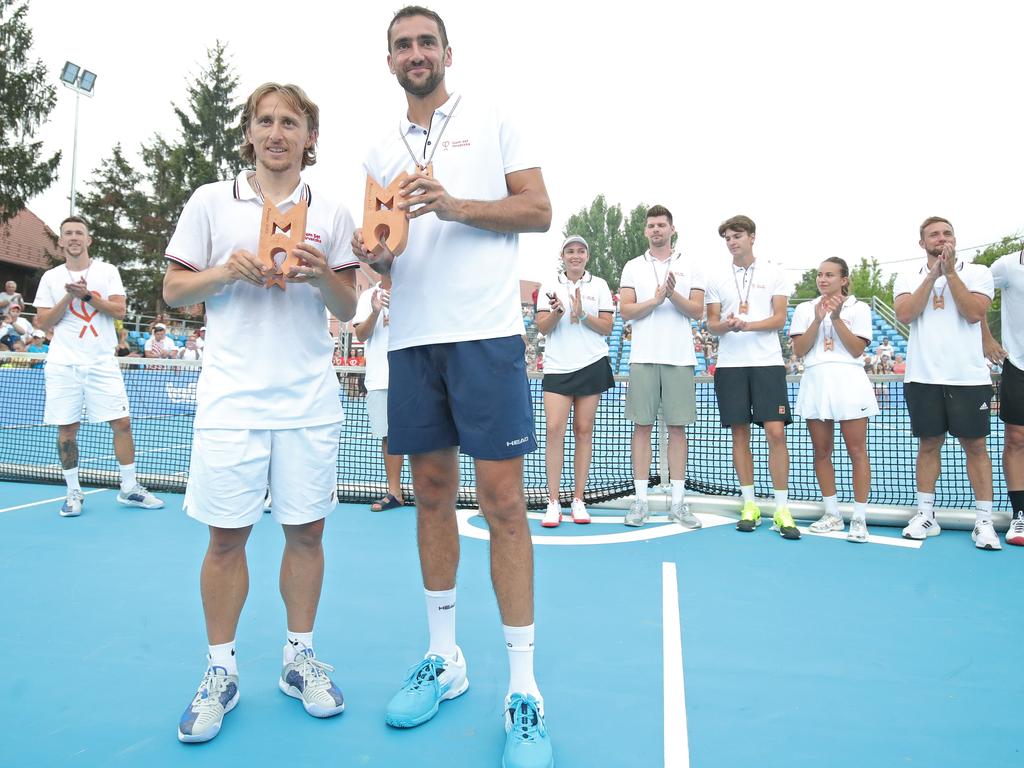
Croatia’s best ever footballer Luca Modric, whose family was displaced during the Balkans war, proved the star attraction and duly shone outside his regular work zone as well.
“Modric was really good at tennis, he was very assured and calm,” Cilic says. “He doesn’t have much time to play but he can do it at top speed, I have never seen anyone move so well on a tennis court.
“He has a calmness, because he is so fit and doesn’t panic at all.”
Multi-functional playgrounds in Petrinja and in neighbouring Hrvatska Kostajnica will be built as a result of ‘Game, Set, Croatia’ while another fundraiser will take place this northern summer in Zadar, Modric’s hometown.
Cilic is third in line in a family of four boys and his father Zdenko set about ensuring his sons were not denied the sporting opportunities he missed out on. There were no tennis courts locally when Cilic was born, so his philanthropic rationale is a simple one.
“I still remember what it was like growing up as a kid. My family didn’t have a great financial background and I was fortunate to get a few scholarships and funds in my hometown that helped me practice tennis and pay for lessons and some equipment,” Cilic says.
“For me it was also the idea that I wanted to give back to the community to provide an opportunity
“I was reading a book by Malcolm Gladwell, ‘Outliers’. He was trying to find a formula and asking ‘what does it take to be successful?’ In the end it was about opportunities.
“You can do things so much better with money but these kids don’t have chances so my idea was to give back, to set up the foundation and get it to grow and grow through success.”
As well as facilities, the foundation has moved onto bursaries with 10 music and 10 sports scholarships, worth about $2000 each, handed out annually.
“It’s not so much about money, but showing that people believe in them. They feel they have earned it.
“That brings me back to my childhood days, I can see how much they get out of it. It reminds me why I started to play tennis; to provide joy.”
A snort of laughter is Cilic’s response to whether he plays a musical instrument. It does happen on the tennis tour. The Bryan brothers are famed musicians and former world No.5 Daniela Hantuchova is a top-notch classical pianist.
No, that’s beyond him, Cilic says, but there is a caveat.
“When you hear something incredible, when you hear someone playing piano. I am so grateful I am able to help them.”
Tennis is of course the focus once more these next few weeks. At 33, Cilic would be contemplating retirement in most sports but remarkably is 16 months younger than Djokovic, the youngest of the big three men.
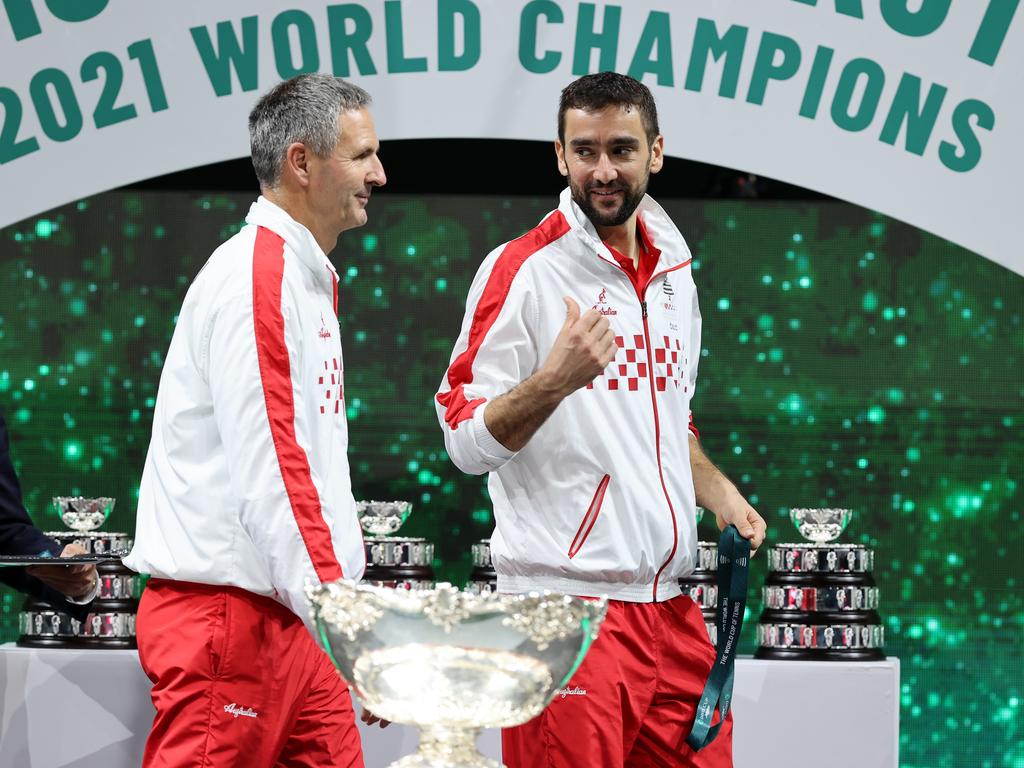
He holds a staggering 20 ATP titles and is not done yet, far from it. A Davis Cup final just a few weeks ago (Croatia’s third final in as many years) holds Cilic in good stead, as does a five-set 2018 thriller when he was a narrow runner-up to Federer.
So another major perhaps?
There is the slightest of pauses only as Cilic – one of the sport’s good guys in more ways than one – treads the line between the bullish and false modesty.
“I think so, if things fall my way.”

‘Very lonely mission’: The price of being a teen tennis star

Federer to return to Aus Open for ‘battle of the World No.1s’

Ultimate wildcard: Mystery still surrounds Kyrgios AO plans

Titmus sought out Barty for advice on early retirement

Demon’s vow after taking out top tennis honour for fourth time
