
Australian Open 2023: Novak Djokovic and former coach Dejan Petrovic reflect on career-shaping training camp in Adelaide 18 years ago
Novak Djokovic learned how to play “very aggressive, in the Australian style” and drink rakija on his first trip to Adelaide, writes ADAM PEACOCK.

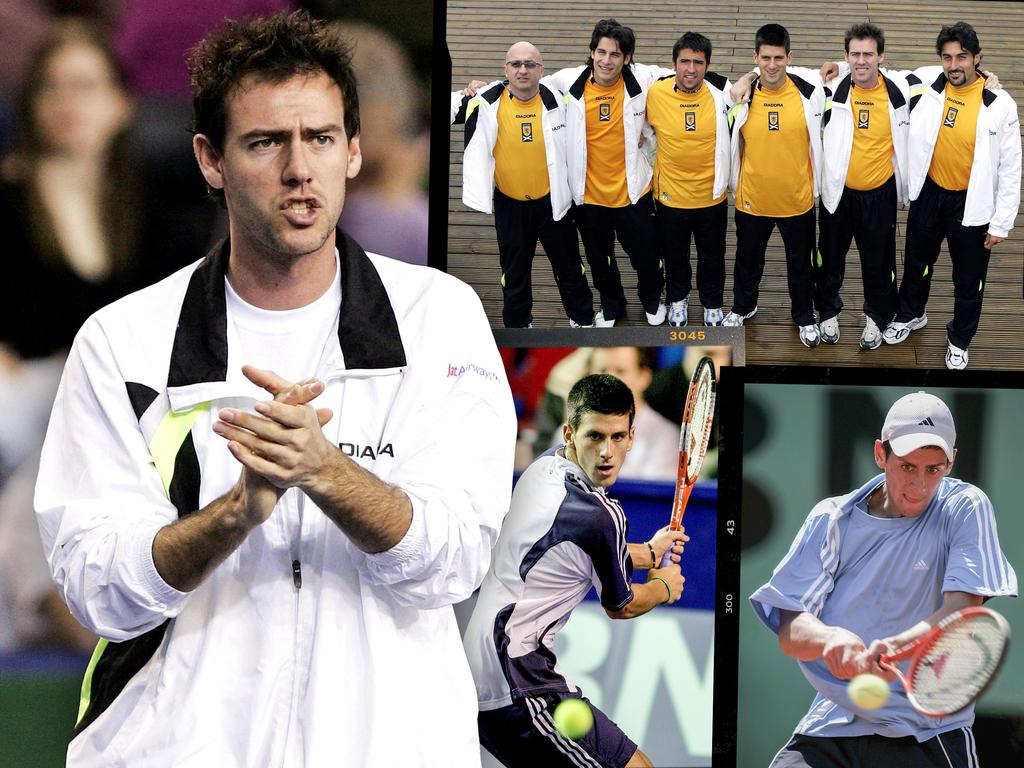
Novak Djokovic’s connection to Australia extends well beyond nine Open titles and five nights in immigration detention. In fact, it stretches back to his very first steps as a touring pro almost 20 years ago.
Djokovic is in Adelaide this week which, for a time, was a second home to him. It was here a teenage Djokovic learned the “very aggressive … Australian style of tennis”, dined on Serbian meze in the northern suburbs and even snuck in a few swigs of rakija (fortunately, no one was checking IDs).
His return to Adelaide has felt like a warm reunion; a stark contrast to the courtroom, detention hotel and departure gate that defined his most recent visit to these shores. He has been greeted by loud cheers and Serbian flags as per his pre-2021 trips here. And he has connected once more with the man who introduced him to Australia all those years ago.
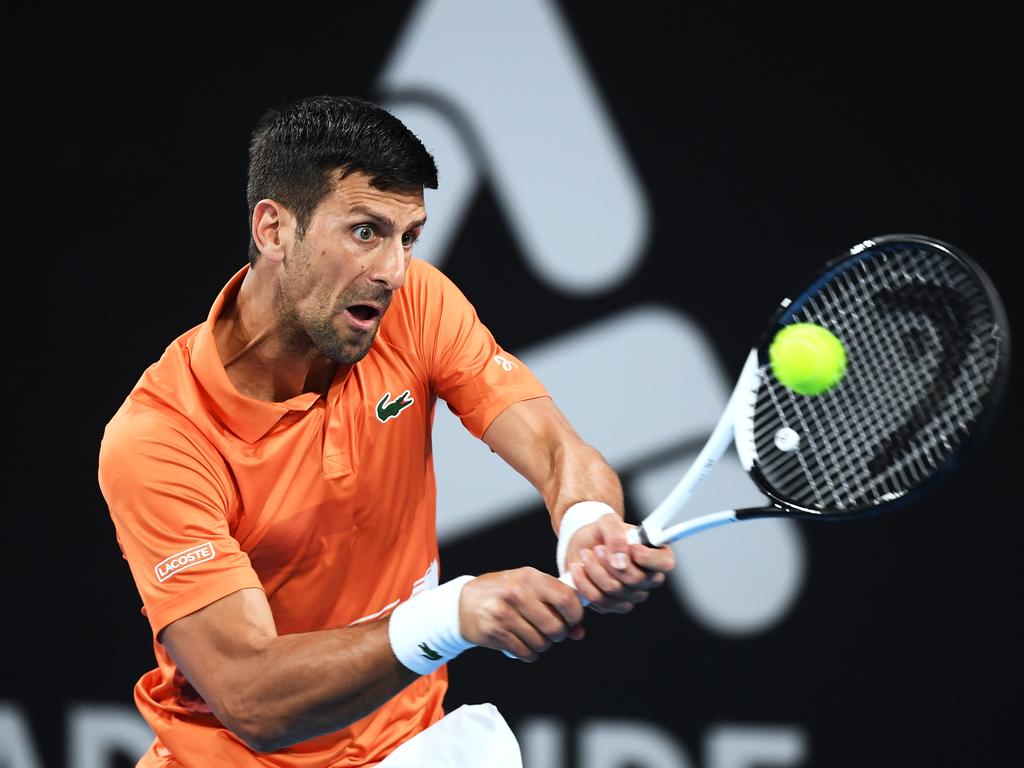
Dejan Petrovic was born and bred in Adelaide. He was, at one point, among Australia’s top juniors and came through the same system as Lleyton Hewitt. That was all before he relocated to Serbia, his parents’ homeland, and an eventual crossing of paths with Djokovic.
In 2004, Petrovic drew the curtain on his own playing career to become Djokovic’s coach. At that point in his career, Djokovic was a talented kid from Belgrade still transitioning to the men’s game. He had much to learn.
“It was a great time, we had fun times,” Djokovic smiles, when asked about Petrovic by CODE Sports.
Says Petrovic: “What he’s achieved is extra warming knowing you gave up your career for someone as special as Novak.”

Petrovic lives in Serbia, was Davis Cup captain for Serbia and even makes his own rakija, the Balkan spirit that burns the airways. But he is also unmistakeable Australian. Listen to him speak English and you’ll hear vowels heard in a pub west of Broken Hill.
In 1972, Petrovic’s parents immigrated to Adelaide. He was born six years later and developed a childhood passion for tennis, going from Port Adelaide Tennis Club to the best under 14 junior in Australia. Hewitt, three years his junior, was among his peers.
The pair clashed memorably in front of their home crowd at the ATP Tour event in 2000.
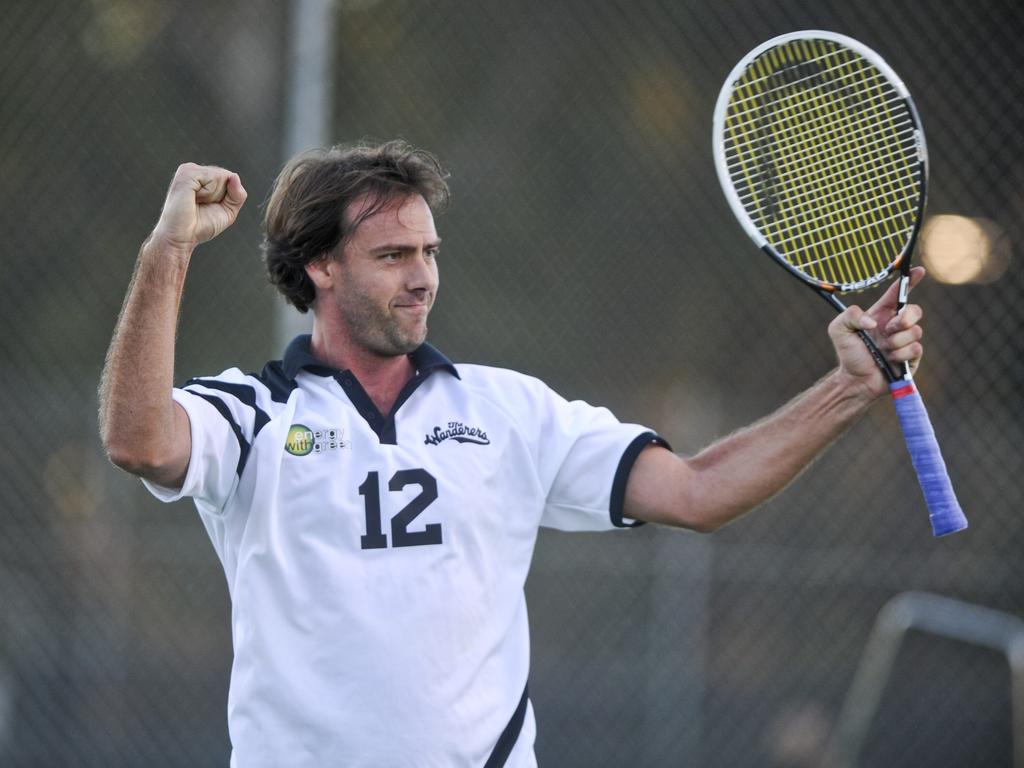
Hewitt, then 18 and rising quickly, smashed Petrovic 6-2, 6-0, and the crowd felt some sympathy. They got agitated when Hewitt questioned a line call. Afterward, a fired up Hewitt would question their intelligence and regrettably called them stupid.
Petrovic laughs about it now.
“I was always the underdog,” he says. “A couple of years before he would have been the underdog, but then I was.”
Petrovic scratched his way around the lower professional rungs as Hewitt charged toward the No. 1 ranking. Around the same time, Petrovic’s parents moved back to Serbia. In 2003, Petrovic was offered the opportunity to play for Serbia (then Serbia & Montenegro).

In that squad was a 15 year-old hitting partner by the name of Novak Djokovic.
“I had heard a bit about him,” Petrovic recalls. “And this kid just didn’t miss. Did. Not. Miss.
“We played a practice match at a local club in Belgrade. I arrived early, and he’s already running around the tennis court.
“We played. That’s when I said, ‘This kid has got what it takes to be a great player’.”
Petrovic, for the time being, continued to pursue a career on the tennis circuit and, at the start of 2004, Djokovic joined him in Adelaide for a training block before the Australian Open junior tournaments.
Petrovic based himself in his old hometown of Adelaide for the summer with his godfather. He wanted Djokovic to avoid homesickness so far from Belgrade.
“I made sure he felt at home,” Petrovic says. “We made a memorable barbecue at his place in Blair Athol [just north of the Adelaide CBD]. Traditional pig on a spit, all meats on the BBQ, meze. Absolutely everything.
“And, naturally, the Serbian rakija. His parents shouldn’t hear this, but we had a couple.”

Djokovic recalls: “Dejan was somewhat a role model for me, and his generation, coming to Australia felt more comfortable. He took me around, connected me with the Serbian communities and instantly I had lots of support, even though I was a teenager.”
Later in 2004, Petrovic was approached by Djokovic’s father, Srdan, to take over his son’s coaching full-time. Petrovic retired right away, well aware of the young man’s potential on account of his personal reference points.
“Growing up, Lleyton lived 500 metres from my place and I travelled with him, stayed in the same room,” Petrovic says. “I saw his progress.
“At the same time I said, ‘Novak is even more special than Lleyton’.”
Petrovic got to work ironing out the kinks in the 17-year-old Djokovic’s game, basing his coaching on the principles he was taught on the courts of Memorial Drive in Adelaide.
“We worked a lot on my transition game to the net and serve,” Djokovic says. “Very aggressive, in the Australian style of tennis. It was a great time. We had fun times.”

Says Petrovic: “The bits about the transition game included moving, through contact then recovering back, that was, for me, essential. He didn’t possess this bomb of an inside out forehand that he has today. He had the backhand. He didn’t miss, and had more power on the backhand.
“Plus, the serve is something we worked like crazy to improve.”
Results started to flow. Djokovic qualified for the 2005 Australian Open, losing in the first round to Marat Safin, who ended up beating Hewitt in the final. Djokovic also got through the qualifying minefield at the French Open, and Wimbledon, where he advanced to the third round.
“After that week he got inside the top 100, and since then he’s never gone back,” Petrovic continues.
Following Wimbledon, the Djokovic family made the decision to move Novak to the tutelage of Italian Riccardo Piatti, a relationship that lasted only nine months, before Novak’s longtime association with Marian Vajda started.
Petrovic, who is now coaching rising Australian Jaimee Fourlis, has no hard feelings.
He’s been courtside this week to watch Djokovic, 19 years after his trip as a junior in 2004, and the barbecue in Blair Athol. The scene is a little different. For all his matches this week, Djokovic has played to packed houses in Adelaide teeming with Serbian flags and overflowing with Novak love.
Petrovic’s overriding emotion is pride for the role he played in transforming tennis in Serbia from a minnow sport to a source of national celebration.
“I’m exceptionally proud. Back in Serbia my sister and I now have our own tennis academy,” Petrovic says. “When I got approached by Novak’s father all those years ago, I told my sister, ‘I truly believe he is the one for Serbian tennis’.”
Will Djokovic win his tenth Australian Open in a few weeks?
“I hope he does,” Petrovic smiles.
“All great things start in Adelaide.”

‘Very lonely mission’: The price of being a teen tennis star
Read more

Federer to return to Aus Open for ‘battle of the World No.1s’
Read more

Ultimate wildcard: Mystery still surrounds Kyrgios AO plans
Read more

Titmus sought out Barty for advice on early retirement
Read more

Demon’s vow after taking out top tennis honour for fourth time
Read more

Pregnant ace’s frock stuns at Crown… but who ghosted the red carpet?
Read more