
Australian Open 2022: Rafael Nadal’s coach Carlos Moya reveals the drive and pain behind Open campaign
In the late 90s, Carlos Moya’s reign as the best tennis player in Spain looked like it would be a long one. Until he met a shy, quiet, 12-year-old kid called Rafael Nadal.

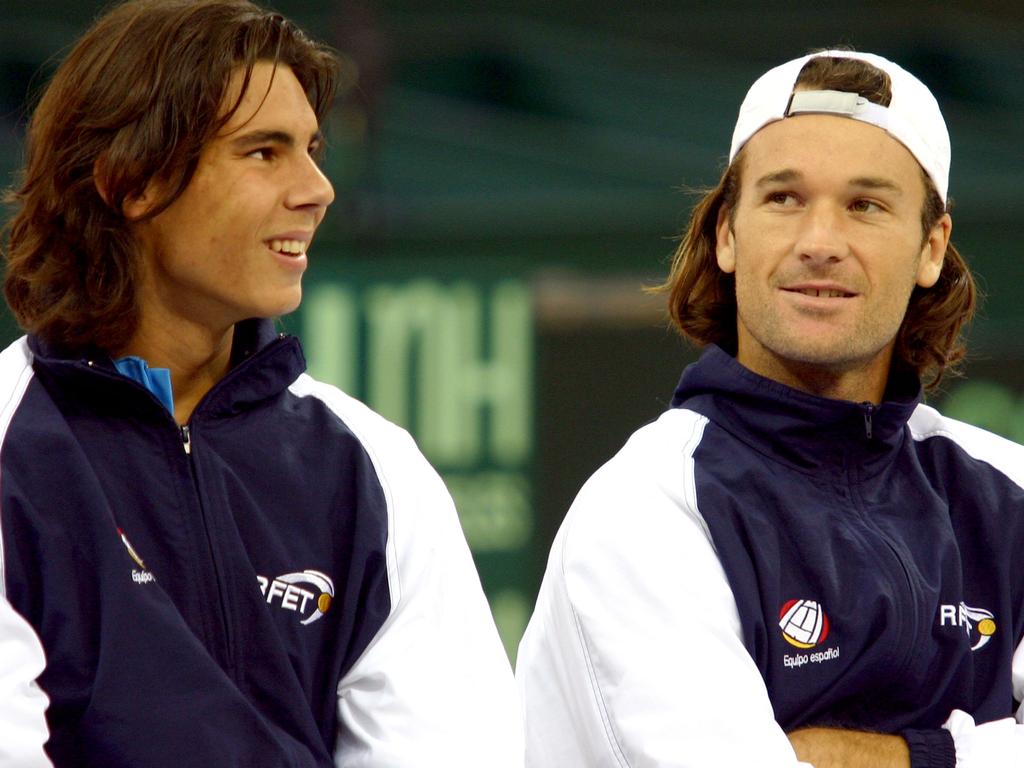
Carlos Moya burst onto the scene at the 1997 Australian Open, his chilled temperament and smooth game capturing attention and the odd heart.
A year later, he’d win the 1998 French Open, then follow that by becoming the first Spanish male world No.1 in 1999.
Mallorca burst with pride. The little island which can be driven around in six hours – known for its unflustered ambience – had produced a tennis king.
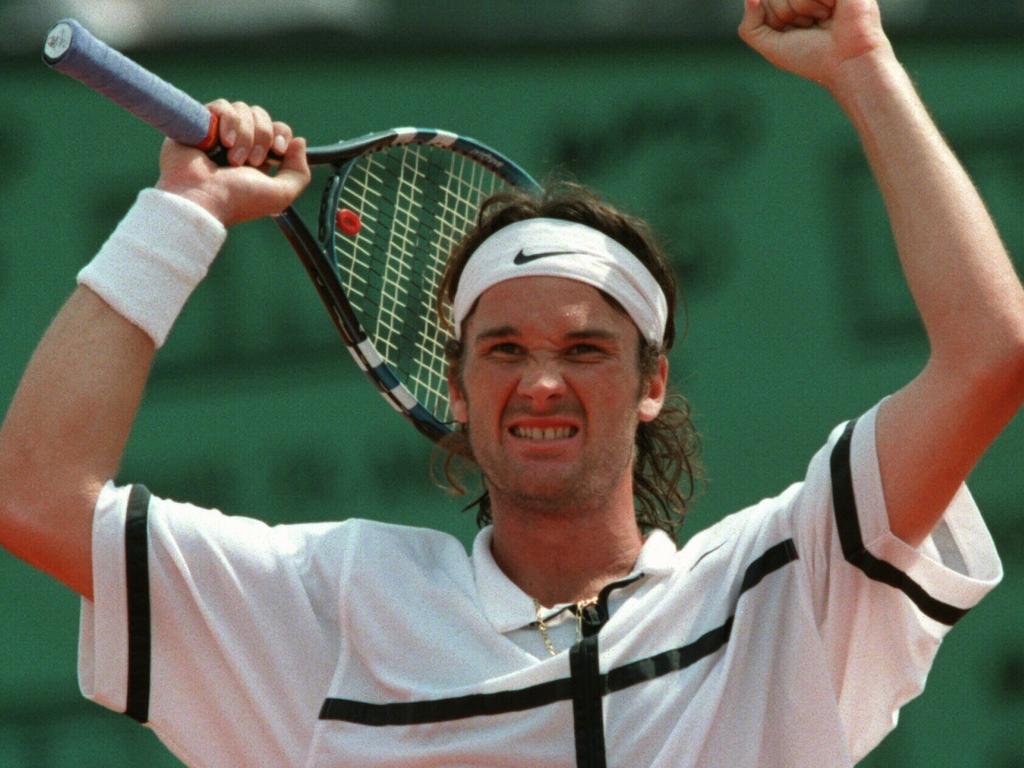
His reign would be fleeting.
At the very same time Moya’s fame peaked, a humble, shy kid was developing at a rapid rate on courts of Mallorca only the locals knew about.
Secrets are hard to keep on the island, though. Moya knew the Nadal family long before Rafa was born. When the kid was 12, still barely able to verbalise anything but manners, they met for the first time.
They would hit together soon after. Moya thought highly of the kid. Then, when the young bull was just 16, realisation would hit him between the eyes in an ATP Tour match on the clay of Hamburg.
Rafa won, and meekly apologised at the net.
No need to say sorry kid, Moya thought. He wanted to help this shy kid transition to the big stage.
“For 20 years I was the only guy from Mallorca, to have someone like him from the same island, I thought I have to help that kid,” Moya says.
“I knew he was going to be better than me.
“I was the best tennis player in the history of Mallorca, and this kid is going to beat me, easy!”
Serendipitous, really, that the help is prolonging the greatness.
*****
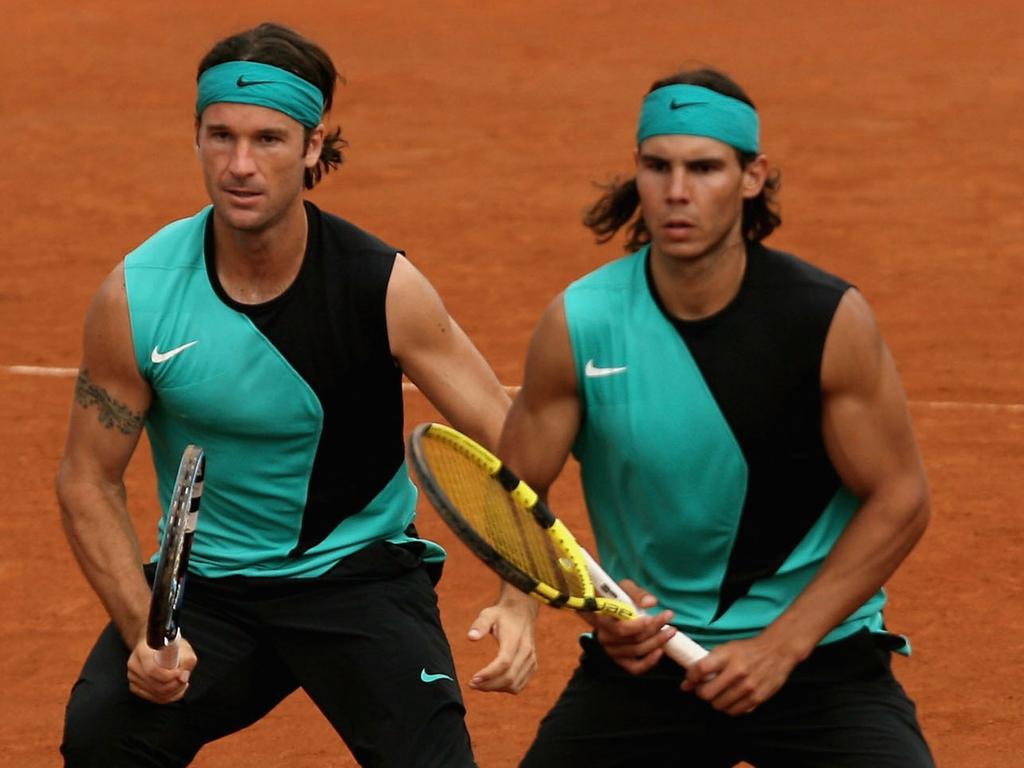
Rafael Nadal was in trouble in 2015 and 2016. Sure, he picked up a doubles Gold Medal at the Rio Olympics, but that was a happy blip amid a period of disappointment.
Injuries mounted, so too head-scratching losses – to the dreadlocked German Dustin Brown at Wimbledon, and Fabio Fognini, Lucas Pouille and Fernando Verdasco at other majors. Talented players, but like comparing a V8 to a Formula One car.
Nadal’s body was breaking, and threatened to take his will too.
At the same time, Moya was enjoying the home life with wife, Spanish actor Carolina Cerezuela, and their three kids. He’d left the tour in 2010, but really, top tennis players don’t leave. They just depart for a while.
“I had five years at home after I retired, but then you miss the adrenaline of being a part of the competition,” he says
Moya’s wife knew it was coming, was OK with short spells on the road with Canadian Milos Raonic, which was the precursor to a call from a familiar voice.
“When I joined Rafa at the end of 2016, he had two difficult years, and wasn’t very motivated during those times.
“But when I joined, he was ready again.”
******

Results speak for everything.
Moya was first part of the Nadal team at the 2017 Australian Open, where he lost a five-set epic final to Roger Federer.
Since then, Nadal has been world No.1 of five separate occasions, a ranking achieved off the back of winning six more majors.
Two of them have been taken on the hard courts of New York, where Moya’s urgings of a more aggressive, nearer to the baseline game, have paid off spectacularly.
“I had very clear in my mind what I wanted from him,” Moya says.
“More serve and volley, be more aggressive, and it set a challenge for me. He is a beast mentally, he wants to keep evolving and there is room for that. That keeps him motivated.”
Moya knows he has to be agile in what works for Nadal’s preparation, given at this stage of his career, he knows exactly what works for him.
“I have to learn from one of the best players ever. Sometimes we don’t agree on things, but I have to listen.
“He’s been much better than me! I have to respect what he says.”
Moya grins.
“Sometimes I still think I’m right.”
Contrary to what many believe, particularly those who see Nadal’s practise sessions that have the intensity of a grand slam final, there are times when Moya has to rattle doubt from his fellow Mallorcan.
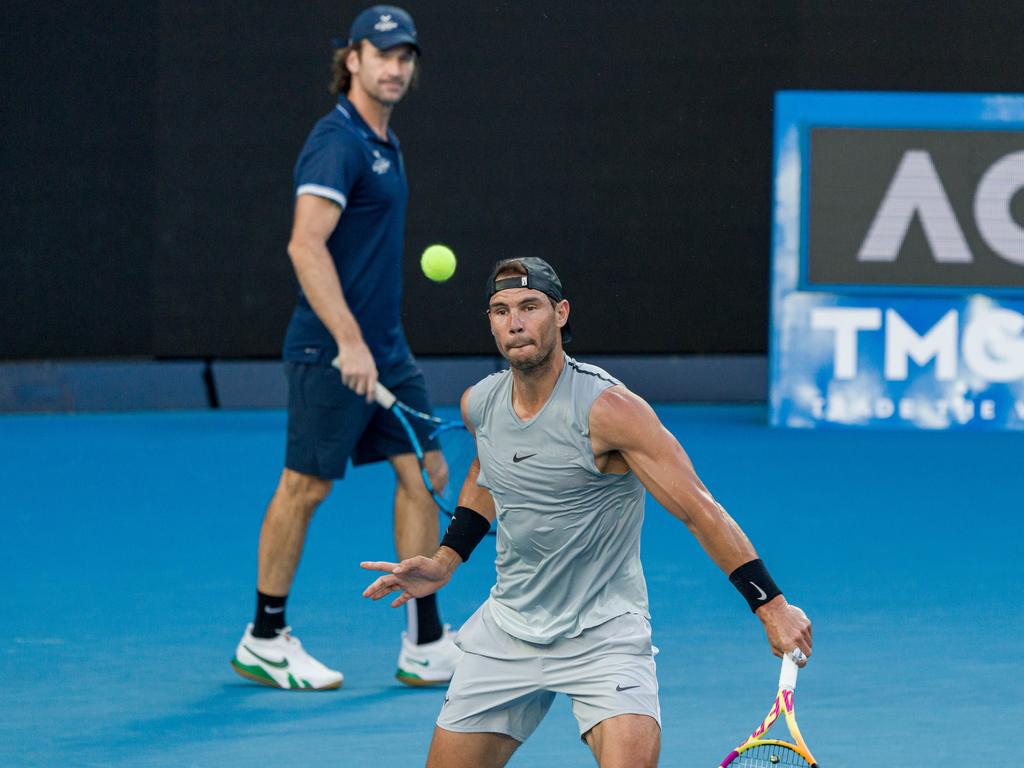
“It happens, he’s human,” Moya says.
“He has feelings, sometimes he’s not that motivated. It doesn’t happen that often. Sometimes with the injuries, maybe he had a bad day the day before. I try to talk to him a lot to see how he is feeling that day, in order to see what we will do.”
There has been a true test of that method in the last six months.
“He’s been through hell,” says Moya bluntly.
Mueller-Weiss syndrome is a chronic issue which causes deformity in the middle of the foot and Nadal has carried it throughout his career.
Midway through 2021 it caused him to stop once more. Some thought for good.
Right up until November, he had no hope of coming for the Australian Open and Moya was set to spend winter in Mallorca.
Then the foot settled, and they went in search of practise and matches in Abu Dhabi midway through December.
“He hadn’t played a set in practise since Washington (in early August),” Moya explains.
“The time there worked, because he didn’t care about the results. He didn’t win a match but after what I saw in Abu Dhabi I knew he was going to be competitive here, and be ready for the challenge.”
*****

Nadal seems ageless, again.
Abu Dhabi served a purpose, despite the spanner a mild case of Covid threatened to throw in the works.
A quick recovery was followed by Nadal’s 89th tour title in the lead-up event here in Melbourne.
Topping Djokovic and Federer for the most major titles with 21 is the number that counts.
Moya won’t be drawn on the overall chances. Must be a Mallorcan thing. Nadal thinks of life as a minute-by-minute proposition and is never drawn into long-term predictions.
Moya, though, is a little more decisive when asked who would win a match between Carlos Moya, the Australian Open finalist circa 1997, and Rafael Nadal now.
“He would win, but I would give him a hard time!” Moya laughs.
“We played each other eight times, he won six, and two of those were really close.
“That’s him though. When you see this happen in his matches, saving set points and coming back, like in the Mannarino tie-break (Nadal’s first set-breaker that went for 30 minutes), you can think he’s lucky.
“It’s something you cannot see, but it‘s there. He has that. In key moments he’s not going to give you anything.”
For Moya’s part, he’s just happy he’s got a front-row seat to the final stages of a career no Mallorcan thought possible.

“I know it’s not going to get any better than this for me. Being with one of the top guys ever, a friend of mine since we were 12 years old, sharing many moments on and off the court.
“We won a Davis Cup in 2004, there are some extra feelings than just a coach-player relationship. Unless my son is playing and I’m his coach, I’m never going to have that again in my life.
“I know it's going to be over sooner than later, so I try to enjoy and learn in every moment I spend with him.”

‘I want to be happy’: How nine-year grind nearly broke Aussie star

Aus Open comeback ramps up as Kyrgios books key-lead up event

‘A bit scared’: Tennis star opens up on pregnancy journey, future plans

Williams set for Australian Open warm-up event return

How Davis Cup can revive Demon after US Open disaster
