
Emma Raducanu’s booming endorsement earnings have not yet been hurt by injury and form woes
Some of the world’s best-known brands will be keeping an eye on the latest injury scare for 78th-ranked Emma Raducanu before the Australian Open, writes STUART FRASER.


Some of the world’s best-known brands will be among those keeping an eye on the latest Emma Raducanu injury scare before the Australian Open. Having invested a combined total of £15 million ($26.4m) a year in the 20-year-old Briton, her nine sponsors will be willing her to recover from an ankle sprain in time to compete on one of the biggest stages in tennis.
Raducanu may be a lowly No.78 in the world rankings after an inconsistent 2022 but she remains one of the sport’s most marketable players. At No.4 in the Forbes list of the world’s highest-paid female athletes, released at the end of last year, there is not yet any indication that her earning power is waning because of her struggles on the court.
No wonder Max Eisenbud, one of Raducanu’s agents, bullishly declared that “the iron’s hot, we’re striking” in the aftermath of her astonishing US Open triumph in 2021. As the long-time IMG negotiator discovered with Maria Sharapova after her Wimbledon victory in 2004, there is no sport like tennis for offering female teenagers a path to untold riches. This is evident in the presence of seven tennis players in the top ten of the Forbes list.
The portfolio that Eisenbud has built for Raducanu contains several blue-chip brands. Backed by British Airways, Dior, Evian, HSBC, Nike, Porsche, Tiffany, Wilson and Vodafone, her earnings off the court last year amounted to about 25 times her on-court prize money total of £580,000 ($1m), for 17 wins in 36 matches – she reached only one semi-final, at the Korea Open in September.
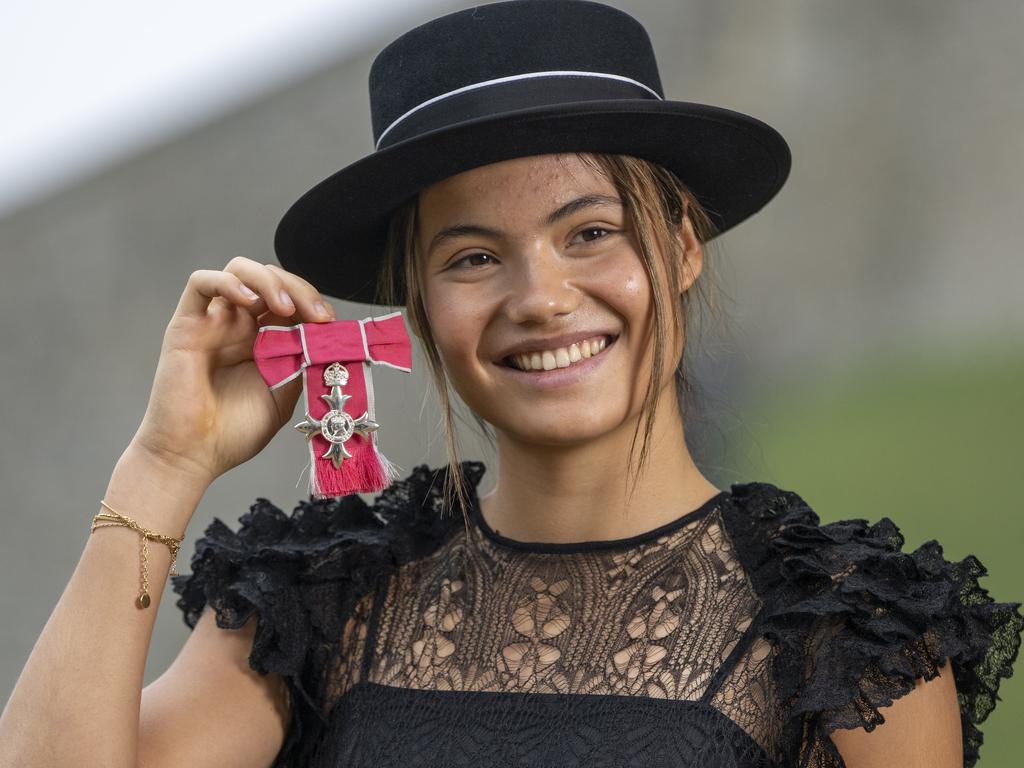
Understandably, some have pondered whether Raducanu’s performance has been affected by so many commercial distractions at such a young age. With lucrative deals come demands on her time, whether it be photo shoots or, as other players have often experienced, a polite but firm request for a birthday video message dedicated to powerful chief executives.
The model used to balance Raducanu’s time is similar to that used by Eisenbud with Sharapova, who was Forbes’s highest-paid female athlete for 11 consecutive years, from 2004 to 2015. A calendar was drawn up with a line struck through all of the weeks where both the agent and player agreed that there should be no commercial work – generally before, during and immediately after a tournament. In Raducanu’s case, this left a maximum of 18 sponsor days in 365.
“We could have done 50 days of shoots,” Eisenbud told the BBC’s Sports Desk podcast last year. “I’ve never seen the amount of excitement and companies that wanted to be in business with Emma after the US Open.”
Eisenbud also added that “millions of dollars” had been left off the table as a result of the 18-day limit.
“Emma decided that she wanted to start her shoots at 12pm or 1pm and go until 8pm or 9pm and have the option in the morning to train or work out or do some fitness,” he said.

There are some performance-related clauses that Raducanu will have missed out on over the past year. Endorsement contracts often have specific bonuses included for achievements such as winning another grand-slam title and finishing the year in the world’s top 10.
While Raducanu is at risk of slipping further down the rankings if she withdraws from the Australian Open – she will drop to about No.85 depending on other results – most pundits are in agreement that she will eventually move back up the list, which would potentially trigger six-figure bonuses.
“It’s not going to be a big surprise if she [Raducanu] breaks through again, so to speak, and gets up to the top 10 in the world, and she has a couple of quarter-finals,” Mats Wilander, the former world No.1 and a Eurosport expert, said. “It’s not a big surprise because she understands tennis and has the level when she’s playing well.”
While grand slam events offer cheques of about £2 million to the singles champions, the sport’s savviest female stars are well aware that their long-term financial security should be built on off-court endorsements. Serena Williams, who pocketed about £80 million of career prize money, has become heavily involved in business with investments in more than 70 start-ups in recent years. The 41-year-old ranked No.2 on the Forbes list with £250,000 earned on the court – she won only three matches in seven before retiring in September – and £34 million off of it.

The largest contrast in on-court and off-court earnings comes from the list’s top-ranked athlete, Naomi Osaka. The 25-year-old from Japan played a reduced schedule last year, with 14 wins in 23 matches after returning from a mental health break, winning £900,000 of prize money. This pales into comparison with an astonishing £41 million worth of contracts from more than 20 corporate partners. The only male tennis player to earn more was Roger Federer, with £75 million of business-related income.
Interestingly, the women’s world No.1, Iga Swiatek, is yet to fully realise her earning potential off the court. Her £8.2 million of prize money exceeds her sponsorship income of £4 million, although she still sits at No.5 on the Forbes list, above Venus Williams (No.6) and Coco Gauff (No.7).
Jessica Pegula, the world No.3 from the United States, completes the set of seven tennis players inside the top 10 at No.9, with earnings of £3 million on the court and £3.5 million off of it. As the daughter of the Buffalo Bills owners, Terry and Kim Pegula, she would comfortably be No.1 if her family fortune of £5.5 billion was included. But to her credit, this considerable financial cushion has not led her to take her eye off the ball.
“I’ve always been super driven, before the Bills and the money and all that stuff,” Pegula said last year. “This is always what I wanted. This hasn’t changed since I was six or seven years old. Why would it change now?”
Originally published as Emma Raducanu’s booming endorsement earnings have not yet been hurt by injury and form woes

‘I want to be happy’: How nine-year grind nearly broke Aussie star

Aus Open comeback ramps up as Kyrgios books key-lead up event

‘A bit scared’: Tennis star opens up on pregnancy journey, future plans

Williams set for Australian Open warm-up event return

How Davis Cup can revive Demon after US Open disaster
