
Greatness skipped a generation during tennis’s ‘Big Three’ era
Dozens of players came and went trying to crack Roger Federer, Rafael Nadal and Novak Djokovic. Now their successors appear to be some of the youngest players on the men’s tour.
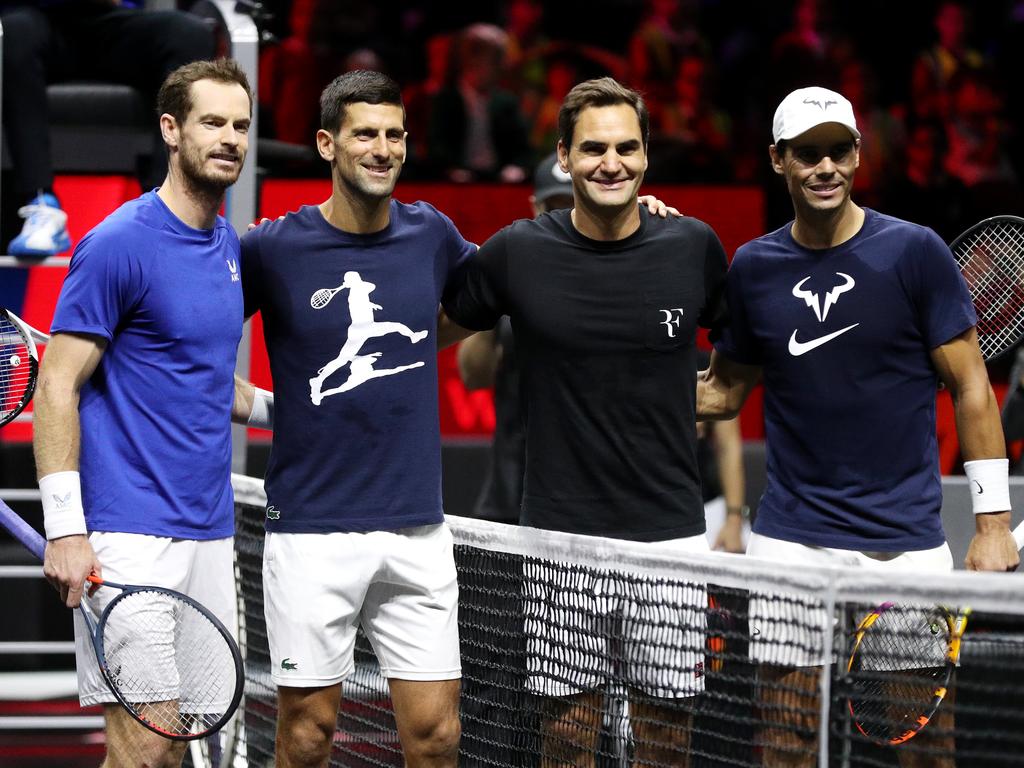
The era of the “Big Three” in men’s tennis ended last week with a farewell post on Roger Federer’s Instagram account. To tell you how long he had been around, Federer had 16 major titles by the time Instagram was invented.
The Swiss master’s exit ushers out a period of dominance unlike anything tennis has ever seen — a spell in which Federer, Rafael Nadal, and Novak Djokovic took 63 of a possible 75 Grand Slam tournaments over the course of two decades. During that time, the Big Three delayed the question of who might succeed them simply by sticking around. Federer won an Australian Open at age 37. Nadal and Djokovic — 36 and 35, respectively — took three of the four Grand Slam tournaments this season.
But at the U.S. Open this month, tennis got its first look at a clutch of players who seem set to define the men’s circuit of the future. It was easy to conclude that in men’s tennis, world-beating greatness may have skipped a generation.
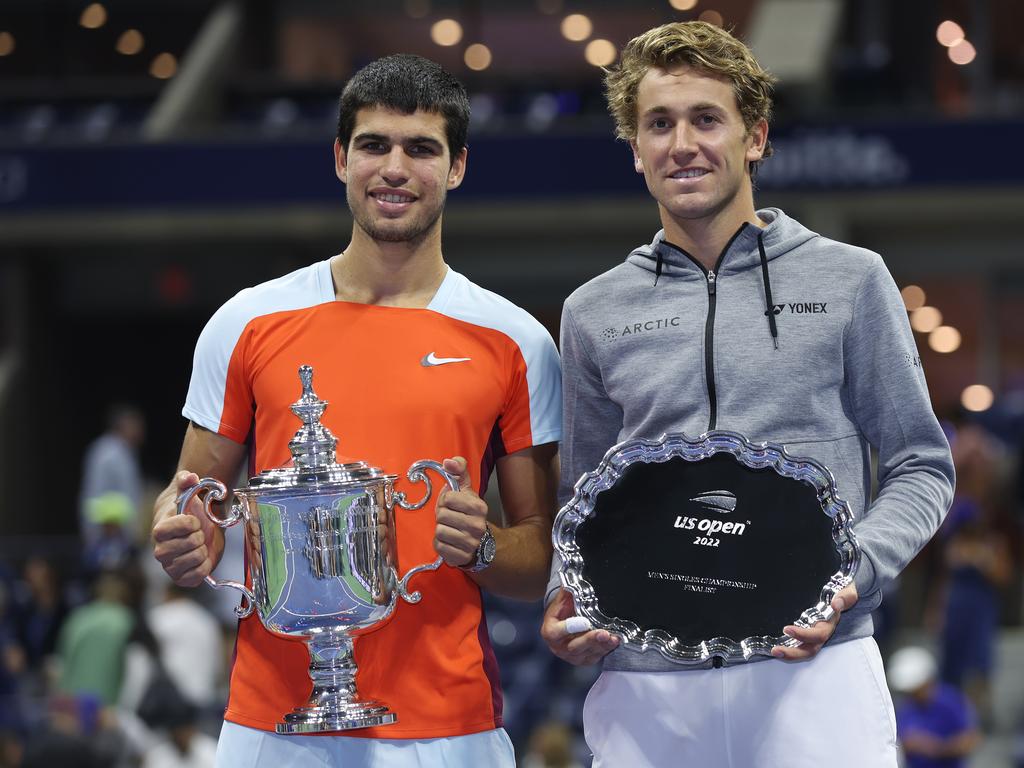
There was impressive tennis from Italy’s Jannik Sinner, now a mainstay in the second week of Slams. There was Norway’s Casper Ruud, who reached two major finals this season. Felix Auger-Aliassime of Canada was eliminated early, but he figures to be a contender soon. And of course there was new U.S. Open champion Carlos Alcaraz, of Spain. All four are 24 or younger.
It also helps that this group will not spend its prime years getting beaten down by the Big Three, who dispatched entire classes of elite players during their reign. France’s Gael Monfils and Jo-Wilfried Tsonga, for instance, were players who rose as the next big things in the Federer era. Tsonga retired after this year’s French Open while Monfils has been slowed by injuries in recent years.
Then came what tennis fans called the NextGen — a group headlined by 20-something players such as Alexander Zverev, Stefanos Tsitsipas, and Daniil Medvedev. They too have largely failed to ruffle the Big Three.
“There has been a lot of talk about the new generation coming and taking over the three of us,” Djokovic said in early 2021. “But realistically, that isn’t happening still. We can talk about it all day if you want. But with all my respect about the other guys, they still have a lot of work to do.”
“Certainly they will be the leaders of the future of tennis, without a doubt,” Djokovic added. “But I’m not going to stand here and hand it over to them. I’m going to make them work their ass off for it.”

This spring, world No.5 Zverev went toe-to-toe with Nadal on Nadal’s spiritual home clay of Roland-Garros, only to retire after rolling his ankle. Tsitsipas, now ranked No.6, went one better and propelled himself to a French Open final in 2021, but threw away a two-set lead and lost to Djokovic.
The only one of that group who managed a breakthrough was Medvedev, who took down an exhausted Djokovic in last year’s U.S. Open final. He and Dominic Thiem remain the only members of the NextGen club to earn major titles.
Now, just when they appeared to have weathered the hardest of the Big Three years, comes another threat playing irresistibly complete tennis in Carlos Alcaraz. The most frustrating part for his midcareer rivals: Alcaraz is just 19.
“Carlos, I think he’s born to play this kind of tournament, born to play these kind of matches,” his coach Juan Carlos Ferrero said. “Since the moment that I started with him, I saw some things that were different than the other guys at his age.”
The biggest advantage Alcaraz has over the NextGen players, however, is really that he won’t spend his prime years getting beaten down by the Big Three.
“It’s disappointing I was never able to play against him,” Federer said. “I always said there will be new superstars in the game, and he’s one of them. The game is bright.”
The same dynamic seems to be playing out on the women’s side, too. Though Serena Williams’s era of dominance was a long way behind her by the time she rode off into expected retirement after the U.S. Open, no clear successor emerged, other than Ashleigh Barty, who abruptly retired in the spring. Instead, the player currently flexing her muscles on tour is three-time major champion Iga Swiatek of Poland, who is 21 years old.
When Williams won her first Grand Slam tournament, Swiatek wasn’t even born.
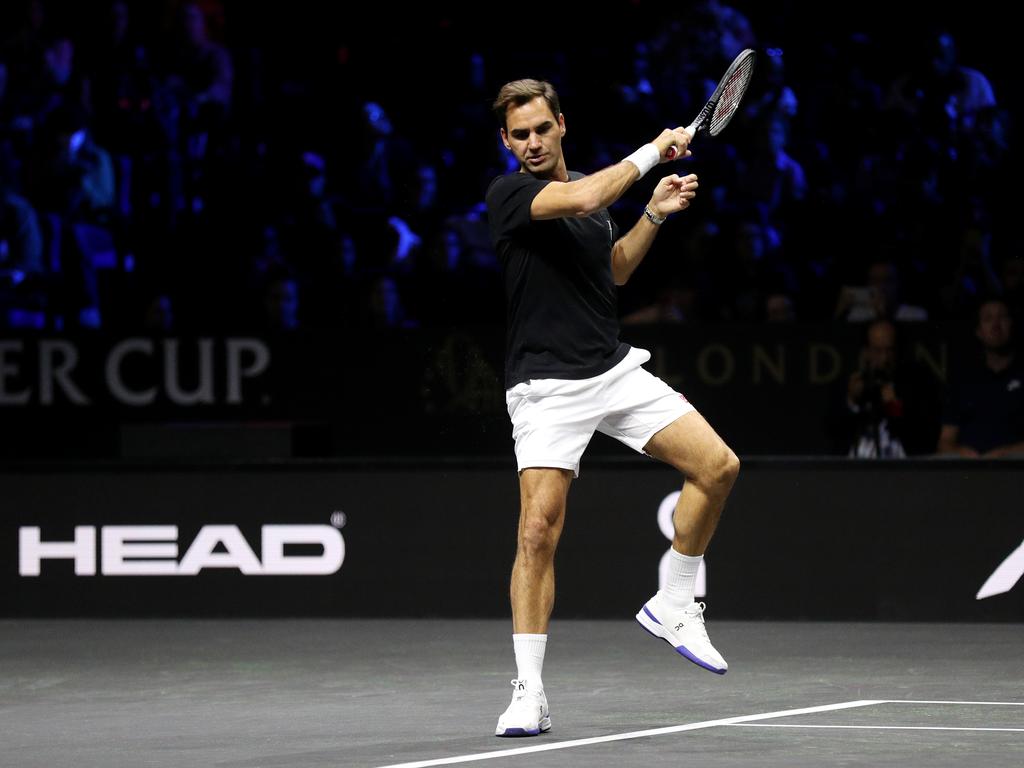
“The new generation, I think it’s going to be great,” Federer said in London on Wednesday, ahead of his farewell at the Laver Cup. “The best movers are the best players. It’s been like this for the last 10, 20 years already now, and it’s going to stay like this.”
For the best mover in the bunch, Alcaraz, Federer will take on a strange new role: a legend of the game who exists mainly in the record books. And Alcaraz knows that the other two aren’t all that far from joining him. The target in his sights now is Nadal’s all-time mark for major titles.
“Well, I have one,” Alcaraz said in New York. “He has 22. I’m in the row.”

‘Very lonely mission’: The price of being a teen tennis star

Federer to return to Aus Open for ‘battle of the World No.1s’

Ultimate wildcard: Mystery still surrounds Kyrgios AO plans

Titmus sought out Barty for advice on early retirement

Demon’s vow after taking out top tennis honour for fourth time
