
How Rafael Nadal, on the brink of his 14th French Open title, conquered Roland Garros
Rafael Nadal can add to his Paris legend with a 14th French Open title by defeating Casper Ruud in the 2022 final. Here’s how his incredible run at Roland Garros has unfolded over the years.

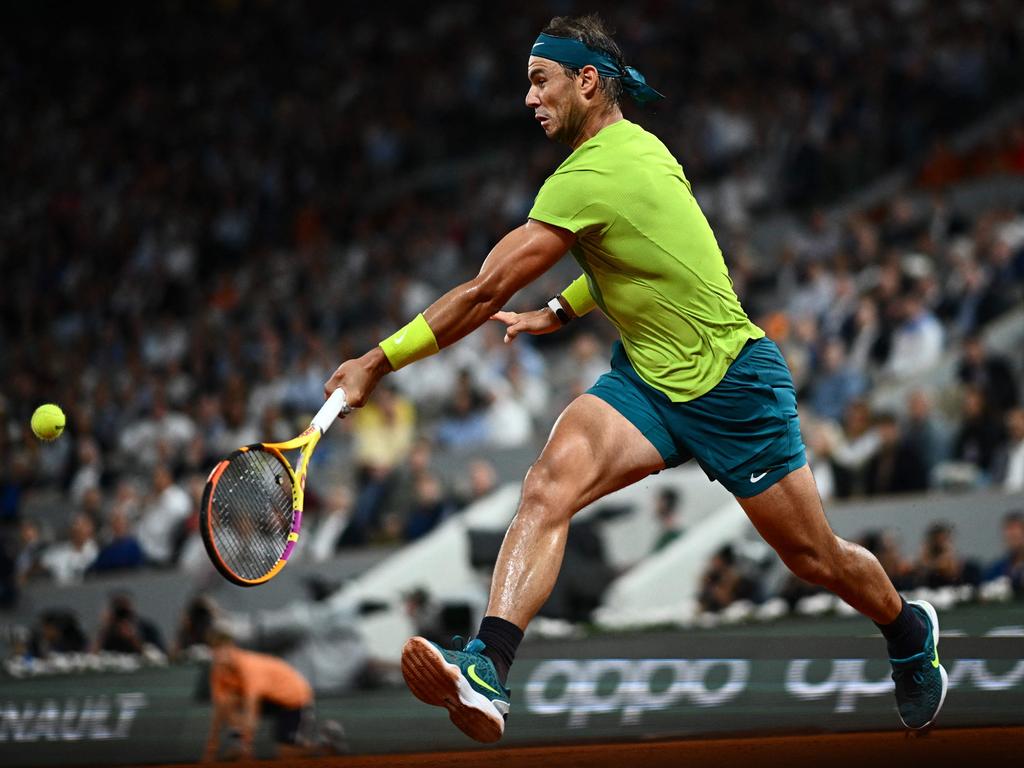
Legendary Spaniard Rafael Nadal can add to his Paris legend with a 14th French Open title by defeating Casper Ruud in the 2022 final. Here’s how his incredible run at Roland Garros has unfolded over the years.
2005: boy wonder
When an 18-year-old Rafael Nadal arrived in Paris, he was by no means some unknown entity, already ranked No.5 in the world after winning three straight tournaments in Monte Carlo, Barcelona and Rome. Unlike most of his fellow teenage competitors, however, he had unusually never before played at Roland Garros as a junior because of his team’s decision to focus on professional tournaments from an early age.
Quickly, it became clear that he had no issue adjusting to the surroundings. He dropped only one set en route to the semi-finals before claiming an emotional four-set win over the world No 1, Roger Federer. In the final, he battled back from a set down against Argentina’s Mariano Puerta to become the first man to win the French Open on his debut since Mats Wilander in 1982.
“Even though he hadn’t won a French Open before, he was still the favourite,” Carlos Moya, Nadal’s present coach and the former world No.1, told the Sunday Times.
“Nobody expected then that he would go on and win 12 more and now have the chance to win No.14, but the first one was really important. It gave him the mentality to know that he was capable of winning more.”

2006-2008: Fed bashing
This is the period in which Nadal brutally stamped his authority over Federer on clay. Another four-set win in 2006 was the first of three straight victories over his Swiss rival in the final. In 2007, Federer had claimed his first success on clay over Nadal in Hamburg, but his hopes of doing the same a month later at Roland Garros were again dashed in four sets.
The 2008 final was arguably the most mentally crushing defeat Federer has ever experienced at the hands of Nadal, losing 6-1 6-3 6-0 in one hour and 48 minutes.
Years later, Nadal’s former coach and uncle, Toni, revealed that this was key in planting the seeds of doubt in Federer’s mind before their famous rematch at Wimbledon four weeks later. “When you beat Roger so easily, you think it is more possible to do it at Wimbledon,” Toni said.
Moya, who lost to Nadal in straight sets in the 2007 quarter-finals, agrees that this run of wins over Federer was indeed pivotal.
“It seems such a long time ago now, but every single victory he has had is a part of history and part of building him to develop as a player,” he said. “It makes him who he is right now. But beating Roger three times in a row, of course, is something else.”

2010-2014: rebound run
Reverberations had swept around the sporting world in 2009 when Nadal lost to Sweden’s Robin Soderling in the fourth round, his first-ever defeat in 32 matches at Roland Garros. This turned out to be a very challenging year. Tendinitis in both of his knees forced him to pull out of Wimbledon and he was left heartbroken by the surprise split of his parents, Sebastian and Ana Maria, which broke up this close Mallorcan family unit. “The news left me stunned,” he later wrote in his autobiography. “My parents were the pillar of my life and that pillar had crumbled.”
Revenge over Soderling in the 2010 final helped him to reassert his French Open dominance. This was important as Novak Djokovic was beginning to show signs that he could become a threat in Paris. After once again beating Federer to win in 2011, he got the better of Djokovic en route to the title in the next three years. In 2014 he broke down in tears when the Spanish national anthem was played.
“When you’re on the podium, then there is the national anthem and the public is there to support you, to cheer your name on this huge court with so many people, of course you are overwhelmed with emotion,” Nadal said.

2017-2020: golden oldie
With nine French Open titles, it seemed inevitable that Nadal would complete an achievement billed by the Spanish press as “La Decima”. Then in 2016, concerns emerged about his future when he suddenly withdrew from the tournament before his third-round match because of a worrying wrist injury. At the age of 30, it seemed that he was fast running out of time to win again at the sport’s most gruelling grand-slam tournament.
But as has been the case throughout his career, Nadal’s fighting spirit knows no bounds. The tenth triumph in 2017 kickstarted a run of four straight French Open titles in his thirties, including a dominant straight-sets win over Djokovic in the 2020 final. Now, two days after his 36th birthday, he is on the cusp of becoming the oldest men’s singles champion in French Open history despite his difficulties with a chronic foot problem in recent weeks.
“This period is a different perspective for him to the beginning of his career,” Moya said. “Fifteen-to-16 years ago, he was a different player, with fresh legs helping him run everywhere. We don’t have that any more. But he has evolved and become wiser on the court, he knows the game better now. To me, beating these records with longevity like this is something you rarely see in any sport, and he has been able to do that.”

Originally published as How Rafael Nadal, on the brink of his 14th French Open title, conquered Roland Garros

‘Very lonely mission’: The price of being a teen tennis star

Federer to return to Aus Open for ‘battle of the World No.1s’

Ultimate wildcard: Mystery still surrounds Kyrgios AO plans

Titmus sought out Barty for advice on early retirement

Demon’s vow after taking out top tennis honour for fourth time
