
The Safinettes, heatwave and a stampede for the ‘Spice Girls’ – 20 years on from the 2002 Australian Open
Lleyton Hewitt came down with chicken pox as Marat Safin arrived with an entourage of glamours. But it was ‘the Spice Girls of tennis’ and 46 degree days that truly dominated the 2002 Australian Open.

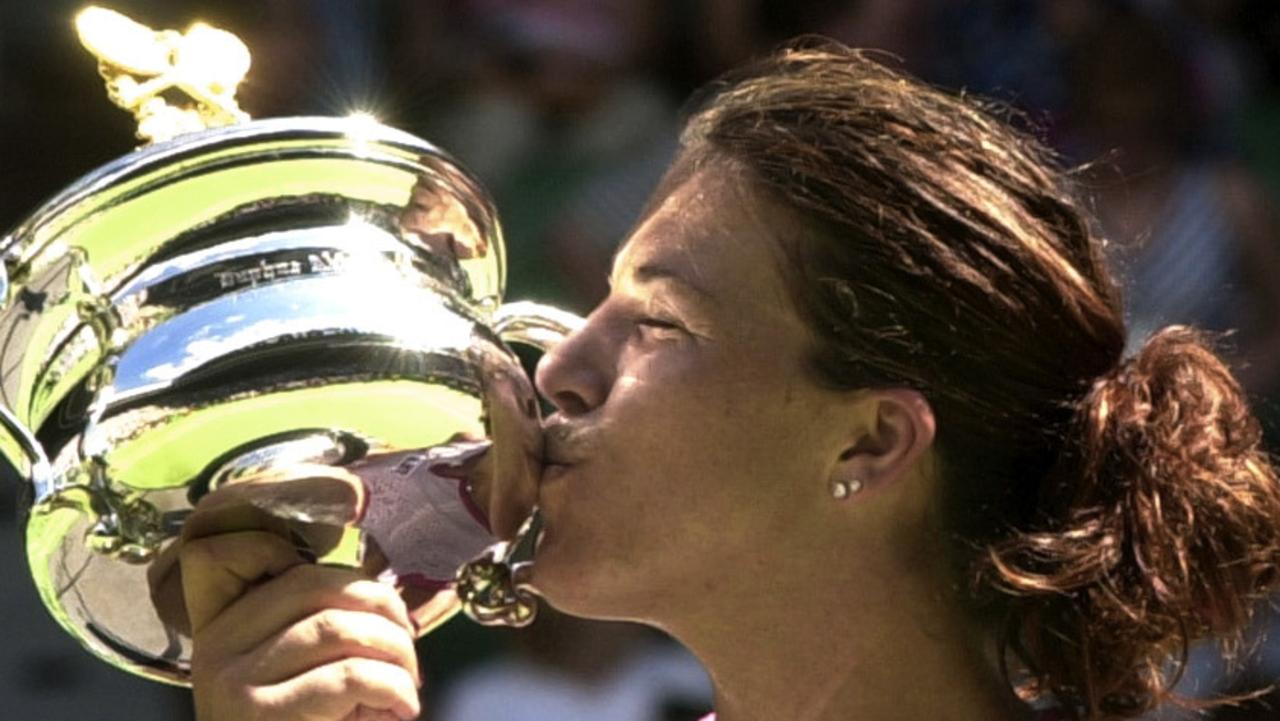
Thomas Johansson arrived in a taxi and left as one of the more surprising major champions in the Open era. Jennifer Capriati entered as the reinstated world No.1 and departed after a debilitating final against Martina Hingis, with a nurse hovering and an ambulance on standby as the on-court thermometer touched 46 degrees.
“Horrendous” was how former AO chief executive and tournament director Paul McNamee describes the conditions on that scorching Saturday at the 2002 Australian Open, recalling that Hingis famously spent the 10-minute break at the end of the second set – in which Capriati had saved a record four match points – packed in ice to try to cool her overheated body.
It remains the most extreme environment the former doubles great, world No.24 in singles and experienced administrator and coach has seen. “And I made sure it would never happen again,’’ says McNamee, who departed the AO in 2006.
Twenty years later, an important legacy remains, with a new Extreme Heat Policy sweeping through for 2003 with the force of Melbourne’s trademark hot northerly. First introduced in 1998, with several subsequent tweaks, it was replaced by a combination of the new medically-backed measurement known as the Wet Bulb Globe Temperature and an air temperature trigger point lowered to 35 degrees.

For the first time, matches could be suspended or postponed in the interests of player welfare, with ice packs and other assistance available at court-side. In the following two decades, the WBGT has morphed into the AO Heat Stress Scale still in place today.
The majority of the 2002 finals quartet, however, would not turn out to be quite so enduring. Only the charismatic and combustible Safin – he of the breathtaking 2000 US Open upset of Pete Sampras, 7000 broken racquets and ‘entourage’ of blonde groupies dubbed the ‘Safinettes’ – would reach another Grand Slam decider. Which, against Lleyton Hewitt in 2005 and watched by a still-record 5.56 million Australian TV viewers, Safin would win.
In 2002, the AO’s memorable-for-many-reasons 90th edition, Hewitt was the host nation’s world No.1 who would be nobbled by chickenpox but go on to claim a maiden Wimbledon crown that same year. Meanwhile, seeded 11th and exiting in the fourth round was a talented Swiss kid called Roger, the first of his 20 majors still more than 17 months away. Rafa was a Majorcan schoolboy; young Novak had just endured the NATO bombings of Belgrade.
Wheelchair competition had nothing like its current profile and no Quad division. An 11-year-old couch spud named Dylan Alcott was still a “young, fat disabled kid with a really bad haircut” (his words, after last year winning the Golden Slam).

Hewitt may have been the only homegrown seed among the collective 64 in the Open events but there would be two Australian names on the honour board: boys’ doubles champions Ryan Henry and Todd Reid. The tragic footnote: Reid, who was the junior singles runner-up in 2002 and would go one better at Wimbledon that July, was found dead in 2018 at the age of just 34.
*****
The fortnight had been book-ended by dramas, starting with twin high-profile withdrawals: Serena Williams due to an ankle injury and, more mysteriously, two-time defending champion Andre Agassi. Following the release of his revealing autobiography, Open, in which the American admitted to regular recreational drug use and lying to the ATP in an attempt to explain a positive test in 1997, Australian Pat Cash wrote in London’s Sunday Times in 2009 that ATP Tour players had long held suspicions that Agassi’s preferred substances included the performance-enhancing kind. “There were some dubious circumstances,” Cash wrote, “none more than his early-morning withdrawal from the defence of his title at the 2002 Australian Open, citing a wrist injury.’’
McNamee: “Andre’s (no-show) was strange, because he’d won Kooyong, in really good form; so it raised eyebrows, let’s just put it that way. It didn’t make any sense at all and it still doesn’t, and I guess if you read his book, it still raises eyebrows, doesn’t it? He’d won Kooyong, playing really well, and then the same night, he wants to pull out.’’
Did.
Hewitt, in contrast, was adamant he would compete.
Also did.
“Lleyton was very sick and I couldn’t believe that he made it to the court to play,’’ McNamee says. “He won a set against Alberto Martin, a really good baseline player, and that was just one of the gutsiest efforts. He was just so determined to try and battle through. I honestly don’t know any other person in the world who would have played that tournament, in the condition Lleyton was in.’’

Fortunately, some drawcards did go the distance. Hingis and the stupendously popular Anna Kournikova, the self-proclaimed Spice Girls of tennis, claimed the women’s doubles crown while prompting an unofficial change to the scheduling policy after a mass fan rush across the precinct that McNamee likened to Spain’s annual Running of the Bulls.
“Anna was a bit like Nick Kyrgios, she never wanted to play on Rod Laver Arena because her fan base was under 20. So she was always, ‘Please, please, not on centre court, please’, because her fan base was teenagers and it was massive,’’ says McNamee, recalling the kerfuffle that followed the shift of a Hingis-Kournikova match on the manic middle weekend, from Margaret Court Arena to what was then the high-energy HQ of the budget-conscious ground-pass holders and is now John Cain Arena.
“I remember moving that match because we had to get it played, but there was a stampede. There’s never been a stampede like that at Melbourne Park and the Melbourne Park management said, ‘Please, never move Anna Kournikova’s match ever again because we can not control it’. It was a Pamplona moment. Luckily no one got hurt but it was a risk we couldn’t take again.’’

*****
Back in 2002, there was also – still – that quaint concept of daytime finals. Remember those?
Hingis does. For better and worse. She triumphed in the first three of the six she played at Melbourne Park, including as an extraordinarily gifted 16-year-old in 1997. But little could have prepared the title favourite from northern Europe for what awaited against Florida-based Capriati on that scorching Saturday.
In the battle of the teen prodigies, Capriati had faced her own demons by the time she arrived as the reigning Australian and French Open champion. The American had retreated from the game and the spotlight in late 1993, arrested for shoplifting and drug possession and playing just one match, in 1994, before her 1996 return.
Yet 2002’s was a final like no other for the 25-year-old with the powerful baseline game. In that crazy-brutal heat, she trailed Hingis 6-4 4-0 and was so frazzled by early in the second set that, having lost an argument with chair umpire Sandra de Jenken to have a line judge removed, she screamed at the overheated crowd to “shut the hell up”.
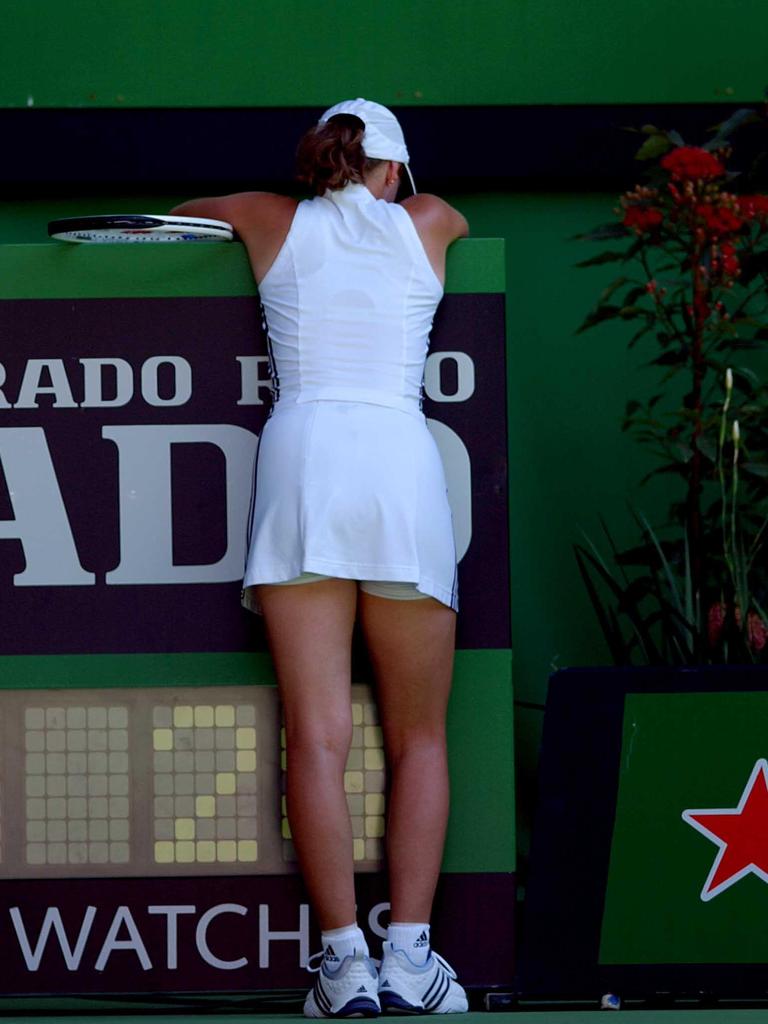
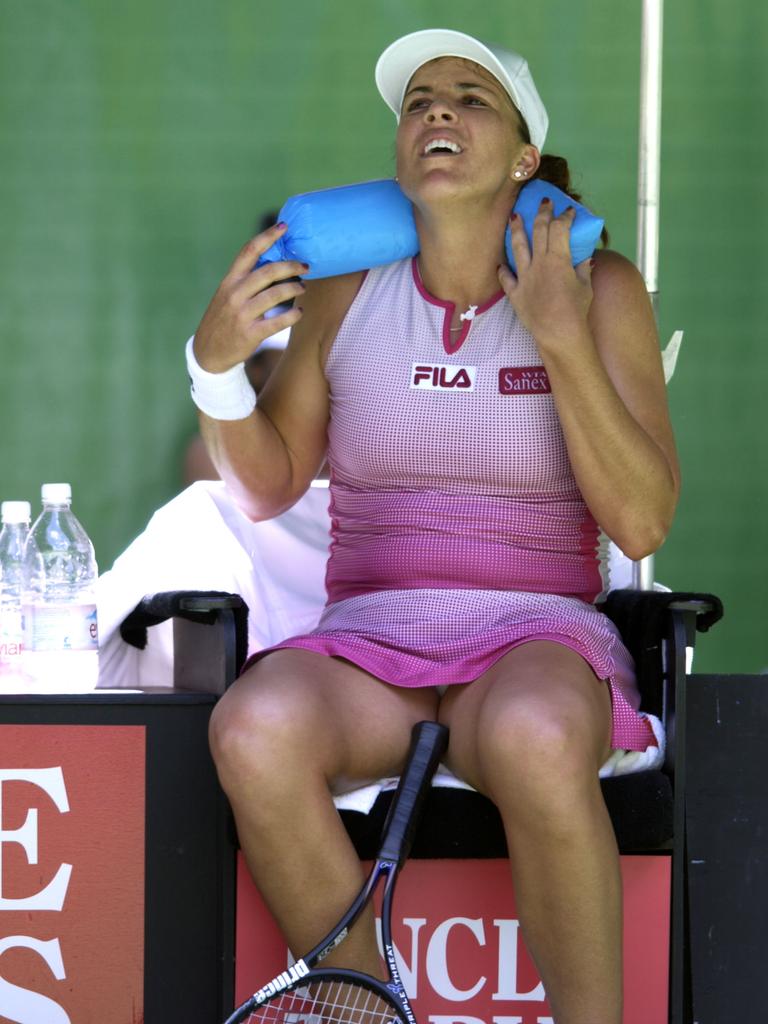
By the third set, those four match points having been saved by Capriati’s “I just went for it” attitude, the battle was attritional, the ice packs multiple, the other game survival. The players sat in officials’ vacant chairs between points, each sheltering in the shade of the tunnel when the other took a bathroom break.
Hingis finished with her head “all over the place”, her body covered in goosebumps. Capriati took home her third and last major singles trophy, the Daphne Akhurst, plus the admiration of all who sweltered through a punishing day; or could even tolerate just sitting and sweating as they watched.
“In my opinion, it was not the proper conditions to play the final of a Grand Slam and that was really the catalyst for us seriously addressing the heat rule; and we were the first tournament to really do that,’’ McNamee says.
“There’s no doubt that final changed the course of ‘what are fair conditions to play an important match?’ Because Martina Hingis was incapable, really, of playing that third set. She was clearly, clearly not in a good way. She was a bit unlucky not to win it in straight sets, actually, but once she lost the tiebreak, she was in bad shape. I was even a little surprised she came back to the court.
“She was a shadow of herself in the third set. She did the brave thing and stuck around and completed the match, which gave Jennifer that [winning] moment … People talk about the gladiatorial nature of tennis and that you should be able to deal with all conditions but it was horrible tennis that day. And sometimes for an athlete it’s the biggest match of their career; philosophically, I don’t like that they’re incapable of playing at their best.’’

*****
A men’s final held in more moderate weather was the last in a succession of surprise results. Following world No.3 Agassi’s no-show, No.2 Gustavo Kuerten was dumped by France’s Julien Boutter in five sets in the first round, Hewitt was eliminated next and none of the top six men were still standing among the last 16.
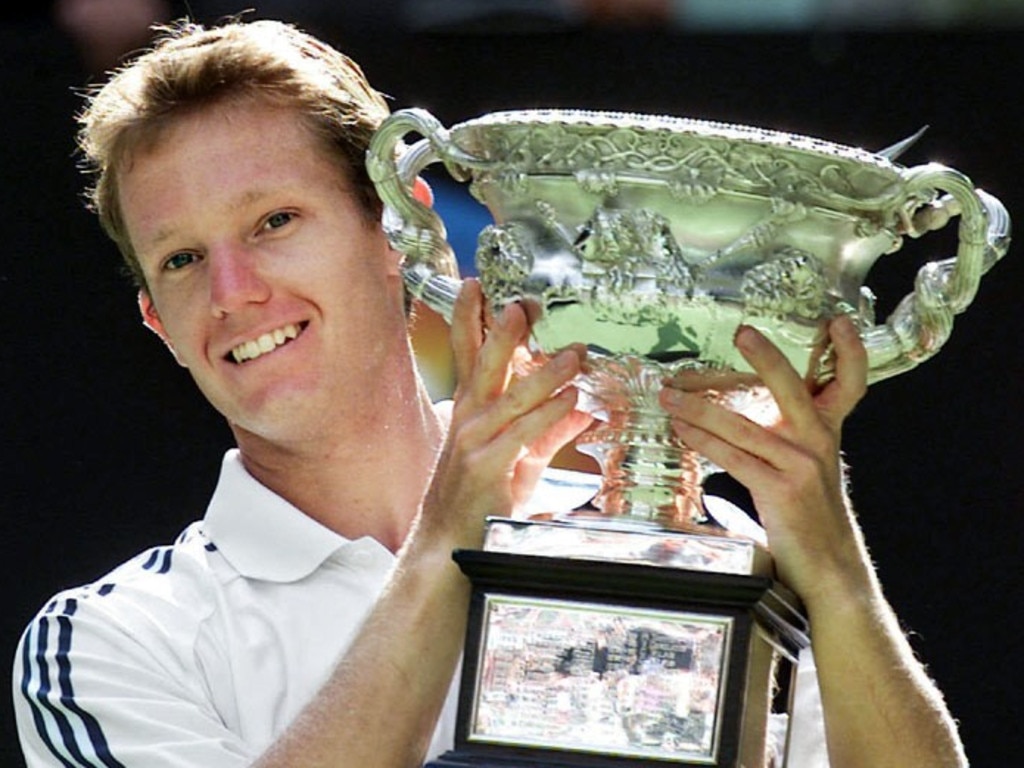
By the end, it was the 18th-ranked Johansson who advanced to the final without facing a top-20 opponent, coming from a set down to upstage the more talented Safin in a tiebreak in the fourth. Two decades later, to anyone who says they predicted that result pre-tournament we say: pants on fire.
“It was unlikely, true, and the expectation was that Marat Safin would beat him because he had more pedigree; to be honest, [he] was a better player, that’s not unfair to say that when you look at the rankings and everything,’’ McNamee says. “Safin became a No.1 and won the Australian Open later on, so everything was really pointing to him winning that tournament.”
And what of the Safinettes? “In the publicity that occurred, the player box became a vocal point for the media and TV because, ah, he’s a friendly guy!’’ McNamee quips. “Of course, people wanted to blame the loss on his lifestyle.”
Was that unfair? “Well, you don’t know what goes on behind closed doors, so I think you can say it wasn’t the ideal look, but how do you really know? If he won, it was fine, but if he lost, people were looking for possible distractions. That’s just the nature of the beast. But he turned it round the next time when he had a chance.’’

The understated Johansson’s sole major final – he had never passed the quarters before it or the semis afterwards – was also unique in another sense: the Swede’s mode of transport from his city hotel. After waiting and wondering for some time and as the clock ticked towards finals time, the realisation dawned that coach Magnus Tideman had forgotten to book a courtesy car.
So it was that Team TJ eventually jumped into a taxi for the quick trip to Melbourne Park, managing to convince the security staff on duty that, well, given that the blonde guy inside was due to play for the title, perhaps it was best to let him in.
As for when McNamee found out about the unusual arrival circumstances? “Ah, now,’’ he says. “I didn’t know that. Wow. I never knew that. That’s quirky.’’
It was that kind of tournament. And if the curious subplot that still leaves him wondering is Agassi’s, what was the most important takeaway for the man who ran the show?
Dealing with the heat issue. Properly. Having long believed that a tennis living is too hard to make for too many, McNamee believes that there are still excessive numbers of times and places where the conditions are unfair – the unique umbrella provided by Melbourne Park’s trio of covered stadia notwithstanding.
There was one fewer roof but no shortage of drama back in 2002. The year that, fortunately, no player left in an ambulance, and just the one arrived in a cab.

‘Very lonely mission’: The price of being a teen tennis star

Federer to return to Aus Open for ‘battle of the World No.1s’

Ultimate wildcard: Mystery still surrounds Kyrgios AO plans

Titmus sought out Barty for advice on early retirement

Demon’s vow after taking out top tennis honour for fourth time
