
Tennis players can now be coached from the stands in the US Open
Four years after Serena Williams was penalised and angered when her coach allegedly made hand signals to her, the Open is the first major to relax tennis’ coaching rule.

During the 2018 U.S. Open women’s final, Serena Williams became enraged when chair umpire Carlos Ramos issued her a warning for allegedly receiving hand signals from her coach, which was against the rules.
“I have never cheated in my life,” Williams said as she confronted Ramos repeatedly throughout her match against Naomi Osaka. Williams was docked a point, and later a game, after she smashed her racket and called Ramos a “thief” on her way to losing to Osaka.
As Williams prepares for her retirement from tennis sometime after next week’s U.S. Open, the tournament has made a change that would have prevented the notorious incident in 2018 from ever happening.
For the first time at a Grand Slam tournament, coaching from the stands will be allowed when the Open begins play on Monday.
The new rule stipulates that coaches can instruct players from a designated seating area as long as they don’t interrupt play. Verbal communication is allowed only when the player is on the same end of the court and must be limited “to a few words or short phrases.”
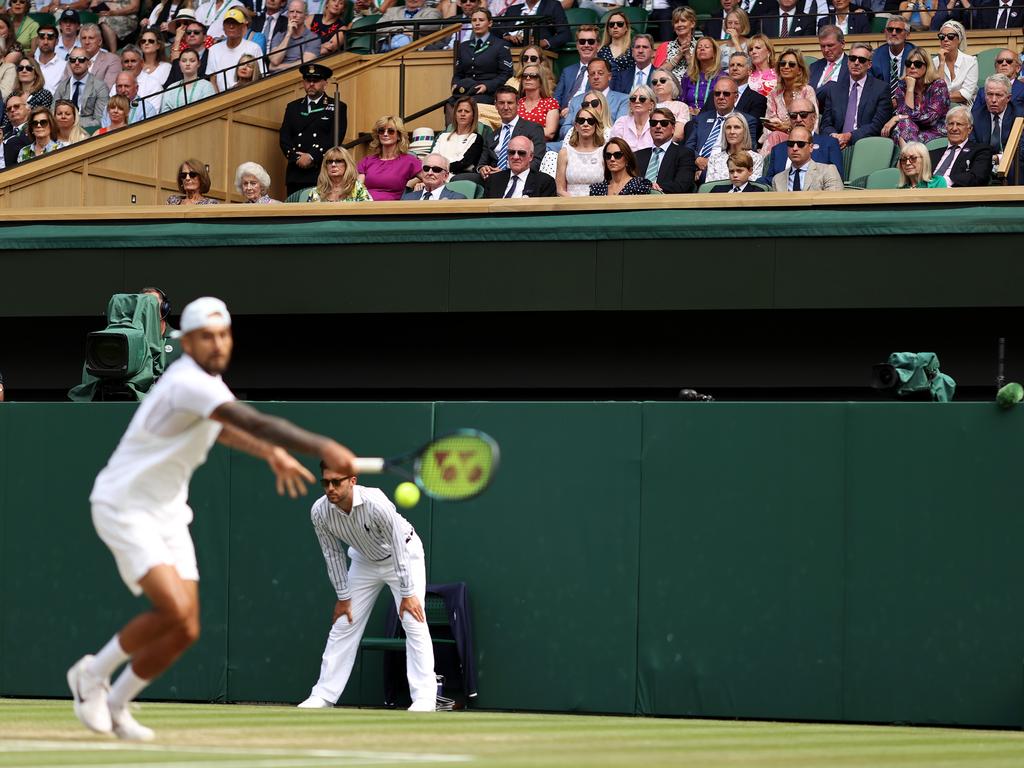
The loosening of the off-court coaching rule in Queens comes after the ATP Tour said it would test it on a trial basis through the year-end ATP Finals in November.
“Various coaching rules have been trialled across the sport in recent years, including on-court coaching and coaching via headsets,” the ATP said in a statement. “[This] announcement brings alignment for the second half of the season across the ATP Tour, U.S. Open and WTA Tour, where an off-court coaching trial is already in place.”
The WTA had a similar trial for non-Grand Slam events in 2020 and currently allows on-court coaching during breaks in the action.
A WTA spokeswoman said at the time that the restriction was loosened because coaching was already taking place from the stands and it had been difficult to regulate.
Stefanos Tsitsipas, the No. 4 seed in the men’s draw in the U.S. Open, has been embroiled in several off-court coaching controversies in recent years and has been a big proponent of a rule change.
“We’re probably one of the only global sports that doesn’t use coaching during the play. Make it legal. It’s about time the sport takes a big step forward,” he wrote on Twitter last year.
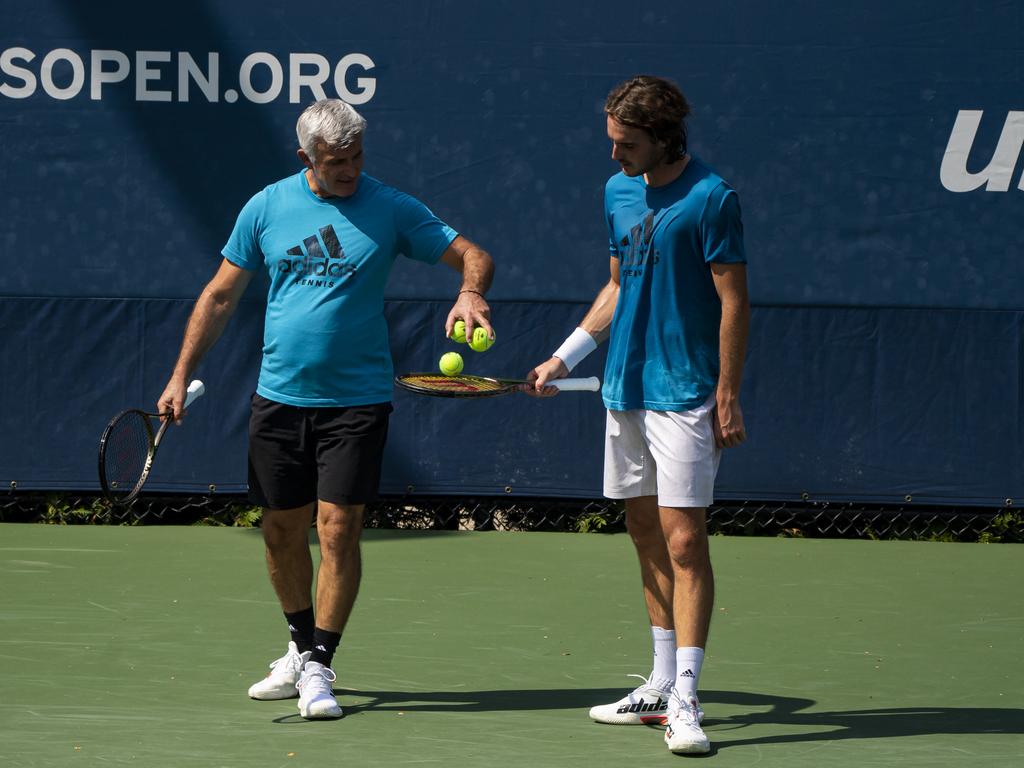
During a semi-final match at the Australian Open in January, Daniil Medvedev complained to chair umpire Jaume Campistol that Tsitsipas was receiving coaching advice during play.
“His father can coach every point?” Medvedev asked Campistol.
Later in the match, Tsitsipas, from Greece, was given a code violation after tournament officials placed another umpire, Eva Asderaki-Moore, in the tunnel below Tsitsipas’s player’s box. When Asderaki-Moore, who speaks Greek, heard Apostolos Tsitsipas give instructions to his son, she radioed Campistol on a walkie-talkie.
The sport’s no-coaching rule came into focus when Williams’s argument with Ramos overshadowed Osaka’s victory during the 2018 U.S. Open final.
After that match, Williams’s then-coach Patrick Mouratoglou told ESPN that he had tried to signal Williams but he didn’t think she saw him. He added that “every player” is coached during matches but he had never been called for a coaching violation.

But the change hasn’t been welcomed by tennis traditionalists who think part of the game is a player’s ability to fight through matches on their own.
Taylor Fritz, who is the highest-seeded American man at No. 10, called the relaxed coaching rules “dumb” after he was asked about it last week at the Western & Southern Open in Cincinnati.
“Tennis is an individual sport. Why are we making it not an individual sport?” Fritz said. “Tennis is as much mental as it is physical, and a big part of it is you need to be figuring it out on the court for yourself.”
On a recent broadcast on the Tennis Channel, Paul Annacone, a former coach of Roger Federer and Pete Sampras, explained why he didn’t like the new rule.
‘I always felt that [as a coach], I would give the player the tools to be on the court to figure it out. And if they can’t, it’s on them. I like that there’s no time out, no righty from the bullpen coming in.”
Chrissie Evert, an 18-time Grand Slam singles champion and current analyst for ESPN, said part of being a champion and winning a match is problem solving.
“Make your own decisions,” Evert said. “I never had a coach who gave me a signal. I wish they would have now.”
Evert said a coach should prepare a player before and after a match, but a player needs to make adjustments on their own during a match.
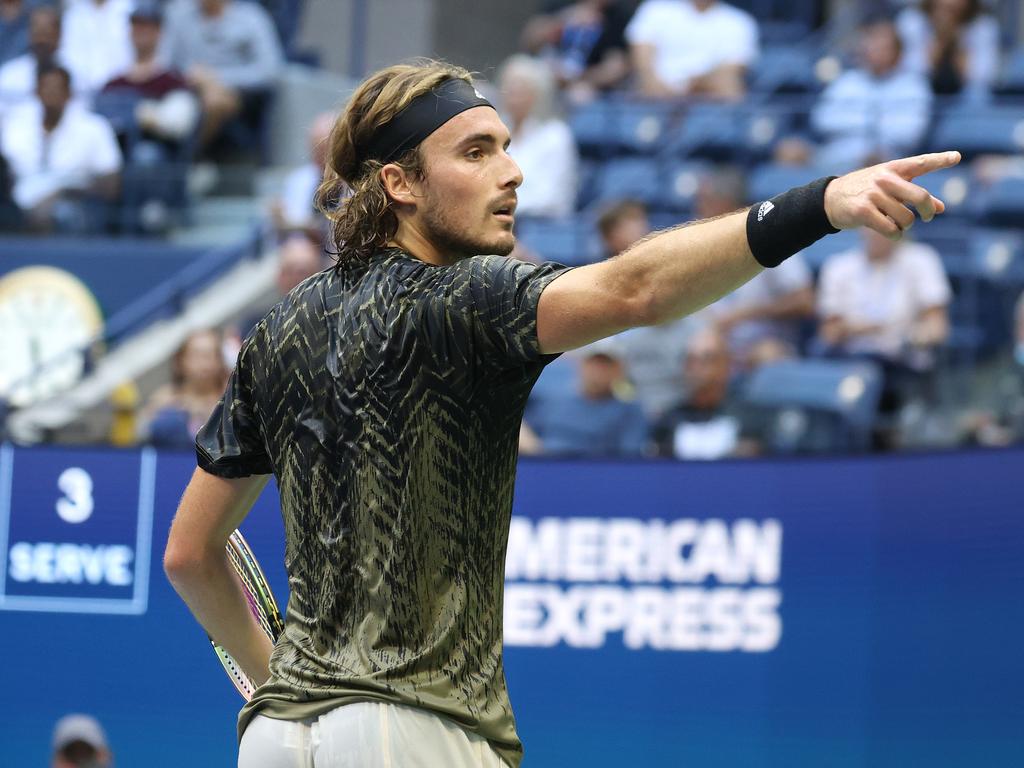
The U.S. Open has tested off-court coaching during qualifying matches, said Brendan McIntyre, a spokesman for the USTA.
“Off-court coaching is something that the U.S. Open has been behind for a number of years,” McIntyre said. “We had pushed for it to be a part of the main draw but had been waiting for consensus from the Tours as well as the other Grand Slams.”
McIntyre said after the ATP Tour announced its trial, the Grand Slam board approved a move to have off-court coaching across all U.S. Open events, including qualifying, juniors, wheelchair and the men’s and women’s main draws.
The ATP said it would evaluate the trial following the end of the season to determine whether off-court coaching would be allowed going forward.
John McEnroe, a seven-time Grand Slam singles champion and ESPN analyst, said he doesn’t like the coaching rule change but if it is good for the sport, he is OK with it.
“I guess I’m old school. I liked it when you had to go out there and there was no coaching,” McEnroe said.
McEnroe said he wouldn’t have minded if his opponent was receiving coaching advice. “The yelling, ‘Go in, serve and volley’ from the sidelines, I find that sort of funny. I don’t think I would have cared. I would have [told] myself that they [were] getting bad advice.”

‘Very lonely mission’: The price of being a teen tennis star

Federer to return to Aus Open for ‘battle of the World No.1s’

Ultimate wildcard: Mystery still surrounds Kyrgios AO plans

Titmus sought out Barty for advice on early retirement

Demon’s vow after taking out top tennis honour for fourth time
