
The feeling Roger Federer tennis fans will miss the most in his retirement
Roger Federer‘s almost fabled aura of could-do-no-wrong permeated his career and his life. LINDA PEARCE recalls the times the GOAT proved he was also a champion off the court.

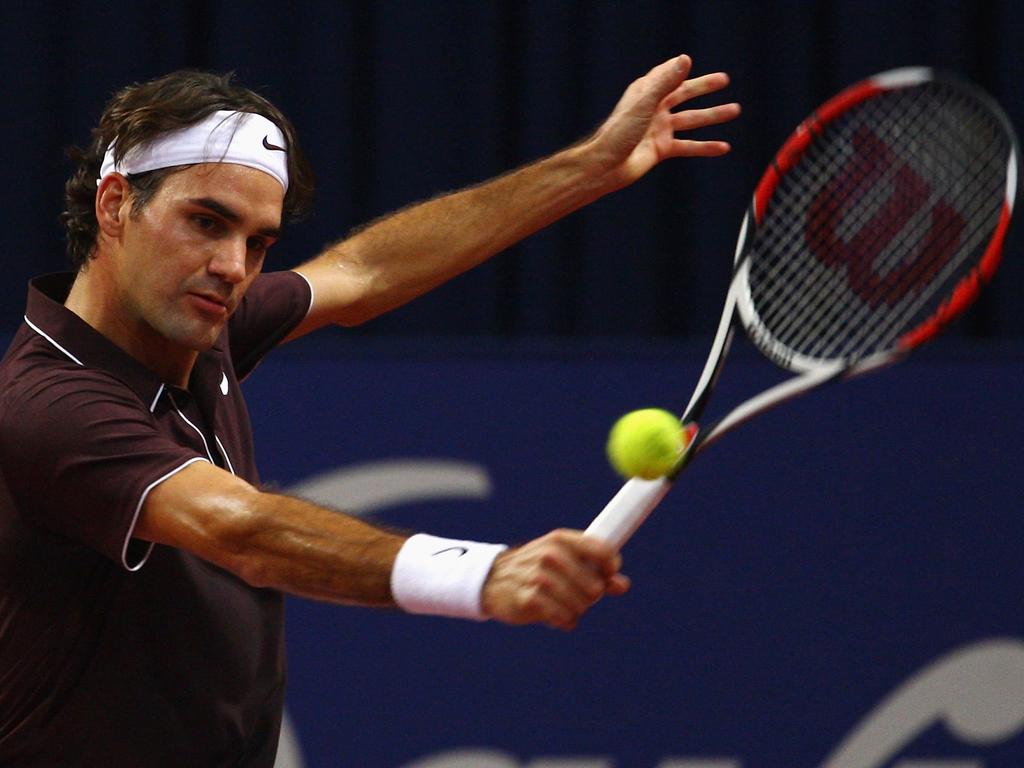
We knew this day was coming. Which doesn’t make it any easier to bear.
The expectation had long been that Roger Federer’s stupendous career would end either at next week’s Laver Cup (which is the reality), or with a Wimbledon farewell (which one senses was the dream) in the same Fed-mad British city now gripped by a different kind of mourning.
What has been clear for some time is that there will be no more individual titles or additions to a remarkable CV, and no chance of catching his friend Rafael Nadal on 22 singles majors or equalling Novak Djokovic on 21 — the latter for so long the black-caped villain contrasting with the beloved Fed’s almost fabled aura of could-do-no-wrong.
Nor is his story Williams-esque, in terms of breaking down barriers or defying prejudice, for we’re talking about a privileged Swiss white boy, after all; albeit one with a notoriously bad on-court temper in his early days, to the point where one of his most challenging opponents was himself.
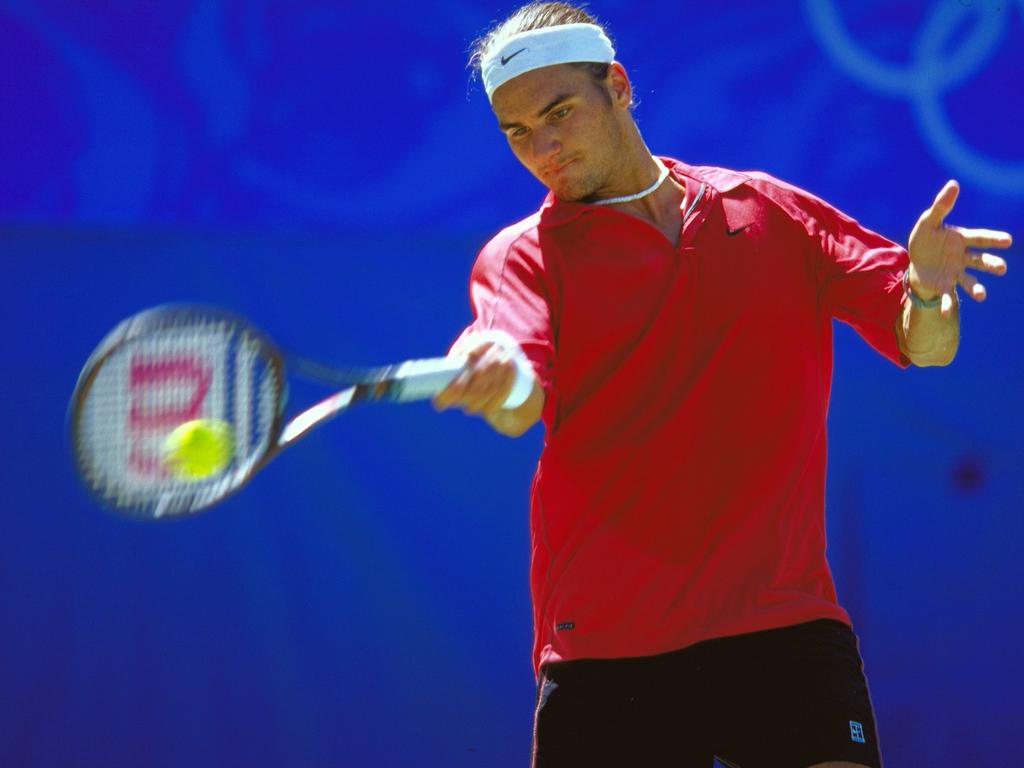
Yet even through his period of unprecedented dominance, once maturity and an improved mentality was coupled with a meticulous physical preparation and wise scheduling of a durable body, it was never so much about what he did but how.
Indeed, for so many who had a virtual, distant, or occasional relationship with the 41-year-old it was, in an athletic take on the best romantic traditions, the way that watching him play made you feel.
Even off the court, the missteps were few. This reporter penned one rather unflattering column from the Wimbledon press room in 2010 when the defending champion displayed his occasional sore-loser tendencies after falling in the quarter-finals to Tomas Berdych. By the morning, I’d half-regretted the criticism, given that even the classiest are entitled to the occasional lack of judgement or grace.

Overall, the tributes have been predictably glowing, and some a long time coming, as the tennis world has had ample opportunity to prepare. At the start of last summer, for example, my idea was to ask every interview subject for their favourite Federer story to wrap into one big tribute piece when the time was right.
First up was James Duckworth, who recalled playing Federer in the opening round of the 2014 Australian Open, where sweaty fans made regular quacking noises, and, bizarrely, one even tooted a whistle imitating the distinctive sound. The local lad lost in straight sets but was amused every subsequent time the pair’s paths crossed, given that Federer would immediately start to quack.
Indeed, “Ducks” henceforth became known as “Quack” to the man he calls “Rog” while resisting any urge to use the name many prefer: The GOAT.
(Author’s note: That particular story idea ended up being shelved, perhaps given the danger that every Australian Open article would end up opening with a Federer angle. Or maybe because the Djokovic debacle hijacked the summer anyway. And only served to make us miss the fully-vaxxed Federer even more.)

By whatever name, the Swiss was far more than the sum of his on-court deeds, though, with a young Thanasi Kokkinakis among the emerging players to be invited for practice weeks with the master in either Basel or at his Dubai training base, and return with tales of eye-opening professionalism to go with the (fun and) games.
Yet he was as cherished by the old guard as idolised by the new one, with our national treasure Ken Rosewall such an admirer that each year in the last handful of Federer’s Australian Opens he would take a handwritten letter to the attendant at the men’s locker room door wishing dear Roger and family all the very best — and what was duly delivered was always gratefully received.
Another part of Federer’s off-court charm — and no, not his welcome tendency for public waterworks and occasional inability to turn off the emotional tap — was his knack of remembering, acknowledging and engaging with people; the location or circumstances rarely mattered.

One of our handful of one-on-one interviews over the years took place in the middle of the crowded old player restaurant at Melbourne Park, where myriad rivals stopped to share a warm greeting, and Federer apologetically excused himself at one point to go and embrace the injury-cursed Juan Martin Del Potro before his latest doomed steps on the comeback trail.
Another was in quieter surrounds after the six-month injury break to heal a meniscus tear suffered in a Melbourne hotel room when he slipped while about to run a bath for his twin daughters — slightly reluctantly, as he’d suggested they take a shower instead — and counted as the first real injury blip in what, until then, had a remarkably uninterrupted career that was part luck and part savvy management.
Back in 2006, the first encounter was at Kooyong, when future wife Mirka, his constant companion, was doubling as his press/travel agent. A relaxed Roger, who had won “just” six majors then, put up his feet like he was at home in Basel watching TV on the couch and breezily waved off the tournament staffer who arrived to announce the allotted time was up.
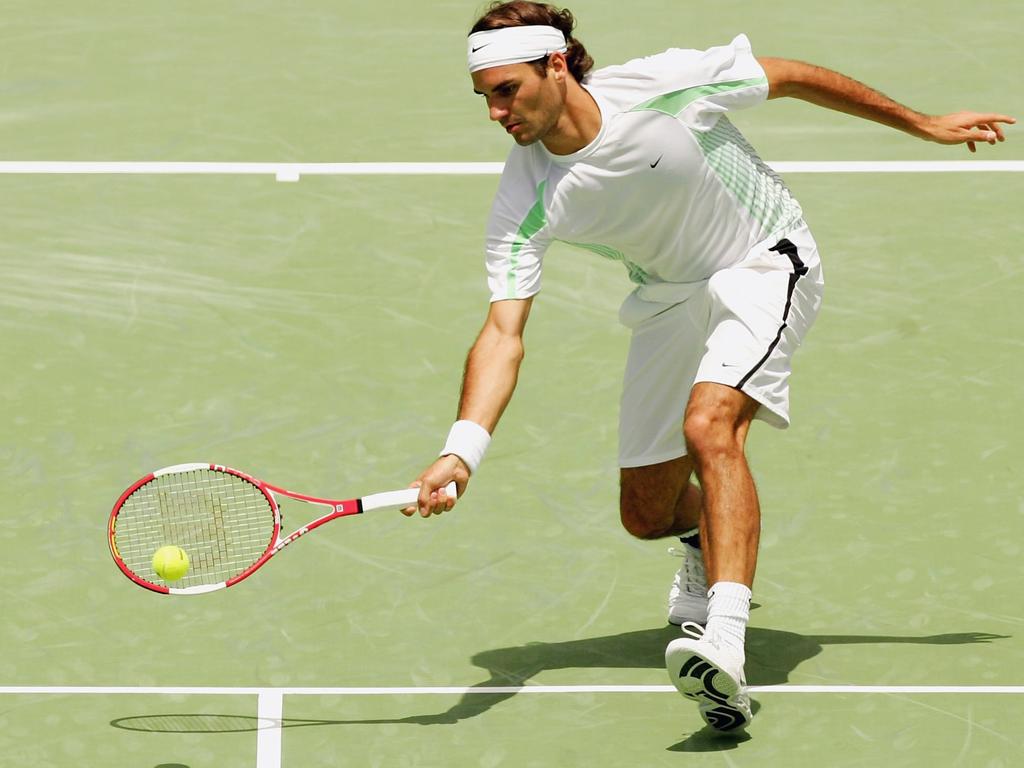
So on it went. Discussing things as mundane as his idea of the perfect day (for the record: a visit to the beach, spa treatment and dinner with Mirka). The stress, it must be said, was on the reporter, desperate not to waste such a coveted opportunity with one of the world’s most in-demand and famous athletes.
The most recent – a couple of later TV experiences aside – came a few years back, following an early-January moment in a hotel foyer before the Brisbane International. Rushing, laptop in hand, to file a story.
Huh? Had there been a bomb scare? An elevator malfunction? Was the PM in the building? Or the Queen? Why the holdup?
Then in sauntered a slightly sheepish Federer with a minder, smiling hello after recognising a familiar face. “Oh, it’s just you – thought it must have been someone important,’’ was my joking response, along with the reminder of that latest interview request, and the fact that the least RF could do now was say yes.

The sit-down didn’t happen in Brisbane, but occurred the next week, when a thrilling day ended with the story intro: “You might call it a dream tennis day, and it was, so we will. First, sitting with Roger Federer on Rod Laver Arena for a strictly-few-minutes chat that stretched nicely beyond. Then, walking back into the quiet early-week media centre to see Rod Laver himself strolling past in his tennis clothes and dashing over to collar him as well. Ah, tennis-legend nirvana. Welcome to it.’’

So the legend will remain. Not just in the sport but above and beyond it as, from this tennis writer’s perspective, the most marvellous of all men’s tennis careers.
Not in the bald terms of slams won, or any head-to-head domination of his two greatest rivals, for Nadal and Djokovic have eight and four-match advantages, respectively. More so when added to the intangibles, aesthetics and pure joy that flowed from unrivalled watchability, smooth balletic grace and immaculate footwork that was the foundation for that inspired, almost magical, shot-making.
So this is about to be a goodbye of sorts, then, Roger Federer, even as we wish it wasn’t. For millions of sports lovers who knew him or didn’t or simply admired and marvelled, the knowledge that this day was inevitable brings with it no happiness that the moment has finally come.

‘Very lonely mission’: The price of being a teen tennis star

Federer to return to Aus Open for ‘battle of the World No.1s’

Ultimate wildcard: Mystery still surrounds Kyrgios AO plans

Titmus sought out Barty for advice on early retirement

Demon’s vow after taking out top tennis honour for fourth time
