
What’s next for Australian Open champion Novak Djokovic, who is still banned from entering the US
Novak Djokovic may have won a 10th Australian Open title a year after being deported, yet he is still unable to enter the United States and facing a big hole in his calendar, writes STUART FRASER.

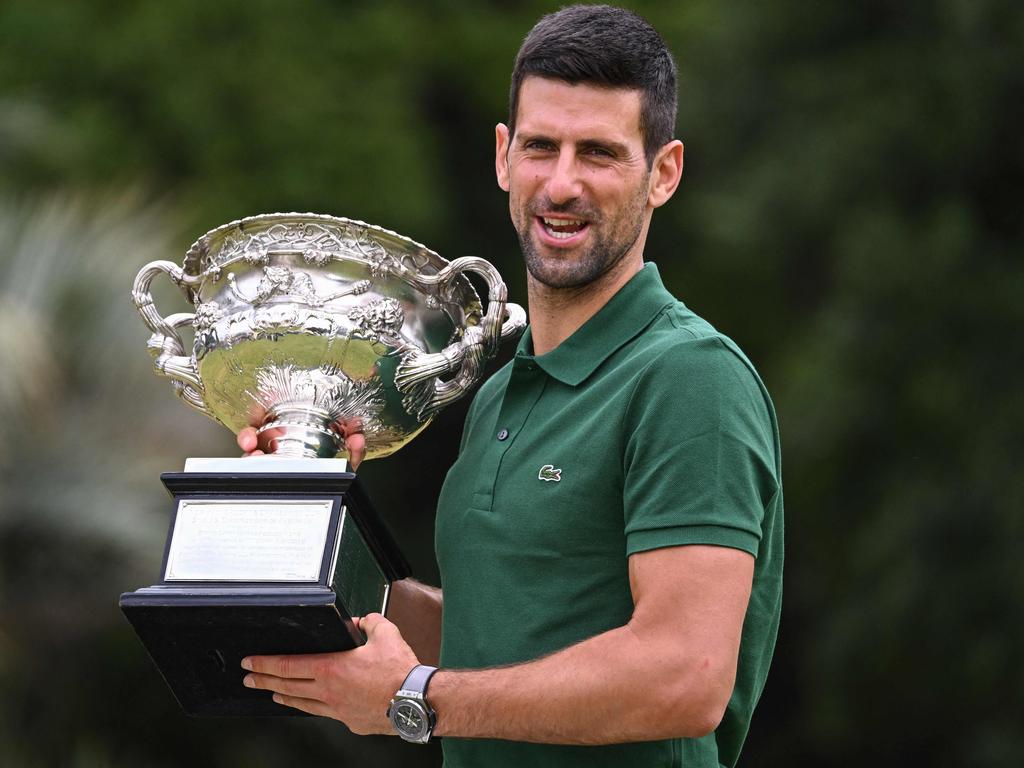
The rest of men’s tennis will breathe a collective sigh of relief that Novak Djokovic cannot compete in the US Sunshine Swing, as it stands. After the past fortnight in Melbourne, the prospect of going up against the 22-times grand-slam champion on a hard court would not feel like much fun.
Permitted entry to Australia after his visa ban had been lifted, Djokovic made the most of his time down under, claiming a tenth Australian Open title, preceded by the Adelaide International warm-up. Once again he is the world’s No.1 player.
Djokovic is due to play the Dubai Championships from February 27 but after that his schedule is uncertain. He is unable to enter the United States for the prestigious Indian Wells and Miami Masters tournaments in March because he remains unvaccinated against Covid-19. The chance of an exemption from American health authorities is slim after attempts to gain one for last year’s US Open were rebuffed.
“I hope I can play in Indian Wells,” Djokovic said. “I am still not allowed but maybe I will get better news.”

Considering the circumstances – the left hamstring issue, the return to Australia a year after deportation, the occasional drunken heckler and the actions of his father, Srdjan, in posing alongside a Russian flag with the face of Vladimir Putin – it is no wonder that Djokovic hailed his Australian Open success as the best victory of his career. Never before have we seen such an outpouring of emotion from Djokovic, who sobbed uncontrollably among his team in the stands of the Rod Laver Arena.
The rest of the locker room will be most concerned about the quality of his tennis at the age of 35. “It’s honestly some of the best tennis I’ve played on this court,” Djokovic said. “As good as I’ve played maybe in 2011, 2015, 2016 or those years where I really had some very strong seasons and strong Australian Opens.”
A fascinating insight into the task of facing Djokovic was provided by his defeated opponent, Stefanos Tsitsipas, after the final. The world No 3 from Greece battled hard in a tight second set but could not breach the impenetrable wall that Djokovic puts up behind the baseline. He looked mentally shattered after losing in straight sets.
“Novak is a player that pushes you to your limits,” Tsitsipas, 24, said. “I don’t see this as a curse. I don’t see this as something annoying. This is very good for the sport to have champions like him. He’s very important for us that want to get to his point one day. Getting our arses kicked is a very good lesson. He has made me a much better player. He has made my levels of concentration higher every time I play him.”

Nick Kyrgios suggested on social media on Sunday that Djokovic could “get to 28 slams easy”. By the sounds of it, Djokovic is up for the challenge.
“I am motivated to win as many slams as possible,” Djokovic said. “At this stage of my career, these trophies are the biggest motivational factor of why I still compete. Physically I can keep
myself fit. Of course, 35 is not 25, even though I want to believe it is. But I still feel there is time ahead of me.”
Originally published as What’s next for Australian Open champion Novak Djokovic, who is still banned from entering the US

‘Very lonely mission’: The price of being a teen tennis star

Federer to return to Aus Open for ‘battle of the World No.1s’

Ultimate wildcard: Mystery still surrounds Kyrgios AO plans

Titmus sought out Barty for advice on early retirement

Demon’s vow after taking out top tennis honour for fourth time
