
MMA knockout legend Mark Hunt also destroys rivals in chess, which has become an addiction
Mark Hunt’s rise to the top of MMA has been well documented. His rise to the top 1.4 per cent of chess players in the world? It began a long time ago, in school then in prison.

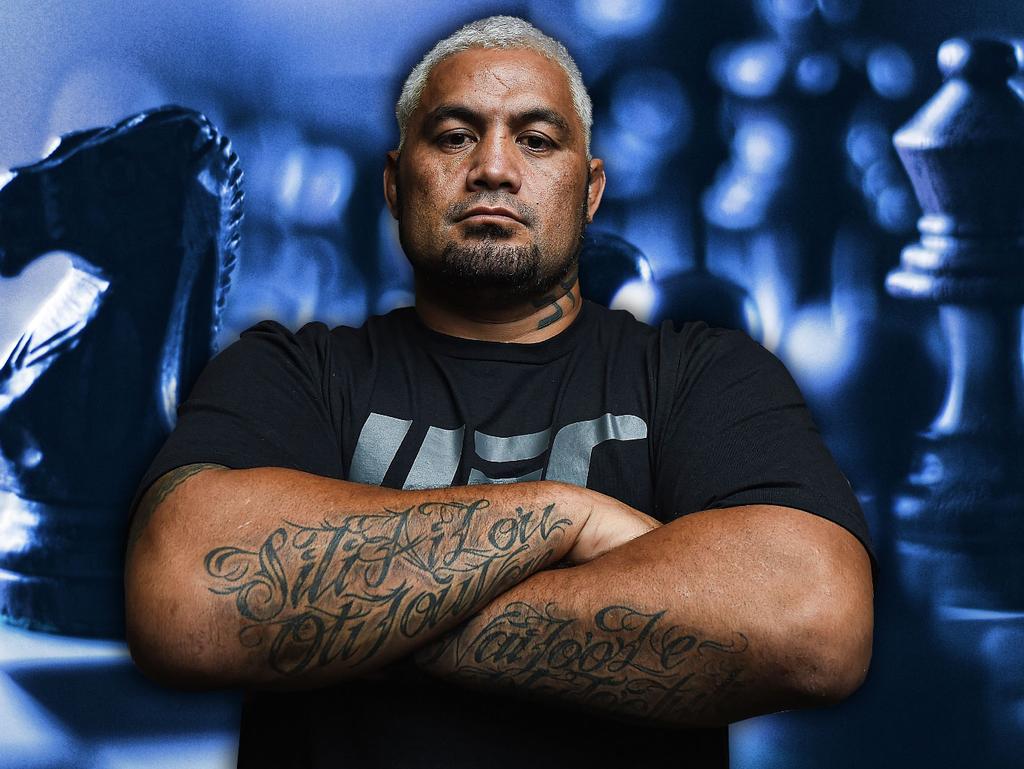
Mark Hunt sits down at a wooden table in a sunny town square in Moscow. It’s September 2018, and the veteran MMA fighter is scheduled to headline a UFC card in the city in three days’ time.
But on this particular afternoon, Hunt has other things on his mind.
He settles in on a chair that creaks and struggles under his 120kg frame.
He relaxes.
He gets to work.
Playing white, Hunt moves his king’s pawn up one space. It’s a little-used opening move that doesn’t worry the old Muscovite in the white jacket on the other side of the table.
Hunt’s opponent is a veteran chess hustler who’s been setting up at this spot in Moscow for years. The hustle is simple: the challenger puts up some money – in Hunt’s case 1000 roubles, which is $20, give or take – and if the old man wins, he keeps the money. Conversely, if the challenger wins, the elderly man must pay up.
The old Russian doesn’t pay out often. He’s got seven books about chess lying on the table and isn’t concerned about the big Samoan sitting opposite him.
Hunt continues executing his plan. He likes setting up a strong defensive position in the middle of the board and attacking from there. He moves his pieces deftly around the board, lightly snatching the first piece of material from the old man.
After a couple more moves, the man in the jacket sits up a bit straighter. He’s worried now. A few more of his pieces are taken. He puts his hand to his face and starts chewing a fingernail. He thought he’d seen everything there is to see on the 64 black-and-white squares of a chessboard, but he’s definitely never seen a Pacific Islander in Moscow playing this sort of chess.
Fellow UFC heavyweight fighter Tai Tuivasa keeps up a steady stream of commentary as the game quickly turns in Hunt’s favour. The hustler hates it. His pieces dwindle. Hunt puts captured pawns and knights on top of one of the books about chess. Pretty soon there’s more black pieces on the book than on the board.
Barely 15 minutes after Hunt’s opening move, the old man lies his king on its side in defeat.
Another knockout win for the Super Samoan.
“He wasn’t that good,” Hunt says later. “He refused to pay up, too.”
***
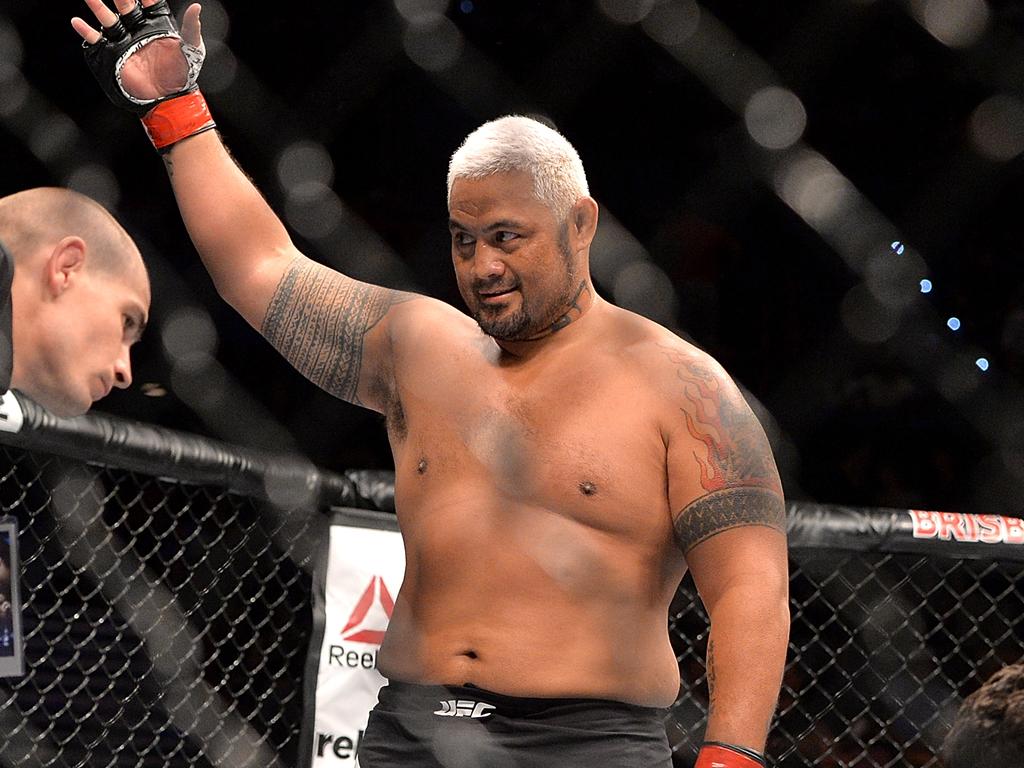
Hunt’s rise to the top of the global MMA scene has been well documented through the years.
His path to the top two per cent of chess players worldwide? Less so.
Born to Samoan parents in South Auckland in 1974, Hunt is the youngest of four kids and his upbringing was the stuff of nightmares. Constant hunger, savage beatings from his father and heinous forms of physical and psychological trauma were sadly frequent experiences for the Hunt children.
“I try to remember any light, fun moments we shared as kids, but it’s hard to find anything,” he wrote in his autobiography, Born To Fight.
When he was four or five, Hunt, his sister and two brothers were sent to live in Samoa for a year. That’s probably where he learned how to play Samoan Checkers. Often played on a makeshift board using pebbles and shells or different coloured bottle tops for pieces, Samoan Checkers is fast-paced – usually taking just a couple of minutes – and full of trash talk.
After returning to New Zealand, Hunt graduated from checkers to chess and even joined the school team for the short amount of time he attended.
Chess became an escape from the horrors of home. Playing ‘Spaceys’ video games in shops around South Auckland was another. So was rugby league. A damaging front-rower, Hunt played for the Mangere East Hawks, which was the same club New Zealand pioneer Olsen Filipaina represented a decade earlier. By that time in his life, the 16-year-old Hunt had been spending weekends stealing cars and fighting. Accordingly, he’d built up a long rap sheet with local law enforcement.
His real troubles started with a pair of shoes – Doc Martins to be precise. Another kid in the area was wearing them, Hunt wanted them, and he took them. That’s how things went in South Auckland at the time. A few days later, he was arrested and locked up in Wikeria Prison for nine-and-a-half months. The prison sentence ended any hopes he had of being selected for a Junior Kiwis team to travel on an overseas tour.
“At least I used to get fed properly in there,” he says of his incarceration.
Despite popular belief, he didn’t do much fighting in jail. But there was plenty of time to hone other skills.
“Lots of chess in prison,” he says. “A lot of time was taken up playing chess, checkers, cards and other board games. Just to pass the time.”

***
Hunt’s rise to fame and fortune in fighting was still a decade down the track when he walked out of Wikeria Prison and there were many, many more bumps in the road ahead as he embarked on a new life in Sydney. But a chessboard – and eventually a chess app on his phone – was never far away and remained a place of comfort and solitude from the world, as well as a way of making human contact no matter how far he travelled.
In September 2011, in the third and last fight of his UFC contract, Hunt fought Ben Rothwell in Denver, Colorado. Anything but an impressive win would have seen him cut from the roster, but after a grind of a three-round fight, in which the altitude did neither man any favours, the Super Samoan emerged with his hand raised courtesy of a unanimous decision.
He was assured of a new contract when UFC president Dana White visited his locker room to offer his congratulations.
Rather than head to an afterparty, bar or nightclub, Hunt celebrated in his own, unique way.
“They had all these homeless guys there in the main square in Denver, and they play chess on the tables there,” he says. “It was a hard fight, but I went down to the square straight after my fight.
“I got pizzas for everyone and played chess with the homeless guys. It was quite cool.”
***
Chess players are assessed on a rating system based on performances over time. A chess master is a player with a rating of 2300 or more, and the highest rating possible is 3000. Norway’s Magnus Carlssen, who is considered the best player of all time, recorded the highest ever rating of 2882 in 2014.
Hunt’s rating on Chess.com has been as high as 2065, but his current rating of 1875 is still good enough to place him in the top 1.4 per cent of players on the planet.
Although there’s plenty of evidence of Hunt playing and beating people at regular chess – the version that can take many hours to play – he doesn’t have much time for it. Hunt prefers speed chess.
His go-to form of the game on the hugely popular platform Chess.com is Bullet Chess, in which each player only gets one minute to play. It’s about as high-octane as chess gets, requiring a strong command of strategy, lightning quick reflexes and decisive decision-making. Its speed and style is similar to the Samoan Checkers he first played as a kid and Hunt plays a lot. More than a lot.
Since joining Chess.com in 2012, he has played over 74,000 games, including 54 on the one day of our interview.
“An 1800-level player is a very strong, tournament class player, among top two per cent in the world,” Chess.com’s Laura Nystrom says.
“Most chess players never reach this level.
“It‘s Class A, however, it’s not as strong as Master Level, which is what you would expect from someone who teaches chess.
“In any given game, a player at this level will make very few, if any mistakes. Maybe there might be a couple of ‘inaccuracies’ that a stronger player can exploit, but very rarely a ‘blunder’.
“When I see a rating like this, it tells me the player is either very naturally gifted or has spent 2-5 years studying the game.”

In fact, Hunt has spent remarkably little time studying chess.
While most of the world’s top level players delve into books about openings and studies on the end game, Hunt has only ever done the smallest amount of reading.
“I looked at a couple of things, like what openers people use,” he says.
“The one I use is called the French Opening. When I read that, I was like, ‘Oh, that’s cool, I didn’t even know that’s what it was called’.
“But, the numbers and the letters on the board – Pawn to D4, all that – I don’t even know about that.
“People talk about that stuff, but you need to study it. All the alphabet and the numbers, I don’t know it … I’d be much better at chess if I did.
“The brain is like a computer, where if you do or see so many moves a certain amount of times, you can start saying what’s going to happen. But I don’t have time to study.”
He might not know all the terminology and theory, but Hunt does have a strong understanding of the subtleties and strategies of the game. His favoured opening, the French Defence, is one of the more popular opening tactics for black, and Hunt says it allows him to set up in the middle of the board in a strong defensive position before launching into his attack.
According to experts, it’s an approach that doesn’t require much grounding in theory, but is useful when a player has a basic understanding of strategy and planning.
And that’s right in Hunt’s wheelhouse.
“It’s the same set up all the time, then you know where everything’s going,” he explains.
“It comes down to those moves you make, then you know where they’re going and everything just goes from there.
“There are two or three moves they can make, and you know what they are. You can see that far ahead.
“If you lose, next time you say, ‘I’m not doing that again’ or, ‘I’m not going there again’.”
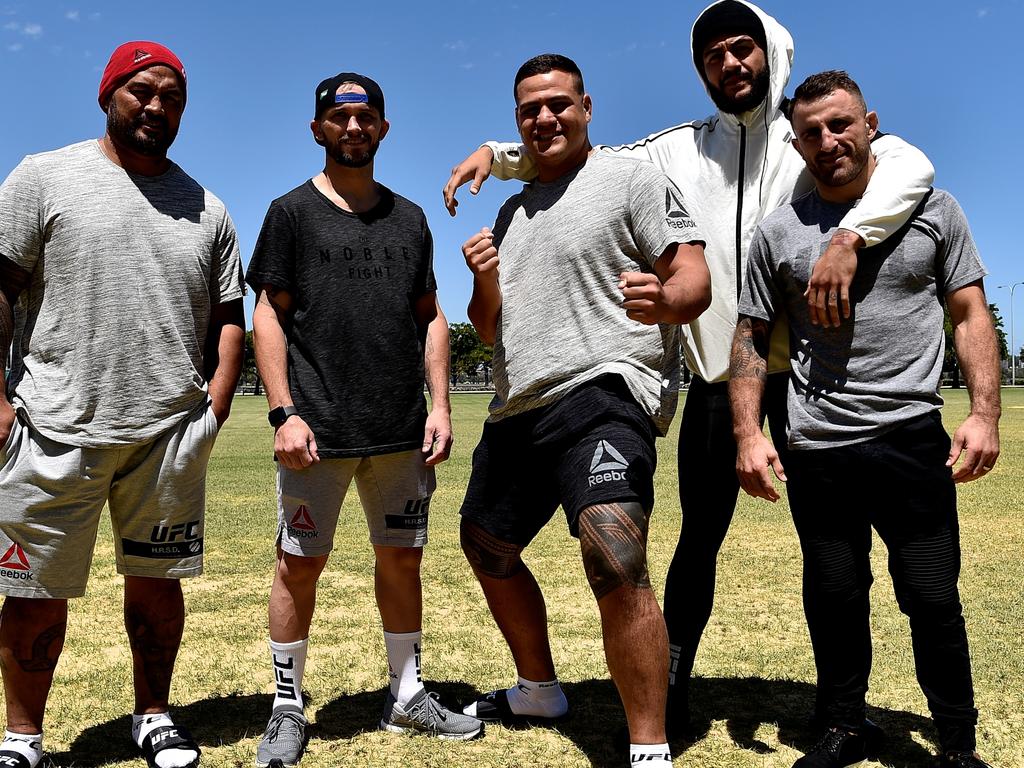
That ability to pick up and understand tactics, techniques and strategies speaks to Hunt’s underlying intellect, says his mate and training partner Tyson Pedro.
“Mark plays down his intellect. That goes for his striking as well,” says Pedro, who was also in Moscow when Hunt played the hustler.
“He just says, ‘I just punch people and knock them out’, but when you watch what he’s doing, he’s making tiny adjustments and there’s so many minute details there.
“Heaps of people can hit harder than Mark Hunt and Mike Tyson, but they don’t set up traps, plan for shots and aren’t as accurate.
“I’m not a crazy good chess player, but that’s what I can compare it to. How you do anything is how you do everything and what he brings to fighting is what he puts into chess.”
In his kickboxing and MMA career, Hunt became famous for his one-punch walk-off knockouts. The power in his fists took him out of poverty and around the world. As contrasting as they may seem, he says there are similarities to beating a man in a cage and beating a man on a chessboard.
“You look at the ways you can lose, the ways you can win, and how you can direct your opponent to where you want them,” he says.
“It’s like striking as well. If you can dictate your opponent’s moves and what they’re doing, then you’re in front. It’s like any battle, you need to dictate where they’re going.
“You can see they’ve got no options but to go here, or there, and I know what the next move is, and you both know they’ve already lost.
“When you’re playing chess and when you’re fighting, you can see their will leaving them.
“If you’re not good enough from the start, you’ll get seen. In chess and fighting, you’ll be exposed. There’s no hiding.”

***
Chess is addictive. To become really good at it, you need to be addicted to it.
Bobby Fischer, the troubled chess genius who slowly lost his grip on reality after beating Boris Spassky in the what was called the ‘Match of the Century’ in 1972, said he was addicted to the game since the age of six.
It can catch up to non-chess professionals, too. Before he became one of the best directors of the 20th century, Stanley Kubrick was a chess hustler in New York’s Washington Square Park and, according to his wife, he flirted with addiction to the game when he started playing against computers later in life.
Bullet chess, which Hunt plays, is particularly addictive.
“It’s one minute on the clock for the whole game – that’s very fast, and played mostly for the ‘thrill’,” says Chess.com’s Peter Doggers.
“According to most trainers, it’s not exactly great to improve your chess, but it’s a very popular time format, and rather addictive at times.”
That explains the hold it has on Hunt, whose addictions have taken many forms over the years. After moving to Sydney in 1997, he worked doors at RSLs around the city, and it wasn’t long before the pokies sucked him in.
“I’ve lost hundreds of thousands of dollars to the pokies,” he wrote his book. “Maybe even more, not to mention losing my mind from time to time.”
It all stems from his childhood. The videos games he’d play to escape the brutal realities of home developed into his full-blown pokie addiction, and he says the fast-paced, instant dopamine hit of bullet chess is similar.
“I play game after game after game after game – bang, bang, bang, get those wins,” he says.
“I play on my phone. I play whenever I get free time. I was playing just before you called. It’s a lifelong thing for me.
“It’s addiction. That’s exactly what it is. You find something you love and takes your time, it becomes addictive. That’s just you.
“It’s an escape. Same as gaming, where you can use an alter ego and get away from the normality of yourself.”

***
From his 2001 K1 kickboxing war with Ray Sefo to a 2013 bloodbath against Antonio ‘Big Foot’ Silva in Brisbane, Hunt has been on the receiving end of a fair amount of punishment in a two-decade long fighting career.
He was pulled off a UFC card in 2017 after making some comments about CTE, but he now says that was an over-reaction.
He seems to be a prime candidate for CTE, but maintains he still has all his mental faculties.
“CTE … who knows? People talk about it, but there’s nothing wrong with me – never has been,” he says.
“I’m fine. I’ve been competing for a long time but there’s nothing wrong with me.”
But playing chess must keep him pretty sharp, right?
Maybe, Hunt says, but don’t read too much into it.
“I just like playing. I don’t know all the numbers and all that.
“I just play. Simple.”

The brutal tactics Hooker uses to get under Volkanovski’s skin

How golf pro helped UFC star prepare for victory

Volk rival’s shot at Aussie after crushing loss as UFC superstar makes history
‘F***ing good’: Aussie claims UFC title in Fight of the Year contender
Vintage Volk winds back the clock and silences critics in title fight epic
