
Analysis: How Samoa’s World Cup final run will turn Test and Origin rugby league upside down
Samoa’s incredible run to the Rugby League World Cup final is set to have massive impacts on rugby league, with a choice to be made between hard facts and ugly division, writes TIM ELBRA.

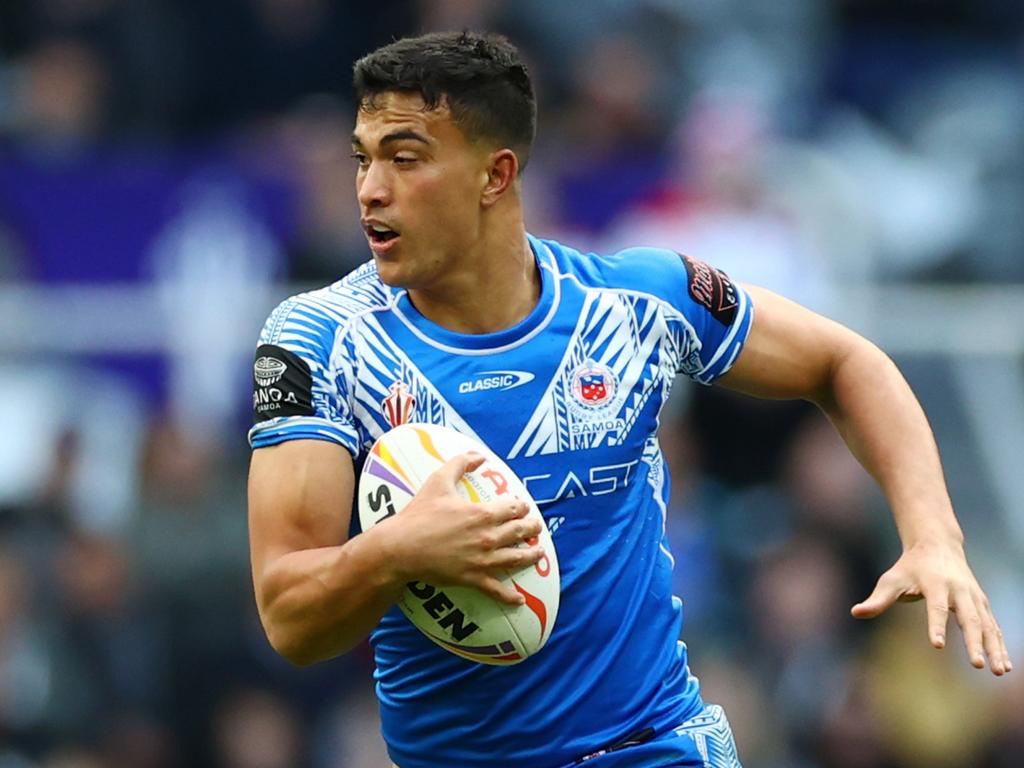
Samoa’s run to the World Cup final will accelerate a major top-to-bottom change in rugby league.
Tonga Invitational beating Australia in 2019 was one thing. Samoa taking on the Kangaroos at Old Trafford in a World Cup decider, having knocked out host nation England, is something else entirely. Victory would open the floodgates of players pledging allegiance to Pacific Island nations.
Pride in family heritage among a rapidly-increasing Pasifika player contingent in the NRL had already created a steady stream of allegiance away from Australia. Six players who featured in Samoa’s semi-final upset of England are current or recent State of Origin players, several of whom may have made the Kangaroos squad (Stephen Crichton, Brian To’o, Jarome Luai, Junior Paulo, Josh Papali’i and Jaydn Su’A, plus rising star Joseph Sua’ali’i).
The genuine prospect of success was, apart from glaring pay disparities, the final box to be ticked. Tonga and Samoa, each side littered with class players, have both proven that they can match it with rugby league’s traditional superpowers.
Jason Taumalolo’s defection from New Zealand to Tonga started a movement that Samoa’s extraordinary success is now making irreversible. Sua’ali’i’s success is intriguing; by taking the opportunity to play as Samoa’s starting fullback rather than Australia’s reserve winger, he has sent his already-soaring NRL stocks through the roof and looks every bit a future $1 million player. He will not be the last to take such an opportunity with a smaller nation.

So, what does it all mean?
Talented junior rugby league players of Pasifika heritage can look to Tonga and Samoa from the outset when it comes to career aspirations. Many will grow up wanting to play for the nation of their parents and ancestors, not their adopted homeland, after they have made a case for representative selection via the NRL.
Australia’s elite rugby league competition already has 45 per cent of players who identify as Maori or Pasifika. That number will only grow and with it, the talent at the disposal of New Zealand, Tonga and Samoa, rather than the Kangaroos.
Fiji and Papua New Guinea will be the next nations hoping to make the leap. They still lack the depth to compete with the heavyweights, but that was Tonga and Samoa not long ago. Samoa did not win a match at the 2017 World Cup.
These rising powers are a great thing for the international game. The World Cup has featured few memorable matches but the semi-finals, plus the New Zealand-Fiji and Samoa-Tonga quarter-finals, were thrillers. One day, it will be a credible tournament from start to finish, not just an awkward wait for the final four.

To support the development process, rugby league officialdom needs to get serious about Test football; as in actually playing it outside of World Cups. Luai debuted for Samoa at the 2017 tournament and the World Cup final will be his 10th Test. Yes, there was a two-year blackout with Covid, but PNG veteran David Mead recently retired on 15 caps … putting him among his nation’s most-capped players, having debuted in 2008.
Issac Luke debuted the same year for New Zealand and retired in 2018 with 43 Tests. Boyd Cordner debuted for Australia five years later and still played 20 Tests. Australia and New Zealand typically play more than twice as often as their Pacific neighbours and far more regularly outside of World Cups.
On recent form, who would not want to see Samoa and Tonga play more often – especially against each other, given the fierce rivalry?
Australia, New Zealand and England remain international rugby league’s only Tier One nations; the only teams that players cannot readily bounce between. The system has served the game well to this point, allowing players of Pacific Island heritage to represent other teams if not selected by Tier One sides, but the model is surely due for review.
For one, players are now choosing Samoa and Tonga first and foremost. Secondly, Tonga entered the tournament ranked world No.1 (albeit in a flawed system) and Samoa is now a finalist. Elevation is not a given, as it is not based purely on on-field success. It seems counter-productive, on many levels.
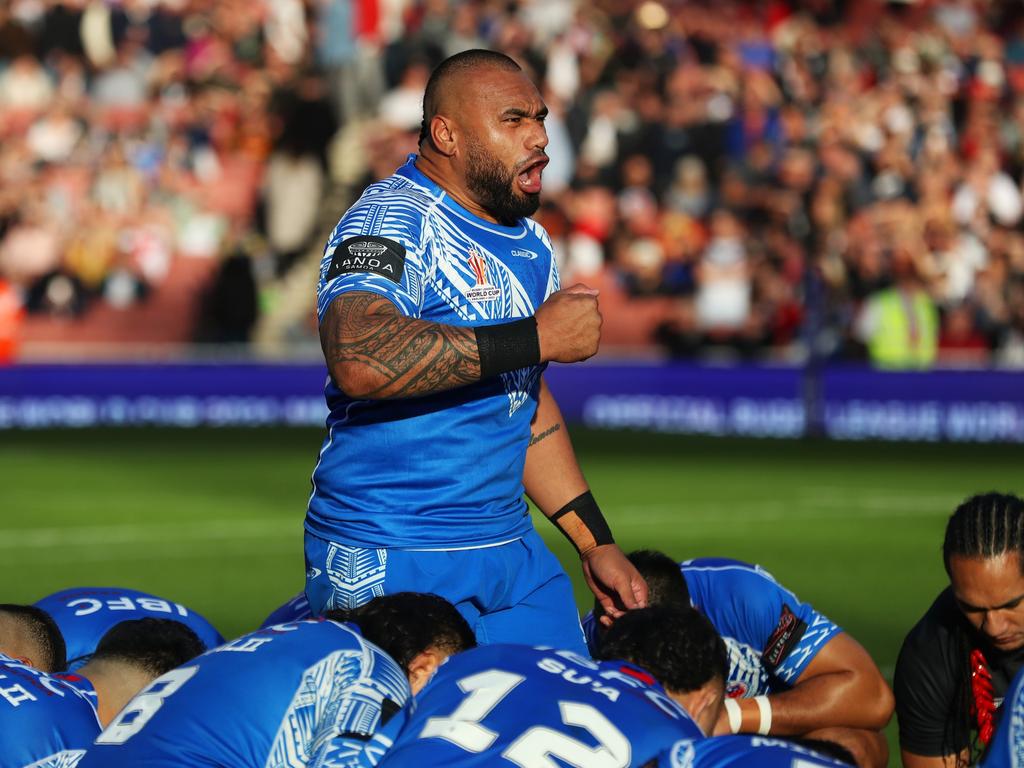
State of Origin is the next major consideration. The rules still state that: “To qualify for State of Origin you must be eligible and elect to play for Australia and have not represented another Tier One nation at senior level.”
Origin has been lurking in a grey area in which a number of players have theoretically been eligible for Australia but have intended to play for ancestral nations. Quiet nods have increasingly become public pledges. Andrew Fifita officially ended his NSW Origin career by openly declaring allegiance to Tonga, rather than Australia, but a number of other players are now in a similar position.
To’o openly declared in July his intention to play for Samoa at this World Cup, regardless of whether Australia wanted him. It was unambiguous and under the rules, would make him ineligible to continue playing State of Origin for NSW. Sua’ali’i also openly declared for Samoa rather than Australia. If the current rules are enforced, his long-anticipated NSW Origin debut will never arrive. No more Paulo in the Blues front-row, or Papali’i for Queensland. No more Luai in the NSW halves alongside Nathan Cleary, his Penrith Panthers teammate since juniors.
The NRL will have to discard the Australian Test eligibility rule. If it does not, it will blow a significant hole in State of Origin from next season and long-term, increasingly weaken the product that remains rugby league’s crown jewel. Pasifika players who meet the criteria of living in NSW/Queensland since prior to their 13th birthday must now be deemed eligible.
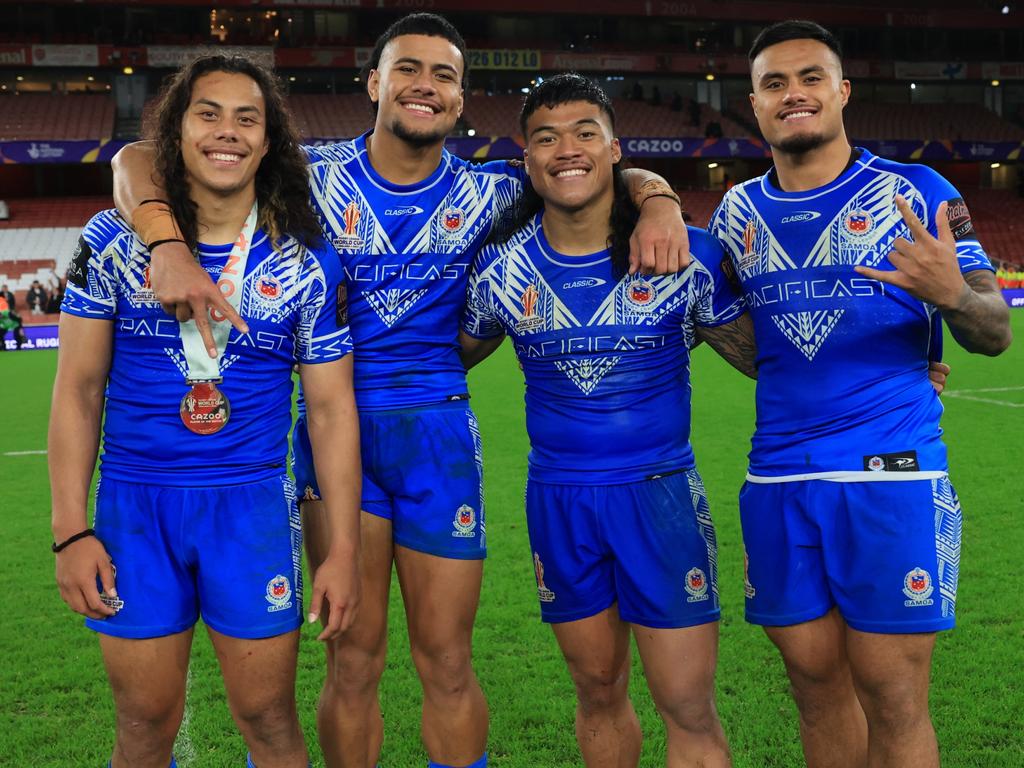
Apart from the squeamishness of change, there are few sane arguments to block them from playing.
Blocking them harms both the Origin and Pacific Island Test teams, depending on who chooses which. Enabling them keeps Origin strong and makes it more representative of modern rugby league’s demographics. It also builds broader strength in international rugby league, albeit at the expense of long-time No.1 Australia, which is already falling back to the pack.
Yes, there will be fewer Kangaroos-eligible players in Origin. The days of it acting as a supposed Test trial will be officially over. There may be a mild dilution of the rampant parochialism that has characterised the series, where players’ hearts now lie primarily with ancestral nations; Paulo admitted that he becomes most emotional while standing for the Samoan anthem, not Advance Australia Fair. Along that avenue, there will be arguments made against Pasifika players’ inclusion that border on flagrant, simple-minded racism.
They will still represent their states with pride. Identity is often multi-layered.
And frankly, what is the alternative to letting them play? Picking Origin teams from just 55 per cent of the NRL’s available talent pool? From perhaps just 30 per cent in the not-so-distant future?
Applying the same logic to New Zealand and England players who have lived in Australia since prior to age 13 is the true can of worms. That will feel like a bridge too far to many who have grown up watching Origin, at least for now. In that sense, perhaps retaining Tier One wording in the Origin rules remains convenient; not allowing players who have declared as eligible for New Zealand or England in Test football, rather than doing away entirely with consideration of national allegiance when it comes to representing NSW or Queensland. ‘Convenient’ has long been one of rugby league’s favourite words.
Yet even that has a counterpoint (beyond an admitted double standard). Victor Radley is now an England player, yet otherwise as NSW as they come. New Zealand Nines player Reimis Smith is Sydney born and bred. Blues coach Brad Fittler has argued the merits of both being Origin eligible. Perhaps one day Origin will feature players from a raft of different Test teams, with the tier system either abolished or disregarded.
Whatever eventuates after this World Cup, the game has some significant decisions to make. All courses of action carry significant ramifications, though clearly there is scope to affect positive long-term change rather than plunge the game into an ugly divide.

Lomax’s surprise code switch: Ex-Eels star takes up cricket

Cleary’s Panthers return locked in after Europe getaway with Fowler

‘Strange welcoming’: Brown’s unusual start to Newcastle life

NRL journeymen, sons of guns: Every club’s train and trial players

Pezet on deck as 150 Eels players gather for whole club hitout
